Best overall for a small, visible chip: dental bonding. Best for a barely rough edge: smoothing. Best for a cosmetic change across the front of a tooth: a veneer. Best for a tooth that needs more structural protection: a crown. If pain or a deep crack suggests damage inside the tooth, the best next step is an examination, not a cosmetic fix. Smile Theory offers general, cosmetic, and restorative dental care in Spring, Texas, for patients who want to discuss the right option for their tooth.
- The best way to fix a chipped tooth is dental bonding when the chip is small, visible, and the tooth is otherwise sound.
- Smoothing suits a tiny rough edge; a veneer addresses a cosmetic concern on the front of a tooth.
- A crown protects a more extensively damaged tooth; pain or a deep crack calls for an examination first.
- Smile Theory offers dental care in Spring, Texas, for patients weighing cosmetic and restorative options.
Why this matters
A chipped tooth and a cracked tooth are not the same problem. A chip can affect only an outer edge, while a crack can extend farther into the tooth than you can see. The visible mark alone does not tell you whether a cosmetic repair will be enough.
In 2026, the useful question is not simply which repair looks best. It is whether the tooth is sound enough for that repair. A small chip with no other symptoms calls for a different conversation than pain when you bite, sensitivity that lingers, or a tooth that feels loose. Smile Theory can help local patients start that conversation with an examination rather than a guess based on a mirror.
If a piece breaks off, keep it and tell the dental office what happened. Avoid chewing on the affected tooth until a dentist has assessed it. Seek prompt dental advice for pain, swelling, or a sharp edge that is cutting your mouth. Swelling with trouble breathing or swallowing needs emergency medical attention.
What makes the best chipped tooth repair?
The best repair protects the tooth first and addresses its appearance second. Use these criteria to understand why a dentist might recommend one option over another:
- Depth of damage: A surface chip, a deeper break, and a crack extending below the gumline call for different decisions.
- Remaining tooth: A repair needs enough healthy tooth to support it. A larger break can rule out a small cosmetic fix.
- Symptoms: Pain on biting, lingering sensitivity, or swelling changes the priority from appearance to diagnosis.
- Location: A front-tooth edge is visible when you smile; a back tooth also has to withstand chewing.
- Appearance: If the tooth is structurally sound, consider how much change you want to its shape and color.
- Long-term care: Ask what the repair covers, what it leaves untouched, and what would require further treatment.
These criteria are a decision guide, not a home diagnosis. The same-looking chip can have a different cause or extent. For a cracked tooth, the location and depth of the crack matter more than choosing a material from a list.
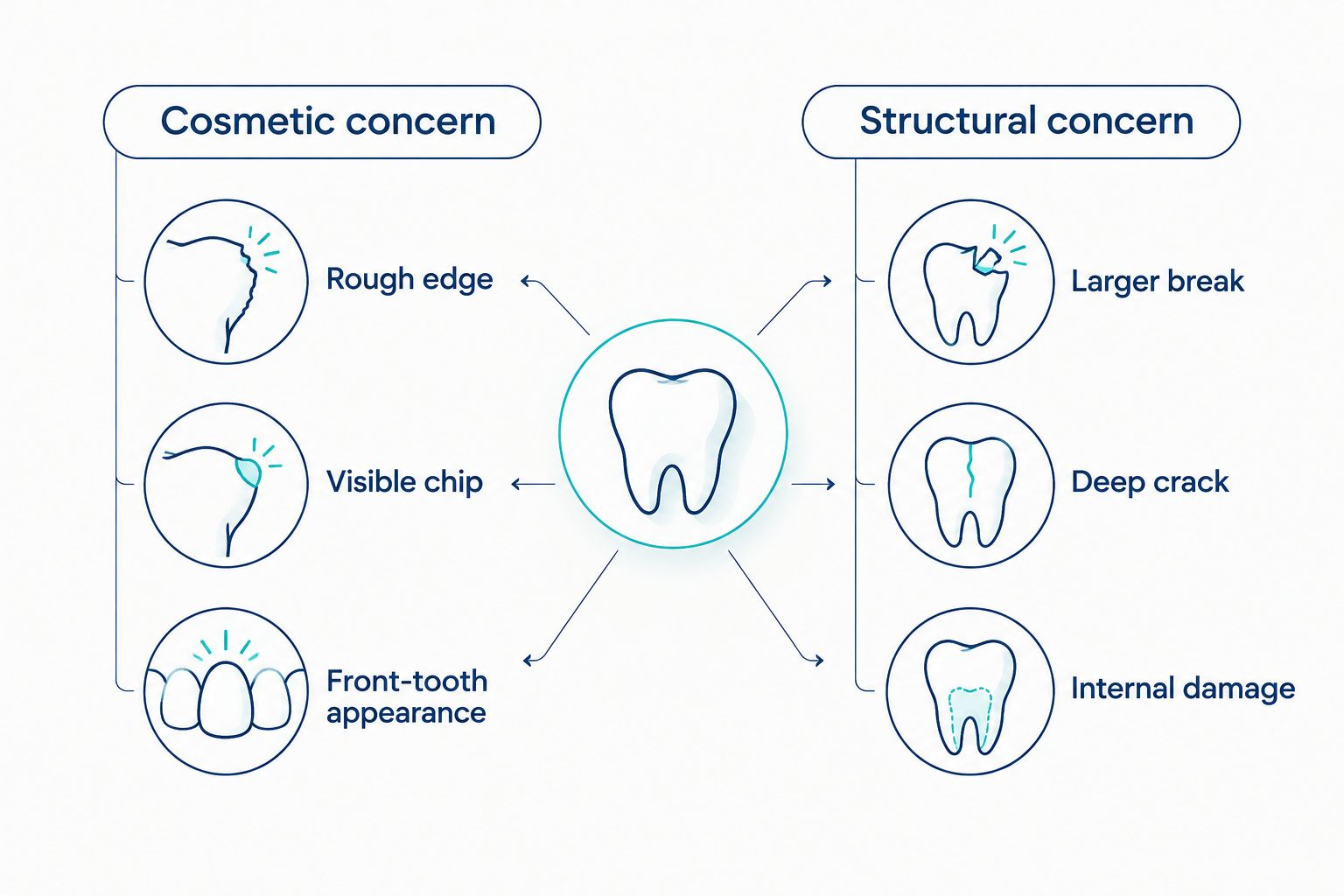
Chipped tooth fixes at a glance
| Option | Best for | What it addresses | Key limitation |
|---|---|---|---|
| Dental bonding | A small, visible chip | Rebuilds the missing edge with tooth-colored material | Not the answer to a deep crack or a tooth that needs extensive protection |
| Smoothing | A tiny, rough edge | Softens a sharp or uneven spot | Does not replace missing tooth structure |
| Veneer | A structurally sound front tooth with a cosmetic concern | Covers the visible front surface | Does not fix damage inside the tooth |
| Crown | A tooth with more extensive damage | Covers and protects the remaining tooth | Requires an assessment of whether the tooth can support it |
| Root canal treatment with a restoration | Damage affecting the tissue inside a tooth | Treats the inside of a tooth before it is restored | Is unnecessary when the inside of the tooth is healthy |
The table compares situations, not treatments you should choose without an examination. Here is what each option does, where it falls short, and when to ask about it in 2026.
1. Dental bonding: best for a small, visible chip
Dental bonding adds tooth-colored material to replace a missing corner or edge. It is the default option to ask about when a front tooth has a small chip and the rest of the tooth is sound. The dentist still needs to check for a crack and confirm that the remaining tooth can support the repair.
Dental bonding pros:
- Rebuilds the shape of a chipped edge rather than simply making it less sharp.
- Uses tooth-colored material for a repair meant to blend with the tooth.
- Targets a limited area when the rest of the tooth does not need broader coverage.
Dental bonding cons:
- Does not treat damage inside the tooth.
- Is not a substitute for a crown when too much tooth structure is missing.
- Can need attention if the bonded edge chips or wears later.
Best for: A small, visible chip on an otherwise healthy tooth.
Verdict: Buy if an examination confirms a surface-level chip and you want the missing edge restored. If biting hurts, ask about the cause before choosing bonding for appearance alone.
2. Smoothing: best for a tiny, rough edge
Sometimes the problem is a slight irregularity that catches on your tongue rather than a piece of tooth you need rebuilt. A dentist can assess whether gently smoothing the edge resolves the discomfort without adding material. Smoothing is deliberately limited: it changes an edge, not the underlying health of the tooth.
Smoothing pros:
- Addresses the specific nuisance of a rough or sharp edge.
- Avoids adding a repair when the tooth does not need one.
- Preserves the distinction between a minor surface issue and a larger break.
Smoothing cons:
- Cannot restore a noticeably missing corner.
- Does not strengthen a cracked tooth or treat sensitivity from deeper damage.
Best for: A very small chip or uneven edge when an examination finds no deeper concern.
Verdict: Buy for a minor rough spot once a dentist confirms that smoothing is enough. Skip it as the only response to a tooth that hurts or has visibly lost a larger piece.
3. Veneer: best for a front-tooth cosmetic concern
A veneer covers the visible front surface of a tooth. It makes sense to discuss when the issue is broader than a single chipped corner, such as a front tooth whose shape or appearance you want to change, and the tooth is healthy enough for a cosmetic approach. A veneer is not a shortcut around diagnosing a crack.
For patients who want a natural-looking result, the important conversation is about the change you actually want to see. Describe what bothers you about the tooth when you smile or speak. Then ask whether a smaller repair would meet that goal before choosing broader coverage.
Veneer pros:
- Addresses the appearance of the visible front surface, not just one edge.
- Can be considered when tooth shape is part of the concern.
- Gives you a clear opportunity to discuss the look you want with your dentist.
Veneer cons:
- Does not treat decay, infection, or damage inside the tooth.
- Covers more of the visible tooth than a repair focused only on a small chip.
- Is not the right answer solely because a crack can be seen from the front.
Best for: A structurally sound front tooth when the main goal is a change to its visible appearance.
Verdict: Hold until an examination confirms the tooth is healthy and you have compared a veneer with a smaller repair. In 2026, choose the treatment that fits both the tooth and the result you want, not the one with the broadest coverage.
4. Crown: best for a tooth needing more protection
A crown covers the remaining tooth. It enters the conversation when a break is too extensive for a small edge repair or when a dentist finds that the tooth needs broader protection. The decision depends on how much healthy tooth remains and what an examination reveals about the crack or break.
This distinction matters for back teeth as well as front teeth. A repair that looks acceptable is not enough if the tooth cannot handle normal use. Conversely, a small surface chip does not automatically call for full coverage.
Crown pros:
- Covers more of the remaining tooth than bonding or a veneer.
- Addresses damage that extends beyond a small cosmetic edge.
- Can be part of restoring a tooth after treatment inside it, when appropriate.
Crown cons:
- Is more extensive than smoothing or repairing a small chip.
- Cannot save every deeply cracked tooth; the crack still needs assessment.
- Does not replace a diagnosis of pain, swelling, or infection.
Best for: A damaged tooth that a dentist determines needs coverage and has enough sound structure to restore.
Verdict: Buy when an examination shows that a small repair will not adequately protect the tooth. Skip choosing a crown from a photograph or symptom list alone.
5. Root canal treatment with a restoration: best for damage inside the tooth
Root canal treatment addresses affected tissue inside a tooth. It belongs on this list because a deep crack or break can turn an apparent cosmetic problem into a dental health problem. After treatment, the tooth also needs a suitable restoration; the type depends on the tooth and the damage.
Do not assume that a painful tooth automatically needs this treatment, or that a painless crack is harmless. A dentist must assess the symptoms and examine the tooth. If the crack makes the tooth impossible to restore, the discussion changes again; the options above do not override that finding.
Root canal treatment pros:
- Addresses damage inside the tooth rather than covering only what is visible.
- Can be part of keeping a tooth that is suitable for restoration.
- Puts the cause of symptoms ahead of cosmetic appearance.
Root canal treatment cons:
- Is not indicated for every chip or crack.
- Does not by itself rebuild a broken edge or replace a final restoration.
- Cannot make an unrestorable tooth restorable.
Best for: A tooth whose internal tissue needs treatment and that a dentist determines can be restored.
Verdict: Wait for a diagnosis before deciding on this option. Do not wait for a routine cosmetic discussion if you have swelling or significant pain; seek dental advice promptly.
How these options are ranked
This is a decision tree, not a claim that bonding beats a crown for every tooth. Bonding ranks first because the question asks about a chipped tooth, and a small visible chip on an otherwise sound tooth is the clearest fit for rebuilding the edge. Smoothing ranks next for a smaller problem that does not need material added.
Veneers address a different goal: the visible appearance of a front tooth. Crowns and treatment inside the tooth appear later because they respond to more extensive damage, not because they matter less. The deeper the problem, the less useful a cosmetic-first ranking becomes. An examination takes precedence over this list when symptoms or a crack suggest more than a surface chip.
Which chipped tooth fix should you choose?
Choose dental bonding as the default question to bring to your dentist for a small, visible chip. If the edge is only rough, ask whether smoothing is sufficient. If you want to change the appearance of a sound front tooth beyond one chipped corner, discuss a veneer and compare it with a smaller repair.
For a larger break, ask whether the tooth needs a crown. For pain, swelling, or a crack that appears to run into the tooth, start with diagnosis rather than requesting a particular cosmetic treatment. The best way to fix a chipped tooth in 2026 is the least extensive option that addresses the damage your dentist actually finds.
If you are looking for a personal dentist in Spring, Smile Theory offers general, cosmetic, and restorative care. You can explain when the tooth broke, what you feel when you bite, and what you would like your smile to look like. That gives the discussion a clear starting point without committing you to a treatment before the tooth has been checked.
Talk through your tooth concern
Explore dental care in Spring, Texas, and ask about an examination for a chipped or cracked tooth.
FAQ
What is the best way to fix a chipped tooth?
Dental bonding is a common choice for a small, visible chip on an otherwise sound tooth. A dentist should check the tooth first, especially if it hurts or the break looks deep.
Can a dentist fix a chipped tooth without a veneer?
Yes. Bonding can rebuild a small missing edge, and smoothing can address a tiny rough spot. A veneer is a different option when the visible front surface needs a broader cosmetic change.
Is bonding or a veneer better for a chipped front tooth?
Bonding better fits a small, isolated chip; a veneer fits a broader concern about the front tooth's appearance. The condition of the tooth determines whether either cosmetic option is appropriate.
Does a cracked tooth always need a crown?
No. Treatment depends on where the crack runs, the symptoms, and whether the tooth can be restored. Some cracks need more than a crown, so an examination comes before choosing coverage.
Can a chipped tooth be left untreated?
A dentist should assess a chip before you decide to leave it alone. Even a small edge can be uncomfortable, while pain or sensitivity can point to a problem that is not clear from its appearance.
What should I do if my chipped tooth hurts when I bite?
Contact a dentist for an assessment and avoid chewing on that tooth until it has been checked. Pain on biting changes the question from how to improve the edge to what is causing the pain.
When is a broken tooth an emergency?
Seek prompt dental advice for significant pain, swelling, or a broken tooth that is injuring your mouth. If swelling makes breathing or swallowing difficult, seek emergency medical attention.
One last thing
The smallest visible chip is not always the simplest problem, and the largest-looking one does not tell the whole story either. In 2026, describe the symptoms before you describe the cosmetic result you want: pain on biting, lingering sensitivity, and swelling tell a dentist more than a request for a particular repair. Smile Theory offers local dental care in Spring for patients ready to have that conversation.