Frequent travelers’ dental care is a daily and professional care plan that protects your oral health while you spend time away from home. This 2026 guide to dental care for frequent travelers explains how to keep your routine steady, arrange treatment around trips, and recognize problems that should not wait until you return.
- Dental care for frequent travelers starts with fluoride toothpaste, daily between-teeth cleaning, and a plan for dental emergencies.
- Mysmiletheory is best for travelers seeking a personal dentist in Spring, Texas.
- Arrange dental work around necessary follow-up, not just your departure date.
- Facial swelling with trouble breathing or swallowing requires immediate emergency medical care.
Why dental care matters for frequent travelers
Travel changes where you sleep, when you eat, and how easily you can reach your regular dentist. A delayed flight can interrupt bedtime brushing; a short stay at home can make it tempting to postpone a toothache again.
The goal is continuity, not a suitcase full of dental products. Keep daily care consistent and make sure someone can assess new symptoms wherever you are.
For your 2026 travel calendar, include dental appointments alongside departures and return dates. Mysmiletheory offers general, cosmetic, restorative, and family dental care in Spring, Texas, for local patients seeking a personal dentist.
Your travel pattern belongs in the conversation. Tell your dentist whether you take short domestic trips, spend extended periods abroad, or have limited time between assignments; that information helps shape a practical treatment schedule.
Build your travel dental care plan
Follow these steps before departure, during your trip, and when you return. Start with a calendar, a small kit, and your dentist’s instructions; you do not need a specialized travel device to maintain good daily care.
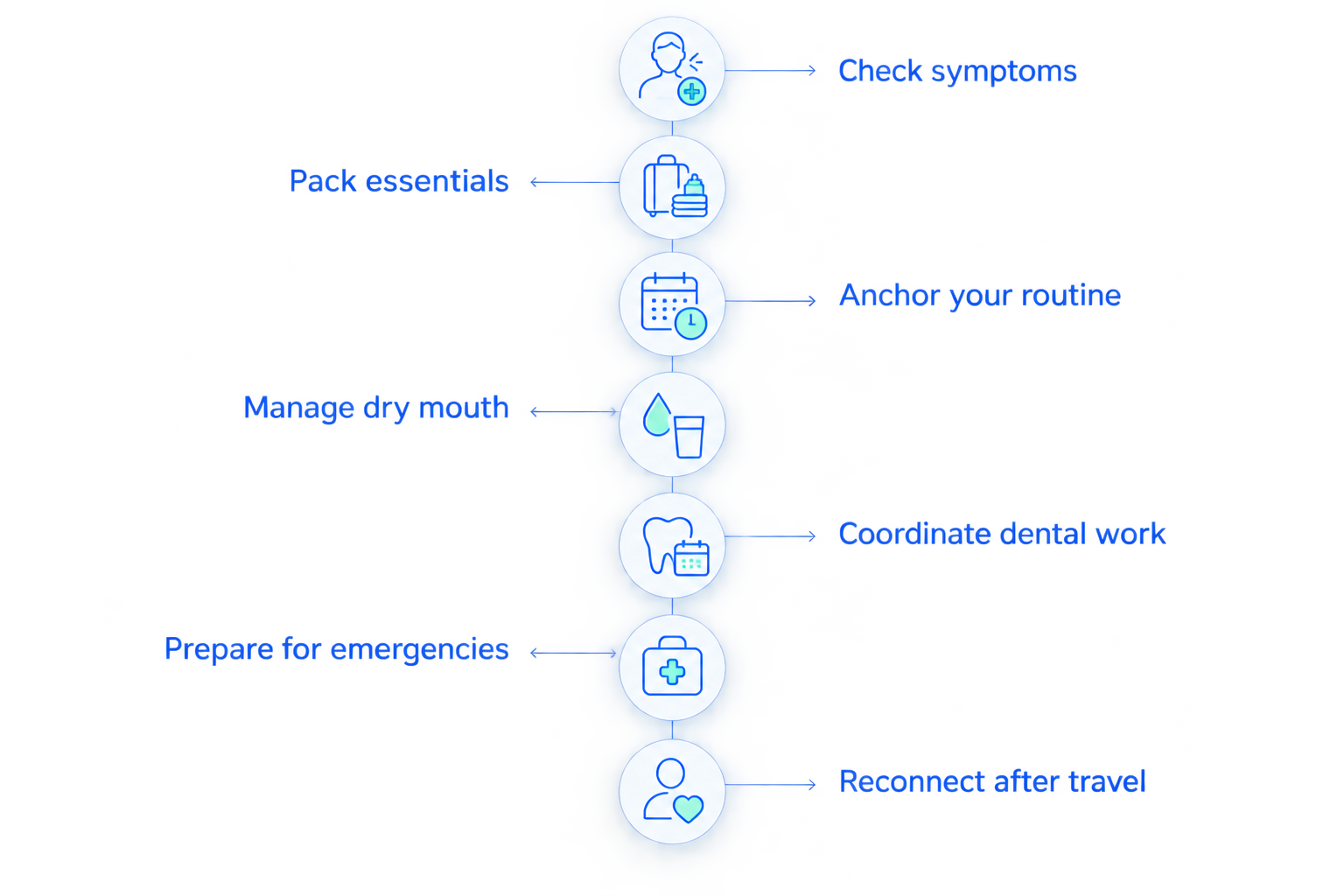
Check symptoms
Start by writing down anything that has changed: sensitivity, bleeding gums, a chipped edge, discomfort when biting, or a filling that feels loose. A note on your phone helps you describe the problem clearly instead of trying to remember it during an appointment.
Arrange an assessment before travel when you have new or persistent symptoms. Pain that comes and goes still deserves attention. Its disappearance does not establish that the underlying problem has resolved.
There is no single preflight appointment deadline that fits every treatment. Leave time for the dentist to examine the tooth, discuss options, and explain whether follow-up affects your plans.
- Record where the discomfort occurs and what triggers it.
- Share departure dates, destinations, and your next return home.
- Mention recent dental work and any unfinished treatment.
- Ask which symptoms require care before you leave.
Pack essentials
Build your kit from the items you already use successfully at home. Include a soft-bristled toothbrush, fluoride toothpaste, and floss or another between-teeth cleaner your dentist recommends.
Keep the kit accessible rather than buried in checked luggage. A manual toothbrush works well when used correctly; an electric toothbrush adds a charging or battery requirement, so choose the option you will use consistently.
Let your toothbrush air-dry when practical, and avoid leaving a wet brush sealed inside its travel cover between uses. If you wear a prescribed appliance, bring its protective case and follow its cleaning instructions.
- Pack fluoride toothpaste and a soft-bristled toothbrush.
- Include floss or your usual between-teeth cleaner.
- Carry prescribed retainers or night guards in their cases.
- Save your dentist’s contact details somewhere accessible offline.
Anchor your routine
Tie brushing to waking up and going to bed rather than to your home time zone. The American Dental Association recommends brushing twice daily for 2 minutes with fluoride toothpaste and cleaning between teeth daily.
An overnight flight makes that routine awkward, but it does not require a new system. Choose a practical opportunity to brush, such as before boarding or after reaching your accommodation, rather than abandoning the routine altogether.
At Mysmiletheory, dental care planning can start with a conversation about your existing habits and travel schedule. Ask for advice about areas you find difficult to clean; personalized instruction is more useful than adding unfamiliar products just before departure.
- Brush twice daily for 2 minutes with fluoride toothpaste.
- Clean between your teeth once daily.
- Set phone reminders if changing schedules disrupt your habits.
- Resume normal care after a missed session without aggressive scrubbing.
Manage dry mouth
A dry or sticky mouth deserves attention, especially when it persists beyond the journey. Saliva helps protect teeth, and ongoing dry mouth can increase the risk of tooth decay.
Sip water and choose sugar-free gum if chewing is comfortable for you. These measures can help with comfort, but they do not replace an assessment of persistent symptoms or substitute for brushing.
Some medicines contribute to dry mouth. Tell your dentist what you take, including nonprescription products, and do not stop a prescribed medicine without speaking to the clinician who prescribed it.
- Keep drinking water accessible during travel.
- Choose sugar-free gum rather than sugary sweets for dry-mouth comfort.
- Avoid repeatedly sipping sugary or acidic drinks throughout the day.
- Report persistent dryness, soreness, or difficulty swallowing.
Coordinate dental work
Put your 2026 itinerary beside your treatment plan before agreeing to appointment dates. Ask whether the proposed care involves a temporary restoration, healing checks, adjustments, or another visit to finish treatment.
For cosmetic dentistry, explain that you want natural-looking results and describe any upcoming photographs or events. A departure date should guide scheduling, not replace the assessment of what your teeth need. Comfort, oral health, and follow-up still matter.
Mysmiletheory offers cosmetic and restorative dentistry, but the right treatment and timetable depend on your examination. If you are having a filling, discuss eating after a filling and get instructions specific to your treatment before leaving.
- Ask how many visits your proposed treatment requires.
- Confirm whether anything will remain temporary during the trip.
- Request eating, cleaning, and aftercare instructions in writing.
- Ask what symptoms should prompt a call or local assessment.
Prepare for emergencies
Identify where you would seek dental care at your destination before you need it. Save your regular dentist’s number, check any relevant insurance arrangements, and keep a brief medication and allergy list available.
A remote conversation can help you explain symptoms and arrange the next step. It cannot replace an examination, take an X-ray, or repair a broken tooth.
Seek prompt dental assessment for severe or persistent tooth pain, a broken tooth, or swelling. Facial swelling with difficulty breathing or swallowing requires immediate emergency medical care. Do not wait for a return flight or a reply from your usual dental office.
- Save contact details for a destination dental provider.
- Keep medication names and allergies available offline.
- Seek urgent dental care for a knocked-out permanent tooth.
- Never place aspirin directly against a painful tooth or gum.
- Use emergency medical services for breathing or swallowing difficulty.
Reconnect after travel
If you received care away from home, ask for a written summary and copies of relevant records. Share them with your regular dentist so the next appointment starts with an accurate account of what happened.
A temporary repair is not necessarily the end of treatment. Even when pain has settled, confirm whether the tooth needs further assessment or a lasting restoration.
Review your 2026 calendar before the next trip and book any recommended follow-up. Keep dental visit frequency personal: your oral health and treatment needs should determine the interval, not a fixed rule borrowed from another traveler.
- Request treatment notes and available dental images.
- Record the date, tooth treated, and advice you received.
- Arrange follow-up for temporary or unfinished treatment.
- Replace missing supplies before packing for the next trip.
Compare care options while traveling
The best option depends on whether you need ongoing care, an examination while away, or immediate medical help. For travel in 2026, save a home-care contact and a destination-care contact rather than relying on a single route.
| Option | Best for | Main advantage | Key limitation |
|---|---|---|---|
| Home dentist | Planned care and ongoing follow-up | Keeps treatment connected to your dental history | An office visit requires being near home |
| Destination dentist | New pain, damage, or a problem needing examination while away | Can examine the tooth and discuss treatment locally | Needs records and coordination with your home dentist |
| Remote dental guidance | Describing symptoms and deciding where to seek care | Provides a way to discuss the problem while away | Cannot physically examine or repair a tooth |
| Emergency department | Breathing or swallowing difficulty, serious facial injury, or other medical emergencies | Addresses immediate medical danger | Definitive dental treatment can still be necessary afterward |
Your home dentist provides continuity, but distance limits hands-on care. A destination dentist provides local assessment, but you will need to communicate what was done when you return.
Remote guidance is a useful bridge, not a substitute for treatment. An emergency department is the right setting for medical danger, not a replacement for routine dentistry.
Common mistakes frequent travelers make
Leaving a recurring toothache until the next return home
Repeatedly postponing an assessment leaves the cause unresolved. Tell your dentist how long the pain has been happening and when you leave; ask whether you need care before traveling.
Treating mouthwash as a substitute for brushing
A rinse is easy to pack and can make your mouth feel fresher. It does not replace brushing with fluoride toothpaste or cleaning between teeth, even during an overnight journey.
Scheduling cosmetic work against a departure deadline
A meeting, wedding, or holiday photo can make the calendar feel urgent. Allow the examination to determine suitable options, and ask about adjustments or follow-up before arranging treatment around a flight.
Leaving temporary treatment without a follow-up plan
A temporary filling or crown can feel comfortable while more treatment remains necessary. Get clear instructions about completing care and whom to contact if it loosens or breaks away from home.
Assuming a quiet tooth is a healthy tooth
Reduced pain is not proof that a dental problem has healed. Follow through on the recommended assessment instead of using symptom changes alone to decide whether care is still needed.
FAQ
What is the best dental care routine for frequent travelers?
Brush twice daily for 2 minutes with fluoride toothpaste and clean between your teeth daily. Tie the routine to waking and bedtime at your destination, and keep your supplies accessible during the journey.
Should I see a dentist before a long trip?
Arrange an assessment before travel if you have new symptoms, unfinished treatment, or a dental visit due under your existing care plan. Share your departure and return dates so your dentist can discuss treatment and follow-up.
Can I fly after having dental treatment?
Ask your treating dentist when flying is appropriate for your specific procedure and recovery. There is no single waiting period that fits every filling, extraction, surgical procedure, or individual medical situation.
What should I do if I get a toothache while traveling?
Contact a dentist promptly for persistent or severe tooth pain and explain your symptoms. Seek immediate emergency medical care for facial swelling accompanied by trouble breathing or swallowing.
Is an electric toothbrush better for travel?
Choose the toothbrush you can use consistently and correctly. A manual toothbrush avoids charging requirements, while an electric toothbrush requires you to plan for power or batteries; either still needs fluoride toothpaste and proper technique.
How can I manage dry mouth during a trip?
Sip water and consider sugar-free gum if chewing is comfortable. Ask a dentist about persistent dryness, and do not change prescribed medicines without speaking to the prescribing clinician.
Should I finish cosmetic dental work before traveling?
Plan cosmetic dental work around the full treatment and follow-up schedule, not only the departure date. Ask whether temporary restorations, adjustments, or recovery could overlap with your trip.
What should I bring home after dental treatment abroad?
Request a treatment summary, relevant dental images, and written aftercare instructions. Share those records with your regular dentist and arrange follow-up for temporary or unfinished treatment.
One last thing
The most useful addition to your 2026 travel kit is a short care note: your dentist’s contact details, medicines, allergies, and any unfinished treatment. Save it offline so you can explain your situation even without a reliable connection.
You do not need a perfect travel routine; you need one you can return to. If you are planning a trip from the Spring or North Houston area, you can request an appointment to discuss symptoms and timing without committing to a particular treatment.