Instead of piecing together symptoms, old records, and appointment notes yourself, use a clear new patient dental exam treatment plan workflow: prepare your history, review the findings with your dentist, and leave knowing what comes next. This 2026 guide explains how to turn a first visit into a plan you understand, without feeling rushed into decisions.
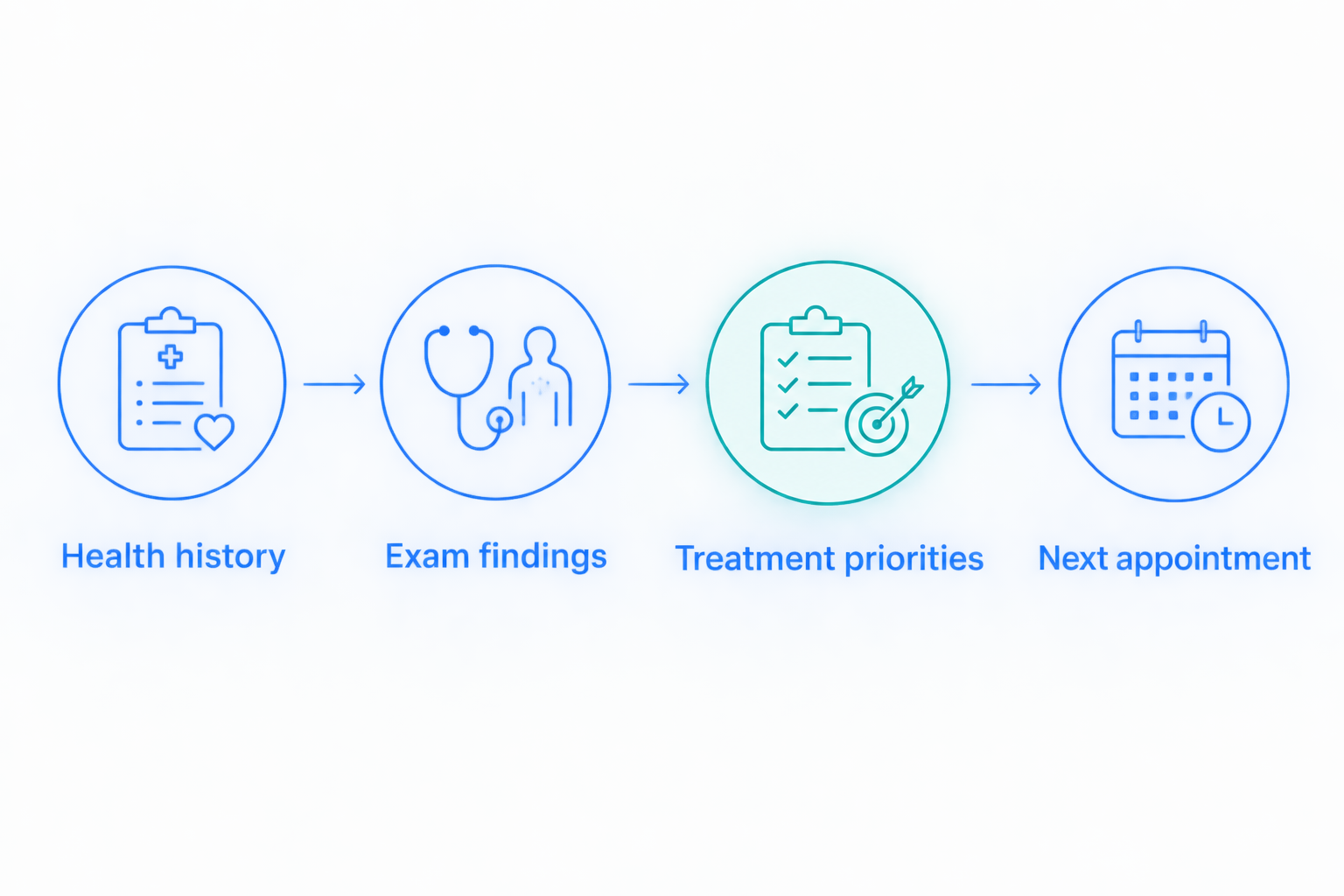
- A new patient dental exam treatment plan connects your health history, examination findings, treatment priorities, and next appointment.
- Mysmiletheory offers general and family dentistry for patients seeking a personal dentist in Spring, Texas.
- Share pain, medications, previous records, and comfort concerns before your examination begins.
- Ask what needs treatment, what can be monitored, and which cosmetic decisions can wait.
Why this matters
A dental exam identifies concerns; a treatment plan explains what to do about them. You need both the findings and their meaning, including what happens if you wait and how each recommendation supports your health or goals.
Mysmiletheory is best for Spring-area patients seeking a personal dentist for general, cosmetic, restorative, and family dental care. You can start with Mysmiletheory when choosing a local practice, then use the questions below to prepare for your conversation.
The workflow has 4 stages: preparation, examination, treatment decisions, and follow-through. Each stage should leave you with something useful, not just another appointment on the calendar.
Before you start
- Gather your health information. Bring your medication and supplement list, allergies, relevant medical conditions, previous dental treatment details, and any insurance information you want the office to review.
- Write down your concerns. Include pain, sensitivity, bleeding gums, broken teeth, and changes you have noticed. Add comfort preferences, such as wanting explanations before instruments enter your mouth.
- Confirm the visit’s scope and record transfer. Ask whether the appointment includes an examination, cleaning, or separate appointments. Request previous records early; sending a request does not mean the new office has received usable images.
That last point prevents an uncomfortable surprise: a new patient appointment is not automatically a cleaning appointment. Your dentist needs to assess your gum health before recommending the appropriate cleaning or gum treatment.
Your health history and visit goals
Prepare the information your dentist needs
- Describe your main concern first. Explain where it is, when you noticed it, and what makes it better or worse. Mention pain when biting, discomfort that wakes you, or swelling rather than simply saying a tooth feels different.
- Review your current health history. Include prescription medicines, nonprescription medicines, supplements, allergies, pregnancy, and changes in your health. Do not stop prescribed medicine unless the clinician responsible for it tells you to.
- Explain previous dental experiences. Share what helped you feel comfortable and what did not. You can ask to agree on a hand signal for a pause before the exam begins.
- Separate health concerns from appearance goals. Tell your dentist if you want relief, easier chewing, a more natural-looking smile, or a combination. Your priorities help shape the discussion, but they do not replace the examination.
Expected result: Your dentist understands why you came, the health information relevant to your care, and how you prefer to communicate.
If you are changing practices in 2026, follow the guide to connecting your previous dentist’s records to your first visit. Ask the receiving office to confirm what arrived rather than assuming the transfer is complete.
Your examination and findings
Connect what you feel with what the dentist finds
- Point out the exact area of concern. Describe symptoms even if they are absent during the appointment. Intermittent discomfort still belongs in your history.
- Review the recommended examination. A dental assessment can include your teeth, existing dental work, gums, bite, and the soft tissues of your mouth. Ask for plain-language explanations as the dentist checks each area.
- Discuss whether imaging is needed. Dental X-rays are selected according to your clinical needs and relevant previous images, not simply because you are new to the practice. Ask what a proposed image is intended to show.
- Ask to see the findings. When an image or other visual is available, ask your dentist to explain it. Clarify the difference between a confirmed problem, a suspected problem needing more assessment, and an area being watched.
Expected result: You can describe the main findings in everyday language and understand whether further information is needed before choosing treatment.
Not every concern has an immediate answer. A tooth with unclear symptoms can require additional testing, a follow-up assessment, or a specialist’s opinion before a final recommendation is appropriate.
Match the visit to the concern
These appointment types serve different purposes. Confirm the scope when booking rather than assuming one replaces another.
| Visit type | Best for | Benefit | Limitation |
|---|---|---|---|
| New patient examination | Establishing an overall picture of your oral health | Connects history, findings, and ongoing care needs | Does not guarantee treatment or cleaning during that appointment |
| Problem-focused examination | A particular painful, broken, or concerning area | Directs attention to the immediate concern | Does not replace an overall assessment of your mouth |
| Cosmetic consultation | Discussing changes to your smile’s appearance | Clarifies goals and possible approaches | Cosmetic decisions still depend on tooth and gum health |
Choose the visit that matches your immediate need, then confirm what remains to be assessed. If you have pain, say so when booking rather than waiting until a routine appointment begins.
Your treatment priorities and choices
Turn findings into a usable plan
- Ask for the reason behind each recommendation. Identify the tooth or area involved, the finding, and the purpose of treatment. A procedure name alone does not explain why you need it.
- Sort the recommendations into 3 priorities. Discuss urgent concerns, other health needs, and elective goals. Your dentist determines the clinical urgency; you help explain your preferences and practical constraints.
- Review suitable alternatives. Ask about benefits, limitations, risks, and what monitoring would involve if it is clinically appropriate. Some findings allow several approaches; others do not.
- Confirm the order of care. Ask which treatment depends on another step being completed first. Gum health, active decay, healing, and bite concerns can affect the sequence.
- Request an understandable written summary. Ask for the problem, proposed treatment, alternatives discussed, and next action. Before consenting, make sure your questions have been answered.
Expected result: You know what is recommended, why it matters, which decisions come first, and what remains undecided.
For your 2026 plan, keep these headings in your own notes: Health history, Exam findings, Treatment priorities, and Next appointment. They make it easier to connect the conversation to the action you take afterward.
Keep cosmetic goals in the conversation
You do not need to hide an appearance concern because you also need dental treatment. Tell your dentist what you hope to change, whether that is a chipped edge, uneven color, or the shape of a tooth.
The sequence matters. For example, untreated decay or gum disease needs assessment before elective cosmetic work, and existing crowns or veneers do not whiten like natural teeth. A natural-looking result starts with a plan that accounts for those differences.
Mysmiletheory offers cosmetic and restorative dentistry alongside general care. The benefit of discussing both is a connected set of goals; the limitation is that your exam still determines which treatments are appropriate. A service description alone cannot establish your suitability for a particular procedure.
Your next appointment and home instructions
Close the loop before leaving
- Repeat the next step in your own words. Explain what you understand is happening next and why. This gives your dentist a chance to correct a misunderstanding before it becomes a missed step.
- Confirm what the next appointment involves. Ask whether it is for treatment, additional assessment, cleaning, or a referral. Check whether you need preparation instructions.
- Ask what to do between visits. Get guidance specific to any painful tooth, temporary dental work, or gum concern. General advice online does not replace instructions based on your examination.
- Clarify how to report changes. Ask whom to contact if pain increases, swelling develops, or something breaks before the next visit. Keep those instructions with your treatment summary.
Expected result: You leave with a next action, any necessary preparation, and a clear way to raise concerns.
Before leaving a 2026 appointment, ask 2 questions: What should I do next? and What change should make me contact you sooner? Those answers are more useful than a list of unfamiliar procedure names.
Take your next step
Explore general, cosmetic, restorative, and family dental care in Spring, Texas.
When symptoms change before treatment
A treatment plan is based on the findings available at the time. New symptoms, a broken restoration, or a change in your health can require reassessment rather than simply continuing the original sequence.
Contact the dental office and explain what changed, when it started, and whether you have swelling or fever. Ask whether the planned appointment still fits your needs; do not assume that an appointment intended for cosmetic work will address a new painful problem.
Trouble breathing or swallowing, or rapidly spreading swelling, needs emergency medical attention. Do not wait for a routine dental appointment in those circumstances.
When a plan changes, request an updated summary. Keep the current version of your 2026 treatment plan separate from earlier notes so you know which next step your dentist recommends now.
Troubleshooting common first-visit problems
- Your previous records have not arrived. Contact the previous practice and ask the receiving office what is missing. Your new dentist decides whether the available records are sufficient or additional assessment is needed.
- You expected a cleaning but received an assessment. Ask what the gum evaluation showed and which cleaning or treatment is appropriate. Confirm whether that care needs a separate appointment.
- The treatment plan feels overwhelming. Ask your dentist to identify the first clinical priority and explain the remaining sequence. Discuss whether staging care is appropriate rather than deciding on your own which problem can wait.
- You hear different recommendations from different dentists. Ask each dentist to explain the diagnosis, supporting findings, and alternatives. A second opinion is reasonable when you do not understand a significant or irreversible recommendation.
- Anxiety makes it hard to absorb information. Request pauses and a written summary. Tell the team what triggers your worry; do not assume they can recognize it without a conversation.
Customize your workflow
Build the plan around your health needs and daily life. Tell your dentist about travel, shift work, caregiving responsibilities, or an upcoming event before the sequence is finalized.
For cosmetic goals, explain what “natural-looking” means to you. You might want to preserve familiar tooth shapes or make a subtle change rather than a dramatic one. Your preferences belong in the conversation, alongside the limits of what treatment can achieve.
At Mysmiletheory, prospective patients can discuss general, cosmetic, restorative, and family dental care. Bring your questions and ask for an explanation you can comfortably repeat at home.
FAQ
What is a new patient dental exam treatment plan?
A new patient dental exam treatment plan connects your examination findings with recommended care and next steps. It should explain the problems identified, treatment priorities, suitable alternatives, and the proposed sequence.
Will I get my teeth cleaned at my first dental appointment?
A cleaning is not guaranteed at your first dental appointment. Confirm the booking details beforehand; your gum assessment helps determine which cleaning or treatment is appropriate.
Do new dental patients always need X-rays?
New patients do not automatically need the same set of X-rays. Your dentist considers your examination, health history, individual needs, and relevant previous images before recommending imaging.
What should I bring to my first dentist appointment?
Bring your medication list, allergies, relevant health information, and details of previous dental care. Ask about record transfers and bring any insurance information you want the office to review.
Can I ask for cosmetic treatment during my new patient exam?
Yes, you can discuss cosmetic goals during your new patient exam. Your dentist needs to assess tooth and gum health before recommending an appropriate approach or treatment order.
Do I have to agree to every treatment at the first visit?
You can ask questions and take time to understand proposed treatment before consenting. Ask your dentist to explain any urgent findings and the risks of delaying care.
What if my tooth starts hurting before my next appointment?
Contact the dental office and describe the new pain or other changes. Seek emergency medical attention for trouble breathing or swallowing, or rapidly spreading swelling.
One last thing
An area marked for monitoring still needs a plan. Ask what your dentist is watching, how it will be reassessed, and which changes you should report. Understanding why treatment is not recommended right now is just as valuable as understanding why it is.