

Instead of piecing together instructions between your wisdom teeth consultation and recovery day, use a written plan that connects the exam, treatment decision, transportation, and home care. This 2026 guide helps you prepare questions, organize support, and recognize symptoms that need attention—without assuming every wisdom tooth needs removal.
- Use this wisdom teeth consult recovery day checklist to connect your consultation, treatment decision, and aftercare.
- Mysmiletheory is best for Spring patients seeking a personal dentist for general and family dental care.
- Confirm fasting, medication, and transportation instructions with the treating team before extraction day.
- Protect the healing blood clot, follow written instructions, and call about worsening pain or persistent bleeding.
Why this matters
A wisdom teeth consultation is a decision visit, not an automatic commitment to extraction. Your dentist evaluates symptoms, tooth position, surrounding teeth, and imaging before recommending removal, monitoring, or an oral surgery consultation.
Mysmiletheory is best for Spring patients seeking a personal dentist for general and family dental care. If you are starting with Mysmiletheory, explain what you are feeling and ask who should evaluate your wisdom teeth. Confirm who would perform any recommended procedure rather than assuming the consultation and surgery happen with the same clinician.
A useful 2026 plan answers three practical questions: What treatment do you need, how will you prepare, and whom will you call afterward? Your treating clinician's instructions take priority over this general educational guide.
Before you start
- Gather your health information. Bring your medication and supplement list, allergies, medical conditions, previous anesthesia experiences, and details of symptoms. Ask whether existing dental images should be transferred before your appointment.
- Arrange practical support. Keep your calendar available, identify someone who can help if sedation requires an escort, and plan for meals and responsibilities during recovery.
- Confirm the non-obvious detail: consultation instructions are not surgery instructions. Do not fast, stop medication, or assume you can drive yourself based on another person's experience. Preparation depends on the planned procedure and anesthesia.
If you take a blood thinner, diabetes medication, or any medicine with special dosing instructions, tell the treating team early. Never stop a prescribed medicine on your own.
Your consultation plan
Prepare your questions
- Describe your symptoms. Note where the discomfort occurs, whether it comes and goes, and whether you have swelling, an unpleasant taste, or trouble opening your mouth. Mention symptoms even if they have settled by appointment day.
- Ask what the examination shows. Have the dentist explain the tooth's position and whether decay, gum problems, infection, or effects on nearby teeth are present. Ask to see the relevant area on the image.
- Clarify the reason for treatment. Ask why removal or monitoring is recommended for each tooth. A recommendation for one wisdom tooth does not automatically explain the plan for the others.
- Discuss comfort and referral needs. Share dental anxiety and previous experiences. Ask who would perform treatment and what anesthesia options are appropriate for your health and procedure.
Expected result: You can explain the recommendation in your own words, including its purpose, alternatives, and the next appointment needed.
Compare the possible next steps
Your examination determines which route fits. This table is a conversation aid, not a way to choose treatment without an evaluation.
| Next step | Best for | Main benefit | Limitation or trade-off |
|---|---|---|---|
| Monitoring | Teeth your dentist determines can remain under observation | Avoids an extraction that is not currently recommended | Requires follow-up; an absence of pain does not establish that a tooth is healthy |
| Planned extraction | Teeth your clinician recommends removing | Addresses the tooth identified as needing removal | Involves healing time and risks such as bleeding, infection, dry socket, or nerve injury |
| Oral surgery consultation | Cases needing a surgical assessment or additional anesthesia planning | Provides an assessment focused on surgical treatment | Adds another consultation and requires coordination of records |
Ask which risks matter for your tooth position and health history. You deserve an explanation that feels clear rather than rushed.
Your procedure-day preparation
Confirm the written instructions
- Confirm the appointment's purpose. Verify whether you are attending a consultation, extraction, or another assessment. Ask whether treatment is planned that day; do not infer it from the appointment length.
- Confirm food and drink instructions. Fasting requirements depend on anesthesia and your health. Get the exact instructions from the treating team, including what to do with routine medicines.
- Confirm transportation. If sedation is planned, ask about the required escort, supervision afterward, and driving restrictions. Do not substitute a rideshare for a responsible adult when an escort is required.
- Confirm the contact plan. Save the office number and after-hours instructions. Ask whom to contact if the dentist who referred you is not the clinician performing the extraction.
Expected result: Your 2026 appointment plan states where to go, what preparation applies, who is helping, and whom to call.
Prepare your recovery space
- Arrange soft foods. Choose foods that require little chewing, such as yogurt, mashed potatoes, or cooled blended soup. Account for allergies and any dietary instructions from your clinician.
- Collect the requested supplies. Follow the team's list for gauze, cold packs, and oral care. Do not assume you need an antibiotic or a particular mouth rinse.
- Make a medication record. Leave space to record medicine names, doses, and times exactly as directed. Check with your clinician or pharmacist before combining medicines that contain the same active ingredient.
- Reduce competing responsibilities. Arrange help with children, pets, work, or school as needed. If sedation is planned, organize the supervision specified by the treating team.
Expected result: You can get home and rest without needing to shop, drive, or decipher medication instructions.
The preparation sequence is simple: understand the treatment decision before organizing the procedure, then prepare home care before leaving for the appointment. A completed calendar is not a substitute for confirmed clinical instructions.
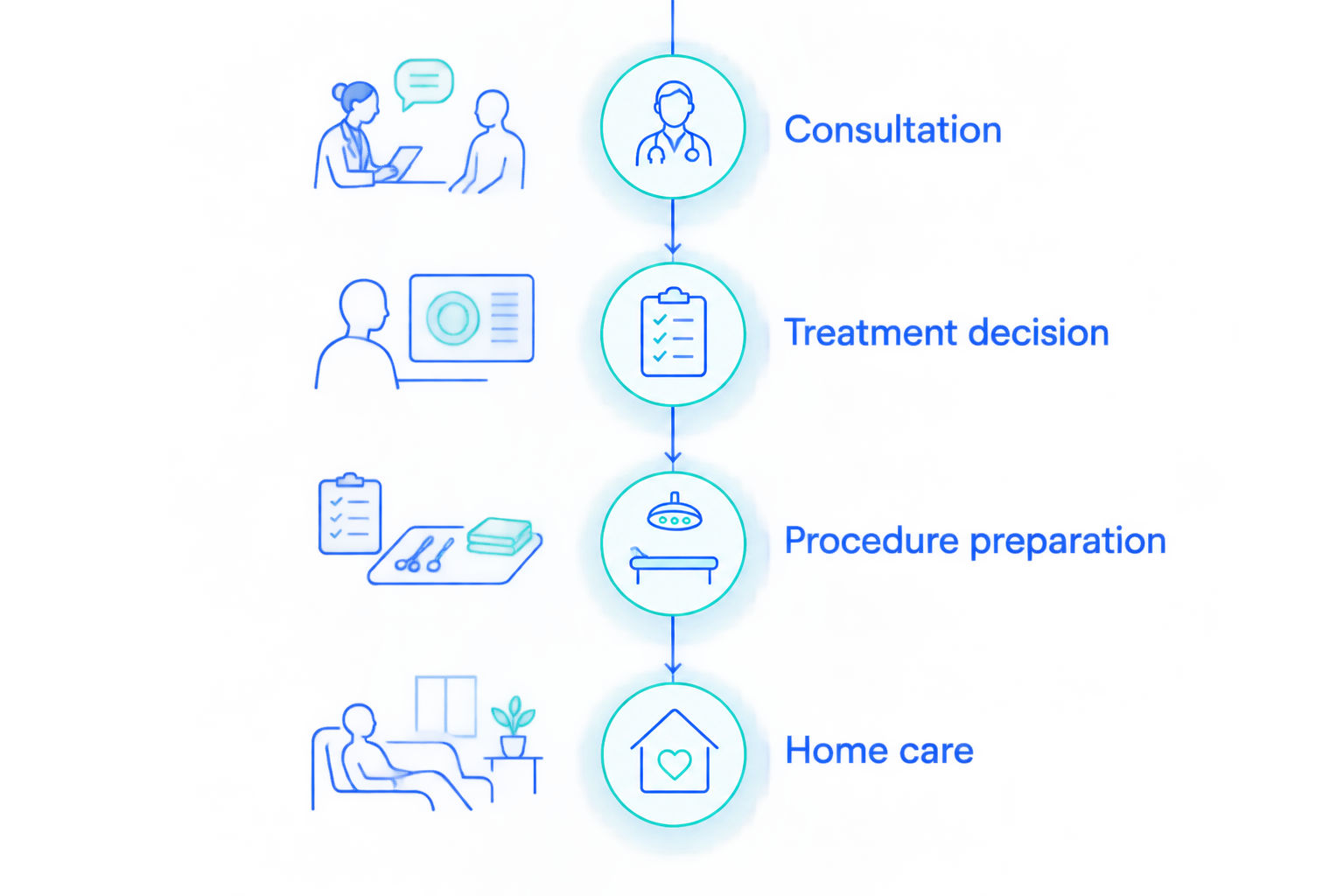
Your extraction and home-care handoff
Review the plan before leaving
- Report any health changes. Tell the team about new illness, medicines, or changes in symptoms. If you did not follow fasting instructions, say so before treatment.
- Review consent and questions. Confirm which teeth are being treated and discuss any remaining concerns. Ask the clinician to explain unfamiliar terms in everyday language.
- Include your support person. If sedation is used, have the responsible adult receive the discharge instructions. You should not rely on memory while recovering from sedation.
- Check the written handoff. Confirm bleeding care, food and drink guidance, oral hygiene, medication directions, activity limits, and follow-up arrangements.
Expected result: You and your support person know what to do at home and which symptoms require a call.
Protect the healing area
- Follow the gauze instructions. Apply pressure as directed by your treating team. Light oozing or pink saliva differs from persistent active bleeding; call if bleeding does not settle with the instructed measures.
- Protect the blood clot. Avoid vigorous rinsing and spitting during the first 24 hours unless your clinician directs otherwise. Avoid straws, smoking, and vaping during the period specified by your treating team.
- Choose gentle food and drinks. Follow the team's guidance about when to eat, and avoid hot food or drinks while your mouth is numb. Do not chew your lip, cheek, or tongue.
- Follow the cleaning plan. Keep other teeth clean while avoiding disturbance of the extraction site. Begin gentle rinsing only when instructed; do not poke the socket or try to remove material from it.
- Track the direction of recovery. Swelling commonly peaks around 48–72 hours after oral surgery. Report symptoms that worsen beyond the expected course rather than judging recovery only by the calendar.
Expected result: Your recovery notes show medication timing, fluid intake, and symptom changes clearly enough to discuss with the treating team.
Feeling better is not the same as complete healing. Ask when you can return to exercise, physical work, and your usual foods. For more context, read how long recovery from wisdom teeth removal takes.
If the consultation leads to monitoring instead
A 2026 wisdom teeth plan can end with observation rather than surgery. If your dentist recommends monitoring, replace the recovery checklist with a follow-up plan.
- Record what is being monitored. Ask which teeth are being watched and what finding would change the recommendation.
- Confirm the review schedule. Follow the dentist's recommended examination and imaging schedule rather than choosing one yourself.
- Keep the area clean. Ask how to reach the back teeth comfortably with your usual oral-care tools.
- Know when to call sooner. Report new pain, swelling, drainage, or difficulty opening your mouth rather than waiting for the next routine visit.
Expected result: Monitoring becomes an active care plan, not an indefinite decision to ignore the teeth. The benefit is avoiding treatment that is not currently recommended; the responsibility is keeping follow-up appointments.
Troubleshooting: when the plan needs attention
You ate or drank outside the fasting instructions
Contact the treating team before the procedure and describe exactly what you consumed and when. Do not hide it or decide for yourself that a small amount does not matter; the anesthesia team must assess safety.
Bleeding continues despite the instructed pressure
Follow the written gauze and pressure directions, then contact the treating clinician if active bleeding persists. Heavy bleeding, faintness, or difficulty breathing requires urgent medical attention.
Pain becomes worse after initially improving
Call the treating clinician. Increasing pain several days after extraction can occur with dry socket or another complication; symptoms alone do not establish the cause. Do not place aspirin, oils, or other home remedies into the socket.
You cannot keep fluids or medication down
Contact the treating team promptly for advice. Do not repeat a vomited medication dose without guidance, because the amount already absorbed is uncertain.
Swelling affects swallowing or breathing
Call 911 for difficulty breathing or rapidly worsening swelling that affects swallowing. Do not wait for a routine dental appointment. Fever, feeling increasingly unwell, or worsening swelling also needs prompt clinical assessment.
Customize your workflow
Adapt your 2026 recovery plan to your actual day. A student returning to class, a parent caring for young children, and someone doing physical work need different arrangements even when their procedures sound similar.
Tell the clinician what your responsibilities involve rather than asking only when you can return to normal. Mention lifting, driving, public speaking, exercise, or working without easy access to water and breaks.
Mysmiletheory provides general and family dental care for local patients. If you would like help starting the conversation, ask about an evaluation and explain your symptoms, concerns, and previous dental experiences. Confirm any wisdom teeth treatment or referral arrangements directly with the team.
Start with a dental conversation
Ask about an evaluation and discuss your wisdom teeth concerns with the team.
FAQ
What should I bring to a wisdom teeth consultation?
Bring your medication list, allergies, health history, and a description of your symptoms. Ask ahead whether the office needs previous dental images or a referral.
Does a wisdom teeth consultation mean I need removal?
No, a consultation does not automatically mean removal. Your dentist evaluates the teeth and surrounding tissues before recommending monitoring, extraction, or a surgical assessment.
Can I have my wisdom teeth removed on consultation day?
Same-day removal requires confirmation from the treating team. Evaluation, preparation, medical history, anesthesia planning, and scheduling all affect whether it is appropriate.
Do I need someone to drive me home?
Arrange a responsible adult when your sedation instructions require an escort. Confirm transportation and supervision requirements before the procedure rather than assuming you can drive yourself.
What should I eat on wisdom teeth recovery day?
Choose soft foods that require little chewing once your treating team says you can eat. Follow their instructions about temperature, numbness, and protecting the extraction sites.
When is swelling worst after wisdom teeth removal?
Swelling commonly peaks around 48–72 hours after oral surgery. Contact your treating clinician if swelling worsens beyond the expected course or comes with fever or feeling increasingly unwell.
When should I call about pain after wisdom teeth removal?
Call if pain becomes worse after initially improving or is not controlled by the prescribed plan. The clinician needs to assess the cause rather than having you treat the socket yourself.
One last thing
Before leaving, ask your support person to explain the home-care plan back to the team. This simple check catches misunderstandings about medicines, bleeding, and contact instructions while someone is still there to clarify them. The most useful recovery checklist is one you both understand.