
Best overall for minor chips or small gaps: dental bonding. Best for brighter natural teeth: professional whitening. Best for a slightly uneven edge: enamel contouring. A one visit smile makeover in 2026 works best when you match a focused treatment to a specific concern—not when you rush several changes into one appointment.
- A one visit smile makeover can address minor concerns, but an examination determines what is appropriate.
- Dental bonding is best for small chips, selected gaps, and modest shape changes.
- Professional whitening brightens natural teeth; it does not change the shade of crowns or veneers.
- Mysmiletheory offers cosmetic dentistry for Spring patients seeking a personal dentist.
Why this matters
You do not necessarily need a full set of veneers to feel better about your smile. A small repair, a change in tooth shade, or smoothing an uneven edge can address the detail that bothers you without changing everything else.
The right treatment starts with healthy teeth and gums. Pain, untreated decay, bleeding gums, or a suspected crack deserve attention before cosmetic changes. A treatment that looks simple in a photograph still needs an examination.
Mysmiletheory offers general, cosmetic, restorative, and family dentistry in Spring, Texas. For North Houston patients, the starting point is a conversation about what you want to change and what you want to keep.
What makes the best one-visit cosmetic treatment?
Use these criteria when comparing your options in 2026:
- Fit for your concern: Whitening changes color; bonding changes selected areas of shape. They solve different problems.
- Tooth preservation: Favor an appropriate treatment that keeps healthy tooth structure whenever possible.
- Natural appearance: Consider tooth proportions, surface texture, and how the result fits neighboring teeth—not shade alone.
- Bite compatibility: A cosmetic change should not interfere with how your teeth meet or move.
- Realistic timing: Finishing treatment in one visit is different from having an examination and treatment on the same day.
- Manageable upkeep: Understand sensitivity, staining, repair needs, and home care before deciding.
One-visit smile options at a glance
These are general treatment options, not a statement that every procedure is offered or suitable at every clinic. Confirm the proposed treatment and appointment plan with your dentist.
| Treatment | Best for | Standout feature | Key limitation |
|---|---|---|---|
| Dental bonding | Small chips and selected small gaps | Adds tooth-colored material to reshape a limited area | Can chip or stain; suitability depends on the bite |
| Professional whitening | Discoloration in natural teeth | Changes tooth shade without reshaping teeth | Does not lighten existing crowns, veneers, or fillings |
| Enamel contouring | A slightly uneven or rough edge | Smooths a small amount of enamel | Removes enamel permanently and cannot correct major unevenness |
| Professional cleaning and polishing | Removable surface stain and buildup | Removes deposits rather than bleaching teeth | Does not change the underlying tooth color |
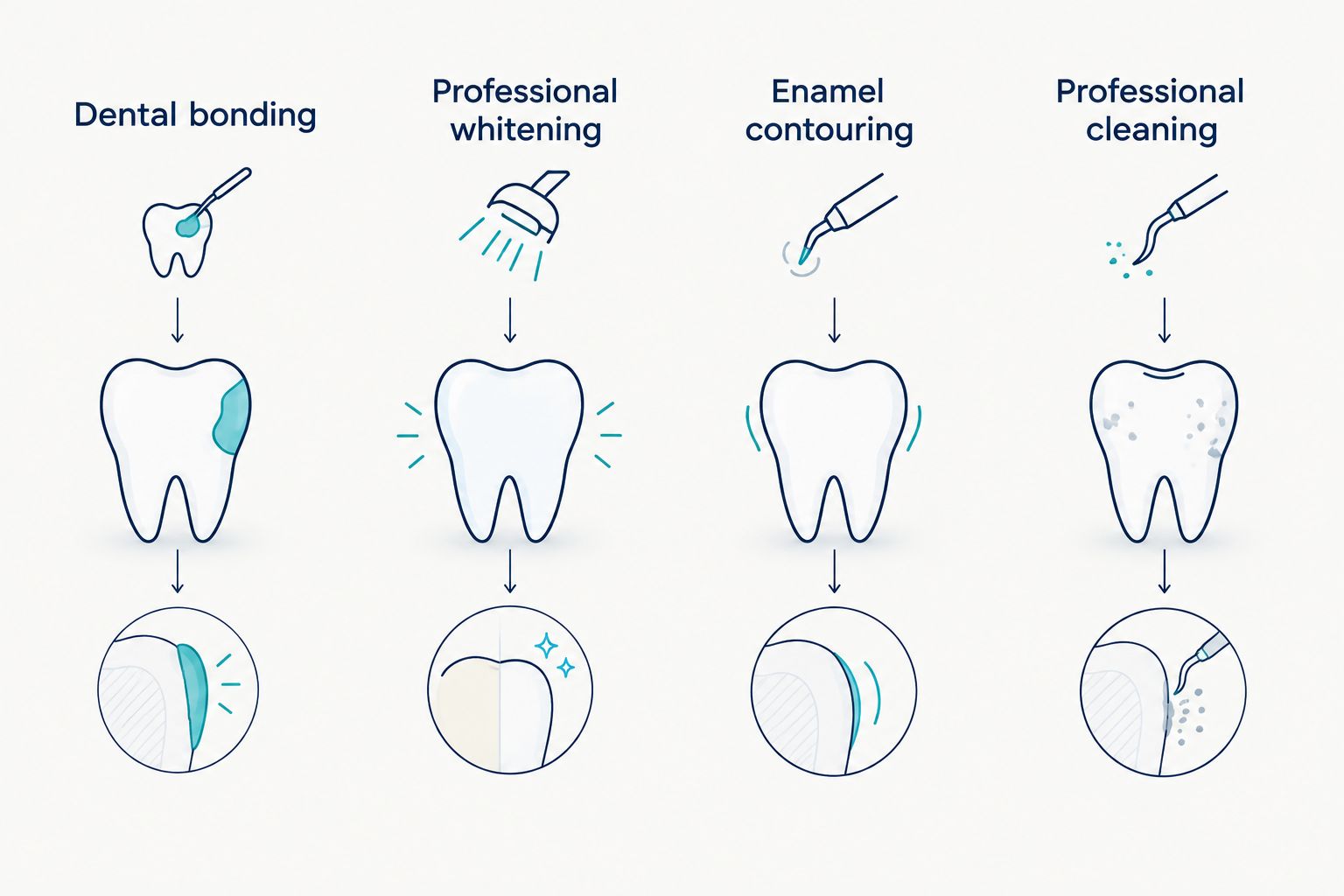
The distinction is straightforward: bonding adds, whitening lightens, contouring removes, and cleaning clears deposits. The best choice depends on which of those actions your smile actually needs.
1. Dental bonding: best for small chips and selected gaps
Dental bonding uses tooth-colored resin to repair or reshape a limited area. Your dentist shapes the material, hardens it with a curing light, and finishes the surface so it fits the tooth.
For a small chip or a gap that is suitable for an additive repair, bonding can often be completed in one treatment visit. It does not move teeth, and a visible chip still needs checking for deeper damage.
Dental bonding pros:
- Addresses selected chips, small gaps, and modest shape differences.
- Often preserves more tooth structure than treatments requiring broader preparation.
- Allows the dentist to shape the repair directly on the tooth.
Dental bonding cons:
- Resin can stain or chip and sometimes needs polishing or repair.
- Closing a gap by adding width can make teeth look out of proportion.
- Grinding or an unfavorable bite can put stress on the repair.
Best for: A healthy tooth with a small, localized appearance concern—not widespread damage or a bite problem.
Ask to discuss the intended width and edge shape before treatment begins. A repair should look like part of your smile, rather than an oversized addition.
Verdict: Choose bonding for a focused repair after your dentist confirms the tooth and bite are suitable.
2. Professional whitening: best for brighter natural teeth
Professional whitening uses bleaching agents to lighten natural tooth structure. In-office treatment can produce a visible change during a treatment appointment, although the amount of change differs by tooth and type of discoloration.
Whitening does not straighten teeth or repair chips. It also does not change the shade of existing fillings, crowns, or veneers, which matters if those restorations show when you smile.
Professional whitening pros:
- Addresses tooth color without cutting or reshaping teeth.
- Can brighten several visible natural teeth together.
- Lets you discuss sensitivity and restoration shade differences with a dentist.
Professional whitening cons:
- Temporary tooth sensitivity or gum irritation can occur.
- Some discoloration responds less predictably than others.
- Existing restorations can look darker beside newly whitened teeth.
Best for: Generally healthy natural teeth when color—not shape or alignment—is your main concern.
If you want whitening and a visible bonded repair, discuss the sequence first. Your dentist needs to plan when to choose the resin shade and when bonding is appropriate after whitening; combining everything immediately is not always the right approach.
Verdict: Choose whitening for a color-focused change, with a plan for sensitivity and visible restorations.
3. Enamel contouring: best for a slightly uneven edge
Enamel contouring, sometimes called tooth reshaping, removes a small amount of enamel to smooth a minor irregularity. It is a limited adjustment—not a substitute for straightening teeth or rebuilding worn teeth.
Your dentist must check the available enamel and how your teeth meet before recommending it. Removed enamel does not grow back, so the smallest appropriate change matters more than speed.
Enamel contouring pros:
- Can smooth selected rough or slightly uneven edges.
- Does not add a restoration that needs shade matching.
- Can address a small shape concern during a treatment appointment.
Enamel contouring cons:
- Permanently removes tooth structure.
- Is unsuitable when enamel is insufficient or the proposed change is too large.
- Does not correct the cause of wear from grinding or bite problems.
Best for: A minor edge irregularity in a tooth with enough healthy enamel.
If a tooth looks short because it is worn down, removing more enamel is not the answer. The dentist should first assess why the wear happened and whether an additive or protective treatment makes more sense.
Verdict: Choose contouring only for a small, carefully assessed adjustment; skip it as a shortcut for major reshaping.
4. Professional cleaning: best for removable surface stain
A professional cleaning removes plaque and hardened deposits, with polishing used where appropriate to address surface stain. It supports oral health first; it is not the same as bleaching.
If deposits and removable stain are affecting your smile, cleaning can make teeth look fresher without a separate cosmetic procedure. It cannot lighten the natural shade beneath those deposits.
Professional cleaning pros:
- Removes buildup that brushing alone cannot remove.
- Can improve the appearance of removable surface stain.
- Helps establish a healthier starting point for cosmetic planning.
Professional cleaning cons:
- Does not repair chips, close gaps, or change tooth shape.
- Does not bleach internal discoloration.
- Gum disease can require care beyond a routine cleaning appointment.
Best for: Teeth that look dull because of removable surface stain or buildup, especially when routine care is due.
A dentist or hygienist can distinguish surface deposits from discoloration within the tooth. That distinction helps you avoid choosing whitening for something cleaning addresses—or expecting cleaning to deliver a bleached shade.
Verdict: Choose cleaning for removable deposits and surface stain; consider whitening separately if the underlying shade still bothers you.
How these options are ranked
This 2026 guide ranks treatments by the concern they address, preservation of healthy tooth structure, and suitability for completion during a treatment visit. Bonding leads for small shape repairs; whitening leads for color changes.
There is no single winner for every smile. The order does not represent clinical testing, a guarantee of results, or a substitute for an individual examination.
What can prevent a one-visit smile makeover?
A one-visit goal is useful, but your dentist should not force treatment into that schedule. The examination can identify a reason to change the plan:
- Tooth decay: A tooth needs appropriate care before a cosmetic covering or repair.
- Gum inflammation: Swollen or bleeding gums need assessment rather than concealment.
- A possible crack: Pain when biting or a damaged edge can signal more than a cosmetic problem.
- Heavy wear: Grinding or bite issues need attention to help protect a repair.
- Multiple planned changes: Whitening and shade-matched restorations sometimes require separate stages.
Porcelain veneers generally involve planning, tooth preparation, and fabrication rather than an automatic same-day transformation. Orthodontic treatment moves teeth over time. Neither should be presented as an instant alternative simply because an event is approaching.
Plan your appointment around the change you want
For a 2026 appointment, begin with a specific request: “I want this chipped edge repaired” is more useful than “I need a whole new smile.” Explain what bothers you, when you noticed it, and whether you have pain or sensitivity.
Bring photographs if they help explain your preferences, but use them as a conversation starter rather than a blueprint. Tooth shape, existing restorations, and your bite affect what is appropriate for you.
Before agreeing to treatment, ask:
- What will this treatment change, and what will stay the same?
- Does my tooth need health-related care first?
- Will you add material, remove enamel, or change tooth color?
- Is completion in one treatment visit realistic for my situation?
- What maintenance or future repair should I expect?
You can explore the dental services at Mysmiletheory and ask which options fit your concerns. If appointments make you nervous, mention that when requesting a visit so you can discuss comfort needs before treatment.
Start with your smile goals
Ask about your concern and whether treatment in one visit is appropriate for you.
Which treatment should you choose?
Choose bonding for a small chip or suitable gap, whitening for natural tooth discoloration, and contouring only for a minor edge adjustment. If buildup is the main issue, start with an examination and appropriate cleaning instead of assuming you need cosmetic treatment.
The best one visit smile makeover in 2026 is a focused change that respects your teeth, your bite, and your preferences. A thoughtful result should still feel like your smile.
FAQ
What is the best one visit smile makeover?
The best one visit smile makeover depends on the concern: bonding suits selected small chips or gaps, while whitening suits discoloration in natural teeth. An examination determines whether treatment is appropriate and can be completed during one treatment visit.
Can a dentist fix a chipped front tooth in one visit?
A small front-tooth chip can often be repaired with dental bonding in one treatment visit. The dentist first checks for decay, deeper damage, and bite forces that could affect the repair.
Is bonding better than whitening for a smile upgrade?
Bonding is better for selected shape problems, while whitening is better for changing natural tooth color. Whitening will not rebuild a chipped edge, and bonding is not a substitute for whitening several teeth.
Can I whiten my teeth and get bonding on the same day?
Do not assume whitening and bonding should happen on the same day. Whitening affects shade selection, and the dentist also needs to plan an appropriate interval before bonding.
Can veneers give me a new smile in one appointment?
Porcelain veneers generally require planning and fabrication rather than a guaranteed one-appointment result. Direct composite veneers can sometimes be completed during one treatment visit, but suitability and the number of teeth involved affect the plan.
Will a one-visit cosmetic treatment hurt?
Comfort depends on the procedure, tooth condition, and your sensitivity. Whitening can cause temporary sensitivity, and your dentist should explain what to expect and discuss any comfort needs before treatment.
Can Mysmiletheory help me choose a cosmetic dental treatment?
Mysmiletheory offers cosmetic dentistry in Spring, Texas, for local patients seeking a personal dentist. Request an appointment to discuss your goals and confirm which treatment options are appropriate for your teeth.
One last thing
Whiter does not automatically mean more natural-looking. A small repair that matches neighboring teeth can be a better fit than changing the shade of your entire smile.
Protect the result with everyday care: brush for 2 minutes, 2 times a day using fluoride toothpaste, and clean between your teeth daily. Ask your dentist whether clenching, grinding, or chewing habits need attention before they damage a cosmetic repair.


