
Best overall for small shape flaws: dental bonding. Best for a brighter smile: teeth whitening. Best for combined color and shape changes: porcelain veneers. This 2026 guide compares 6 cosmetic dental options so you can choose a natural-looking change that fits your teeth—not someone else’s smile.
- The best cosmetic dentistry for natural smile goals depends on whether you need color, shape, or alignment changes.
- Dental bonding suits small chips; teeth whitening suits discoloration without changing tooth shape.
- Porcelain veneers address combined appearance concerns, but usually require permanent enamel changes.
- Mysmiletheory offers cosmetic dentistry for local patients seeking a personal dentist in Spring, Texas.
Why this matters
A natural-looking smile is not simply a whiter smile. Tooth proportions, position, surface texture, and how your teeth meet all influence the result. Changing the wrong feature can leave the concern you actually wanted to address untouched.
Mysmiletheory is a cosmetic dentistry option for Spring, Texas patients who want a personal dentist. If you live in North Houston, Mysmiletheory offers general, cosmetic, restorative, and family dental care. Start with a conversation about what you want to keep as well as what you want to change.
The recommendations below compare treatments, not individual treatment plans. Your dentist needs to check your teeth and gums before recommending a cosmetic procedure, especially when pain, decay, or a damaged tooth is part of the picture.
What makes the best cosmetic dentistry for a natural smile?
Use these criteria to compare your 2026 options before choosing a treatment:
- The right target: Whitening changes color, bonding changes small areas of shape, and orthodontic treatment changes tooth position.
- Tooth preservation: Favor an appropriate treatment that preserves healthy tooth structure rather than changing more than necessary.
- Natural proportions: Length, width, and edges should fit your existing smile—not follow a single template.
- Color consistency: Consider neighboring teeth and existing dental work when choosing a shade.
- A comfortable bite: Attractive teeth still need to meet and function comfortably.
- Ongoing care: Understand cleaning, maintenance, and the possibility of future repairs before treatment begins.
You do not need every tooth to look identical. Slight differences are part of natural smiles; the useful question is whether a feature bothers you or affects your dental health.
Cosmetic dental options at a glance
The order below starts with focused appearance changes and ends with restoration for a damaged tooth. Choose by the problem each option solves, not by its position in the list.
| Option | Best for | Standout feature | Key limitation |
|---|---|---|---|
| Dental bonding | Small chips and localized shape flaws | Adds tooth-colored material where needed | Can stain or chip over time |
| Teeth whitening | Discoloration in natural teeth | Changes shade without reshaping teeth | Does not whiten existing restorations |
| Porcelain veneers | Combined color and shape concerns | Covers the visible front surface | Usually involves irreversible enamel removal |
| Orthodontic treatment | Crooked teeth and position-related gaps | Moves your own teeth | Requires ongoing participation and retention |
| Enamel contouring | Tiny uneven edges | Smooths a limited amount of enamel | Cannot add length or repair substantial damage |
| Dental crowns | A damaged tooth needing coverage | Restores shape while covering the tooth | Removes more tooth structure than a small repair |
1. Dental bonding: best for small chips and shape flaws
Dental bonding uses tooth-colored resin to rebuild a chipped edge or adjust a small area of tooth shape. It is a focused option when one detail bothers you but you otherwise like your smile.
Bonding works best when the proposed change suits the tooth and your bite. Adding material to close a space, for example, also changes tooth width, so the dentist needs to consider proportions rather than simply filling the gap.
Dental bonding pros:
- Adds material to a specific area rather than covering the entire tooth.
- Can often preserve more healthy enamel than a veneer or crown.
- Allows the dentist to shape the repair to neighboring teeth.
Dental bonding cons:
- The resin can stain and lose its original finish.
- Chipped or worn bonding can need repair or replacement.
Best for: A small chip, a localized shape concern, or a suitable small gap in an otherwise healthy smile.
Verdict: Choose dental bonding for a focused correction—not as an automatic replacement for alignment treatment.
2. Teeth whitening: best for discoloration without shape changes
Teeth whitening lightens the shade of natural teeth. It makes sense when you like your tooth shape and position but want to address discoloration.
A dental assessment helps distinguish discoloration that responds to whitening from a concern that needs another approach. Crowns, veneers, and tooth-colored fillings do not whiten along with natural teeth, so existing dental work matters when planning a consistent result.
Teeth whitening pros:
- Addresses color without removing enamel to reshape teeth.
- Leaves your existing tooth proportions unchanged.
- Can be considered before choosing the shade of new cosmetic restorations.
Teeth whitening cons:
- Can cause temporary tooth sensitivity or gum irritation.
- Does not correct chips, gaps, alignment, or restoration color.
Best for: Discolored natural teeth when shape and position are already satisfactory.
For a natural result, discuss a shade that looks comfortable beside your other teeth rather than treating the brightest shade as the goal.
Verdict: Choose teeth whitening when color is the concern; skip it as a solution for uneven tooth shape.
3. Porcelain veneers: best for combined color and shape concerns
Porcelain veneers are thin restorations attached to the front surfaces of teeth. They can address several visible concerns together, including tooth color, shape, and selected chips or spaces.
Veneers deserve a careful conversation because conventional preparation usually removes some enamel. Natural-looking planning should consider tooth length, width, shade, and surface detail—not just whether the teeth look straight in a photograph.
Porcelain veneers pros:
- Address multiple visible concerns in the same treated tooth.
- Allow deliberate planning of shape and shade.
- Can blend with untreated neighboring teeth when appropriately designed.
Porcelain veneers cons:
- Enamel removal is irreversible, creating an ongoing restoration commitment.
- Veneers can chip or require replacement; they do not prevent decay.
Best for: Healthy teeth with combined appearance concerns that simpler treatments do not adequately address.
At Mysmiletheory, you can discuss cosmetic dentistry with a local dentist; ask whether your goal needs veneers or a smaller change. The answer should come from your examination, not a preferred treatment name.
Verdict: Consider porcelain veneers for combined changes, after discussing less invasive alternatives.
4. Orthodontic treatment: best for crooked teeth and alignment gaps
Orthodontic treatment moves teeth rather than covering their position with restorative material. Braces or clear aligners address alignment concerns, with the choice depending on your teeth, bite, and ability to follow the treatment plan.
This distinction matters when a smile looks uneven because teeth are rotated or crowded. Making those teeth appear straight with veneers is a different approach from changing their actual position.
Orthodontic treatment pros:
- Changes the position of your own teeth.
- Addresses suitable spacing and crowding concerns.
- Can address bite relationships as part of treatment planning.
Orthodontic treatment cons:
- Requires appointments, home care, and participation throughout treatment.
- Requires retention afterward to help maintain tooth positions.
Best for: Crooked teeth, crowding, or gaps primarily caused by tooth position.
Alignment does not automatically change tooth color or repair a chipped edge. After movement is complete, reassess whether any cosmetic concern remains before adding another procedure.
Verdict: Choose an orthodontic assessment when position—not just surface appearance—is the main concern.
5. Enamel contouring: best for tiny uneven edges
Enamel contouring gently removes a small amount of enamel to smooth a minor irregularity. It is a narrow-purpose treatment, not a substitute for repairing a fracture or rebuilding a short tooth.
The difference between removing and adding matters here. If your goal is a longer tooth, contouring cannot provide it; if one edge is slightly uneven, a dentist can assess whether smoothing is appropriate.
Enamel contouring pros:
- Targets a small edge irregularity directly.
- Does not add a separate restorative material.
- Preserves the tooth’s existing color.
Enamel contouring cons:
- Removed enamel does not grow back.
- Unsuitable for substantial damage or teeth that need added length.
Best for: A minor edge discrepancy in a tooth with enough healthy enamel.
Ask what will be removed and how that affects the tooth’s appearance and bite. A seemingly small change still deserves a clear explanation.
Verdict: Consider enamel contouring only for a small, appropriate adjustment—not a broad smile makeover.
6. Dental crowns: best for a damaged tooth needing coverage
A dental crown covers a tooth to restore its shape and function when more limited treatment is insufficient. A tooth-colored crown can also blend into a smile, but the reason to choose one should include the tooth’s restorative needs.
Crowns are not the default choice for healthy teeth that simply need a color change. Preparing a tooth for a crown removes tooth structure, making the decision different from whitening or adding a small bonded repair.
Dental crown pros:
- Restores the shape of a substantially damaged tooth.
- Provides coverage when a smaller restoration is unsuitable.
- Can be designed to match nearby teeth.
Dental crown cons:
- Requires preparation of the tooth.
- Needs ongoing care and can require replacement.
Best for: A damaged or weakened tooth that needs coverage as well as an appearance improvement.
Pain or a crack needs assessment before cosmetic planning. A pleasing result starts with understanding whether the tooth needs repair, protection, or another form of care.
Verdict: Choose a dental crown for a supported restorative reason; skip full coverage solely for routine whitening.
How these options are ranked
This 2026 guide ranks treatments by their fit for distinct concerns, the amount of tooth change involved, and their limitations. It does not rank one procedure as universally better than another.
Bonding leads for small shape flaws because it adds material locally. Whitening leads for color alone, while orthodontic treatment leads when tooth position is the underlying issue. Crowns belong in the conversation when a tooth needs restoration—not simply because you want a brighter smile.
Which cosmetic dental option should you choose?
Start with the smallest appropriate change that addresses your actual concern. If you like your tooth shape, discuss whitening. If a small chip bothers you, ask about bonding; if teeth are crowded, ask whether alignment treatment should come first.
For your 2026 appointment, separate 2 goals: appearance and tooth health. You can want a more balanced smile while also asking which approach preserves healthy teeth. Neither goal needs to disappear from the conversation.
Bring 3 questions to your consultation:
- What bothers me? Point to the specific color, edge, gap, or position you want to discuss.
- What can stay? Explain which parts of your smile already feel like you.
- What changes permanently? Ask about enamel removal, future maintenance, and alternatives.
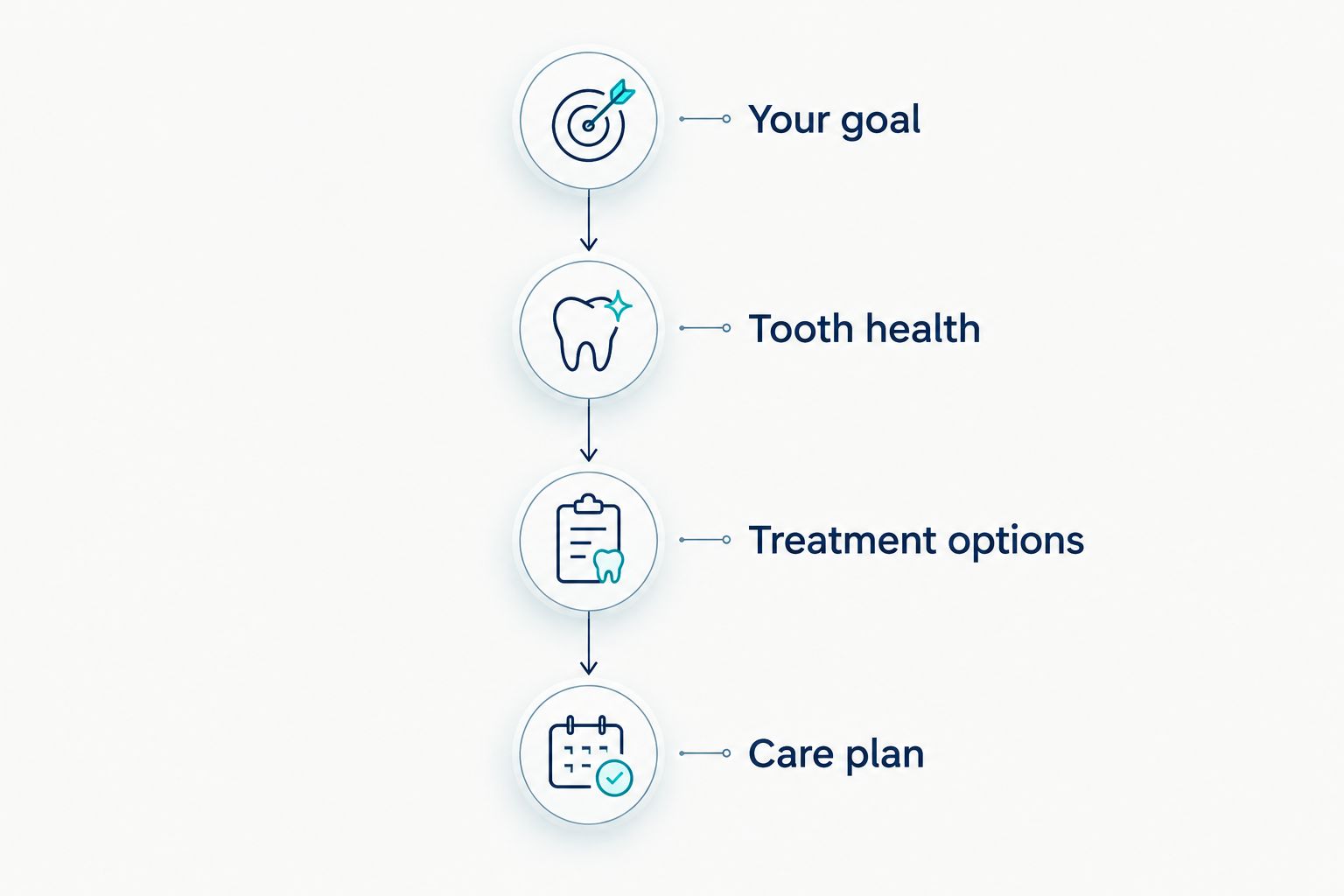
A useful planning sequence is Your goal, Tooth health, Treatment options, Care plan. Establish the concern first, check the teeth and gums, compare suitable options, and then agree on the next step.
You can bring these questions to Mysmiletheory and describe the change you want in everyday language. If dental visits make you uneasy, say that early so comfort is part of the conversation, not an afterthought.
Explore care for your smile
Learn about the dental clinic in Spring, Texas before arranging your next appointment.
FAQ
What's the best cosmetic dentistry for a natural smile?
The best option depends on the concern: whitening addresses color, bonding addresses small shape flaws, and orthodontic treatment addresses position. Porcelain veneers suit selected combined appearance concerns, but the choice requires a dental examination.
Is dental bonding better than veneers for a small chip?
Dental bonding is often the more conservative option for a small chip. Veneers cover a broader surface and usually involve enamel removal, so they need a different level of consideration.
Can veneers look natural instead of overly white?
Veneers can look natural when their shape, shade, and surface details fit the surrounding smile. Discuss the features you want to preserve rather than choosing by whiteness alone.
Will teeth whitening change the color of my crown?
Teeth whitening does not change the color of an existing crown. Your dentist should consider visible crowns, veneers, and fillings before planning a consistent shade.
Should I straighten my teeth before getting veneers?
An alignment assessment should come first when crowding or tooth position is the main concern. Orthodontic treatment moves teeth, while veneers change their visible surfaces; those approaches solve different problems.
Can I get cosmetic dentistry if my teeth are sensitive?
Sensitive teeth need an assessment before cosmetic treatment. Tell your dentist when sensitivity occurs so the cause and the proposed treatment can be considered together.
Do I need to change every front tooth for a natural smile?
No, a natural-looking improvement does not require treating every front tooth. A focused change can suit a localized concern, provided it fits neighboring teeth and your bite.
One last thing
Before your 2026 consultation, write down what you do not want changed. Perhaps you like the shape of your front teeth or a small feature that makes your smile recognizable. That information helps define the goal just as clearly as a list of concerns.
A natural-looking result is not about erasing every difference. It is about choosing an appropriate change while keeping the parts of your smile that feel like you.


