
Dental bonding is worth it in 2026 when you want to repair a small chip, soften an uneven tooth edge, or close a minor gap without a more extensive change to healthy teeth. The trade-off is maintenance: bonding can stain, chip, and need repair, so it is not the right answer for every cosmetic concern or damaged tooth.
- Is dental bonding worth it? Yes, for minor cosmetic changes when your teeth and bite are suitable.
- Composite bonding preserves tooth structure but needs care and occasional repair.
- Veneers, whitening, and orthodontic treatment solve different problems; choose treatment around the cause.
- Mysmiletheory offers cosmetic and general dental care for patients seeking a personal dentist in Spring, Texas.
Why this matters
A small tooth concern can make you hesitate in photographs or cover your mouth when you laugh. Wanting to change it does not mean you need to change your whole smile.
The best cosmetic treatment is the smallest appropriate treatment that addresses what bothers you. Bonding deserves consideration because it adds tooth-colored material where needed, but a healthy foundation matters more than the appearance of the repair.
Mysmiletheory is a fit for Spring, Texas patients seeking a personal dentist for cosmetic and general dental care. An appointment gives you space to explain your goals and understand whether bonding fits your teeth, rather than choosing a procedure before an examination.
Is dental bonding worth it in 2026?
Yes—dental bonding is worth considering for a modest change to an otherwise healthy tooth. A dentist shapes tooth-colored composite material onto the tooth, hardens it with a curing light, and polishes the surface. The goal is a repair that belongs in your smile, not a tooth that draws attention.
Bonding is less suitable when the real problem is tooth position, significant structural damage, active decay, or an unhealthy bite. Covering a concern does not necessarily treat its cause.
Use this comparison to understand what each treatment changes. These are discussion points for an examination, not interchangeable ways to get the same result.
| Treatment | Best for | Main advantage | Main limitation |
|---|---|---|---|
| Dental bonding | Small chips, minor shape changes, and selected small gaps | Adds material with limited alteration of healthy tooth structure | Can stain, chip, or need refinishing and repair |
| Porcelain veneers | Broader changes to the visible shape and color of suitable teeth | Offers a stain-resistant surface and planned cosmetic changes | Usually requires irreversible enamel removal |
| Orthodontic treatment | Moving teeth and addressing alignment or bite concerns | Changes tooth position rather than disguising it | Requires a treatment course and retention afterward |
| Teeth whitening | Lightening the color of natural teeth | Changes color without adding a covering | Does not repair chips, close gaps, or lighten existing bonding |
A useful question for your dentist is: What would bonding improve, and what would it leave unchanged? That separates a realistic cosmetic goal from a result the material cannot deliver.
Bonding for a small chip or uneven edge
Best for: a limited change in tooth shape when the remaining tooth is healthy. Bonding can rebuild a small missing corner or smooth the appearance of an uneven edge. Your dentist can shape and polish the material to work with neighboring teeth.
The limitation is the position of the repair. A thin bonded edge that takes repeated biting force needs different consideration from material placed on a less heavily loaded surface.
Do not assume every chip is cosmetic. If the tooth hurts, feels sensitive, or has a visible crack, have it assessed before choosing a cosmetic repair. A deeper problem needs treatment that protects the tooth, not simply hides the damage.
Bonding for a small gap
Best for: selected small spaces where adding width will still leave the teeth looking balanced. Bonding closes a gap by changing tooth shape; it does not move the teeth or correct their roots' positions.
That distinction matters. Adding material to teeth that are already broad can create an appearance you do not want, even if the space disappears.
Ask your dentist to explain the likely proportions and how you will clean between the treated teeth. Our guide to solutions for closing gaps between teeth explains the wider treatment choices to discuss when a gap is your main concern.
Bonding for a color concern
Best for: a localized cosmetic concern after your dentist identifies why the tooth looks different. Composite material can cover selected surface imperfections, but bonding is not the same as whitening your natural teeth.
If you want a lighter overall smile, discuss that goal before choosing the shade of a bonded repair. Whitening does not lighten composite material, so treatment order matters when both are being considered.
A tooth that becomes darker after an injury also deserves an examination. Choosing a matching shade is only part of the decision; your dentist first needs to understand the tooth's health.
Why dental bonding's value varies
For your 2026 treatment decision, focus on how the repair will function in your mouth—not just how it looks immediately afterward. These factors help determine whether bonding is a sensible long-term choice:
- Size of the change. A small addition and a large rebuild place different demands on the material. More missing tooth structure calls for a closer look at protective treatment options.
- Biting forces. Grinding, clenching, and the way your teeth meet affect stress on a bonded repair. Your dentist should assess these before recommending a shape change.
- Tooth and gum health. Decay, inflammation, and other underlying concerns need attention before cosmetic treatment. A good-looking surface cannot substitute for a healthy foundation.
- Color expectations. Composite can pick up stains and does not respond to whitening like natural enamel. A very bright or highly uniform result requires a careful discussion of limitations.
- Daily habits. Nail biting, chewing pens, and using teeth to open packaging put avoidable stress on bonding. Protecting the repair is part of the commitment.
- Willingness to maintain it. Polishing, repair, or replacement can become part of care over time. Bonding makes more sense when you accept that it is not a maintenance-free finish.
You do not need perfect habits to ask about treatment. You do need an honest conversation about the habits and expectations that could affect it.
How do you decide whether bonding fits your smile?
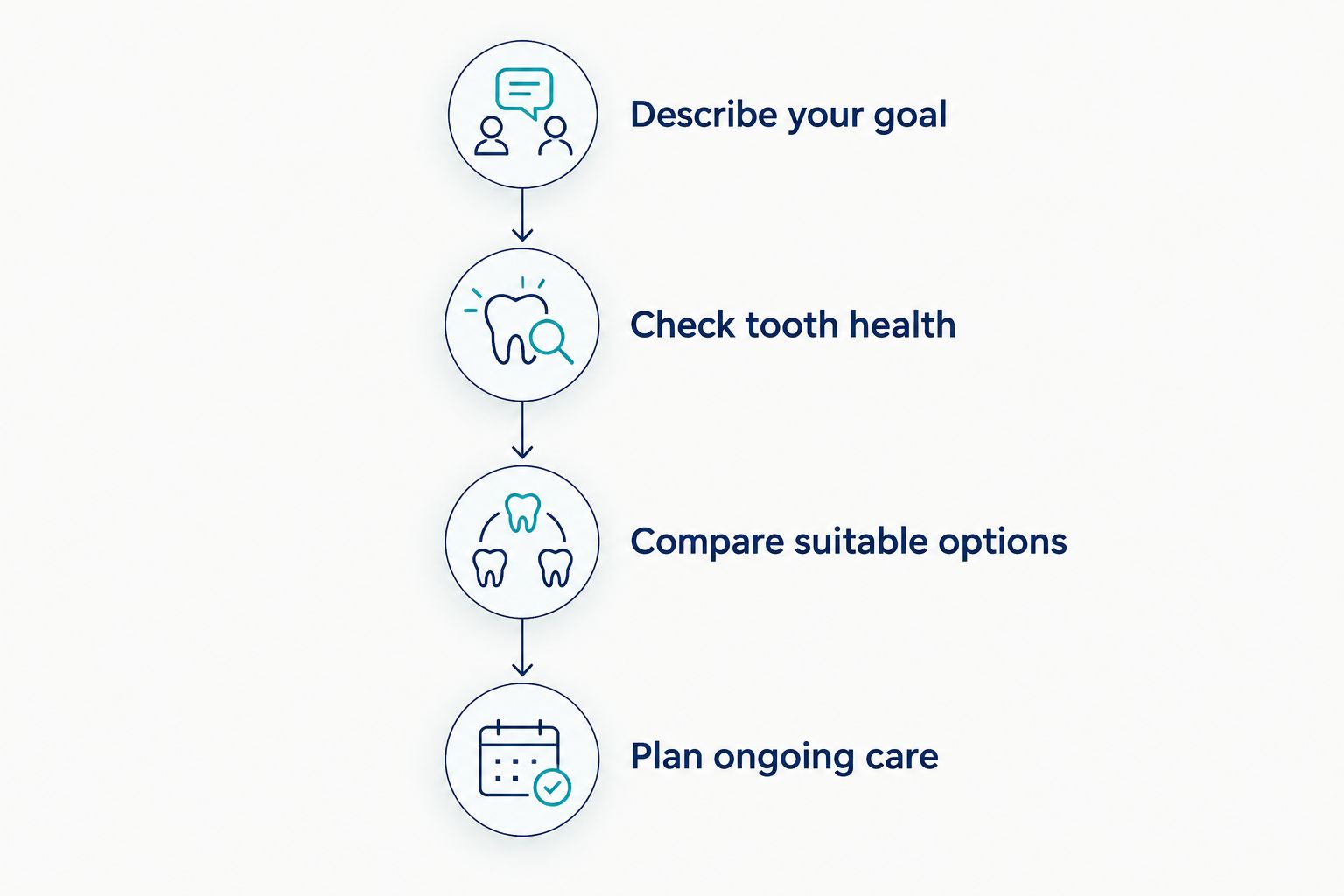
You can arrive at a consultation with a clear concern without arriving with a fixed treatment choice. For a 2026 cosmetic appointment, these steps keep the conversation focused on your goals and your tooth health.
- Describe your goal. Point out the exact edge, space, or color difference that bothers you. Explain whether you want a subtle adjustment or a wider change.
- Check tooth health. Ask your dentist to assess the tooth, gums, and bite. Mention sensitivity, past injuries, grinding, and previous dental work.
- Compare suitable options. Discuss what bonding changes and whether another treatment addresses the cause more directly. Ask what healthy tooth structure each option changes.
- Plan ongoing care. Learn how to clean the area, what habits to avoid, and what signs mean the repair needs attention. Agree on what a realistic result looks like before treatment.
If dental visits make you nervous, say so at the start. Ask your dentist to explain each step and agree on a signal you can use when you need a pause. Understanding the plan helps you make a decision without feeling rushed.
Mysmiletheory provides cosmetic, restorative, general, and family dentistry in Spring, Texas. You can bring a specific bonding question to an appointment while keeping the decision open until your teeth have been examined.
Talk through your smile goals
Ask whether bonding fits your tooth health, bite, and the change you want.
Is dental bonding better than veneers?
Dental bonding is often the more conservative choice for a small correction; veneers address a different scale of cosmetic change. Bonding commonly involves less alteration of healthy enamel, and composite can often be repaired. Its disadvantages include staining and wear.
Porcelain veneers resist staining better, but they usually involve irreversible tooth preparation. Neither treatment is automatically better: the right choice depends on the amount of change, the condition of your teeth, and the maintenance you accept.
Can bonding fix crooked teeth?
Bonding can change the appearance of a slightly uneven tooth, but it does not straighten teeth. It adds material rather than moving teeth into a different position. If crowding or the bite causes the concern, discuss orthodontic treatment before covering it cosmetically.
Is bonding worth it if you grind your teeth?
Grinding makes a bonding decision more complicated because repeated force can damage the repair. It does not automatically rule bonding out, but it belongs in the treatment discussion before any material is placed. Ask whether the bite needs attention and whether a protective appliance is appropriate.
What care does dental bonding need?
Care for bonded teeth as carefully as your natural teeth. Brush for 2 minutes, twice a day, using fluoride toothpaste, and clean between your teeth daily. Follow any additional instructions your dentist gives for the treated area.
Avoid biting hard objects or using your teeth as tools. A bonded tooth still needs protection from decay around the repair, and a smooth-looking surface does not remove the need for regular dental care.
Contact your dentist if you notice a rough edge, a loose piece, persistent sensitivity, or a change in how your teeth meet. Do not try to file or glue the repair yourself. A small problem deserves attention before you keep biting on it.
FAQ
Is dental bonding worth it in 2026 for a small chip?
Yes, dental bonding is worth considering in 2026 for a small chip when the tooth is healthy and the bite supports the repair. Pain, significant cracks, or deeper damage need assessment before cosmetic treatment.
Does getting dental bonding hurt?
Cosmetic bonding that only adds material to the tooth surface often does not require numbing. Treatment involving decay or a sensitive area is different, so ask your dentist what to expect for your tooth.
Does dental bonding ruin your natural teeth?
Bonding generally preserves more natural tooth structure than treatments that require substantial tooth preparation. The exact process depends on the problem being treated, and removal or replacement still needs professional care.
Can I whiten my teeth after getting bonding?
You can discuss whitening after bonding, but whitening does not lighten the composite material. Tell your dentist about your color goals before treatment so the natural teeth and repair can be planned together.
How do I know when bonding needs repair?
A chipped area, rough edge, loose material, or change in your bite is a reason to contact your dentist. Staining can also warrant a review, although it does not always mean the entire repair needs replacement.
Where can I discuss dental bonding in Spring, Texas?
Mysmiletheory offers cosmetic and general dentistry in Spring, Texas. An appointment lets you discuss your concern and ask whether bonding or another treatment fits your teeth and goals.
One last thing
Ask what happens when the bonding eventually needs attention—not just what happens on treatment day. Understanding whether a future concern could be polished, repaired, or require replacement gives you a clearer picture of the commitment.
Your 2026 smile plan does not need to be the biggest possible transformation. A small, thoughtfully chosen change can be enough when it addresses your concern and respects the health of your teeth.


