
Teeth whitening is not permanent, and there is no single timeline that fits every smile. How long your results last depends on the treatment, the cause of discoloration, and your everyday habits. Touch-ups can help maintain the shade, but repeating treatment too often can cause sensitivity or gum irritation.
- How long does teeth whitening last? Results fade at different rates; treatment and daily habits both matter.
- Professional whitening and home whitening need maintenance, not a promise of permanent brightness.
- Crowns, veneers, and tooth-colored fillings do not whiten like natural teeth.
- Mysmiletheory offers cosmetic dentistry for local patients seeking a personal dentist in Spring, Texas.
How long does teeth whitening last?
Whitening lasts until gradual color changes make the result less noticeable to you; it does not have a fixed expiration date. Teeth can pick up new surface stains after treatment, and natural tooth color continues to change over time. The useful question is not just how long whitening lasts, but how you will maintain a shade you like comfortably.
For your 2026 whitening plan, compare the treatment process and maintenance needs rather than choosing by a promised duration alone. Mysmiletheory provides general and cosmetic dentistry in Spring, Texas, where you can discuss your smile goals alongside your dental health.
| Whitening approach | Best for | Main advantage | Main limitation |
|---|---|---|---|
| In-office whitening | People who want treatment performed by a dental professional | A professional applies and monitors treatment | Sensitivity can occur, and the result still needs maintenance |
| Dentist-supervised home whitening | People who prefer a guided home routine | Treatment follows a dentist's instructions | You need to follow the prescribed schedule consistently |
| Over-the-counter whitening | People considering a self-applied option after checking suitability | Products can be applied at home | Fit, application, and suitability need attention |
| Whitening toothpaste | People managing surface stains | It fits into a brushing routine | It does not change tooth color in the same way as bleaching |
No approach prevents future staining. A brighter result immediately after treatment is not a guarantee that the same shade will remain unchanged.
Why this matters
A lasting result should also be a comfortable, natural-looking one. Chasing the brightest possible shade with repeated applications can leave you with sensitive teeth rather than a smile you enjoy.
For a 2026 event or personal goal, build your plan around healthy teeth, realistic expectations, and time to assess the result. Tell your dentist whether you want a subtle change or a more noticeable difference. That conversation helps separate your desired appearance from what whitening can actually change.
In-office whitening: supervised treatment, ongoing maintenance
In-office whitening puts the application in a dental professional's hands. That is useful when you want someone to assess your teeth, protect surrounding tissues, and monitor how you tolerate treatment.
The limitation is straightforward: professional application does not make teeth resistant to future stains. Coffee, tea, tobacco, and other staining exposures still matter afterward. Sensitivity is also possible, even when treatment is professionally supervised.
Best for: people who want professional application and an assessment before treatment. Ask what changes are realistic for your teeth and what the dentist recommends if sensitivity develops. Do not treat a stronger whitening gel as proof of a longer-lasting result.
Dentist-supervised home whitening: a guided routine
Dentist-supervised home whitening gives you a treatment routine to follow outside the office. Depending on the prescribed approach, that can include trays and whitening gel used according to specific instructions.
The advantage is guidance: you have someone to ask about application, discomfort, and progress. The trade-off is that the routine depends on you. Wearing a tray longer or adding extra applications does not make the treatment a better fit for your teeth.
Best for: people who prefer a home routine with professional direction. Follow the instructions for your actual product rather than borrowing a schedule from another person's treatment. Ask before restarting leftover gel for a later touch-up.
Over-the-counter whitening: convenience with limits
Over-the-counter whitening includes products such as strips and gels that you apply yourself. These products differ in their ingredients, application methods, and instructions, so they should not be treated as interchangeable.
The convenience comes with a responsibility to check suitability. Whitening will not fix decay, a cracked tooth, or an old restoration that no longer matches. Gel that contacts your gums can also cause irritation.
Best for: people whose dentist has confirmed that self-applied whitening is appropriate. Follow the label and stop if you develop significant discomfort. Combining several whitening products is not a shortcut to a more stable shade.
Whitening toothpaste: surface-stain maintenance
Whitening toothpaste primarily helps remove surface stains; it does not bleach teeth in the same way as peroxide-based whitening treatment. That makes the distinction important when you are judging whether whitening has “worn off.”
If new surface stains are the issue, brushing and professional cleaning address a different problem from changing the underlying tooth shade. The limitation is that toothpaste cannot deliver every change shown in a bleaching treatment comparison.
Best for: people who want to manage surface staining as part of daily care. Choose a fluoride toothpaste, and ask for advice if your teeth are sensitive. More vigorous scrubbing is not better maintenance.
Why whitening results vary
Your treatment is only part of the picture. These factors help explain why someone else's experience is not a reliable calendar for your own smile:
- Starting color: Yellow-toned discoloration generally responds differently from gray discoloration or deep internal staining. A dentist can assess the likely response.
- Staining habits: Coffee, tea, red wine, and tobacco can contribute to new discoloration after whitening.
- Daily cleaning: Plaque and surface stains affect how bright and clean your teeth look. Whitening does not replace brushing or cleaning between teeth.
- Treatment instructions: Application time and frequency matter. Extra gel or longer wear can increase irritation rather than improve the plan.
- Existing dental work: Crowns, veneers, and tooth-colored fillings do not bleach like natural teeth, so the overall color match can change.
- Sensitivity and gum health: Discomfort or exposed root surfaces can affect which approach is appropriate and whether treatment needs to pause.
These factors do not mean you need to give up everything you enjoy. They mean your maintenance plan should reflect your actual habits, rather than depend on a promise that whitening will last unchanged.
How to help your whitening results last
Start your 2026 maintenance routine with ordinary dental care, not extra whitening sessions. The American Dental Association recommends brushing for 2 minutes, 2 times daily, and cleaning between teeth daily. In practical terms, make interdental cleaning a habit at least 1 time daily, using a method that suits your teeth and gums.
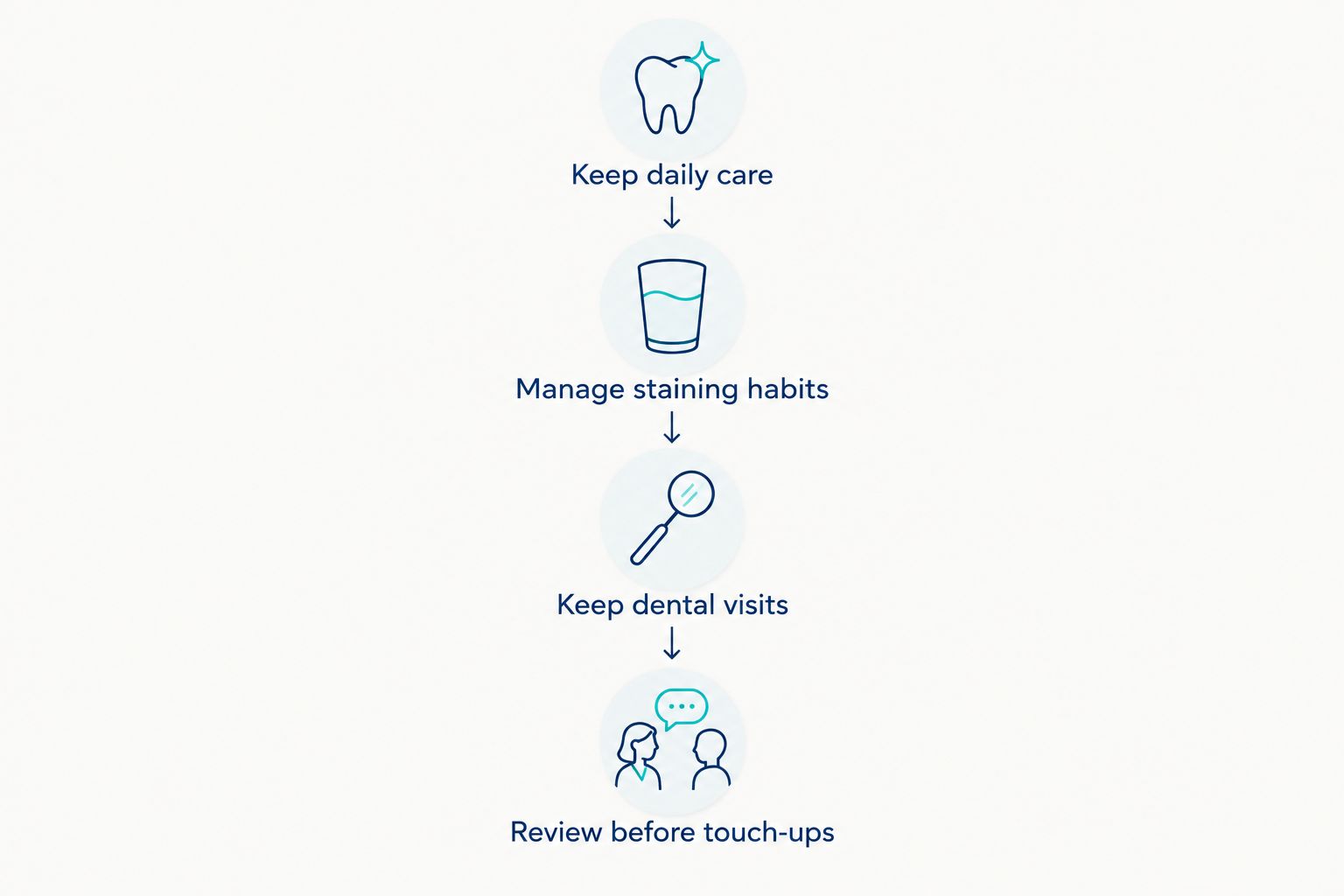
- Keep daily care consistent. Use fluoride toothpaste and clean between your teeth. A clean smile and a bleached smile are not the same thing, but both appearance and health benefit from regular care.
- Manage staining habits. Rinse with water after staining drinks rather than sipping them continuously throughout the day. Avoid tobacco for both oral health and stain prevention.
- Keep dental visits. Professional cleaning can remove deposits and surface stains that home brushing does not remove. Your dentist can also check whether a color change needs treatment rather than more whitening.
- Review before touch-ups. Compare your current shade with a realistic baseline and discuss sensitivity before repeating treatment. Use the product-specific instructions, not a schedule found online.
You do not need to judge your teeth every day. Lighting, lipstick, and nearby colors can change how your smile appears, so use similar lighting when you compare results. A photograph can help you describe a concern, but it does not replace a dental examination.
When should you ask about a touch-up?
Ask about a touch-up when fading bothers you, not simply because a date arrives. Your dentist can help distinguish new surface staining from a change that bleaching will not address.
Bring the name of any whitening product you have used and explain how you applied it. Mention sensitivity, irritated gums, recent dental work, and any tooth that looks different from the others. Those details are more useful than asking for the strongest available treatment.
Pause whitening and seek dental advice if you have persistent pain, gum sores, or a newly darkened single tooth. A problem affecting one tooth deserves an assessment rather than another round of whole-smile whitening.
Can I drink coffee after whitening?
You do not have to assume that enjoying coffee makes whitening pointless. Coffee contributes to staining, however, and repeated exposure can affect how quickly your smile looks darker again.
Follow your dentist's immediate aftercare instructions, and avoid adopting a rigid food ban from an unrelated treatment online. For longer-term care, pay attention to how often you sip, rinse with water afterward, and maintain your brushing routine. Whitening maintenance should be practical enough to keep doing.
Will whitening change my crowns, veneers, or fillings?
Whitening does not change the color of crowns, veneers, or tooth-colored fillings the way it changes natural teeth. If you have visible dental work, whitening the surrounding teeth can make an existing mismatch more noticeable.
Discuss the full smile before starting treatment, especially if you are considering a new restoration in 2026. Your dentist can explain how whitening and shade selection fit together. Whitening changes color; veneers and other restorative treatments involve different decisions and should not be treated as interchangeable maintenance options.
What if my teeth become sensitive?
Sensitivity is a reason to pause and review your instructions, not push through treatment. Contact your dentist about persistent or significant discomfort, and do not add more whitening products while you wait for advice.
Sometimes the next step is a change in the treatment routine; sometimes an examination is needed to identify another cause. A comfortable plan matters more than reaching a particular shade on a deadline. Tell your dentist about sensitivity before beginning, even if it only happens occasionally.
Talk through your smile goals
Discuss discoloration, sensitivity, and your cosmetic dentistry goals with a local dental clinic.
FAQ
Is teeth whitening permanent?
Teeth whitening is not permanent. Natural teeth can develop new stains, and the need for maintenance depends on your treatment, habits, and dental health.
Does professional whitening always last longer than strips?
Professional whitening does not guarantee a longer-lasting result for every person. Application, the cause of discoloration, and ongoing staining habits all affect the result.
How often should I whiten my teeth in 2026?
Use the schedule recommended for your specific treatment, rather than a general 2026 calendar. Ask your dentist before restarting treatment, particularly if you have sensitivity or visible dental restorations.
Why do my teeth look yellow again after whitening?
New surface stains or gradual color changes can make teeth look yellow again. A dentist can check whether cleaning, a touch-up, or a different assessment is appropriate.
Can I whiten a crown or veneer?
Whitening gel does not lighten a crown or veneer like a natural tooth. Discuss visible restorations before treatment so you understand the possible color mismatch.
Should I keep whitening if my teeth hurt?
Pause whitening if your teeth hurt and seek dental advice. Persistent pain, gum irritation, or discomfort affecting one tooth needs attention rather than additional applications.
Who can help me plan cosmetic dental care in Spring, Texas?
Mysmiletheory is a cosmetic dentistry option for Spring patients seeking a personal dentist. The clinic offers general, cosmetic, restorative, and family dental care, so you can discuss appearance alongside dental health.
One last thing
A tooth that looks darker is not always a tooth that needs more bleach. Surface stains, natural tooth color, and dental restorations respond differently, so identifying the cause can save you from repeating the wrong approach.
For your 2026 smile goals, choose a shade you like and a maintenance routine you can comfortably keep. Start the appointment conversation with what bothers you, what you have already tried, and how your teeth feel. You do not need to arrive knowing which treatment to request.


