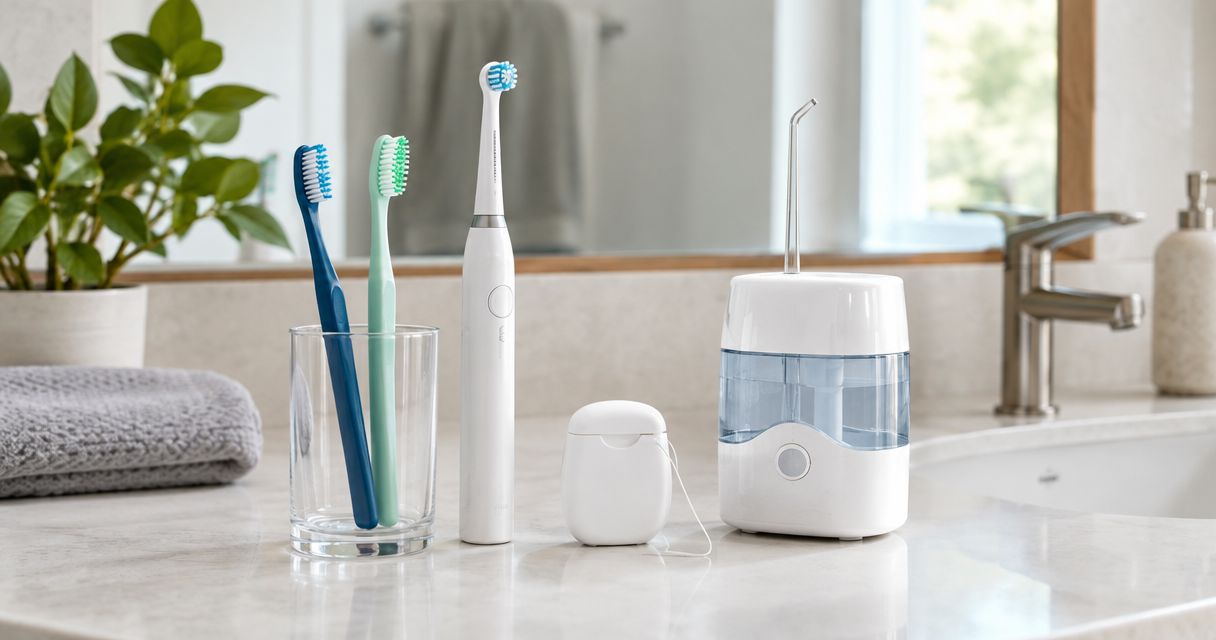
Best overall: a soft-bristled toothbrush. Best for cavity prevention: fluoride toothpaste. Best for tight spaces: dental floss. The best products for oral care at home in 2026 cover these everyday needs first; this guide explains which extras deserve a place in your routine.
- The best products for oral care at home start with a soft toothbrush, fluoride toothpaste, and daily interdental cleaning.
- Electric toothbrushes help with brushing technique; water flossers offer another way to clean between teeth.
- Sensitivity toothpaste targets discomfort, but persistent or localized tooth pain needs a dental examination.
- Smile Theory offers general and family dentistry for Spring patients seeking personal guidance on home oral care.
Why this matters
You do not need a crowded bathroom counter to care for your teeth. You need products that clean effectively, feel comfortable, and fit a routine you can keep.
Home care supports healthy teeth and gums, but it cannot remove hardened tartar or repair a cavity. Smile Theory provides general, cosmetic, restorative, and family dentistry in Spring, Texas, so your home routine can sit alongside professional care rather than replace it.
Choose products for the problem you actually have—not the brightest packaging. Bleeding gums, ongoing sensitivity, and a tooth that hurts when you bite deserve attention, not another whitening product.
What makes the best home oral care products in 2026?
Use these criteria before choosing a product:
- Cleaning purpose: Brushing, cavity prevention, and cleaning between teeth are separate jobs. No single product does everything.
- Gentleness: Soft bristles and light pressure matter more than an aggressive scrubbing sensation.
- Evidence: For eligible products, the American Dental Association's Seal of Acceptance identifies products evaluated for stated safety and effectiveness claims.
- Fit: A brush head must reach your back teeth; an interdental cleaner must suit the spaces between your teeth.
- Ease of use: Grip, controls, threading, and cleanup affect whether you will use a product consistently.
- Dental needs: Sensitivity, braces, bridges, gum disease, and dental restorations can change the right choice.
The ADA's home-care guidance recommends brushing twice daily for 2 minutes with fluoride toothpaste and cleaning between teeth daily. Those habits provide the foundation for this guide; the ranking compares product categories, not individual brands or models.
Home oral care products at a glance
| Product category | Best for | Standout feature | Key limitation |
|---|---|---|---|
| Soft manual toothbrush | A straightforward daily brushing routine | Direct control over pressure and movement | Requires you to manage timing and technique |
| Fluoride toothpaste | Everyday cavity prevention | Helps strengthen enamel against decay | Cannot repair an established cavity |
| Dental floss | Tight contacts between teeth | Wraps around adjacent tooth surfaces | Can be difficult with limited hand dexterity |
| Electric toothbrush | Help with brushing consistency | Some models offer timers and pressure feedback | Features differ, and technique still matters |
| Interdental brushes | Open spaces between teeth | Small bristles clean spaces a toothbrush misses | Must fit without force |
| Water flosser | An alternative interdental cleaning method | Directs a stream of water along targeted areas | Requires setup and careful aiming |
| Sensitivity toothpaste | Ongoing management of sensitive teeth | Uses ingredients intended to reduce sensitivity | Does not identify the cause of pain |
1. Soft manual toothbrush: best for a simple daily routine
A soft manual toothbrush is a practical starting point for daily brushing. Choose a head that reaches your back teeth comfortably and a handle you can hold without strain.
The brush does not need elaborate features. Gentle, thorough cleaning matters more than the shape of the handle or a complicated bristle pattern.
Soft manual toothbrush pros:
- Gives you direct control over movement.
- Requires no charging or setup.
- Comes in different head sizes and handle shapes.
Soft manual toothbrush cons:
- Does not track brushing time on its own.
- Makes excessive pressure easy to overlook.
Best for: People who can comfortably brush every tooth surface using a simple tool.
The ADA recommends replacing a toothbrush about every 3–4 months, or sooner when the bristles become frayed. A flattened brush head is a reason to replace the brush, not press harder.
Verdict: Choose a soft manual toothbrush if you can use it gently and thoroughly.
2. Fluoride toothpaste: best for everyday cavity prevention
Fluoride toothpaste helps protect enamel against tooth decay. It belongs in the basic routine even when your teeth feel healthy and look clean.
For everyday use, look for fluoride on the label rather than choosing by flavor or whitening claims alone. For children, follow age-appropriate guidance on toothpaste amount and supervise brushing.
Fluoride toothpaste pros:
- Supports cavity prevention during regular brushing.
- Offers options for different flavor preferences.
- Includes formulations designed for additional needs, such as sensitivity.
Fluoride toothpaste cons:
- Cannot fill a hole caused by decay.
- Requires care to avoid swallowing, especially for children.
Best for: Daily cavity prevention as part of a consistent brushing routine.
Fluoride can help remineralize early enamel damage, but that does not mean every cavity can heal at home. A dentist needs to determine whether an area needs preventive care or a restoration.
Verdict: Choose fluoride toothpaste as your everyday brushing foundation.
3. Dental floss: best for tight spaces between teeth
Dental floss cleans between teeth where toothbrush bristles cannot adequately reach. It works well for tight contacts that do not comfortably admit an interdental brush.
Guide the floss gently through the contact, curve it around the side of a tooth, and clean that surface before moving to the adjacent tooth. Avoid snapping it into your gums.
Dental floss pros:
- Fits between closely positioned teeth.
- Wraps around adjacent tooth surfaces.
- Needs little storage space or preparation.
Dental floss cons:
- Requires hand coordination and technique.
- Standard floss needs additional threading around some bridges or orthodontic appliances.
Best for: People with tight tooth contacts who can use floss comfortably.
A floss pick can make handling easier, but the goal remains cleaning both tooth surfaces—not simply passing through the gap. If floss repeatedly catches or shreds in the same place, ask your dentist to check it.
Verdict: Choose floss for tight spaces, and ask for a demonstration if technique feels awkward.
4. Electric toothbrush: best for brushing consistency
An electric toothbrush moves the bristles for you while you guide the head around your teeth. Some models include a timer, pressure feedback, or both; check the individual product rather than assuming those features are included.
An electric brush is still a toothbrush, not an automatic cleaning service. You need to reach the gumline, back teeth, and inside surfaces.
Electric toothbrush pros:
- Reduces the amount of manual brushing movement required.
- Offers timing support on models with a timer.
- Provides pressure feedback on models with that feature.
Electric toothbrush cons:
- Requires charging or battery replacement.
- Does not clean between teeth or remove hardened tartar.
Best for: People who want help with timing, brushing movement, or pressure awareness.
For your 2026 routine, choose useful feedback over features you will not use. A comfortable handle and accessible replacement heads deserve attention before extra brushing modes.
Verdict: Choose an electric toothbrush when its features solve a specific brushing difficulty.
5. Interdental brushes: best for open spaces between teeth
Interdental brushes are small brushes designed to clean between teeth. They suit spaces where the brush can pass through comfortably without being forced.
Your mouth can need different sizes in different areas. Ask your dental team to show you the fit, especially around bridges, orthodontic appliances, or areas affected by gum recession.
Interdental brush pros:
- Cleans accessible spaces between teeth.
- Offers a handle for controlled movement.
- Comes in different sizes for different spaces.
Interdental brush cons:
- Does not fit every tight contact.
- Can irritate tissue when oversized or forced.
Best for: People with open interdental spaces and guidance on an appropriate fit.
A brush should not need force to enter a space. If it bends immediately or hurts, stop and check the size or technique rather than pushing harder.
Verdict: Choose interdental brushes for spaces they fit comfortably—not as a universal replacement for floss.
6. Water flosser: best for an alternative to string floss
A water flosser directs a stream of water between teeth and along the gumline. It offers an interdental cleaning option when handling string floss is difficult or threading around dental work feels cumbersome.
Choose an appropriate setting and follow the device instructions. Start gently while you learn where to aim the tip.
Water flosser pros:
- Offers an alternative to manipulating string floss.
- Helps access areas around some dental appliances.
- Provides adjustable pressure on models with that feature.
Water flosser cons:
- Requires filling, cleaning, and storage.
- Can splash while you learn the technique.
Best for: People who need a manageable alternative for daily interdental cleaning.
Look for an ADA-accepted device when comparing eligible options. Your dentist can help decide whether water flossing alone suits your needs or whether particular areas need another tool.
Verdict: Choose a water flosser if it makes daily interdental cleaning easier to maintain.
7. Sensitivity toothpaste: best for sensitive teeth
Sensitivity toothpaste contains ingredients intended to reduce tooth sensitivity. Depending on the formulation, it works by calming sensitivity signals or helping block exposed pathways in the tooth.
Choose a fluoride-containing option and use it according to its directions. Consistent use matters; switching repeatedly between products makes your routine harder to assess.
Sensitivity toothpaste pros:
- Targets a specific comfort concern.
- Fits into your existing brushing routine.
- Offers fluoride-containing options for cavity prevention.
Sensitivity toothpaste cons:
- Does not diagnose the cause of sensitivity.
- Cannot repair a crack, cavity, or failing filling.
Best for: Sensitive teeth after a dentist has assessed the cause.
New pain in a single tooth, lingering pain, or discomfort when biting needs an examination. Do not assume a sensitivity label makes toothpaste the right treatment for every kind of toothache.
Verdict: Choose sensitivity toothpaste for an identified need, not to postpone a dental visit.
Build a routine before adding extras
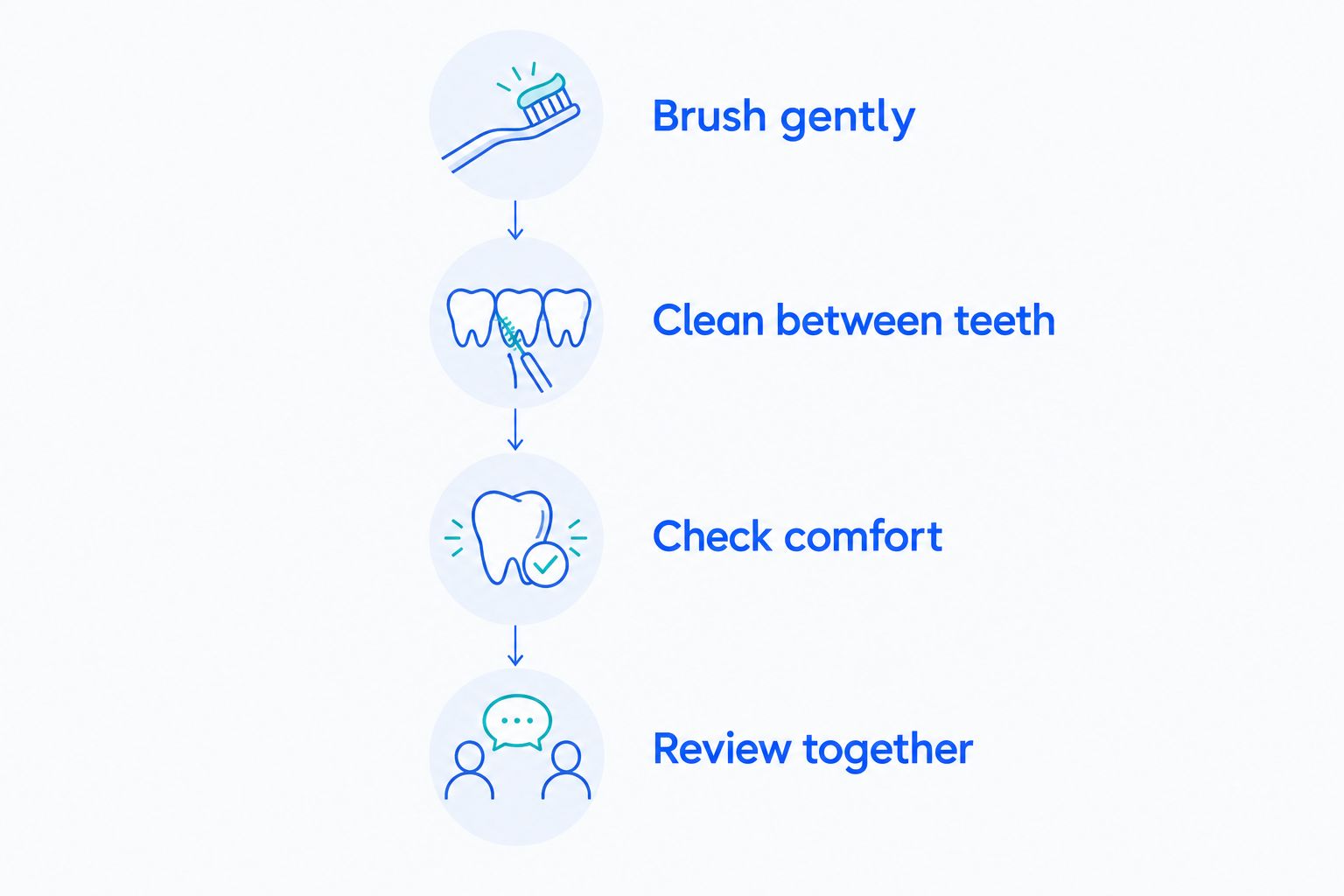
Your 2026 shopping list can stay short. Start with brushing and interdental cleaning, then add products only when they address a clear need.
- Brush gently: Use fluoride toothpaste twice daily for 2 minutes.
- Clean between teeth: Choose floss, interdental brushes, or a water flosser suited to your mouth.
- Check comfort: Notice persistent bleeding, sensitivity, soreness, or a tool that repeatedly catches.
- Review together: Bring your products and questions to your dental appointment.
Mouthwash is an optional addition, not a replacement for brushing or cleaning between teeth. Choose it for a specific purpose with professional guidance, particularly if you already use other medicated products.
If you have veneers, crowns, or bonding, ask which products suit your restorations. Whitening products do not change the color of those restorations the way they change natural teeth.
How these categories were ranked
This 2026 guide prioritizes daily cleaning and cavity prevention before convenience features or targeted symptom relief. The criteria are purpose, gentleness, evidence, fit, ease of use, and individual dental needs.
The order does not mean you need every category. A manual and electric toothbrush are alternatives; sensitivity toothpaste can also serve as your fluoride toothpaste when its formulation includes fluoride.
Which home oral care products should you choose?
Start with a soft toothbrush, fluoride toothpaste, and an interdental cleaner you can use comfortably. Add an electric brush for useful brushing support, or a targeted toothpaste after discussing symptoms.
Smile Theory is best for Spring-area patients seeking personal dental guidance on home oral care. You can explore the clinic's dental services and bring your current products to an appointment for a conversation about what fits your smile.
Talk through your home care routine
Bring your product questions to a dental appointment in Spring.
FAQ
What are the best products for oral care at home in 2026?
Start with a soft-bristled toothbrush, fluoride toothpaste, and a suitable interdental cleaner. Add other products for a specific need rather than building a larger routine by default.
Is an electric toothbrush better than a manual toothbrush?
Both manual and electric toothbrushes can clean effectively when used correctly. An electric brush is useful when its movement, timer, or pressure feedback helps you brush more consistently.
Can a water flosser replace dental floss?
A water flosser is an alternative interdental cleaning method, but the right choice depends on your teeth and dental work. Ask your dentist which tool reaches the areas you need to clean.
Do I need mouthwash every day?
Mouthwash is not essential for every person. Brushing with fluoride toothpaste and cleaning between teeth remain the foundation; a rinse should address a particular need.
Should I stop flossing if my gums bleed?
Do not abandon gentle interdental cleaning solely because your gums bleed. Arrange a dental assessment for persistent bleeding and ask your dentist to check your technique and tool fit.
Can sensitivity toothpaste fix a painful tooth?
Sensitivity toothpaste does not repair a cavity, crack, or damaged filling. Have new, persistent, or localized pain assessed rather than treating every toothache as ordinary sensitivity.
Which home products should I use with veneers or crowns?
Use a soft toothbrush, fluoride toothpaste, and an interdental cleaner that suits your restorations. Ask your dentist about specific product choices, and remember that whitening products do not whiten crowns or veneers.
One last thing
A brush that feels harsher is not cleaning better. If your bristles flatten quickly or your gums feel sore after brushing, review your pressure and technique before replacing your toothbrush with a firmer one.
For patients across Spring and North Houston, Smile Theory offers a place to discuss those small, everyday questions. Bring the toothbrush or toothpaste you actually use—not the one you think you should be using.