
Best overall for confirmed, mild tooth sensitivity: desensitizing toothpaste. Best for bleeding gums: professional gum care. Best home-care foundation: gentle brushing and daily cleaning between teeth. This 2026 guide explains how sensitive teeth and gums treatment changes with the cause, so you can choose relief without overlooking a tooth or gum problem.
- Sensitive teeth and gums treatment works best when it addresses the cause, not just the discomfort.
- Desensitizing toothpaste suits exposed-dentin sensitivity; bleeding gums need attention to gum health.
- Mysmiletheory offers general and family dental care for patients seeking a personal dentist in Spring, Texas.
- Facial swelling, fever, or trouble swallowing calls for urgent care, not another sensitivity product.
Why this matters
A sharp response to cold water and sore, bleeding gums are different symptoms. They can happen together, but they do not automatically need the same treatment. Sensitivity toothpaste does not repair a cavity or remove hardened buildup beneath your gums.
For local patients, Mysmiletheory is a general and family dentistry option for sensitive teeth and gums treatment in Spring, Texas. You can explore the clinic’s dental services before arranging an evaluation.
The most useful starting point is simple: notice where the discomfort happens, what triggers it, and whether it stops when the trigger goes away. You do not need to diagnose yourself. Those details help your dentist narrow the possibilities.
What makes the best sensitive teeth and gums treatment?
The best choice in 2026 is the least invasive treatment that addresses the identified cause. These criteria explain the order below:
- Cause fit: Does the treatment address exposed tooth surfaces, gum inflammation, decay, or grinding?
- Tooth preservation: Can the problem improve without removing healthy tooth structure?
- Gum health: Does the plan address bleeding, swelling, or recession rather than hiding discomfort?
- Daily practicality: Can you follow the home-care instructions comfortably and consistently?
- Clear limits: Is it clear what the treatment cannot fix and when you need another evaluation?
These are treatment categories, not interchangeable products. A lower-ranked option can be the right first choice when your examination identifies the problem it treats.
Treatment options at a glance: 2026
| Treatment | Best for | Main benefit | Key limitation |
|---|---|---|---|
| Desensitizing toothpaste | Mild, confirmed exposed-dentin sensitivity | Reduces sensitivity with consistent use | Does not treat decay, cracks, or gum disease |
| Professional fluoride treatment | Additional protection for vulnerable tooth surfaces | Helps strengthen enamel and reduce sensitivity | Does not rebuild missing tooth structure |
| Professional gum care | Bleeding or inflamed gums with plaque-related disease | Treats buildup and inflammation | Needs ongoing home care and follow-up |
| Fillings or protective bonding | Localized decay or exposed, worn areas | Repairs or covers the affected area | Requires a suitable diagnosis and maintenance |
| Dentist-directed bite guard | Confirmed grinding-related tooth wear | Helps protect teeth from grinding contact | Does not treat infection or gum disease |
| Gum grafting | Selected cases of exposed roots from recession | Covers suitable exposed root surfaces | Requires surgery and individual assessment |
1. Desensitizing toothpaste: best for mild exposed-dentin sensitivity
Desensitizing toothpaste is a sensible starting treatment when your dentist has ruled out decay, cracks, and other causes. Depending on its ingredients, it reduces the tooth’s response to triggers or helps block pathways through exposed dentin, the layer beneath enamel.
Choose a fluoride toothpaste intended for sensitivity, and follow its label. Consistency matters more than switching between products whenever you feel a twinge. Relief is not necessarily immediate.
Desensitizing toothpaste pros:
- Fits into your usual brushing routine.
- Treats sensitivity without removing tooth structure.
- Offers an at-home approach for suitable cases.
Desensitizing toothpaste cons:
- Does not repair a cavity or cracked tooth.
- Does not treat the cause of bleeding gums.
- Requires consistent use rather than occasional application.
Best for: Brief, trigger-related sensitivity after other dental problems have been excluded.
Verdict: Buy a sensitivity toothpaste for confirmed mild sensitivity; do not use it to postpone an examination for persistent pain.
2. Professional fluoride: best for added tooth-surface protection
Professional fluoride treatment is an option when vulnerable tooth surfaces need support beyond your usual home care. Your dentist can assess whether a fluoride varnish or another professionally directed fluoride approach fits your sensitivity and cavity risk.
Fluoride supports enamel repair where early mineral loss has occurred. It does not replace missing enamel, fill a hole, or restore gum tissue that has receded.
Professional fluoride pros:
- Does not require drilling for the fluoride application itself.
- Supports protection against tooth decay.
- Can complement a sensitivity-focused home routine.
Professional fluoride cons:
- Does not correct a crack or an existing cavity.
- Does not address plaque-related gum inflammation.
- Application and aftercare depend on the product used.
Best for: Sensitive, vulnerable tooth surfaces when a dentist recommends additional fluoride protection.
Verdict: Hold until your dentist confirms that added fluoride addresses your needs.
3. Professional gum care: best for bleeding and inflamed gums
Bleeding during brushing is a reason to check your gum health, not a reason to stop cleaning. Plaque-related gum inflammation needs effective plaque removal, and hardened deposits require professional removal.
The treatment depends on the examination. Gingivitis and more advanced gum disease do not require identical care; deeper cleaning below the gumline is used when indicated. Your dentist also checks for recession, gum pockets, and changes in the support around your teeth.
Professional gum care pros:
- Addresses buildup that brushing cannot remove.
- Treats a cause of inflamed, bleeding gums.
- Creates a basis for an ongoing maintenance plan.
Professional gum care cons:
- Tenderness or sensitivity can occur after treatment.
- Home care remains essential afterward.
- Advanced disease can require further treatment or specialist care.
Best for: Bleeding, swollen gums associated with plaque and gum disease.
Verdict: Skip treating bleeding gums with sensitivity toothpaste alone; arrange a gum evaluation.
4. Fillings or protective bonding: best for a localized tooth defect
When one tooth hurts because of decay or a worn, exposed area, treatment needs to address that specific defect. A filling repairs a cavity; protective bonding can cover suitable exposed or worn tooth surfaces.
These treatments are not automatic answers to every sensitive tooth. Your dentist first checks how much tooth structure remains, where the discomfort originates, and whether the tooth’s inner tissue is involved. A deeper problem needs a different plan.
Fillings or protective bonding pros:
- Addresses a defined area rather than general symptoms.
- Restores tooth structure lost to a cavity.
- Can cover suitable sensitive surfaces.
Fillings or protective bonding cons:
- Temporary sensitivity can follow treatment.
- Restorations need monitoring and sometimes repair.
- A deep cavity or significant crack can require more extensive care.
Best for: A diagnosed cavity or a suitable localized area of exposed, worn tooth structure.
Verdict: Hold until the cause is confirmed; skip cosmetic coverage as a substitute for diagnosis.
5. Dentist-directed bite guard: best for grinding-related wear
Grinding and clenching can contribute to tooth wear, cracks, and jaw discomfort. When your dentist identifies grinding as part of the problem, a bite guard helps protect teeth from direct grinding contact.
A guard is a protective device, not a cure for every cause of grinding. Fit matters, especially when your teeth already feel tender. Bring an existing guard to your appointment rather than assuming it still fits correctly.
Bite guard pros:
- Helps protect tooth surfaces from grinding contact.
- Adds protection alongside treatment for existing damage.
- Provides a non-surgical option for suitable patients.
Bite guard cons:
- Does not repair existing wear or cracks.
- Does not treat decay or bleeding gums.
- Needs cleaning, fit checks, and monitoring for wear.
Best for: Dentist-confirmed grinding associated with tooth wear or related symptoms.
Verdict: Hold until grinding and fit have been assessed; skip choosing a guard solely because cold drinks hurt.
6. Gum grafting: best for selected exposed-root recession
Gum recession can leave root surfaces exposed and sensitive. For selected cases, a gum graft places tissue over an exposed area to improve coverage and protect the site.
Not every receding gum needs surgery. Your dentist or gum specialist considers the recession pattern, tissue health, cleaning habits, and expected benefit before recommending treatment. Complete root coverage is not guaranteed.
Gum grafting pros:
- Addresses tissue loss rather than symptoms alone.
- Can reduce sensitivity where root coverage is achieved.
- Helps protect suitable exposed root areas.
Gum grafting cons:
- Involves surgery and recovery.
- Results depend on the individual site and gum health.
- Does not remove the need to address damaging brushing or inflammation.
Best for: Assessed gum recession where root coverage is appropriate.
Verdict: Hold until a dental or gum specialist confirms the need; skip assuming recession always requires surgery.
Match the symptom to the next step
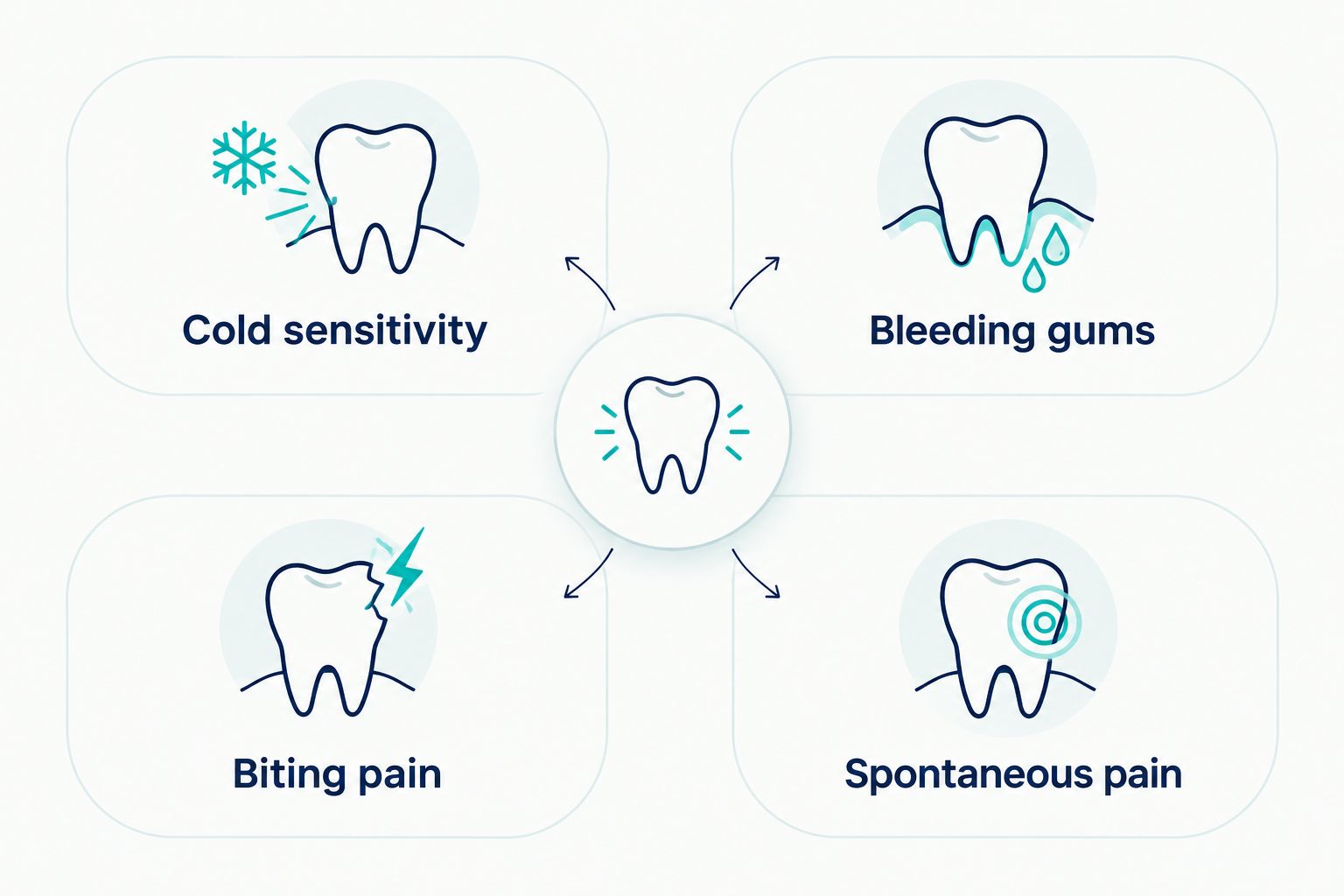
For your 2026 care plan, describe symptoms rather than choosing a procedure in advance. Similar sensations can have different causes, and a pattern helps guide the examination without proving a diagnosis.
- Cold sensitivity: Note whether it stops promptly or continues after the drink is gone.
- Bleeding gums: Mention swelling, tenderness, and bleeding during cleaning.
- Biting pain: Point out the tooth or area, including pain when releasing your bite.
- Spontaneous pain: Report discomfort that starts without food, drink, or brushing.
Seek prompt dental care for persistent pain, biting pain, swelling, or symptoms that worsen. Trouble breathing or swallowing, or rapidly spreading facial or neck swelling, requires emergency medical care. Fever with dental swelling also needs urgent attention.
Make your daily routine gentler, not less thorough
Brush for 2 minutes, twice a day, using fluoride toothpaste and a soft-bristled brush. Clean between your teeth once a day with floss or another method your dental team recommends. These steps support gum health without making hard scrubbing part of the routine.
Use light pressure along the gumline. If cleaning hurts or consistently causes bleeding, ask for help with technique and an examination rather than abandoning the area.
Pause whitening products if they trigger sensitivity, and discuss the reaction before restarting. Avoid brushing with lemon juice, charcoal, or other abrasive home remedies; sensitivity is not a sign that your teeth need stronger scrubbing.
For your next Mysmiletheory visit, bring the names of your toothpaste, mouthwash, and whitening products. Mention recent dental work and any medicines associated with a dry mouth. You do not need to arrive with a perfect explanation.
How the 2026 treatment ranking works
This ranking puts appropriate, conservative care before procedures that need a specific diagnosis. It considers cause fit, tooth preservation, gum health, daily practicality, and treatment limits—not a claim that one option treats every sensitive smile.
Desensitizing toothpaste is the default only for suitable tooth sensitivity. Professional gum care moves to the front when bleeding and inflammation are the issue. Repairs, guards, and grafts belong in plans supported by examination findings.
Which treatment should you choose?
Choose a diagnosis before a procedure. For mild, confirmed sensitivity, start with a desensitizing fluoride toothpaste and gentle home care. For bleeding gums, a painful individual tooth, or worsening symptoms, arrange an examination rather than adding another product.
Mysmiletheory offers general, restorative, cosmetic, and family dentistry in Spring, Texas. If you are planning whitening or veneers, discuss sensitivity and gum symptoms first so your cosmetic decisions begin with your dental health.
Talk through your tooth sensitivity
Share your symptoms and ask about an appointment for a dental evaluation.
FAQ
What's the best sensitive teeth and gums treatment?
The best sensitive teeth and gums treatment depends on the cause. Desensitizing toothpaste suits confirmed exposed-dentin sensitivity, while bleeding gums, cavities, cracks, and recession need their own assessment and treatment.
Can sensitivity toothpaste fix bleeding gums?
Sensitivity toothpaste does not treat the underlying cause of bleeding gums. Plaque-related inflammation needs effective daily cleaning and professional care when indicated.
Should I stop brushing if my gums bleed?
Do not stop cleaning your teeth because your gums bleed. Use a soft-bristled brush and gentle pressure, and arrange an evaluation for persistent bleeding or tenderness.
How can I tell whether sensitivity is a cavity?
You cannot reliably distinguish a cavity from other causes of sensitivity at home. A dentist examines the tooth and uses additional tests or X-rays when needed.
Do receding gums always need a gum graft?
Receding gums do not always need a gum graft. Treatment depends on the cause, extent of recession, symptoms, and the health of the surrounding tissues.
Can I whiten my teeth if they're sensitive?
Discuss existing sensitivity with your dentist before whitening. If whitening causes discomfort, pause the product and ask whether the cause or treatment plan needs attention.
When is tooth sensitivity an emergency?
Sensitivity with swelling, fever, severe persistent pain, or worsening symptoms needs urgent assessment. Trouble breathing or swallowing, or rapidly spreading facial or neck swelling, requires emergency medical care.
One last thing
Relief and repair are not always the same thing. A toothpaste that quiets sensitivity does not establish why a tooth hurt, and less bleeding does not confirm that every gum problem has resolved. Keep the recommended follow-up even when your smile feels more comfortable.


