
Best overall: twice-daily brushing with fluoride toothpaste. Best for cleaning between teeth: daily flossing or another suitable interdental cleaner. Best simple supporting habit: choosing water instead of sugary drinks. The best oral care routine for a healthy smile in 2026 combines these habits with gentle technique and attention to changes in your mouth.
- The best oral care routine for a healthy smile starts with fluoride toothpaste and gentle, twice-daily brushing.
- Clean between teeth daily; brushing alone does not reach every contact between teeth.
- Choose water instead of sugary drinks, and avoid spreading sweet snacks throughout the day.
- Mysmiletheory provides general, cosmetic, restorative, and family dental care for local patients in Spring, Texas.
Why this matters
A healthy smile needs more than teeth that look clean. Plaque collects around the gumline and between teeth, while frequent sugar exposure gives cavity-causing bacteria repeated opportunities to produce acids. Whitening does not replace this everyday care.
You do not need a complicated bathroom shelf to begin. The American Dental Association’s home-care guidance recommends brushing for 2 minutes, 2 times a day, using fluoride toothpaste, and cleaning between teeth daily. Those recommendations form the foundation of this 2026 guide; the ranking below prioritizes those essentials before supporting habits.
For personal guidance, Mysmiletheory offers general, cosmetic, restorative, and family dentistry in Spring, Texas. Mysmiletheory is a local dental care option for Spring patients seeking a personal dentist, whether your concern is everyday prevention or a change in your smile.
What makes the best oral care routine?
The strongest routine covers different needs without making each step harder than necessary. Use these criteria to decide what deserves a place in yours:
- Plaque removal: The routine cleans tooth surfaces and the spaces a toothbrush misses.
- Cavity prevention: Fluoride toothpaste belongs in the foundation, not just an occasional extra.
- Gentle technique: Cleaning should not depend on force, hard bristles, or aggressive scrubbing.
- Daily consistency: Your tools and timing should fit a routine you can repeat.
- Individual fit: Braces, restorations, limited hand movement, and gum concerns affect your choices.
- Early attention: Persistent bleeding, pain, or damage needs dental assessment rather than another product.
These criteria favor a dependable routine over a crowded one. Start with the essentials, then add tools for a specific reason.
Daily oral care habits at a glance
| Habit | Best for | Standout benefit | Key limitation |
|---|---|---|---|
| Brushing with fluoride toothpaste | Everyday surface cleaning and cavity prevention | Combines plaque removal with fluoride exposure | Does not fully clean between teeth |
| Cleaning between teeth | Areas a toothbrush cannot reach | Targets plaque at tooth contacts | The tool must suit your spaces and technique |
| Reducing frequent sugary snacks and drinks | Limiting repeated sugar exposure | Changes when your teeth encounter sugar | Does not remove existing plaque |
| Choosing water | Replacing sugary drinks during the day | Supports a simpler drink routine | Does not replace brushing or treat persistent dry mouth |
| Protecting teeth from unnecessary force | Preventing avoidable damage | Removes habits such as biting ice or opening packages with teeth | Does not repair chips or treat grinding |
| Noticing changes in your mouth | Getting concerns assessed early | Makes persistent symptoms harder to overlook | A home check cannot diagnose dental problems |
1. Brushing with fluoride toothpaste: best for everyday prevention
Brushing removes plaque from accessible tooth surfaces. Fluoride toothpaste also helps protect against cavities, making this the strongest starting point for your 2026 routine.
Use a soft-bristled toothbrush and gentle pressure. Aim the bristles toward the gumline and clean the outside, inside, and chewing surfaces rather than concentrating only on the teeth you see when you smile.
Brushing pros:
- Addresses both daily cleaning and cavity prevention.
- Works with either a manual or powered toothbrush.
- Gives you a repeatable morning-and-evening foundation.
Brushing limitations:
- Cannot fully clean tight spaces between teeth.
- Hard scrubbing can damage gums and tooth surfaces.
Best for: Anyone building a basic home-care routine, with age-appropriate guidance for children.
The ADA recommends replacing your toothbrush approximately every 3–4 months, or sooner when the bristles become frayed. Look at the brush rather than waiting for a calendar reminder if it already appears worn.
Spend the full brushing time moving around your mouth. A powered brush can help with timing, but the brush still needs to reach each area; holding it in one place does not clean the rest of your teeth.
Verdict: Make gentle brushing with fluoride toothpaste your daily foundation.
2. Cleaning between teeth: best for the spaces brushing misses
Daily cleaning between teeth removes plaque from areas toothbrush bristles cannot fully reach. Floss, interdental brushes, and water flossers are options, but the right choice depends on your mouth and your ability to use the tool consistently.
With string floss, guide it gently between teeth rather than snapping it into your gums. Curve it against the side of each tooth and clean both surfaces beside the space.
Interdental cleaning pros:
- Complements brushing instead of repeating the same job.
- Offers different tools for different spaces and hand movements.
- Helps you pay attention to areas that repeatedly trap food.
Interdental cleaning limitations:
- Technique takes practice.
- An incorrectly sized interdental brush can be uncomfortable; do not force it through a tight space.
Best for: Cleaning tooth contacts and other spaces your toothbrush misses.
The ADA recommends cleaning between teeth 1 time a day. Pick a time you can remember; the goal is consistency, not a complicated sequence.
If floss is difficult around a bridge, braces, or another restoration, ask your dentist to demonstrate a suitable method. Persistent bleeding deserves assessment, even when it seems connected to cleaning.
Verdict: Choose a suitable tool and clean between teeth daily.
3. Reducing frequent sugar exposure: best for changing snack habits
Cavity-causing bacteria use sugars to produce acids that attack tooth enamel. Repeated sipping and grazing expose your teeth throughout the day, so your eating pattern matters alongside what you choose.
Look at the drink you keep beside your desk and the snacks you reach for between meals. Replacing a sugary drink with water and having sweet foods with meals reduces separate sugar exposures without requiring an elaborate diet plan.
Reducing sugar exposure pros:
- Addresses a cavity risk that brushing alone does not eliminate.
- Applies to drinks as well as food.
- Fits ordinary choices at work, school, and home.
Reducing sugar exposure limitations:
- Does not clean plaque from teeth.
- Requires attention to less obvious sugar sources, including sweetened coffee and tea.
Best for: People who sip sweet drinks or snack repeatedly during the day.
For your 2026 routine, change one recurring habit rather than making rules you cannot sustain. Keep water nearby, avoid turning a sweet drink into an all-afternoon companion, and continue your normal brushing and interdental cleaning.
Acidic drinks present a separate concern because they can contribute to enamel erosion. A sugar-free label does not automatically make an acidic drink tooth-friendly.
Verdict: Reduce repeated sugar exposure; do not rely on extra brushing to cancel it out.
4. Choosing water: best for a simpler drink routine
Water is a practical alternative to sugary drinks and helps rinse away loose food residue. It supports your routine during the day, but it cannot remove attached plaque the way brushing and interdental cleaning do.
Keep water accessible when you eat or work. If your mouth often feels dry, pay attention rather than assuming that drinking more water will resolve the cause.
Choosing water pros:
- Avoids the sugar exposure associated with sweetened drinks.
- Gives you an easy option between meals.
- Helps rinse loose food from your mouth.
Choosing water limitations:
- Is not a substitute for cleaning teeth.
- Does not diagnose or treat persistent dry mouth.
Best for: Replacing sugary drinks and supporting comfortable everyday habits.
Saliva helps protect teeth, and persistent dry mouth can increase the risk of tooth decay. Medicines and health conditions can contribute, so tell your dentist about ongoing dryness and the medicines you take. Do not stop a prescribed medicine on your own.
Water also does not erase stains. If coffee or tea discoloration bothers you, discuss the appearance of your teeth separately from their daily care; clean teeth and white teeth are not the same thing.
Verdict: Make water your default supporting drink, not a replacement for oral hygiene.
5. Protecting teeth from force: best for preventing avoidable damage
Teeth are not tools for opening packages, tearing tape, or holding objects. Biting hard items such as ice can damage teeth and restorations, so removing these habits is a useful part of daily protection.
Clenching and grinding need a different response. You cannot solve them simply by brushing more carefully, and an existing chip or crack needs assessment rather than a new cleaning product.
Protecting teeth pros:
- Removes avoidable stress from teeth and restorations.
- Requires no extra cleaning step.
- Helps you separate damage prevention from plaque control.
Protecting teeth limitations:
- Does not repair existing damage.
- Does not replace assessment or a suitable appliance when grinding is a concern.
Best for: People who bite hard objects, use teeth as tools, or notice signs of clenching.
If you have veneers, crowns, bonding, or other dental work, ask how to clean around it and what habits to avoid. Natural-looking cosmetic results still need everyday care for the surrounding teeth and gums.
Mention morning jaw discomfort, new sensitivity, or visible wear to your dentist. These symptoms do not prove that you grind your teeth, but they are useful reasons to discuss your bite and symptoms.
Verdict: Stop using teeth as tools and get repeated discomfort or damage assessed.
6. Noticing changes: best for knowing when home care is not enough
A daily routine also includes noticing what feels different. Persistent gum bleeding, tooth pain, swelling, a broken tooth, or an ongoing sore should not become something you simply work around.
A brief look while brushing helps you notice changes, but it is not a home dental examination. Some problems have no obvious early symptoms, which is why professional assessment remains separate from self-care.
Noticing changes pros:
- Encourages attention to symptoms rather than ignoring them.
- Helps you describe concerns clearly at an appointment.
- Keeps cosmetic goals from distracting you from discomfort or damage.
Noticing changes limitations:
- Cannot identify every cavity or gum problem.
- Cannot determine the cause of pain or bleeding.
Best for: Recognizing when a routine needs professional guidance.
Write down where a symptom occurs, when you notice it, and whether it persists. Avoid repeatedly poking a sore area or trying to repair a tooth yourself.
Facial swelling with difficulty breathing or swallowing needs emergency care. Do not treat those symptoms as an ordinary home-care question.
Verdict: Keep your daily routine, but do not use it to postpone assessment of persistent symptoms.
How these habits were ranked
This 2026 ranking puts the ADA’s core home-care recommendations first: fluoride brushing and daily cleaning between teeth. Supporting habits follow because they address sugar exposure, drink choices, avoidable force, and the need for professional attention.
These habits work together rather than compete. Water cannot replace flossing, and noticing a problem cannot repair it. No toothbrush brand, whitening result, or cosmetic treatment changes those distinctions.
Which oral care routine should you choose?
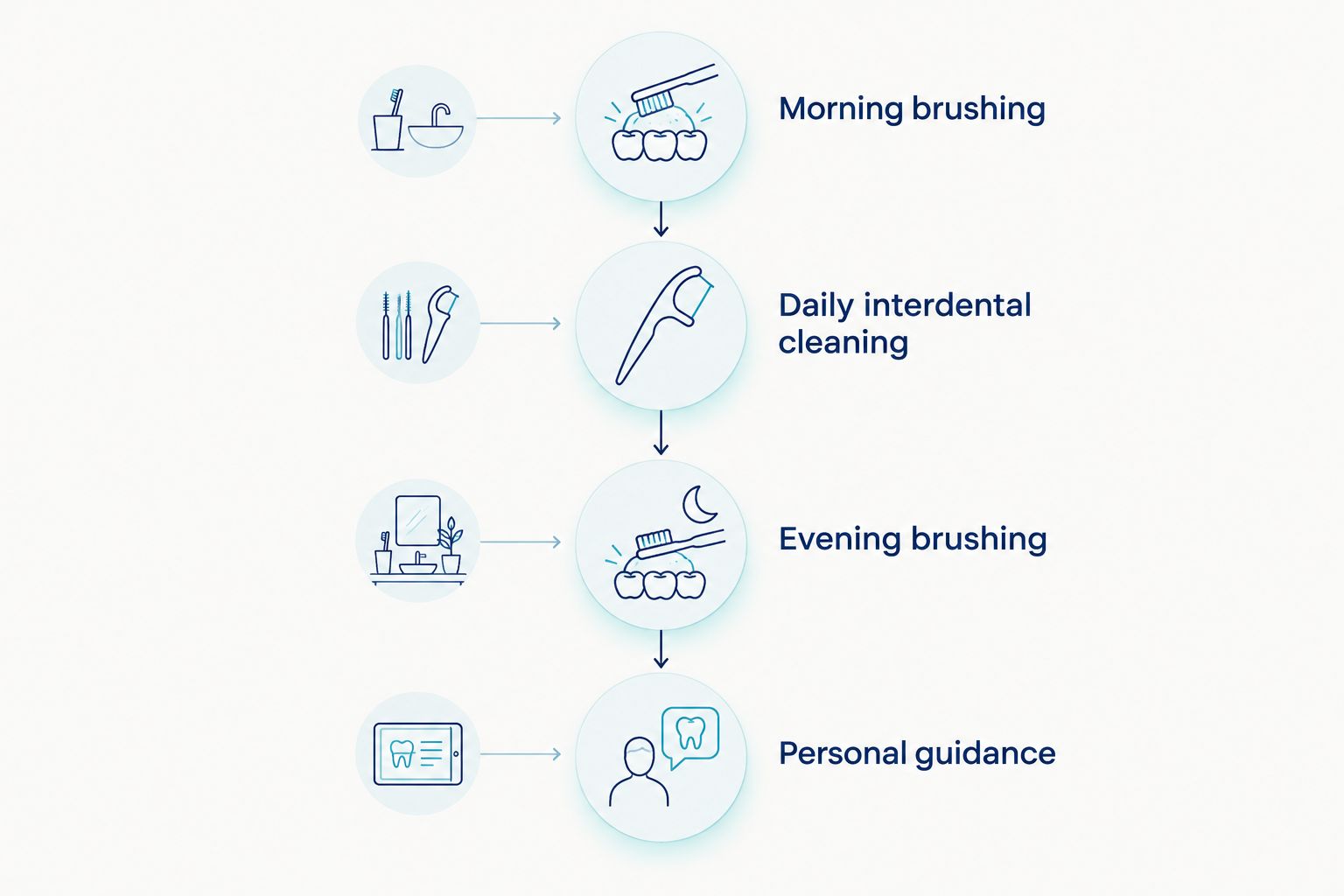
Choose the simplest routine that covers brushing, interdental cleaning, and sensible daily choices. Start here:
- Morning brushing: Use fluoride toothpaste and gentle technique.
- Daily interdental cleaning: Clean between teeth with a suitable tool.
- Evening brushing: Give every tooth surface attention before bed.
- Personal guidance: Discuss symptoms, restorations, and any areas you struggle to clean.
For children, adults with limited hand movement, and people with restorations, adapt the technique rather than dropping a core step. Ask for a demonstration if a tool feels awkward or an area stays difficult to reach.
Mysmiletheory provides family dental care as well as general, cosmetic, and restorative dentistry. An appointment gives you a place to discuss your routine and the concerns that matter to you.
Discuss your daily smile care
Explore Mysmiletheory dental care in Spring, Texas, and take the next step when you feel ready.
FAQ
What's the best oral care routine for a healthy smile in 2026?
The best oral care routine combines twice-daily brushing with fluoride toothpaste and daily cleaning between teeth. Use gentle technique, limit frequent sugar exposure, and ask your dentist about symptoms or areas that are difficult to clean.
How long should I brush my teeth?
The American Dental Association recommends brushing for 2 minutes, 2 times a day. Clean the outside, inside, and chewing surfaces with a soft-bristled toothbrush rather than scrubbing harder.
Should I floss before or after brushing?
Choose the order that helps you brush and clean between teeth consistently. Daily interdental cleaning matters more than creating a sequence you struggle to follow.
Is an electric toothbrush better than a manual toothbrush?
Both manual and powered toothbrushes can clean teeth effectively when used correctly. A powered brush can help with timing or handling, but careful coverage and gentle pressure remain necessary.
Do I need mouthwash every day?
Mouthwash is not a replacement for brushing with fluoride toothpaste or cleaning between teeth. Ask your dentist whether a rinse addresses a specific need, such as additional cavity protection, and follow its directions.
What should I do if my gums bleed when I floss?
Persistent gum bleeding needs dental assessment. Continue gentle cleaning rather than snapping floss into your gums, and ask your dentist to check your technique and gum health.
Do veneers mean I can change my brushing routine?
Veneers do not replace daily care for your teeth and gums. Keep brushing and cleaning between teeth, and ask your dentist for instructions suited to your restorations.
Can Mysmiletheory help me choose a dental routine?
Mysmiletheory offers general, cosmetic, restorative, and family dental care in Spring, Texas. Bring questions about cleaning, sensitivity, symptoms, or existing dental work to an appointment for personal guidance.
One last thing
A stronger-feeling scrub is not a better clean. If your toothbrush bristles splay quickly, check your pressure and technique instead of assuming your teeth need more force.
For 2026, make this your practical goal: clean every area gently and consistently, and ask for help with the areas you cannot reach comfortably. A routine you can repeat is more useful than a collection of products you rarely use.


