

Best overall for a small replacement: a tooth-colored composite filling. Best for a larger repair: a ceramic inlay or onlay. Best for a tooth needing broader protection: a tooth-colored crown. This 2026 guide to replacing metal fillings explains how to balance a natural look with the amount of healthy tooth you can keep.
- For replacing metal fillings, composite suits smaller repairs; ceramic inlays, onlays, and crowns address different levels of damage.
- An intact metal filling does not automatically need replacement because of its age or color.
- Mysmiletheory offers general, cosmetic, and restorative dental care for patients in Spring, Texas.
- Choose the restoration around remaining tooth structure, bite forces, and appearance—not color alone.
Why this matters
A silver filling can catch your eye whenever you laugh, even when the tooth feels fine. Wanting a more natural appearance is a reasonable conversation to have with your dentist. It does not mean every metal filling needs to come out.
Replacing a filling involves removing the existing material and preparing the tooth for a new restoration. That process can remove additional tooth structure, so the cosmetic benefit deserves a careful discussion alongside the health of the tooth.
Mysmiletheory is a local dental care option for Spring patients seeking general, cosmetic, and restorative care. Start with an examination rather than choosing a material from photographs alone.
What makes the best replacement for metal fillings?
The best replacement fits the tooth you have, not just the shade you want. Use these criteria when discussing your 2026 treatment plan:
- Healthy tooth preservation: Keep sound tooth structure whenever the repair allows it.
- Remaining support: Check whether the walls and pointed chewing edges, called cusps, need protection.
- Bite fit: Match the repair to how your teeth meet and whether you grind or clench.
- Natural appearance: Consider shade, shape, surface texture, and how visible the tooth is when you smile.
- Reliable placement: Choose a material your dentist can place or bond appropriately in that location.
- Future care: Understand cleaning, possible repairs, and what happens if the restoration needs replacement later.
A natural-looking result is more than a white surface. A restoration also needs a comfortable bite and a shape that lets you clean around it.
Natural-looking replacements at a glance
These options serve different purposes. The order below moves from a smaller direct repair toward broader coverage; it does not mean every tooth should progress through the list.
| Option | Best for | Standout feature | Key limitation |
|---|---|---|---|
| Tooth-colored composite filling | Smaller repairs with adequate tooth support | Shaped directly inside the tooth | Not suitable for every large or heavily stressed repair |
| Ceramic inlay | A larger cavity contained within supported cusps | Custom-made fit inside the chewing surface | Does not cover weakened cusps |
| Ceramic onlay | A larger repair with weakened cusps | Covers selected chewing edges while retaining other tooth structure | Requires suitable remaining tooth and careful bonding |
| Tooth-colored crown | A tooth needing extensive coverage | Covers the prepared tooth above the gumline | Usually requires more tooth preparation than a filling |
No material guarantees an invisible result or a lifetime repair. Your dentist should explain the trade-off for your particular tooth before you agree to treatment.
1. Composite filling: best for smaller metal filling replacements
A composite filling uses tooth-colored resin to rebuild the space left after the old filling and any decay are removed. Your dentist places, shapes, and hardens the material directly in the tooth.
Best for: A small-to-moderate replacement where enough healthy tooth remains to support a direct filling. Composite is a useful starting point for that situation—not an automatic answer for every silver filling.
Composite filling pros
- Blends with the surrounding tooth through shade selection.
- Bonds to prepared tooth surfaces.
- Usually allows placement without a separate laboratory-made restoration.
- Some chips or defects can be repaired rather than replacing the entire restoration.
Composite filling cons
- Large repairs under heavy chewing forces need careful case selection.
- Placement depends on good moisture control.
- The material can stain, wear, or chip over time.
Ask your dentist to explain how much of the tooth will remain after the metal comes out. A filling that looks modest from above can extend farther inside the tooth than you expect.
For a 2026 cosmetic update, the useful question is not simply whether composite looks better than silver. It is whether composite can restore that tooth without leaving weakened areas unsupported.
Verdict: Choose composite for a smaller replacement when the remaining tooth can support it.
2. Ceramic inlay: best for a contained larger repair
A ceramic inlay is a custom-made restoration that fits within the chewing surface of a tooth. Unlike an onlay, it stays inside the cusps rather than covering them.
Best for: A larger internal repair where the surrounding cusps remain strong enough to keep. An inlay is not a way to avoid necessary protection when a chewing edge is already weakened.
Ceramic inlay pros
- Provides a tooth-colored alternative to a visible metal restoration.
- Rebuilds the internal chewing surface with a custom-made piece.
- Preserves supported cusps when coverage is unnecessary.
Ceramic inlay cons
- Does not protect a cusp that needs covering.
- Can chip or fracture.
- Requires suitable conditions for bonding and an accurate fit.
Ask why an inlay is preferable to a direct filling in your case. The explanation should focus on the size, shape, and condition of the tooth—not a general claim that ceramic is always better.
The fabrication process also matters to your schedule. Ask whether the proposed restoration requires a temporary repair and a return appointment; do not assume every office follows the same workflow.
Verdict: Choose a ceramic inlay when the repair stays inside strong, supported cusps.
3. Ceramic onlay: best for protecting weakened chewing edges
A ceramic onlay replaces missing tooth structure and covers one or more cusps. It sits between an internal filling and a full crown in the amount of tooth it covers.
Best for: A tooth with a large old filling and weakened chewing edges that need protection, while other areas remain suitable to preserve.
Ceramic onlay pros
- Combines a tooth-colored appearance with coverage of selected cusps.
- Can retain tooth structure that does not need full crown coverage.
- Recreates chewing contours as a custom-made restoration.
Ceramic onlay cons
- Not every heavily damaged tooth has enough suitable structure for an onlay.
- Ceramic can fracture under unfavorable forces.
- Bonding conditions and bite adjustment are important.
An onlay deserves a discussion when the choice seems to be “another large filling or a crown.” It is not appropriate for every tooth, but partial coverage belongs in the conversation when the remaining structure supports it.
Ask your dentist to point out exactly which chewing edges need coverage. That makes the difference between an inlay, an onlay, and a crown easier to understand.
Verdict: Choose a ceramic onlay when selected cusps need protection and full coverage is unnecessary.
4. Tooth-colored crown: best for extensive loss of tooth structure
A crown covers the prepared tooth above the gumline. Tooth-colored crowns include different ceramic materials, and the choice depends on the tooth's position, appearance goals, and biting forces.
Best for: A tooth with extensive damage, substantial loss of supporting structure, or a crack pattern that calls for broader protection.
Tooth-colored crown pros
- Covers a tooth that needs more protection than a filling can provide.
- Rebuilds the visible shape and chewing surface.
- Offers a tooth-colored alternative when full coverage is necessary.
Tooth-colored crown cons
- Usually requires more tooth preparation than a direct filling.
- Does not make a tooth immune to decay or future treatment.
- Ceramic can chip, and the crown can need repair or replacement.
A crown should answer a structural need, not simply hide the color of an otherwise sound filling. Ask what makes a smaller restoration unsuitable and how the proposed crown addresses that problem.
A very deep restoration also warrants a conversation about the nerve inside the tooth. Replacing a filling does not automatically require root canal treatment, but a tooth with existing nerve damage needs a different treatment discussion.
Verdict: Choose a tooth-colored crown when the tooth needs extensive coverage, not color correction alone.
How these options are ranked
This 2026 guide ranks options by the amount and location of remaining tooth structure, then considers appearance, bite demands, and future care. It is a decision guide, not a comparison based on patient testing or clinic-specific outcomes.
Composite comes first for smaller suitable repairs because full coverage is unnecessary in that situation. Inlays, onlays, and crowns serve progressively different structural needs; none is the universal winner.
When keeping a metal filling is the better choice
A sound metal filling does not need replacement solely because it is old or silver. The FDA advises against removing intact amalgam fillings solely to prevent disease when there is no decay beneath them, unless removal is considered medically necessary by a healthcare professional.
Removal temporarily increases exposure to mercury vapor and can sacrifice healthy tooth structure. A cosmetic preference still deserves attention, but the decision should include those trade-offs rather than a promise of “detox.”
Reasons to assess a filling include a broken edge, decay, a tooth fracture, or new symptoms. Age alone does not establish that a filling has failed.
For your 2026 appointment, separate two questions: “Does this filling need treatment?” and “Would I prefer a tooth-colored replacement?” You deserve a clear answer to each.
What to discuss before replacing metal fillings
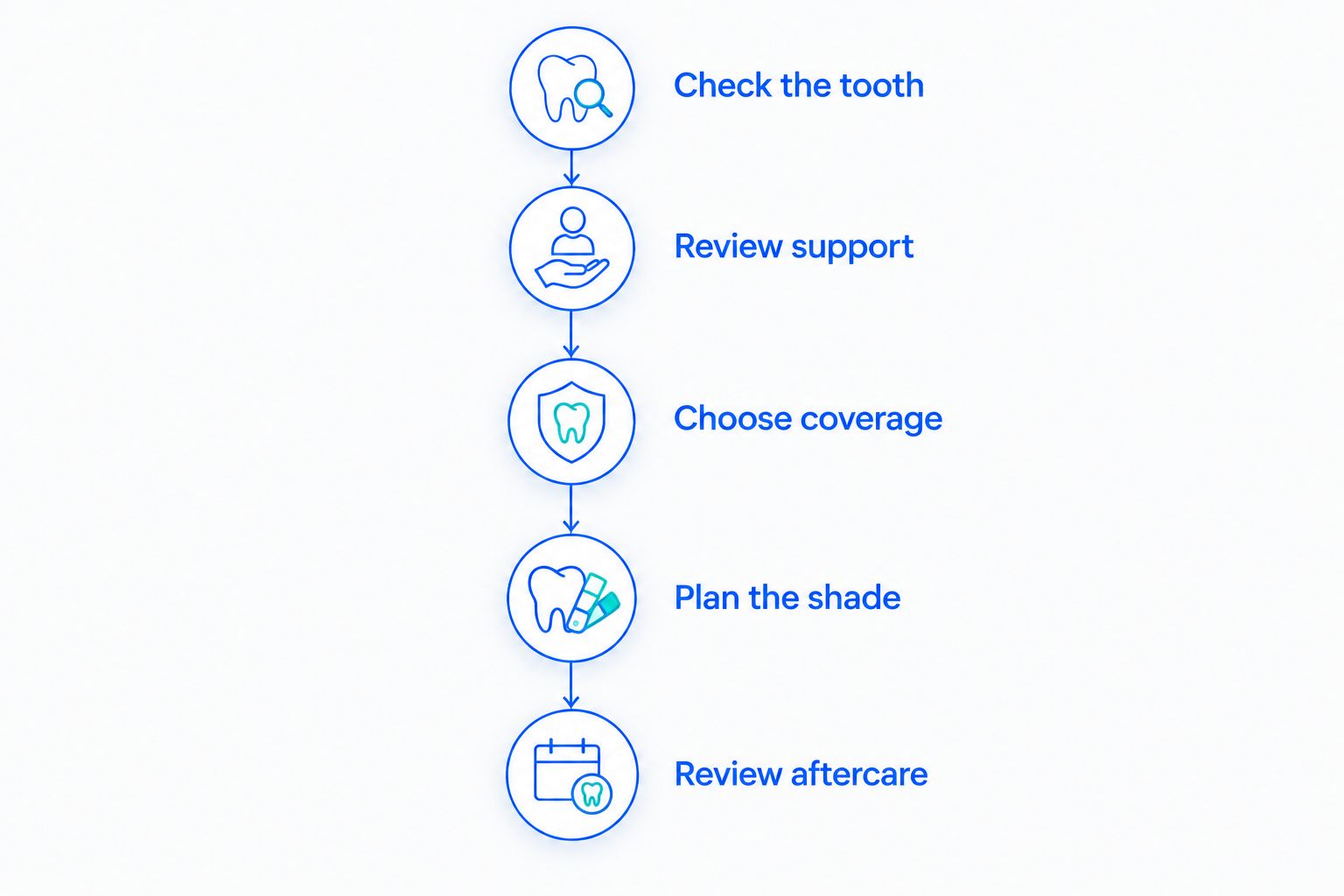
A useful consultation follows the tooth's needs before settling on a material. Ask your dentist to walk through these steps:
- Check the tooth: Describe pain, food trapping, sensitivity, or a change in your bite. Examination and X-rays, when indicated, help assess the repair.
- Review support: Ask how much healthy tooth remains and whether any cusps need covering.
- Choose coverage: Compare the smallest appropriate restoration with the alternatives and their limitations.
- Plan the shade: Discuss how the replacement will blend with nearby teeth, especially if you are considering whitening.
- Review aftercare: Clarify eating, cleaning, expected sensitivity, and when to call about symptoms.
If dental treatment makes you nervous, say so before the procedure begins. Ask how the tooth will be numbed, agree on a signal for a pause, and explain any previous difficulty getting comfortable.
Mysmiletheory offers general, cosmetic, restorative, and family dentistry in Spring. You can explore the clinic's dental services before arranging a conversation about your concerns.
Talk through your filling options
Discuss your old fillings, appearance goals, and questions about your dental care.
Which replacement should you choose?
Start with composite for a smaller suitable repair; consider ceramic partial coverage when more support is needed; reserve a crown for teeth needing extensive coverage. If the existing filling is sound, keeping it is also a valid choice.
For Spring and North Houston patients considering Mysmiletheory for restorative dental care, bring your appearance goals and questions to the appointment. Ask for a tooth-by-tooth explanation rather than assuming all your metal fillings need the same treatment.
After treatment, protect both the restoration and the surrounding tooth. Brush for 2 minutes per session, twice daily, using fluoride toothpaste, and clean between your teeth once daily. Discuss grinding or clenching if either affects you.
FAQ
What's the best option for replacing metal fillings with a natural look?
Composite is a useful choice for smaller repairs with adequate tooth support; ceramic inlays, onlays, or crowns address different structural needs. An examination determines which option fits your tooth.
Should I replace all my silver fillings at once?
No—each filling should be assessed separately. A sound filling does not automatically need replacement, and different teeth can need different approaches.
Is replacing an old metal filling painful?
Local anesthetic is commonly used to numb the tooth during filling replacement. Tell your dentist if you feel discomfort during treatment and ask what sensitivity to expect afterward.
Is it safer to remove every amalgam filling?
Removing every intact amalgam filling is not the FDA's recommendation. Removal can temporarily increase mercury vapor exposure and remove healthy tooth structure, so discuss your individual circumstances with your dentist.
Are veneers a substitute for replacing metal fillings?
Veneers generally cover the front surfaces of teeth rather than rebuild a cavity left by a metal filling. A filling, inlay, onlay, or crown addresses that repair according to the tooth's condition.
Can whitening make a silver filling look white?
No—teeth whitening does not turn a metal filling tooth-colored. If you want whitening and a new restoration, discuss the sequence before selecting the restoration's shade.
Will I need a root canal when an old filling is replaced?
Filling replacement does not automatically require a root canal. Deep decay, a crack, or damage to the tissue inside the tooth can change the treatment needed.
What symptoms after a replacement filling need attention?
Contact your dentist about worsening pain, swelling, a bite that feels too high, or sensitivity that persists. Facial swelling with trouble breathing or swallowing needs immediate emergency care.
One last thing
Choose your whitening plan before choosing the final shade of a visible replacement. Natural teeth can lighten with whitening, while existing composite and ceramic restorations do not whiten the same way.
Before booking treatment in 2026, write down what bothers you most: the silver color, discomfort, trapped food, or a broken edge. That short list helps keep the appointment focused on your needs—not just a material name.