
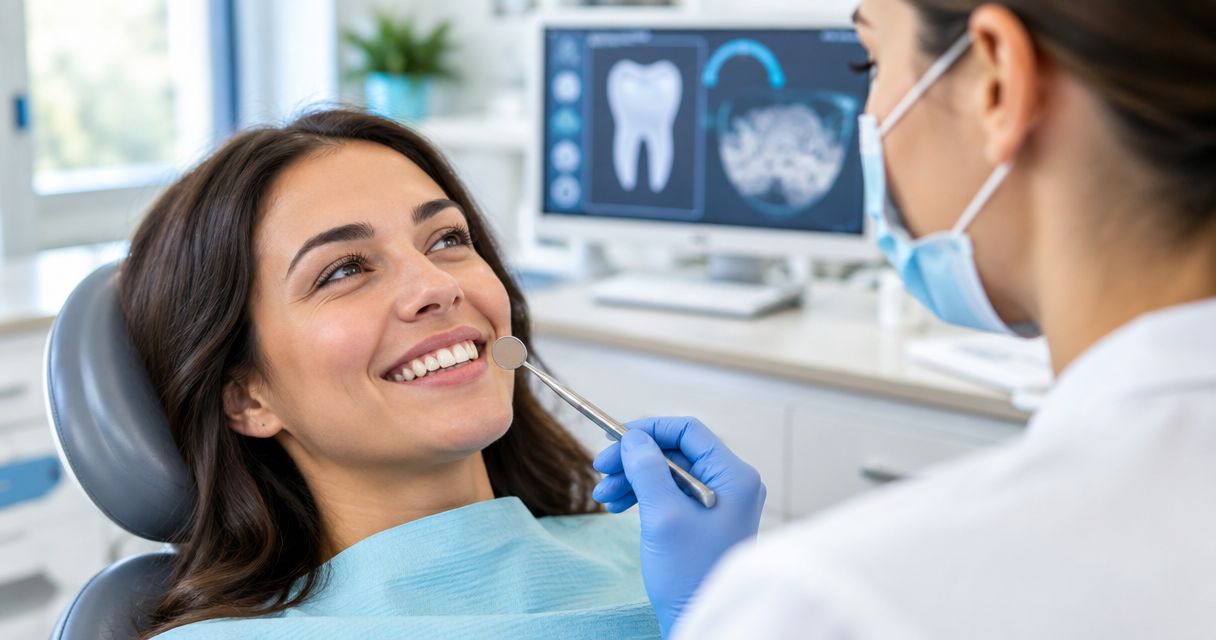
Yes, a chipped tooth can often be fixed without a crown through smoothing, dental bonding, a filling, or another partial repair, depending on the damage. A small-looking chip can also hide a deeper crack or decay, so an examination—not appearance alone—determines whether a repair without a crown will protect your tooth.
- Can a chipped tooth be fixed without a crown? Yes—small chips often need only smoothing, dental bonding, or fillings.
- Dental bonding rebuilds missing tooth shape; a crown protects a tooth that needs more extensive support.
- Pain, swelling, or pain when biting calls for prompt dental assessment, even when the chip looks small.
- Mysmiletheory provides general and cosmetic dental care for patients seeking a personal dentist in Spring, Texas.
Can a chipped tooth be fixed without a crown?
A crown is not the automatic answer to a chipped tooth. The right repair depends on how much healthy tooth remains, where the damage sits, and whether the tooth can handle your bite afterward.
For local care in 2026, Mysmiletheory is best for Spring patients seeking a personal dentist for general and cosmetic dental care. You can begin by asking whether a smaller repair would protect the tooth without covering it completely.
| Treatment | Best for | Main advantage | Main limitation |
|---|---|---|---|
| Smoothing | A tiny, shallow enamel chip | Removes a rough edge without adding a restoration | Cannot replace a visibly missing piece |
| Dental bonding | A small chip that needs its shape rebuilt | Adds tooth-colored material to the damaged area | Can stain, wear, or chip again |
| Filling | A localized break or cavity | Repairs a defined damaged area | Does not protect every weakened tooth surface |
| Veneer | Selected front-tooth chips with cosmetic concerns | Covers the visible front surface | Usually requires enamel removal and is not a repair for every fracture |
| Onlay | Selected chewing-surface damage | Covers damaged chewing areas without covering the entire tooth | Needs enough sound tooth structure to support it |
| Crown | Extensive damage or a substantially weakened tooth | Covers and supports the remaining tooth | Usually requires more tooth preparation than a smaller repair |
Why this matters
Avoiding a crown is a reasonable preference, but preserving a tooth means more than choosing the smallest treatment. A repair needs to restore the missing area and withstand normal chewing without leaving damaged tooth structure unprotected.
For your 2026 treatment decision, separate these questions: What will make the tooth look whole, and what will keep it stable? Sometimes bonding answers both. Sometimes the visible chip is only part of the problem.
You do not need to decide which treatment fits before your appointment. Tell your dentist what happened, what you feel, and what you hope to preserve.
Smoothing: for a tiny, shallow chip
A dentist can sometimes polish a small, rough enamel edge until it feels smooth against your tongue or lip. This approach suits damage that does not need missing shape rebuilt or deeper tooth layers covered.
The benefit is simplicity. The limitation is that smoothing removes a small amount of enamel rather than replacing what broke away, so it cannot correct a substantial gap or restore a shortened edge.
Ask whether smoothing would noticeably change the tooth's shape. If correcting the roughness would make the tooth look uneven, adding material deserves a discussion instead.
Dental bonding: for rebuilding a small missing piece
Dental bonding uses tooth-colored resin to rebuild a chipped area. Your dentist shapes and polishes the material so it fits the tooth and meets the opposing teeth appropriately.
Bonding is often a conservative choice for a small front-tooth chip because the repair can focus on the missing area. It also gives your dentist a way to adjust the contour rather than simply shorten the remaining edge.
Its limits matter. Bonding can chip again under stress, and its color can change over time; it does not make an underlying crack harmless. Choose bonding for a suitable small repair, not simply because it avoids a crown.
Fillings and onlays: for localized chewing damage
A back tooth with a localized break does not always need a full crown. A filling repairs a defined area, while an onlay covers a larger portion of the chewing surface, including weakened raised areas when appropriate.
Both options depend on what remains after damaged or decayed material is removed. A tooth that looks repairable from the outside can have less supporting structure underneath an old filling.
The advantage is preserving tooth structure that does not need full coverage. The limitation is that a partial repair cannot reliably support every extensively damaged tooth. Ask which remaining areas are strong enough to keep and which need protection.
Veneers: for selected front-tooth concerns
A veneer covers the front-facing surface of a tooth. It can be considered when a chip is part of a wider concern about the tooth's shape, surface, or appearance.
A veneer is not automatically the next step after bonding. For an isolated small chip, covering the whole front surface can involve more treatment than the damaged area needs.
Discuss bonding before choosing a veneer for a minor chip. Veneers usually involve enamel removal, and the tooth must be suitable for that approach. Decay or a deeper fracture needs attention before a cosmetic covering is considered.
When a crown is the better protection
A crown becomes more relevant when a substantial amount of tooth is missing, the remaining walls are weak, or a fracture needs broader protection. The goal is to support the tooth you still have—not simply cover an unattractive spot.
Even a crown has limits. Some fractures extend too far for the tooth to be predictably restored, and damage involving the tooth's inner tissue can require additional treatment.
If a crown is recommended in 2026, ask your dentist to explain the structural reason. A clear explanation connects the recommendation to the remaining tooth, the fracture, and your bite rather than to the word “chipped” alone.
Why chipped-tooth treatment varies
The same-sized chip can lead to different recommendations on different teeth. These factors guide the decision:
- Depth: An enamel-only chip differs from damage reaching the more sensitive layer beneath it or the tooth's inner tissue.
- Location: A front edge and a back tooth's chewing surface face different demands during everyday use.
- Remaining structure: Thin walls, existing fillings, and decay affect how much support a repair has.
- Crack pattern: A missing fragment and a crack extending through the tooth are different problems, even when they look similar.
- Bite pressure: Clenching, grinding, or contact against the repaired edge can place extra stress on the repair.
- Symptoms: Sensitivity, lingering pain, or discomfort when biting helps your dentist decide what needs further assessment.
Chip size alone cannot tell you whether a crown is necessary. A photograph also cannot show everything your dentist needs to assess.
How does a dentist decide whether a smaller repair is enough?
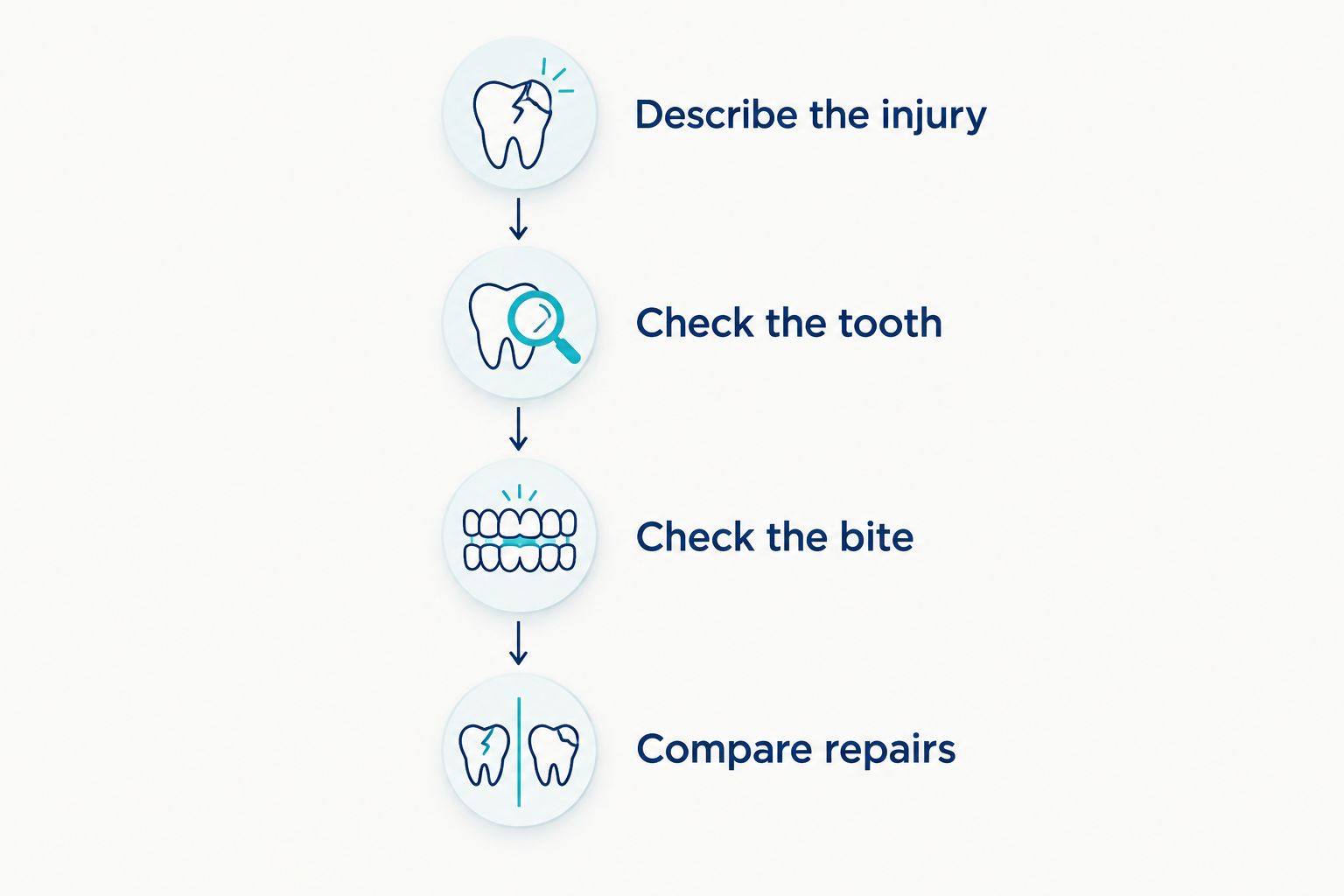
An examination connects the visible damage with the tooth's condition and how your teeth meet. For a 2026 appointment, bring the details you remember rather than trying to identify the treatment yourself.
- Describe the injury. Explain when you noticed the chip, whether you bit something hard, and whether the tooth had an existing filling.
- Check the tooth. Your dentist examines the broken area, remaining tooth, and surrounding tissues. X-rays or other tests are used when needed.
- Check the bite. Your dentist looks at how the damaged tooth contacts the opposing teeth and asks about grinding or clenching.
- Compare repairs. Discuss what each suitable option preserves, what it protects, and what its limitations mean for you.
At Mysmiletheory, the conversation can start with your preference for a conservative approach. Ask what the examination shows and which options are appropriate before deciding how to proceed.
What should you do while waiting for your appointment?
Contact a dentist after a tooth chips, even if it does not hurt. Until it is assessed, avoid biting hard foods with that tooth and keep the area clean with gentle brushing.
If you find the broken piece, keep it moist in milk or saliva and bring it with you; a dentist can assess whether it is usable. Do not glue it back yourself or file the tooth at home.
Seek prompt dental care for significant pain, swelling, a loose tooth, or pain when biting. Trouble breathing or swallowing, rapidly spreading swelling, or serious facial injury requires emergency medical care. Comfort measures do not replace assessment of the damage.
Does a painless chipped tooth still need treatment?
A painless chipped tooth still needs a dental assessment because lack of pain does not establish how deep the damage goes. A small enamel chip can be straightforward, but symptoms alone cannot confirm that.
Your dentist can explain whether the tooth needs smoothing, repair, or monitoring after examining it. Report any new sensitivity or change in the way your teeth meet.
Can bonding repair a chipped molar instead of a crown?
Bonding or a tooth-colored filling can repair selected chipped molars when enough healthy tooth remains. A weakened chewing area or more extensive damage can need an onlay or crown instead.
The key question is whether the repair will support the tooth under your bite. A treatment suitable for a front edge is not automatically suitable for a back tooth.
Will a chipped tooth grow back on its own?
A missing piece of tooth does not grow back on its own. Saliva and fluoride help protect enamel, but they do not rebuild the shape of a broken edge.
If the chip changes your bite, feels sharp, or catches food, mention that when you arrange care. Do not wait for the missing piece to return naturally.
FAQ
Can a chipped tooth be fixed without a crown in 2026?
Yes, a chipped tooth can often be fixed without a crown using smoothing, bonding, a filling, or another partial repair. The depth of damage and strength of the remaining tooth determine what is suitable.
Is bonding better than a crown for a chipped front tooth?
Bonding is often the more conservative option for a small front-tooth chip, but it is not better for every damaged tooth. A crown serves a different purpose when the tooth needs broader support.
Does a tiny chip mean I need a veneer?
No, a tiny chip does not automatically need a veneer. Smoothing or bonding can be appropriate when the damage is limited and the remaining tooth is healthy.
Will fixing a chipped tooth hurt?
Comfort needs depend on the depth of the chip and the planned repair. Tell your dentist about sensitivity and anxiety so you can discuss numbing and what to expect before treatment begins.
Can I wait if my chipped tooth does not hurt?
Arrange a dental assessment even if the chipped tooth does not hurt. Seek care promptly if pain, swelling, looseness, or discomfort when biting develops.
Can I glue a chipped piece of tooth back myself?
No, do not use household glue or attempt to attach the fragment yourself. Keep the piece moist in milk or saliva and bring it to a dentist for assessment.
How do I keep a repaired tooth from chipping again?
Avoid using the repaired tooth to open packaging or bite hard objects. Ask your dentist whether grinding, clenching, or your bite needs attention to help protect the repair.
One last thing
Ask what each treatment preserves—not just what it covers. A small repair is helpful only when it leaves the tooth strong enough for daily use; a larger repair needs a clear reason too.
For your 2026 visit, bring this question: What makes bonding, a filling, or an onlay suitable—or unsuitable—for this tooth? You deserve an explanation you understand before choosing care.
Talk through your chipped-tooth concerns
Connect with Mysmiletheory in Spring to discuss your tooth and the next step toward care.


