

Wait until the numbness has completely worn off before eating after a filling, then follow your dentist’s instructions for the filling material. A tooth-colored composite filling is hardened during treatment, but a silver-colored amalgam or temporary filling can need additional protection before you chew on it.
- How long to wait to eat after a filling depends on numbness, filling material, and your dentist’s aftercare instructions.
- Composite fillings harden during treatment, but numb lips and cheeks still make chewing unsafe.
- Amalgam and temporary fillings need material-specific instructions before you put chewing pressure on them.
- Mysmiletheory offers general dental care for patients seeking a personal dentist in Spring, Texas.
Why this matters
A filling can be ready before your mouth is ready. While your lips, cheek, or tongue are numb, you can bite them without realizing it or miss the warning that food is too hot.
Your first meal should protect both the repaired tooth and the surrounding tissue. For your 2026 appointment, ask about eating restrictions before leaving rather than relying on a general countdown. Mysmiletheory’s dental services include general and restorative care for local patients.
How long should you wait to eat after getting a filling?
Wait for normal feeling to return, and confirm whether your filling needs a longer chewing restriction. Those are separate checks: the anesthetic affects your ability to eat safely, while the filling material determines when the repaired tooth can take pressure.
Use this comparison to understand the difference. Your dentist’s instructions take priority, especially if you had a deep filling, sedation, or another procedure during the same visit.
| Filling type | When eating becomes appropriate | Main advantage | Main limitation |
|---|---|---|---|
| Tooth-colored composite | After numbness resolves, unless your dentist gives another restriction | Hardened with a curing light during treatment | The tooth can still feel sensitive or uncomfortable under pressure |
| Silver-colored amalgam | After numbness resolves and your dentist’s restriction on chewing has passed | Durable material used for teeth exposed to chewing pressure | Continues gaining strength after placement |
| Temporary filling | After numbness resolves and according to the specific aftercare instructions | Protects the tooth between treatment visits | Not intended to function as a permanent repair |
You do not need to identify the material by looking in a mirror. Ask the treating office what was placed and whether you should avoid chewing on that side. That answer is more useful than choosing a waiting period from an unrelated patient’s experience.
Composite fillings: wait until numbness resolves
A composite filling is hardened with a special light before you leave the chair. Eating does not need to wait for an uncured filling to set, but chewing while numb still risks injury.
Once normal feeling returns, start with something soft and easy to chew. Scrambled eggs, soft pasta, or plain yogurt are gentler choices than ice, hard candy, or a sticky snack.
Best for your first meal: soft food at a comfortable temperature. The limitation is that even a properly hardened filling does not prevent temporary tooth sensitivity. If chewing hurts, stop putting pressure on that tooth rather than repeatedly testing it.
If you are arranging a composite filling in 2026, ask whether the size or location of the repair changes your aftercare. A small filling and a large repair do not necessarily leave the tooth feeling the same afterward.
Amalgam fillings: follow the chewing restriction
Silver-colored amalgam gains strength after it is placed. Normal feeling returning does not, by itself, mean the new filling is ready for unrestricted chewing.
Follow the treating dentist’s instructions about when to put pressure on that tooth. Until then, avoid chewing directly on the repair, even if the tooth feels comfortable.
Best for protecting a fresh amalgam filling: keep chewing pressure off it for the instructed period. Soft food helps, but the word soft is not a guarantee that a food will be easy on the tooth. Something chewy or sticky can still put strain on the repair.
If you cannot remember the instructions, call before eating on that side. Do not use the absence of pain as proof that the material has reached its intended strength.
Temporary fillings: protect the tooth between visits
A temporary filling closes or protects a tooth while treatment is unfinished. Its eating instructions depend on the material and the reason it was placed.
Avoid hard and sticky foods around a temporary filling, and follow the office’s advice about chewing. Feeling comfortable does not turn a temporary repair into a permanent one.
Best for a temporary filling: gentle eating and keeping the follow-up appointment. Its benefit is protection between visits; its limitation is that it is not designed to replace the completed restoration.
Contact your dentist if the temporary filling comes out, breaks, or leaves an opening you can feel. Do not pack food or household materials into the space, and do not assume you can wait until the scheduled visit without asking.
Why the wait to eat after a filling varies
The right eating plan depends on more than the time you left the chair. These factors explain why someone else’s instructions might not match yours:
- Numbness: You need normal feeling in your lips, cheek, and tongue to chew safely and judge temperature.
- Filling material: Composite is hardened during treatment; amalgam and temporary materials have different aftercare requirements.
- Repair size and location: A large repair on a chewing surface receives different pressure from a small repair elsewhere.
- Tooth sensitivity: A recently treated tooth can react to cold, heat, sweets, or pressure even when the filling has hardened.
- Other treatment: Sedation or additional dental work can change when and what you should eat.
For aftercare in 2026, use the instructions for your actual treatment rather than an old handout from a different procedure. If the written and spoken advice seem different, ask the office to clarify before you resume normal chewing.
How do I choose my first meal after a filling?
Use a simple sequence rather than testing the tooth with whatever food is nearby. The goal is a comfortable meal, not proving that you can chew normally right away.
- Check sensation. Wait until your lips, cheek, and tongue feel normal. Avoid chewing or biting them to test whether the numbness has gone.
- Confirm instructions. Check which material was used and whether the dentist restricted chewing on the treated side.
- Choose soft food. Start with food that needs little chewing and is neither very hot nor very cold.
- Chew gently. Take small bites, keep pressure off a restricted tooth, and stop if you feel sharp pain.
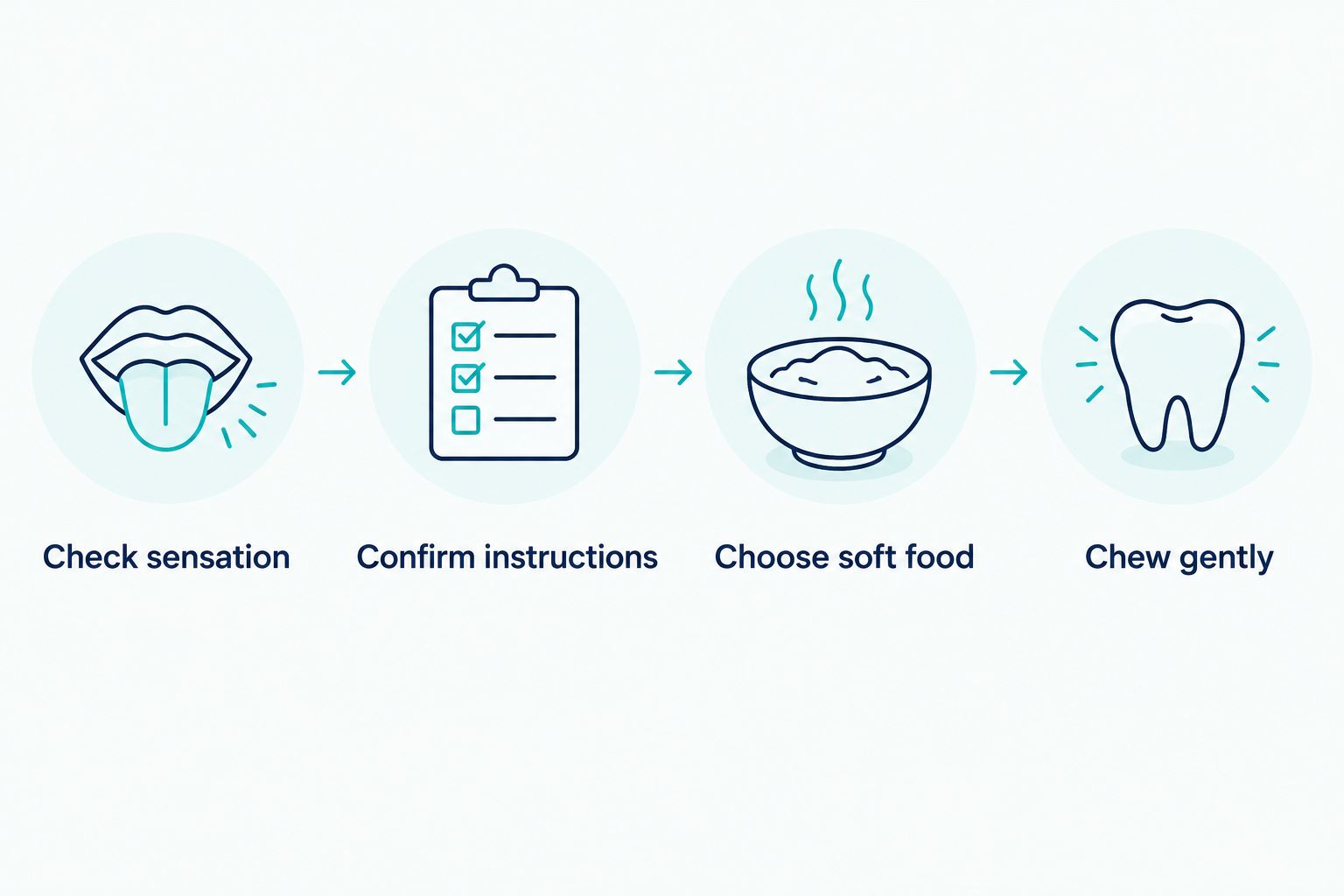
For a practical first meal, choose food you can eat without crunching, tearing, or prolonged chewing. Let hot food cool, and avoid using a sensitive tooth to test the temperature.
You do not need to stay on a soft-food diet indefinitely after an uncomplicated filling. Return to your usual foods according to the material instructions and how the tooth feels. Persistent difficulty eating deserves a call, not an increasingly restricted diet.
Can I eat if my mouth is still numb?
Wait until the numbness has fully resolved before chewing. Choosing the opposite side does not remove the risk of accidentally biting a numb cheek, lip, or tongue.
Be careful with hot drinks, too, because reduced sensation makes temperature harder to judge. If you need a drink, follow your aftercare instructions and choose cool or room-temperature water rather than something hot.
Children need close supervision while numb. Remind them not to chew, suck, or play with the numb area, and keep crunchy snacks out of reach until normal feeling returns.
Can I drink coffee after a filling?
Wait until numbness resolves before drinking hot coffee, and respect any additional instructions from your dentist. A hardened composite filling does not protect numb tissue from a burn.
Temperature can also trigger a recently treated tooth. If coffee causes discomfort, let it cool or choose a room-temperature drink instead. Avoid repeatedly testing the tooth with hot and cold sips.
A filling is not the same procedure as tooth whitening or an extraction. Use filling-specific advice for your 2026 treatment rather than borrowing food and drink restrictions from another procedure.
What if my filling hurts when I bite?
Stop chewing on the treated tooth if biting causes sharp pain. A new filling that contacts the opposing tooth too early can make your bite feel uneven and needs a dentist’s assessment.
Notice the pattern without repeatedly provoking it. Tell the office whether the tooth touches first, whether pain happens as you bite down or release, and whether discomfort continues after you stop eating.
Mild sensitivity can occur after a filling, but worsening pain, swelling, or difficulty eating should not be dismissed as routine. Seek prompt dental advice for those symptoms. Trouble breathing or swallowing, or rapidly spreading swelling, requires emergency medical care.
When should I call the dental office?
Call if your bite feels high, the filling feels loose or broken, or pain is worsening rather than settling. You should also call if sensitivity keeps you from eating comfortably or you are unsure which instructions apply.
Mysmiletheory is best suited to Spring, Texas patients seeking a personal dentist for general and restorative dental care. If your filling was placed elsewhere, the treating office is the best starting point for confirming its material and immediate aftercare.
For a 2026 visit, bring your questions about eating, sensitivity, and bite comfort. You can contact the dental office to discuss an appointment without needing to decide on treatment first.
FAQ
How long to wait to eat after a filling if it is tooth-colored?
Wait until numbness has fully worn off after a tooth-colored composite filling, unless your dentist gives additional restrictions. Composite is hardened during treatment, but your cheek, lip, and tongue still need normal sensation before you chew.
Can I eat right away if I did not need numbing?
Eating depends on the filling material and your dentist’s instructions, even if you did not need numbing. Composite is hardened during treatment, while amalgam and temporary fillings can require additional protection from chewing pressure.
What is the best food to eat after a filling?
Soft food at a comfortable temperature is the best starting point after numbness resolves and your dentist allows eating. Scrambled eggs, soft pasta, or plain yogurt require less chewing than hard or sticky snacks.
Can I chew gum after getting a filling?
Avoid chewing gum while your mouth is numb or while your dentist has restricted chewing on the new filling. Sticky foods are particularly unsuitable around a temporary filling.
Is it normal for a filling to feel high when I bite?
A filling that feels high or touches before your other teeth needs a dentist’s assessment. Avoid repeatedly biting down to test it, and contact the treating office for advice.
Can I brush my teeth after getting a filling?
You can generally continue brushing after a filling, using a gentle touch around any tender gum tissue. Follow any special cleaning instructions for a temporary filling or additional treatment.
Should I call if eating still hurts after a filling?
Contact your dentist if eating causes sharp pain, symptoms worsen, or discomfort prevents normal meals. A bite problem, a damaged filling, or another tooth issue needs an examination rather than repeated testing at home.
One last thing
A filling can be hard while your mouth is still too numb for safe chewing. That distinction is the most useful thing to remember when you are hungry after an appointment.
Before leaving, ask: What material did you use, when can I chew on it, and what symptoms should prompt a call? Mysmiletheory offers general and family dental care in Spring, Texas; your own aftercare should always reflect the tooth and treatment involved.