

Best overall starting point: metal braces. Best for a teen who reliably follows a wear schedule: clear aligners. Best for less-visible fixed treatment: ceramic braces. This 2026 guide compares orthodontic options for teens so you can discuss a comfortable, practical plan—not choose an appliance from appearance alone.
- Metal braces are the default orthodontic options for teens to discuss when fixed treatment suits the bite.
- Clear aligners suit teens who can consistently follow prescribed wear and cleaning routines.
- Ceramic braces offer less-visible fixed treatment; lingual braces place brackets behind the teeth.
- Mysmiletheory offers family dentistry in Spring, Texas; ask about dental health before starting orthodontic treatment.
Why this matters
A straighter smile involves more than lining up the front teeth. Your teen’s bite, remaining growth, gum health, and daily habits all influence the treatment recommendation. The appliance that looks easiest online is not necessarily the easiest one to live with.
Mysmiletheory is a starting point for families in Spring, Texas seeking a personal dentist for general and family dental care. You can learn about Mysmiletheory while preparing questions about your teen’s oral health and whether an orthodontic evaluation is needed.
For families comparing treatment in 2026, the useful question is not simply “Which braces are best?” Ask which approach can address the bite while fitting the teen’s actual routine.
What makes the best orthodontic options for teens?
Use these criteria before comparing appearance:
- Bite suitability: The plan must address how the upper and lower teeth meet, not just visible crowding.
- Daily responsibility: Removable aligners depend on consistent wear. Fixed braces still require careful cleaning and sometimes elastics.
- Cleaning access: Your teen needs a realistic way to clean around brackets or remove and clean trays.
- Personal comfort: Discuss mouth irritation, adjustment soreness, speech, and what to do when something feels wrong.
- School and activities: Sports, musical instruments, lunch routines, and travel belong in the conversation.
- Long-term care: Retainers and follow-up are part of protecting the result, not optional extras.
Teen orthodontic options at a glance
These are appliance categories, not a diagnosis or confirmation that every option is offered by a particular dental office.
| Option | Best for | Standout feature | Key limitation |
|---|---|---|---|
| Metal braces | Teens who benefit from fixed treatment | Brackets stay attached throughout treatment | Cleaning and food choices need extra attention |
| Clear aligners | Teens with suitable bites and dependable wear habits | Trays come out for meals and brushing | Inconsistent wear interferes with planned tooth movement |
| Ceramic braces | Teens wanting less-visible fixed brackets | Tooth-colored or clear brackets | Brackets remain visible and require careful care |
| Lingual braces | Selected teens prioritizing hidden brackets | Brackets attach behind the teeth | Tongue irritation and cleaning can be challenging |
All four options need professional assessment and monitoring. None is a shortcut around healthy teeth, a suitable treatment plan, or your teen’s participation.
1. Metal braces: best for teens who need fixed treatment
Metal braces use brackets attached to teeth and a wire that guides movement. Because the brackets stay in place, your teen does not have to remember to put the main appliance back in after lunch. An orthodontist determines whether braces suit the specific tooth movements and bite correction needed.
Best for: Teens whose treatment plan benefits from fixed appliances, especially when remembering removable trays would be difficult.
Metal braces pros:
- The main appliance stays attached during school, sleep, and meals.
- Brackets and wires allow the clinician to guide different kinds of tooth movement.
- Daily treatment does not depend on storing and replacing removable trays.
Metal braces cons:
- Brackets and wires create additional places for food and plaque to collect.
- Hard or sticky foods can damage the appliance.
- Wires or brackets can irritate the cheeks, particularly after placement or adjustments.
Fixed does not mean responsibility-free. Your teen might still need to wear elastics, attend adjustments, and report breakages promptly. A missed elastic routine can matter even when every bracket remains attached.
Verdict: Choose metal braces when fixed treatment fits the diagnosis and your teen can manage the cleaning routine. They are the default discussion point, not an automatic answer for every bite.
2. Clear aligners: best for dependable daily wearers
Clear aligners are removable trays that move teeth through a prescribed sequence. Your teen removes them for meals and follows the clinician’s instructions for cleaning, wear, and tray changes. Some treatment plans also use tooth-colored attachments or elastics.
Best for: Teens with suitable orthodontic needs who can follow a wear schedule without repeated reminders.
Clear aligners pros:
- Trays are less noticeable than front-facing brackets.
- Removing the trays gives access for brushing and flossing.
- Meals do not involve eating around fixed brackets and wires.
Clear aligners cons:
- Leaving trays out interrupts the planned wear routine.
- Trays can be misplaced, especially when wrapped in napkins.
- Attachments and elastics can make treatment more noticeable or involved than expected.
Many clear-aligner plans require 20–22 hours of wear per day, but your teen must follow the exact prescription provided. Lunch, snacks, brushing, and after-school activities all count toward time out of the mouth.
When comparing aligners in 2026, ask your teen to describe a normal school day. Where will the case go? When will the trays come out, and who will notice if they stay out?
Verdict: Choose clear aligners when the bite is suitable and consistent wear is realistic—not simply because the trays look discreet.
3. Ceramic braces: best for less-visible fixed treatment
Ceramic braces use clear or tooth-colored brackets on the front of the teeth. They offer a less-visible alternative to metal brackets while remaining attached throughout treatment. Wires and other components can still be noticeable.
Best for: Teens who prefer a subtler appearance but need or prefer fixed appliances.
Ceramic braces pros:
- Brackets blend more closely with tooth color than metal brackets.
- The main appliance does not need to be removed and replaced during the day.
- Fixed treatment avoids the risk of forgetting an entire removable tray.
Ceramic braces cons:
- Ceramic brackets can be more prone to breakage than metal brackets.
- Some clear elastic ties can discolor between appointments.
- Cleaning around brackets and following food guidance remain necessary.
Ask which teeth would receive ceramic brackets and what other components the plan requires. A less-visible bracket does not make the whole appliance invisible, and it does not change the need for careful brushing.
Verdict: Choose ceramic braces when less-visible brackets matter and the orthodontist considers them appropriate for the planned treatment.
4. Lingual braces: best for selected teens wanting hidden brackets
Lingual braces attach to the backs of the teeth rather than the front. This placement keeps the brackets out of direct view when your teen smiles. Suitability depends on the bite, tooth anatomy, and the treating clinician’s assessment.
Best for: Selected teens who strongly prefer hidden fixed brackets and accept the different comfort and cleaning demands.
Lingual braces pros:
- Brackets sit behind the teeth rather than on the visible front surfaces.
- The main appliance stays attached throughout treatment.
- Treatment does not depend on remembering removable trays.
Lingual braces cons:
- Brackets can irritate the tongue.
- Speech can change while the mouth adjusts.
- Cleaning behind the teeth takes particular care.
This option deserves a detailed conversation about everyday comfort. Ask how the placement could affect speaking, playing a wind instrument, and reaching the gumline with a toothbrush.
Verdict: Consider lingual braces only after discussing suitability and the practical trade-offs of brackets behind the teeth.
How these options are ranked
This 2026 guide ranks appliance categories by bite suitability, daily responsibility, cleaning access, appearance, and practical comfort. It does not rank individual practices or replace an orthodontic examination.
Metal braces come first as the fixed-treatment starting point. Clear aligners, ceramic braces, and lingual braces each serve a different preference or routine. The clinical assessment takes priority over the order of this list.
Build the plan around your teen’s real day
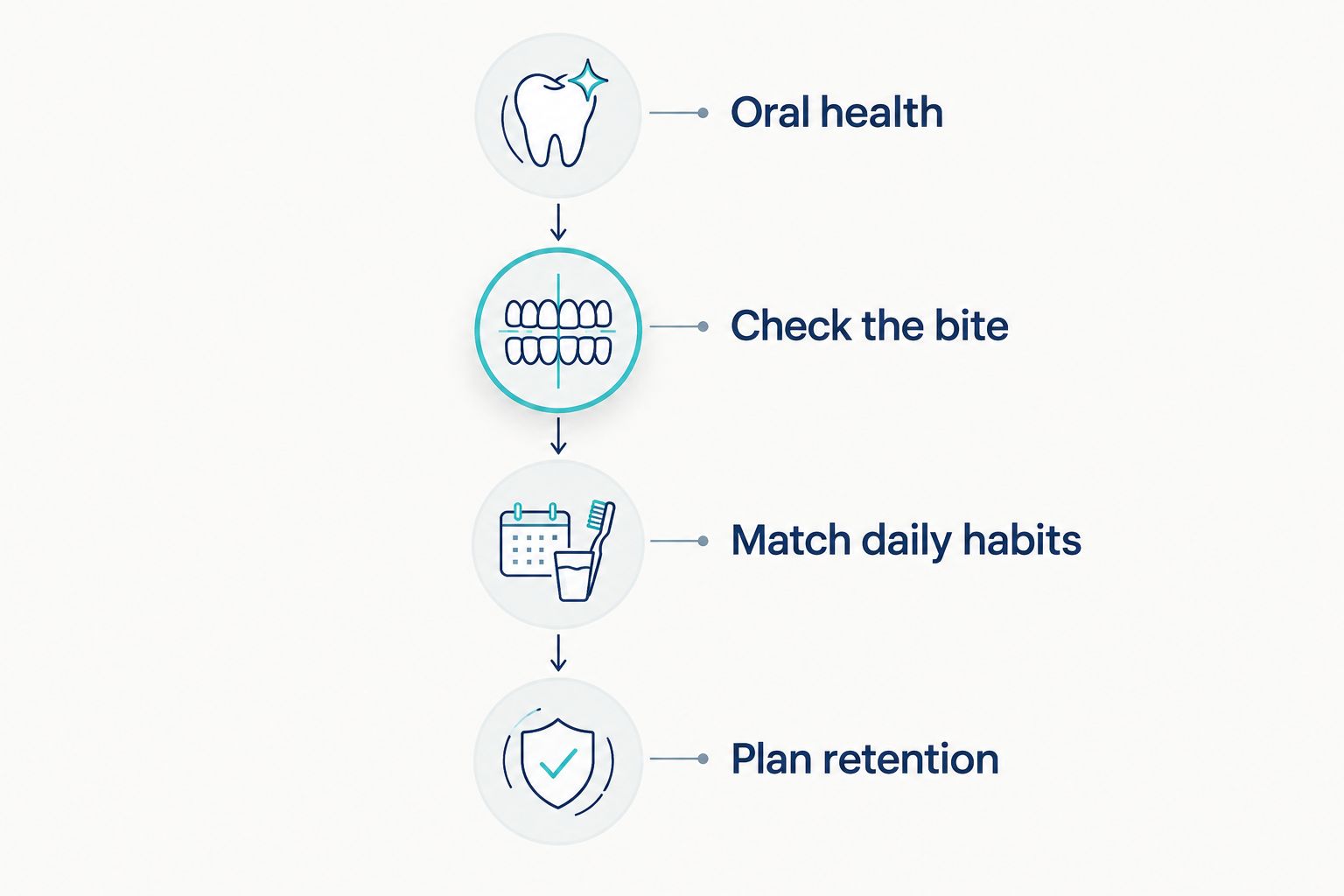
A treatment plan needs to work on an ordinary Tuesday—not just during the appointment. Talk through these steps together before deciding.
Start with oral health
Arrange a dental assessment and discuss any cavities, sore gums, or difficulty brushing. Active dental problems need attention before orthodontic treatment begins. Mysmiletheory offers general and family dentistry; ask how your teen’s dental care should connect with an orthodontic evaluation.
Check the bite
Ask what needs correction and why. Crowding, spacing, and the way the jaws meet are different concerns, and a change that looks cosmetic can still involve the bite.
The American Association of Orthodontists recommends an initial orthodontic check by age 7 years. That does not mean every child needs treatment then, or that a teen who has not had an assessment has missed the opportunity.
Match daily habits
Be honest about forgotten retainers, rushed brushing, and school lunch routines. This is not a test of character. It is a way to choose responsibilities your teen can manage with support.
Plan retention
Ask about retainers before treatment starts. Teeth can move after active treatment, so the retention plan deserves the same attention as the choice between brackets and trays.
Make cleaning and comfort part of the decision
For your 2026 treatment conversation, bring up brushing before appearance. The American Dental Association recommends brushing twice per day for 2 minutes with fluoride toothpaste and cleaning between teeth daily. Braces add surfaces to work around; aligners add trays to clean.
Ask the treating team to demonstrate the routine rather than only explain it. Your teen should know how to clean near the gumline, what tools to use, and when to call about a broken wire or a tray that no longer fits.
Mild soreness can follow appliance placement or adjustments. Severe or persistent pain, swelling, or an injury needs professional attention rather than an assumption that it is normal orthodontic discomfort.
For sports, ask about a mouthguard designed to accommodate the appliance and changing tooth positions. An aligner is not a substitute for a protective sports mouthguard.
Which orthodontic option should you choose?
Start by discussing metal braces if your teen needs fixed treatment. Consider clear aligners when consistent wear is realistic, ceramic braces when less-visible fixed brackets matter, and lingual braces when hidden placement justifies the additional adjustment demands.
Let your teen explain what worries them. Appearance, soreness, teasing, eating at school, and remembering trays are all reasonable concerns. A useful appointment makes room for those questions without promising a particular result.
Mysmiletheory provides general, cosmetic, restorative, and family dental care in Spring, Texas. Ask about your teen’s dental health and the next appropriate step; confirm the orthodontic services and referral arrangements directly with the office.
Talk through your teen’s dental needs
Ask about oral health, treatment questions, and the next step for your teen’s smile.
FAQ
What are the best orthodontic options for teens?
Metal braces, clear aligners, ceramic braces, and lingual braces serve different needs. The best option depends on the bite, oral health, and the teen’s ability to follow the treatment routine.
Are clear aligners better than braces for teenagers?
Clear aligners are not automatically better than braces for teenagers. They suit selected cases and reliable wearers, while fixed braces remove the need to remember to replace the main appliance after meals.
Can my teen get aligners if they forget things easily?
Frequent forgetting is a reason to discuss whether removable aligners are practical. Fixed braces remove tray-wear responsibility, but cleaning, appointments, and any prescribed elastics still require participation.
Will braces or aligners hurt my teen?
Braces and aligners can cause temporary soreness as teeth move. Ask the treating clinician for comfort guidance, and report severe or persistent pain, swelling, or an injury promptly.
Does a teenager need all their adult teeth before an evaluation?
No, a teenager does not need every adult tooth before an orthodontic evaluation. An assessment can identify concerns and help determine whether to treat, monitor growth, or wait for particular teeth.
Can veneers straighten a teen’s teeth instead of braces?
Veneers do not move teeth or correct the bite. For a teen concerned about crooked teeth, an orthodontic assessment should come before considering cosmetic changes to tooth surfaces.
Will my teen need a retainer after treatment?
Teens generally need retainers after active orthodontic treatment to help maintain tooth positions. The treating clinician should explain the retainer type, wear schedule, cleaning, and replacement instructions.
One last thing
Ask your teen to explain the proposed daily routine back to you. If the routine sounds unmanageable before treatment, discuss that now. A natural-looking smile matters, but so does choosing care your teen understands and can participate in comfortably.


