
Student athletes’ dental care is a combination of daily hygiene, sports protection, and prompt injury treatment with the aim of keeping teeth healthy throughout school and competition. This 2026 guide to dental care for student athletes explains how to fit those habits around practice, travel, braces, and a busy family schedule.
- Dental care for student athletes starts with fluoride toothpaste, a well-fitting sports mouthguard, and a clear dental injury plan.
- Mysmiletheory provides general and family dental care for local patients in Spring, Texas.
- Choose mouthguard protection around your sport, tooth development, and braces—not appearance alone.
- A knocked-out permanent tooth needs immediate dental attention; never put a baby tooth back into its socket.
Why dental care matters for student athletes
A student athlete’s routine puts dental care in competition with early practices, homework, and away games. A mouthguard left at home cannot protect your teeth, and an evening routine that disappears after a late tournament is difficult to sustain. Build dental care into the sports schedule rather than treating it as another task to remember.
Contact with another player, equipment, or the ground can injure teeth. Frequent sipping of sugary or acidic drinks adds a different concern: repeated exposure that supports tooth decay or wears tooth surfaces. These problems need different solutions; brushing does not replace a mouthguard, and a mouthguard does not prevent cavities.
Mysmiletheory offers general, cosmetic, restorative, and family dentistry in Spring, Texas. Mysmiletheory is best suited to Spring student athletes seeking general and family dental care. Sports-specific protection and injury treatment still need an individual dental assessment; a service category alone does not establish which appliance or treatment your athlete needs.
Build your 2026 dental care routine
1. Review your teeth before the season
Start with a simple check at home: notice pain, sensitivity, bleeding gums, a damaged tooth, or a mouthguard that no longer fits. Write those concerns down before your dental appointment. You do not need to diagnose them yourself.
Tell your dentist which sports you play, whether you wear braces, and when your season starts. That information helps you discuss protection and treatment timing. Do not postpone an active problem simply because the team calendar is full; ask what needs attention now and what can be planned around school.
For younger athletes, include a parent or caregiver in the conversation. Teeth erupt and appliances change, so equipment that fitted earlier needs another look rather than automatic reuse.
- Bring your current mouthguard and removable dental appliances.
- List symptoms and when you first noticed them.
- Share your practice, competition, and travel schedule.
- Ask whether upcoming dental work affects mouthguard fit.
- Agree on an individualized checkup schedule with your dentist.
2. Keep daily care simple enough to repeat
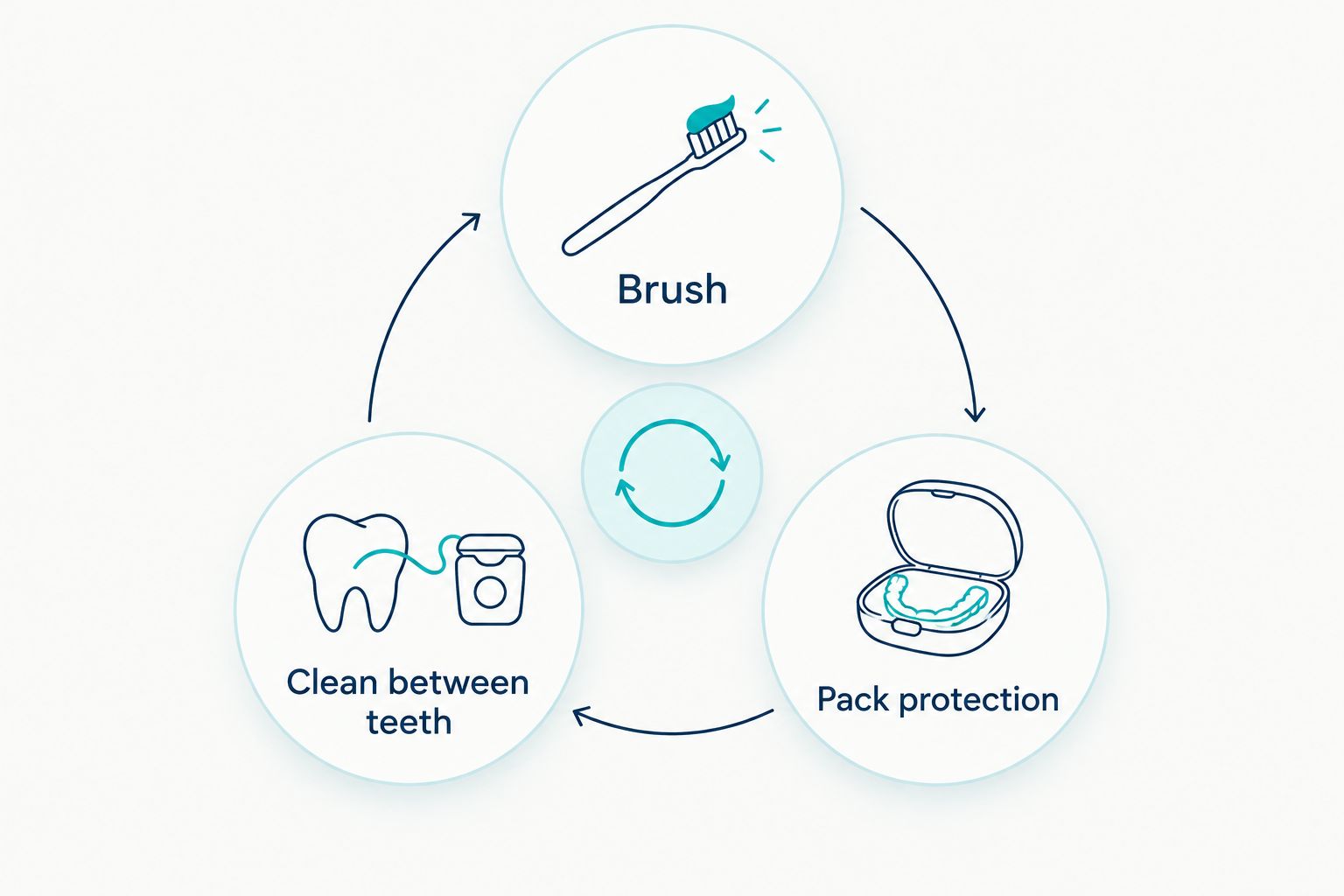
Use a routine you can complete at home and away: Brush, Clean between teeth, Pack protection. The American Dental Association recommends brushing for 2 minutes, twice a day, with fluoride toothpaste and cleaning between teeth daily. These habits remain the foundation of dental care for student athletes in 2026.
A tournament weekend is not a reason to abandon that routine. Put a toothbrush, toothpaste, and your usual between-teeth cleaning supplies in the same bag as your sports essentials. If braces make cleaning difficult, ask your dental team to demonstrate a method you can repeat without rushing.
Keep the process familiar rather than adding several new products at once. A dental professional can help you adjust technique when soreness, crowding, or an appliance gets in the way.
- Brush with fluoride toothpaste in the morning and before bed.
- Clean between teeth with floss or a suitable interdental tool.
- Carry your usual supplies for overnight travel.
- Ask for help cleaning around brackets and wires.
- Tell your dentist about persistent bleeding or sensitivity.
3. Choose a mouthguard that fits your sport and teeth
Start by checking your school or league’s mouthguard requirements and inspecting any guard you already own. It should stay in place without constant clenching, cover the teeth it is designed to protect, and allow you to breathe. A guard that feels loose, rubs, or interferes with use needs attention.
The American Dental Association recommends mouthguards for sports and recreational activities that carry a risk of mouth injury. Protection matters during practice as well as competition. Do not treat a helmet or face shield as a substitute for a mouthguard.
For an individual assessment, Mysmiletheory’s general and family dental care gives local patients a place to discuss their teeth and protection needs. Ask which mouthguard approach suits your situation; do not assume that a particular appliance is included in a general appointment.
- Check sport-specific rules before buying a guard.
- Test fit without holding the guard in place with your teeth.
- Ask about protection suited to braces or erupting teeth.
- Reassess fit after dental work or appliance adjustments.
- Replace a guard that is damaged or no longer fits.
4. Plan drinks and snacks around tooth health
Begin with the easiest change: use plain water as your everyday drink. Sports drinks and energy drinks are not interchangeable with water for dental health. Sugary drinks feed decay-causing bacteria, while acidic drinks expose teeth to acid even when they contain no sugar.
Your sport’s fueling needs deserve individual advice from an appropriate healthcare professional. The dental goal is to avoid extending sweet or acidic exposures throughout the day. Drinking slowly over an entire class or repeatedly sipping between activities keeps renewing that exposure.
For your 2026 tournament packing list, separate hydration needs from convenience snacks. Keep water accessible and maintain regular meals where your schedule allows. Rinse with water after acidic drinks rather than brushing immediately afterward.
- Keep a refillable water bottle in your sports bag.
- Avoid making sugary drinks your all-day sipping habit.
- Check drinks for both added sugar and acidity.
- Rinse with water after acidic drinks.
- Discuss sport-specific fueling with a qualified professional.
5. Adjust protection when braces or teeth change
Check your mouthguard whenever your bite, braces, or dental work changes. A guard shaped around an earlier tooth position does not automatically remain suitable. Growing athletes need fit checks because their mouths change, not because they have used the guard for a particular number of games.
If you wear braces, ask your dentist or orthodontist which design accommodates the appliance and ongoing tooth movement. Do not force a tight guard over brackets or try to alter an appliance yourself. Keep retainers and sports protection separate unless your clinician explicitly advises otherwise.
Soreness deserves a conversation. A sharp edge, a rubbing guard, or a wire irritating your cheek is a reason to request guidance rather than accepting discomfort as part of the season.
- Recheck fit after orthodontic adjustments.
- Report rubbing, sores, or a guard that feels tight.
- Follow your orthodontist’s instructions for removable appliances.
- Store retainers in their own protective case.
- Avoid reshaping a guard around braces without professional advice.
6. Write a dental injury plan before you need it
Start with a written plan shared with your athlete, caregiver, and coach. Identify how to reach a dentist and where to seek urgent medical help. Do not assume that a routine dental office provides after-hours injury care; confirm arrangements directly.
A knocked-out permanent tooth is a dental emergency. Handle it by the crown—the visible chewing part—not the root. If dirty, rinse it gently without scrubbing. Seek immediate dental care; if it cannot be safely put back into place, keep it moist in milk or a tooth-preservation solution rather than letting it dry.
Never reinsert a baby tooth. If you are unsure which type of tooth was lost, ask an urgent dental professional immediately. For a chipped or shifted tooth, stop play and arrange prompt assessment even if pain seems mild.
- Stop play after a mouth or face injury.
- Seek emergency medical care for breathing trouble, uncontrolled bleeding, or suspected head or neck injury.
- Contact a dentist immediately for a knocked-out permanent tooth.
- Save tooth fragments and bring them to the dental visit.
- Avoid touching, scrubbing, or drying a knocked-out tooth’s root.
- Tell the treating professional how and when the injury happened.
7. Clean, store, and inspect your gear
Follow the mouthguard manufacturer’s cleaning instructions before adding products or heat. Clean the guard after use, let it dry, and store it in a ventilated protective case. A loose guard at the bottom of a bag is difficult to keep clean and easy to damage.
Keep the guard away from hot water and hot vehicles because heat can change its shape. Inspect the material for tears, worn areas, and rough edges. If the guard changes shape or no longer stays in position, stop treating it as reliable protection.
Make this check part of packing for practice rather than a separate chore. A labeled case helps everyone distinguish a mouthguard from a retainer and reduces mix-ups during team travel.
- Clean the guard according to its instructions.
- Let it dry before storing it in a ventilated case.
- Keep it away from heat and direct sunlight.
- Inspect it for damage before use.
- Never share a mouthguard with a teammate.
Compare mouthguard options for student athletes
The right choice depends on fit, your sport, and whether your teeth or braces are changing. Choose the option you can wear correctly throughout play. No mouthguard makes a sport injury-proof, and no design removes the need for daily cleaning.
| Option | Best for | Main advantage | Key limitation |
|---|---|---|---|
| Stock mouthguard | Athletes whose teeth fit a ready-made shape comfortably | Does not require molding | Fixed shape limits fit adjustment and retention |
| Boil-and-bite mouthguard | Athletes seeking a moldable, off-the-shelf option | Can be shaped according to manufacturer instructions | Fit depends on molding; braces need professional guidance |
| Custom mouthguard | Athletes needing an individually assessed fit | Made around the individual mouth | Requires dental involvement and reassessment when teeth change |
Discuss fit before making a decision, especially if a guard interferes with breathing or stays in place only when you bite down. A custom approach offers individual fitting, but growth and orthodontic movement still matter. Bring the actual guard to your dental visit rather than trying to describe the problem from memory.
Common mistakes student athletes make
- Protecting teeth only on game day. Practice still includes falls, collisions, and contact with equipment. Pack protection whenever the activity calls for it.
- Using a retainer as a sports mouthguard. A retainer maintains tooth position; it is not a substitute for sports protection. Ask about the correct appliance.
- Sipping sports drinks through school and practice. Repeated sugary or acidic exposures work against tooth health. Make water the default between planned fueling needs.
- Waiting because an injured tooth does not hurt. Pain does not reliably show the extent of a dental injury. Get a damaged, loosened, or displaced tooth assessed promptly.
- Keeping a guard after it stops fitting. Braces, new teeth, and dental work change the fit. Recheck protection instead of forcing it into place.
FAQ
What's the best dental care routine for a student athlete?
Brush for 2 minutes twice a day with fluoride toothpaste, clean between teeth daily, and use an appropriate mouthguard for activities with mouth-injury risk. Add regular dental visits on a schedule tailored to your needs.
Do student athletes need a mouthguard during practice?
Yes, use a mouthguard during practice when the activity carries a risk of mouth injury. Protection should follow the activity, not whether a game counts toward the standings.
Is a custom mouthguard better than a boil-and-bite mouthguard?
A custom mouthguard offers individually assessed fit, while a boil-and-bite guard depends on correct molding. Choose with dental guidance if you wear braces or cannot get a guard to stay comfortably in position.
Can my child play sports with braces?
Braces do not automatically prevent sports participation, but appropriate protection matters. Ask the orthodontist about a mouthguard that accommodates brackets and tooth movement, and follow the sport's rules.
What should I do if a permanent tooth gets knocked out?
Contact a dentist immediately and handle the tooth by its crown, not its root. Keep it moist if it cannot be safely reinserted; never scrub the root or let the tooth dry.
Should I put a knocked-out baby tooth back in?
No, never put a knocked-out baby tooth back into its socket. Seek prompt dental advice, and get emergency medical help if the injury includes breathing trouble, uncontrolled bleeding, or suspected head injury.
Are sugar-free sports drinks safe for teeth?
Sugar-free sports drinks can still be acidic, so they are not the same as plain water for tooth health. Avoid prolonged sipping and rinse with water after acidic drinks.
Where can student athletes find family dental care in Spring in 2026?
Mysmiletheory offers general and family dentistry in Spring, Texas. Discuss your athlete's symptoms, sports schedule, and protection needs when arranging an appointment.
One last thing
A tooth can be injured without an obvious break. If a hit changes the way your teeth meet, loosens a tooth, or causes lasting sensitivity, request a dental assessment rather than waiting for visible damage. Keep that reminder in your 2026 team injury plan alongside the dentist’s contact details.
A comfortable routine begins with knowing what to do next. Bring your mouthguard and your questions to a dental appointment, and ask for advice that fits your athlete’s school, sport, and smile.


