
Best overall: professional cleanings with risk-based dental exams. Best for everyday cavity prevention: fluoride toothpaste and daily between-teeth cleaning. Best for cavity-prone back-tooth grooves: dental sealants. This 2026 guide explains which preventive dental treatments fit different needs, what they cannot do, and how to choose care without adding unnecessary treatment.
- Preventive dental treatments work best when matched to your cavity risk, gum health, and daily habits.
- Mysmiletheory offers general and family dentistry for patients seeking a personal dentist in Spring, Texas.
- Fluoride toothpaste supports everyday cavity prevention; professional fluoride adds protection when your dentist identifies increased risk.
- Sealants protect chewing grooves, sports mouthguards protect against injury, and nightguards address grinding-related tooth wear.
Why prevention matters before anything hurts
Dental problems do not always announce themselves with pain. Early decay and gum inflammation can develop before you notice a change, making an exam useful even when your teeth feel comfortable.
Mysmiletheory provides general, cosmetic, restorative, and family dental care in Spring, Texas. If you are looking for a personal dentist, start with a conversation about your current concerns and the habits that shape your oral health.
The goal is not to receive every treatment on this list. The right prevention plan addresses your actual risks while keeping daily care manageable. Some options prevent decay, others protect against injury or wear, and none replaces treatment for an existing infection.
What makes the best preventive dental treatments?
Use these criteria to decide whether a recommendation belongs in your 2026 care plan:
- Risk match: The treatment addresses a specific concern, such as repeated cavities, deep grooves, or contact sports.
- Tooth preservation: The approach protects healthy tooth structure rather than changing teeth unnecessarily.
- Home-care support: The treatment complements brushing and between-teeth cleaning instead of replacing them.
- Comfort and practicality: You understand what the appointment involves and can follow the care instructions.
- Clear limitations: Your dentist explains what the treatment prevents, what it cannot fix, and when it needs reassessment.
Preventive options at a glance
These options serve different purposes. The order starts with a general foundation, then moves into protection for particular risks.
| Option | Best for | Main benefit | Key limitation |
|---|---|---|---|
| Cleanings and dental exams | Establishing a prevention plan | Removes hardened deposits and checks for developing problems | Does not replace daily care or treatment for active disease |
| Fluoride toothpaste and between-teeth cleaning | Everyday cavity and gum protection | Combines enamel protection with plaque removal | Depends on consistent technique |
| Professional fluoride | Increased cavity risk | Supports enamel resistance to decay | Cannot rebuild a tooth with an established cavity hole |
| Dental sealants | Deep chewing grooves | Covers grooves that trap food and plaque | Does not protect every tooth surface |
| Custom sports mouthguards | Contact and collision activities | Cushions teeth against sports-related impacts | Requires consistent wear and fit checks |
| Dentist-fitted nightguards | Grinding-related tooth wear | Separates teeth to limit direct wear | Does not reliably stop grinding itself |
1. Cleanings and exams: best for a prevention foundation
Professional cleanings remove plaque and hardened deposits that you cannot reliably remove with a toothbrush. Dental exams assess your teeth, gums, existing dental work, and signs of developing problems; X-rays are added when your history and findings justify them.
An exam is an assessment, not a treatment. Pairing it with appropriate cleaning helps your dentist distinguish routine maintenance from care needed for an existing condition.
Cleanings and exams pros:
- Remove hardened buildup that brushing cannot remove.
- Create an opportunity to identify decay and gum changes.
- Help tailor your home routine to areas you are missing.
Cleanings and exams cons:
- A routine cleaning is not sufficient treatment for established periodontitis.
- Teeth and gums can feel temporarily sensitive afterward.
Best for: Adults and children establishing or maintaining a personal prevention plan.
Ask what your gum measurements and cavity history mean for your next visit. Your appointment interval should reflect your oral health, not an automatic calendar rule.
Recommendation: Make cleanings and risk-based exams your starting point.
2. Fluoride toothpaste and daily cleaning: best for everyday protection
Fluoride toothpaste helps strengthen enamel against decay, while brushing and between-teeth cleaning remove plaque. This is home care rather than an office procedure, but it belongs near the top because professional treatment cannot do the daily work for you.
American Dental Association home-care guidance recommends brushing for 2 minutes, 2 times per day, with fluoride toothpaste, and cleaning between teeth 1 time per day. Children need an age-appropriate amount of toothpaste and supervision to limit swallowing.
Daily fluoride and cleaning pros:
- Protect teeth between dental appointments.
- Reach different surfaces when brushing and interdental cleaning are combined.
- Allow you to adjust tools around braces, bridges, or limited hand movement.
Daily fluoride and cleaning cons:
- Inconsistent technique leaves plaque behind.
- Brushing and flossing cannot remove hardened tartar or repair a cavity hole.
Best for: Nearly everyone, with tools and toothpaste amounts adapted to age and needs.
Ask your dentist to demonstrate technique in your own mouth. Pressing harder is not the answer to persistent buildup or bleeding.
Recommendation: Prioritize a repeatable daily routine before adding optional products.
3. Professional fluoride: best for increased cavity risk
Professional fluoride applies concentrated fluoride to the teeth, often as a varnish. It helps enamel resist decay and supports remineralization of early damage before a cavity becomes a hole.
A history of repeated cavities, dry mouth, exposed roots, or difficulty keeping teeth clean can make this discussion especially relevant. Professional fluoride is not automatically necessary for every adult.
Professional fluoride pros:
- Adds targeted protection when cavity risk is elevated.
- Supports early enamel repair before tooth structure breaks down.
- Does not require removing healthy tooth structure.
Professional fluoride cons:
- Cannot replace a filling when decay has created a hole.
- Requires product-specific aftercare and reassessment of ongoing need.
Best for: Patients whose dentist identifies increased cavity risk.
For your 2026 plan, ask what puts you at risk and how professional fluoride addresses it. The explanation should connect to your teeth, medications, saliva, diet, or dental history—not simply your age.
Recommendation: Choose professional fluoride when there is a clear cavity-risk reason.
4. Dental sealants: best for deep back-tooth grooves
Sealants are thin protective coatings placed over chewing grooves, usually on back teeth. They create a barrier over areas where food and plaque can collect despite brushing.
Children with newly erupted permanent molars are common candidates. Adults with suitable tooth surfaces can also benefit, depending on the condition of the tooth and its decay risk.
Dental sealants pros:
- Protect grooves that toothbrush bristles struggle to clean.
- Usually require little or no removal of tooth structure.
- Add localized protection alongside fluoride toothpaste.
Dental sealants cons:
- Do not protect the spaces between teeth or every exposed surface.
- Need inspection because coatings can wear or become damaged.
Best for: Teeth with deep, decay-prone chewing grooves.
Your dentist needs to assess the tooth before sealing it. Some early, noncavitated lesions can be managed with sealants, but a tooth with a cavity hole needs a different treatment discussion.
Recommendation: Consider sealants for vulnerable grooves, not as a substitute for brushing.
5. Custom sports mouthguards: best for injury prevention
A sports mouthguard cushions the teeth during activities involving contact, falls, or flying equipment. A custom guard is made to fit your mouth, with fit and coverage assessed by a dental professional.
This is injury prevention rather than cavity prevention. It matters even if your teeth are healthy and you have never needed a filling.
Custom sports mouthguard pros:
- Provides a protective barrier during sports-related impacts.
- Can be assessed for retention and coverage.
- Allows fit to be reviewed as teeth or dental work change.
Custom sports mouthguard cons:
- Offers no protection when left in a bag or removed during play.
- Needs cleaning, inspection, and replacement when damaged or poorly fitting.
Best for: Children and adults participating in contact or collision activities.
A mouthguard does not make sport injury-proof, and it should not be presented as proven concussion prevention. If you wear braces, ask how the guard will accommodate tooth movement.
Recommendation: Wear an appropriately fitted sports mouthguard whenever your activity calls for it.
6. Dentist-fitted nightguards: best for grinding-related wear
A nightguard places a protective layer between your upper and lower teeth during sleep. It can help limit direct tooth-to-tooth wear when grinding is damaging teeth or restorations.
Grinding and jaw discomfort need assessment before you choose an appliance. A nightguard protects tooth surfaces; it does not reliably eliminate the underlying grinding behavior.
Dentist-fitted nightguard pros:
- Separates teeth to reduce direct grinding-related wear.
- Can be checked for fit and bite contact.
- Provides an opportunity to monitor ongoing wear or damage.
Dentist-fitted nightguard cons:
- Does not reliably stop grinding or resolve every cause of jaw pain.
- Needs regular cleaning and reassessment if your bite or symptoms change.
Best for: Patients with confirmed grinding-related wear or damage risk.
Tell your dentist about snoring, breathing pauses during sleep, or significant daytime sleepiness. An ordinary nightguard is not a treatment for sleep apnea.
Recommendation: Choose a nightguard after assessment, not solely because you wake with a sore jaw.
How these options are ranked
The ranking puts broadly useful care first, followed by treatments that address narrower risks. It prioritizes risk match, preservation of tooth structure, practical home care, and clear limitations—not a claim that every patient needs every option.
Mysmiletheory provides general and family dentistry, but the specific preventive services appropriate for you belong in an individual appointment discussion. You can review the clinic's dental services before that conversation.
Which preventive treatments should you choose?
Start with an exam, appropriate cleaning, and a daily fluoride routine. Add other treatments only when they solve an identified problem.
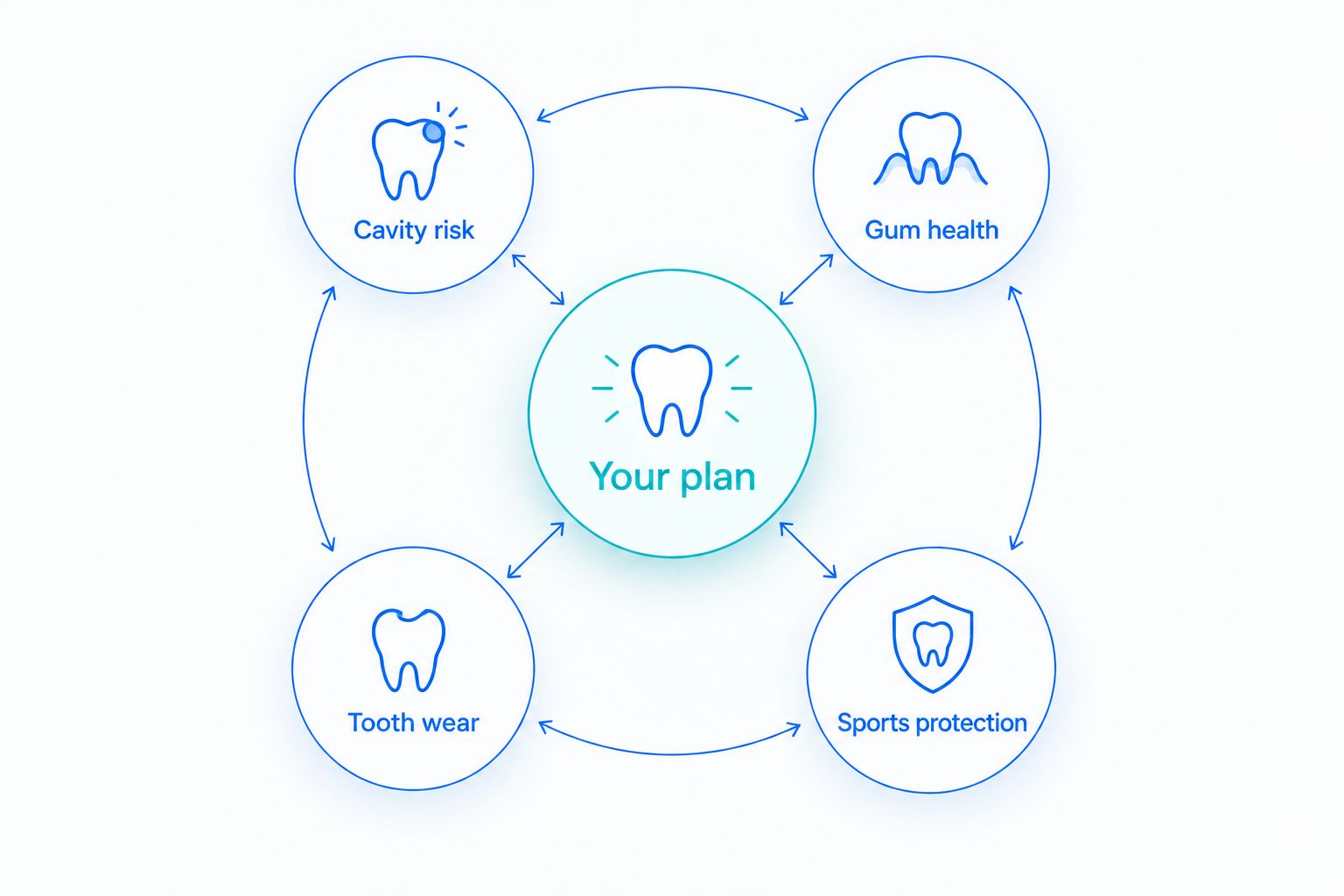
Organize your 2026 appointment around these questions:
- Cavity risk: Have you developed new cavities, noticed dry mouth, or struggled to clean certain areas?
- Gum health: Do your gums bleed, look swollen, or seem to be pulling away from teeth?
- Tooth wear: Are teeth chipping, flattening, or becoming sensitive?
- Sports protection: Do your activities expose your mouth to impacts?
These questions form Your plan. They help separate care you need now from options that do not address your situation.
Tell your dentist if anxiety, sensitivity, or past experiences make appointments difficult. Sharing that early gives the conversation a clearer starting point and lets you ask what comfort options are appropriate.
Start with a personal conversation
Ask about preventive care that fits your dental history, daily routine, and concerns.
FAQ
What's the best preventive dental treatment for most people?
The best starting point is appropriate professional cleaning and dental assessment, supported by fluoride toothpaste and daily between-teeth cleaning. Additional treatments should address an identified risk rather than be added automatically.
How often should I get a dental cleaning in 2026?
Your cleaning interval should reflect your gum health, cavity history, and home-care needs. Patients receiving treatment for gum disease can need a different maintenance schedule from patients with healthy gums.
Are fluoride treatments useful for adults?
Professional fluoride is useful for adults with increased cavity risk, including some patients with dry mouth, exposed roots, or repeated decay. Your dentist should explain the reason for recommending it in your case.
Are dental sealants just for children?
No. Adults with suitable tooth surfaces and decay-prone grooves can also be candidates for sealants. A dentist needs to examine the tooth before deciding whether sealing it is appropriate.
Can preventive care reverse a cavity?
Early enamel damage before a hole forms can sometimes be arrested or remineralized with fluoride and changes in daily habits. A cavity that has lost tooth structure does not grow back and needs a dental assessment.
Do I need both a sports mouthguard and a nightguard?
You need separate assessment for sports protection and grinding protection because the appliances serve different purposes. Do not assume a nightguard provides suitable protection for contact sports.
Can I ask Mysmiletheory about a personal prevention plan?
Yes. Mysmiletheory offers general and family dentistry in Spring, Texas, for patients seeking a personal dentist. Bring your concerns and dental history so you can discuss which preventive care fits your needs.
One last thing
A mouth that feels fine still deserves a prevention plan—but symptoms should never wait for a routine visit. Persistent bleeding, a new chip, lingering sensitivity, or pain needs assessment rather than another product added to your bathroom shelf.
For 2026, make your next appointment useful with a simple request: ask your dentist to name your main risk, explain the recommended protection, and show you what to change at home. You should leave understanding the plan, not just the treatment names.


