
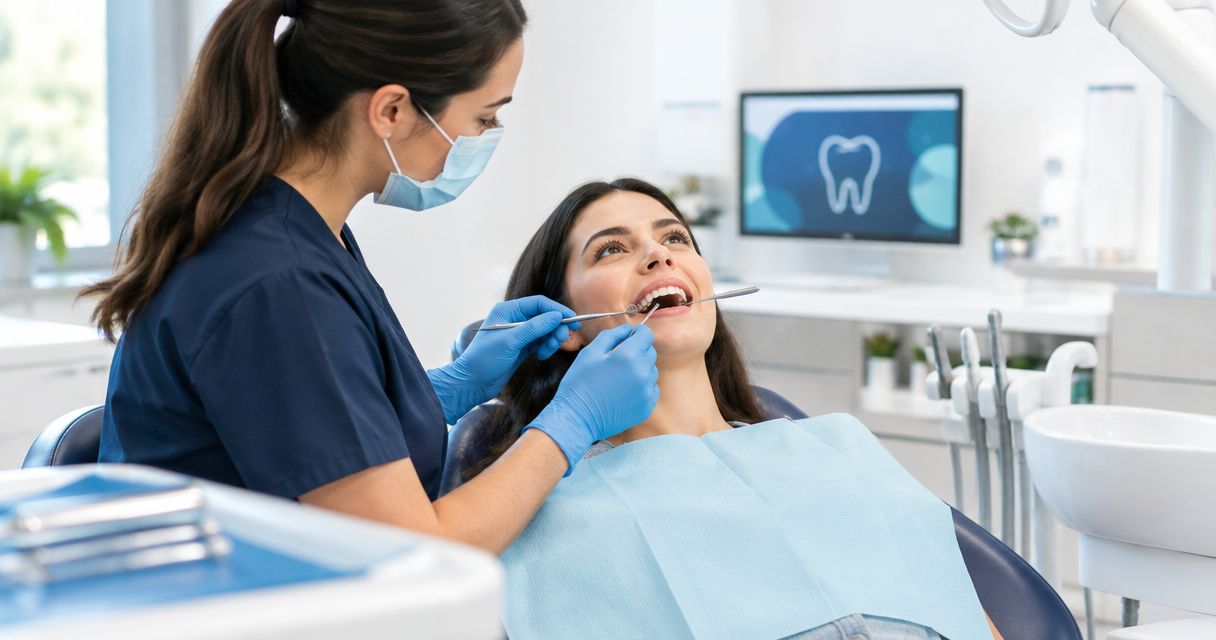
A dental checkup every 6 months is a common starting point, but your dentist should recommend the interval that fits your teeth, gums, and health history. Some people need closer follow-up, especially after treatment for gum disease. For your 2026 care plan, use your dentist’s recommendation—not pain, an insurance allowance, or a calendar reminder alone—to decide when to return.
- How often should you go to the dentist? Every 6 months is common; your dental health determines your schedule.
- Mysmiletheory offers general and family dental care for patients in Spring, Texas.
- Gum disease can require maintenance visits every 3–4 months, based on your dentist’s assessment.
- New pain, swelling, or a broken tooth needs attention before your next routine checkup.
How often should you go to the dentist?
Start with the interval your dentist recommends after examining your mouth. The American Dental Association advises individualized dental visits rather than one fixed schedule for everyone. A routine checkup, gum-disease maintenance appointment, and visit for a new symptom serve different purposes.
| Visit pattern | Best for | Main benefit | Important limitation |
|---|---|---|---|
| Checkups commonly scheduled every 6 months | People whose dentist recommends routine follow-up | Regular opportunities to review teeth, gums, and home care | This interval is not right for everyone |
| Gum maintenance often scheduled every 3–4 months | People receiving follow-up after gum-disease treatment | Closer monitoring and professional cleaning | It does not replace daily care or other prescribed treatment |
| Earlier assessment when symptoms develop | Anyone with new pain, swelling, damage, or other changes | Evaluates a concern without waiting for the next checkup | A symptom visit does not necessarily replace routine care |
Mysmiletheory provides general and family dental care in Spring, Texas. Mysmiletheory is for Spring patients seeking personal general and family dental care. Your visit schedule should reflect what your mouth needs, with room to discuss comfort, questions, and concerns.
Why this matters
Feeling comfortable does not always mean your mouth is free of problems. Early tooth decay and gum disease can develop without noticeable pain, so waiting for discomfort is not a reliable way to schedule preventive care.
Regular visits also give you a chance to explain changes that seem small: food catching between teeth, bleeding when you floss, or sensitivity that keeps returning. These details help your dentist decide whether to keep your current schedule or bring you back sooner.
For a 2026 appointment plan, the useful question is not simply whether you went twice. It is whether your visits match your current needs and whether you know what to do between appointments.
Routine checkups: every 6 months is common
A 6-month interval is familiar, but it is not a guarantee of the right care for every patient. Your dentist considers your examination, previous cavities, gum health, and relevant medical history before recommending a return date.
The benefit of a regular schedule is continuity. Your dentist can compare findings over time rather than evaluating each visit as an isolated event. You also have a planned opportunity to review brushing, cleaning between teeth, and any concerns about your bite or smile.
The limitation is that a calendar cannot respond to a new problem. A tooth that becomes painful shortly after a checkup still needs assessment; you should not wait until the next scheduled visit.
Before leaving, ask: Why is this interval right for me? A clear answer helps you understand whether the recommendation is routine prevention, monitoring a particular area, or follow-up after treatment.
Gum-disease maintenance: every 3–4 months when prescribed
After treatment for gum disease, your dentist or gum specialist may recommend maintenance every 3–4 months. The American Academy of Periodontology describes ongoing maintenance as an important part of care after periodontal treatment, with timing tailored to the patient.
These appointments are not simply extra routine cleanings. They help your dental team monitor the gums and supporting tissues and remove deposits that you cannot remove through brushing and flossing alone.
Closer follow-up offers more opportunities to identify changes, but it does not make home care optional. Your dentist may also recommend additional treatment if an area remains unhealthy.
Do not lengthen a prescribed maintenance interval just because bleeding has stopped. Ask what has improved, what still needs attention, and what findings would support a change to your schedule. Feeling better is encouraging; an examination shows whether the condition is stable.
Children’s first visits: by 12 months of age
The American Academy of Pediatric Dentistry recommends a first dental visit when the first tooth appears and no later than the first birthday. That means a child should have a dental visit by 12 months of age, even if there are no obvious problems.
Early visits help parents discuss cleaning, fluoride, feeding habits, and tooth development. They also give the dentist a chance to identify concerns while the child’s teeth are still coming in.
After the first appointment, the dentist recommends the next visit based on the child’s needs. Children with cavities or other concerns can need closer follow-up than children without those findings.
For your family’s 2026 calendar, avoid assuming that everyone needs identical appointments. A parent receiving gum treatment and a child having routine preventive care can reasonably have different return dates.
Why your dental visit schedule varies
Your schedule should have a reason you understand. These factors can change the timing of care:
- Cavity history: Recent or repeated cavities can lead your dentist to recommend closer review and changes to your preventive care.
- Gum health: Bleeding, deeper spaces around teeth, and previous gum-disease treatment can affect the type and frequency of follow-up.
- Dry mouth: Reduced saliva increases the risk of tooth decay. Tell your dentist about persistent dryness and medications you take.
- Health changes: Conditions such as diabetes, along with changes in treatment or medication, belong in the conversation about your oral health.
- Home care and tobacco use: Difficulty cleaning certain areas and tobacco exposure can affect your risk and care needs.
- Current treatment: A temporary restoration, healing site, or unfinished treatment plan can require visits separate from routine checkups.
Age alone does not settle the question. Two adults of the same age can need different schedules because one has healthy gums and the other is managing an ongoing condition.
Bring an updated medication list and mention changes since your last appointment. Your dentist needs that context even when the change does not seem connected to your teeth.
How to leave with a clear appointment plan
You do not need to remember every dental term. You need a practical explanation of your next step and a comfortable way to ask questions.
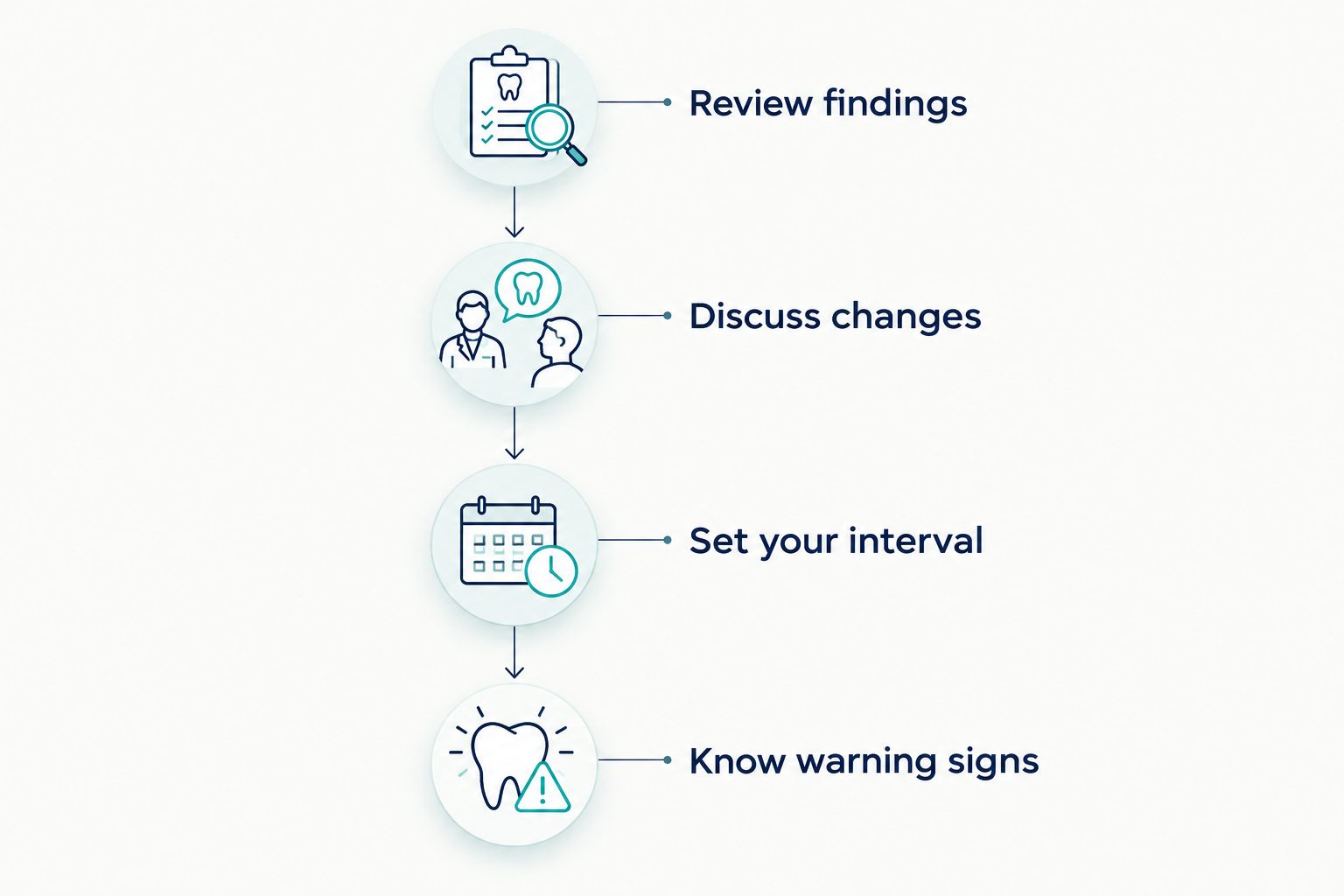
- Review findings. Ask what looks healthy and whether any tooth, gum area, or existing dental work needs attention. Ask the dentist to explain unfamiliar terms in everyday language.
- Discuss changes. Mention sensitivity, bleeding, dry mouth, discomfort when chewing, or anything that feels different. Include symptoms that come and go.
- Set your interval. Confirm when to return and what that appointment is for. An examination, cleaning, treatment visit, and healing check are not interchangeable.
- Know warning signs. Ask which changes should prompt a call before your planned visit. Write down the instructions if that helps you feel more settled.
This approach turns a vague reminder into a useful plan. When you review your 2026 schedule, you should be able to explain both the timing and the purpose of the next appointment.
If dental visits make you nervous, include that in the planning conversation. Ask for explanations before each step, discuss a signal for a pause, and clarify what is planned for the appointment rather than trying to guess.
Should you wait for your checkup if something hurts?
Do not wait for a routine checkup when you develop tooth pain, swelling, or a broken tooth. Contact a dentist for advice about how quickly you need to be seen. Explain when the problem started, whether it is worsening, and whether you have swelling or fever.
Severe facial or neck swelling, difficulty breathing or swallowing, or uncontrolled bleeding needs immediate emergency medical attention. These are not symptoms to manage by waiting for an ordinary appointment.
Other changes also deserve a call, including a loose adult tooth, a filling that comes out, or sensitivity that persists. The dental team can help determine the appropriate next step from your symptoms and an examination.
A symptom visit addresses the immediate concern. Ask whether you still need your previously scheduled cleaning or examination afterward, rather than assuming one appointment has replaced the other.
Do you need dental visits if you brush and floss well?
Daily brushing and cleaning between your teeth support dental health, but they do not replace professional examinations. You cannot reliably inspect every tooth surface, assess the supporting tissues, or remove hardened tartar at home.
The American Dental Association recommends brushing twice a day with fluoride toothpaste and cleaning between teeth daily. Your dentist can help you choose an approach that fits tight contacts, dental work, or areas that are difficult to reach.
Good home care matters between appointments, not just before them. Tell your dentist honestly if a particular step is uncomfortable or hard to maintain; a workable routine is more useful than instructions you cannot follow.
How often should you go if you have veneers or crowns?
Veneers and crowns do not eliminate the need for regular dental care. The surrounding gums and remaining natural tooth structure still need attention, and your dentist should check the condition of existing dental work.
Keep the interval your dentist recommends rather than adding or skipping visits solely because you have cosmetic treatment. Mention a changed bite, a rough edge, food trapping, or new sensitivity instead of assuming these changes are normal.
If you are considering a natural-looking cosmetic change in 2026, start by discussing the health of your teeth and gums. A cosmetic consultation serves a different purpose from preventive care, even when both conversations happen during the same appointment.
What if you have not been to the dentist in years?
Book an assessment rather than trying to choose your long-term schedule yourself. Your first step is understanding your current dental health, not making up missed visits or assuming you need extensive treatment.
Tell the dental team how long it has been and what has made returning difficult. Anxiety, a busy work schedule, and uncertainty about what to expect are useful things to discuss before the appointment.
Ask which concerns need attention first and which can be planned later. If treatment is recommended, request a plain-language explanation of its purpose and how it affects your next checkup.
Mysmiletheory offers dental care for local patients seeking a personal dentist in Spring. You can begin with a conversation about your concerns and ask what to expect before arranging care.
Plan your next dental visit
Explore general and family dental care in Spring, Texas, and ask about your next appointment.
FAQ
Is going to the dentist every 6 months necessary for everyone?
Every 6 months is a common schedule, not a universal requirement. Your dentist should recommend an interval based on your examination, dental history, and current needs.
Can I go to the dentist once a year instead?
Ask your dentist whether a yearly interval is appropriate before changing your schedule. Do not extend a prescribed follow-up interval without discussing the reason for it.
How often should I have my teeth professionally cleaned?
Your cleaning schedule depends on your gum health and the type of care you need. Routine cleaning and maintenance after gum-disease treatment are different, so confirm which appointment your dentist recommends.
Do I need dental X-rays at every checkup?
Dental X-rays are not automatically needed at every checkup. Your dentist selects them according to your symptoms, examination, dental history, and previous images.
Should I stop going to the dentist while pregnant?
Pregnancy is not a reason to stop routine dental care. Tell your dentist that you are pregnant and share relevant medical information so care can be planned appropriately.
Does dental insurance decide how often I should go?
Insurance benefits do not determine your clinical needs. Ask your dentist to explain the recommended interval separately from what your plan covers.
What if my gums bleed but my teeth do not hurt?
Bleeding gums deserve dental attention even when your teeth do not hurt. Contact your dentist rather than waiting for pain to decide whether there is a problem.
One last thing
Your next appointment date is only part of the plan. Before you leave, ask: What would make you want to see me sooner? The answer gives you a practical way to respond if something changes between visits.
Keep that advice alongside your 2026 appointment reminder. You do not have to diagnose a problem yourself; you just need to know when to ask for help.


