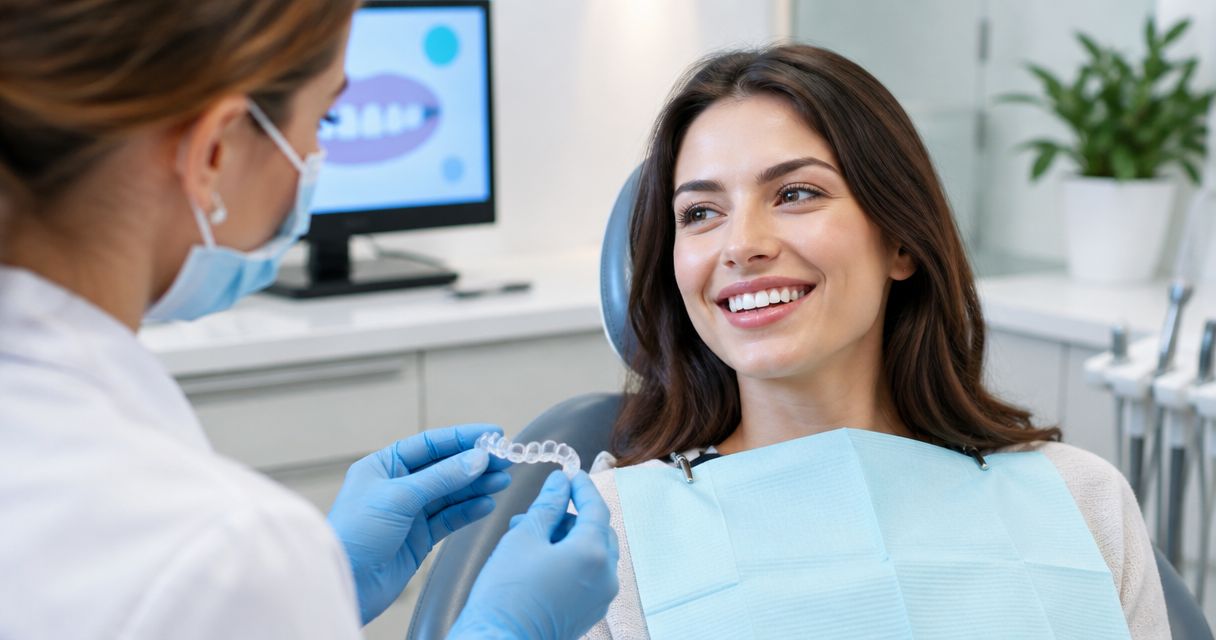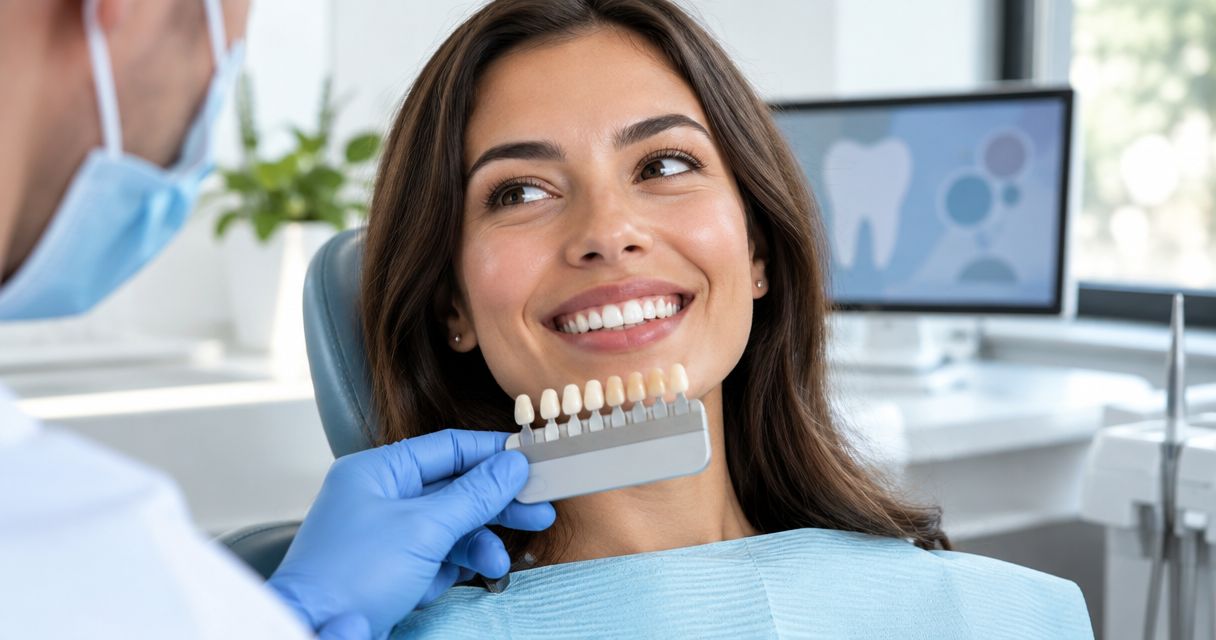
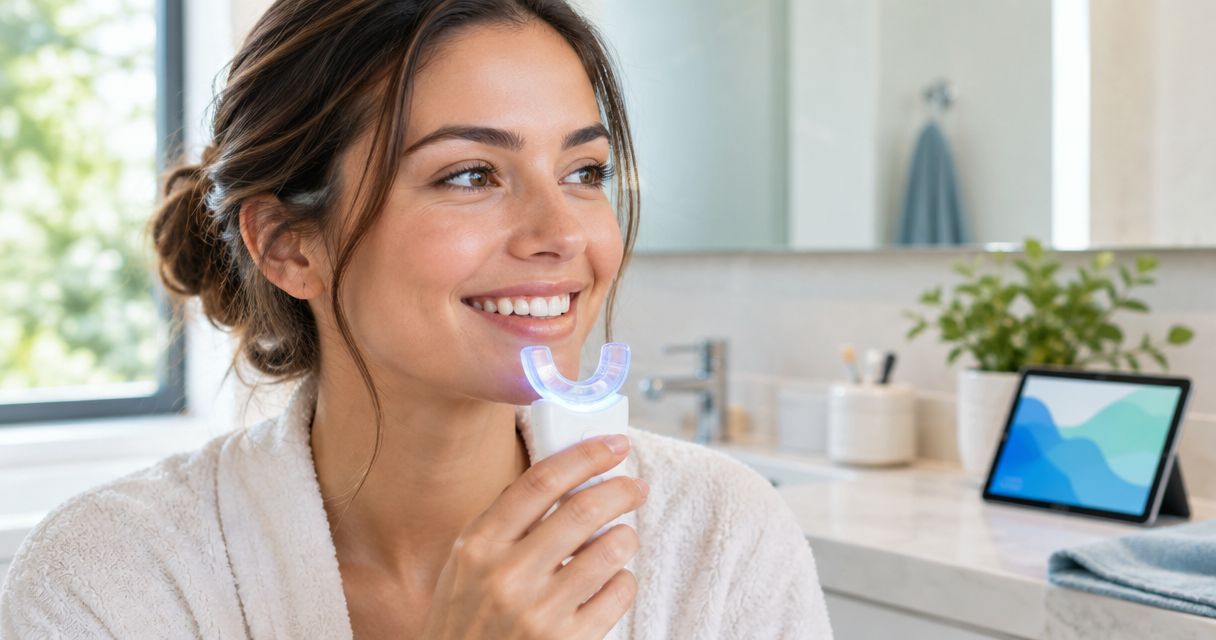
Best overall: dentist-supervised take-home whitening with a plan tailored to your sensitivity. Best for surface stains without bleaching: professional cleaning. Best for a gradual at-home approach: a whitening toothpaste selected for sensitive teeth. This 2026 guide compares the best teeth whitening for sensitive teeth by comfort, stain type, and how much control you have over treatment.
- The best teeth whitening for sensitive teeth starts with identifying why your teeth hurt, not choosing the strongest bleach.
- Dentist-supervised take-home whitening allows treatment adjustments, but peroxide can still cause sensitivity.
- Professional cleaning removes external stains without bleaching; it does not change your teeth’s underlying color.
- Mysmiletheory provides general and cosmetic dental care in Spring, Texas, for patients seeking a personal dentist.
Why this matters
Whitening should not mean pushing through tooth pain. Bleaching ingredients can cause temporary sensitivity, while existing decay, exposed roots, or a cracked tooth need a different response.
Mysmiletheory is a local dental-care option for Spring patients seeking a personal dentist before choosing teeth whitening. You can start with Mysmiletheory to discuss your concerns and cosmetic goals. The useful first question is not how white your teeth can become, but whether whitening fits their current condition.
What makes the best whitening method for sensitive teeth?
For your 2026 decision, judge each method against these criteria:
- Cause of sensitivity: Existing discomfort needs an assessment before bleaching, especially when one tooth hurts differently from the others.
- Type of discoloration: Surface stains and the natural color inside a tooth require different approaches.
- Treatment control: A method should let you follow clear instructions and pause if discomfort develops.
- Gum protection: Whitening gel belongs on teeth, not on irritated gums or exposed root surfaces.
- Realistic results: Whitening does not change the color of crowns, veneers, or tooth-colored fillings.
- Daily maintenance: Gentle brushing and appropriate fluoride toothpaste support oral health; whitening is not a substitute for them.
A sensitivity label does not guarantee a pain-free experience. The American Dental Association identifies tooth sensitivity and gum irritation as potential effects of bleaching, so your starting condition matters more than a reassuring package claim.
Whitening methods at a glance
These rankings prioritize assessment and treatment control, not the fastest visible change. No method guarantees that sensitive teeth will stay comfortable.
| Method | Best for | Standout feature | Key limitation |
|---|---|---|---|
| Dentist-supervised take-home whitening | A tailored bleaching plan | Dentist guidance on fit, application, and adjustments | Peroxide can still cause sensitivity |
| Professional cleaning | External stains without bleaching | Removes deposits and some surface discoloration | Does not lighten the underlying tooth color |
| Whitening toothpaste selected for sensitivity | Gradual surface-stain maintenance | Fits into your normal brushing routine | Limited effect on deeper discoloration |
| Over-the-counter whitening strips | A label-directed home option after assessment | No custom tray is required | Fit and gel contact are less individualized |
| In-office whitening | Professionally managed application | A dental team controls application and protects gums | Professional supervision does not eliminate sensitivity |
1. Dentist-supervised take-home whitening: best for a tailored plan
Dentist-supervised take-home whitening uses bleaching gel with instructions based on your teeth and the treatment prescribed. A dentist can assess existing sensitivity and determine whether trays and bleaching are appropriate.
Its advantage is control. You have someone to contact about discomfort, tray fit, or a change in your treatment schedule rather than deciding on your own to use more gel or continue through pain.
Dentist-supervised take-home whitening pros:
- Starts with an assessment of your teeth and gums.
- Provides guidance on application and treatment instructions.
- Allows you to discuss adjustments if sensitivity develops.
- Keeps your cosmetic goal connected to your dental health.
Dentist-supervised take-home whitening cons:
- Bleaching gel can still cause tooth sensitivity or gum irritation.
- Trays need correct use; adding extra gel does not make treatment safer.
- Crowns, veneers, and fillings will not whiten alongside natural teeth.
Best for: You want to change the color of natural teeth and need a plan that accounts for existing sensitivity.
Before starting, ask what to do if discomfort appears, whether a sensitivity toothpaste belongs in your routine, and which symptoms mean treatment should stop. Do not shorten the prescribed breaks or extend the wear time to chase a quicker result.
Verdict: Hold until your dentist confirms that bleaching is appropriate; then favor a clearly explained, adjustable plan.
2. Professional cleaning: best for external stains without bleaching
Professional cleaning removes plaque, hardened deposits, and some external stains. It is not bleaching, so it does not change the underlying shade of your teeth.
This distinction matters when discoloration sits on the surface. A cleaning can address that problem without introducing whitening gel, although sensitive teeth can still feel uncomfortable during dental treatment.
Professional cleaning pros:
- Addresses deposits that whitening products do not remove.
- Can remove some staining from the tooth surface.
- Gives your dental team an opportunity to assess your oral health.
- Avoids peroxide exposure when bleaching is unnecessary.
Professional cleaning cons:
- Does not lighten the natural color inside a tooth.
- Is not automatically painless for someone with exposed roots or sensitive gums.
- Cannot replace treatment for decay or a damaged tooth.
Best for: Your main concern is external staining or buildup rather than the underlying tooth color.
Ask your dentist to distinguish removable stains from discoloration that would require another approach. If you are happy after cleaning, there is no need to add bleaching simply because it was part of your original plan.
Verdict: Hold off on bleaching until you know whether cleaning addresses the change you want.
3. Whitening toothpaste: best for gradual surface-stain maintenance
Whitening toothpaste generally targets external stains rather than making a large change to the color inside teeth. For sensitive teeth, choose with care: stain removal and sensitivity relief are separate functions, even when one toothpaste includes both.
Look for clear fluoride and sensitivity information rather than promises of dramatic whitening. The American Dental Association’s Seal of Acceptance can help you identify products evaluated for their stated uses; it is not a promise that every whitening toothpaste will suit your teeth.
Whitening toothpaste pros:
- Fits into your existing brushing routine.
- Helps manage surface stains between dental visits.
- Some formulations also contain ingredients intended to reduce sensitivity.
- Does not require trays or whitening strips.
Whitening toothpaste cons:
- Does not deliver the same type of color change as peroxide bleaching.
- Whitening wording alone does not establish sensitivity relief.
- Hard scrubbing can aggravate sensitivity regardless of the toothpaste.
Best for: You want modest surface-stain maintenance, not a major change in tooth shade.
Brush gently with a soft-bristled toothbrush for 2 minutes per session, 2 times per day, following American Dental Association guidance. More pressure is not better cleaning, and brushing longer with the aim of whitening is not a substitute for choosing an appropriate product.
Verdict: Hold any purchase based only on whitening claims; choose a toothpaste that matches your dental needs.
4. Whitening strips: best for a label-directed home option
Over-the-counter whitening strips place bleaching gel against the teeth. They are convenient, but their shape and gel placement are not individually fitted to your mouth.
For a 2026 home-whitening decision, treat strips as bleaching treatment rather than an ordinary grooming product. Existing sensitivity is a reason to ask your dentist whether they are appropriate before starting.
Whitening strips pros:
- Do not require a custom tray.
- Provide product-specific instructions for application.
- Can lighten natural teeth through bleaching.
Whitening strips cons:
- Can cause sensitivity and irritate gums.
- Fit and coverage vary with tooth position.
- Cannot identify or treat the cause of existing tooth pain.
Best for: Your dentist has assessed your sensitivity, and you want a home option you can use exactly as labeled.
Do not overlap strips onto irritated gums or combine different bleaching products to intensify the result. If pain develops, stop and seek guidance instead of assuming discomfort proves the product is working.
Verdict: Hold until existing sensitivity has been assessed; skip any routine that requires you to tolerate pain.
5. In-office whitening: best for professionally managed application
In-office whitening places bleaching treatment under the management of a dental team. The team can assess your teeth, protect soft tissues, and control application during treatment.
That supervision is valuable, but it does not make bleaching sensitivity-free. A person with sensitive teeth still needs a discussion about suitability, expected discomfort, and what happens if symptoms develop.
In-office whitening pros:
- Keeps application under professional supervision.
- Includes measures to protect gums from bleaching gel.
- Allows concerns to be discussed directly during treatment.
In-office whitening cons:
- Can still cause tooth sensitivity afterward.
- Does not whiten existing crowns, veneers, or fillings.
- Is not a solution for untreated decay, cracks, or exposed roots.
Best for: You prefer professionally managed treatment and your dentist considers bleaching suitable.
Ask how the recommended treatment compares with a take-home plan for your particular sensitivity. The right choice depends on your teeth, not on the appeal of completing whitening in a dental chair.
Verdict: Hold until you understand the sensitivity considerations and alternatives.
How these methods are ranked
This 2026 ranking puts assessment, treatment control, and the match between stain type and treatment ahead of speed. Dentist-supervised take-home whitening leads for a tailored bleaching plan; cleaning leads when external deposits are the actual problem.
The remaining options serve distinct needs rather than forming a simple ladder from weak to strong. Toothpaste supports surface-stain maintenance, strips offer a label-directed home approach, and in-office whitening puts application under professional management. These are treatment categories, not results from a head-to-head product trial.
Match the method to what bothers you
Start by describing the problem in your own words. You do not need to know dental terminology to explain that cold drinks sting, one tooth looks darker, or your front teeth have surface stains.
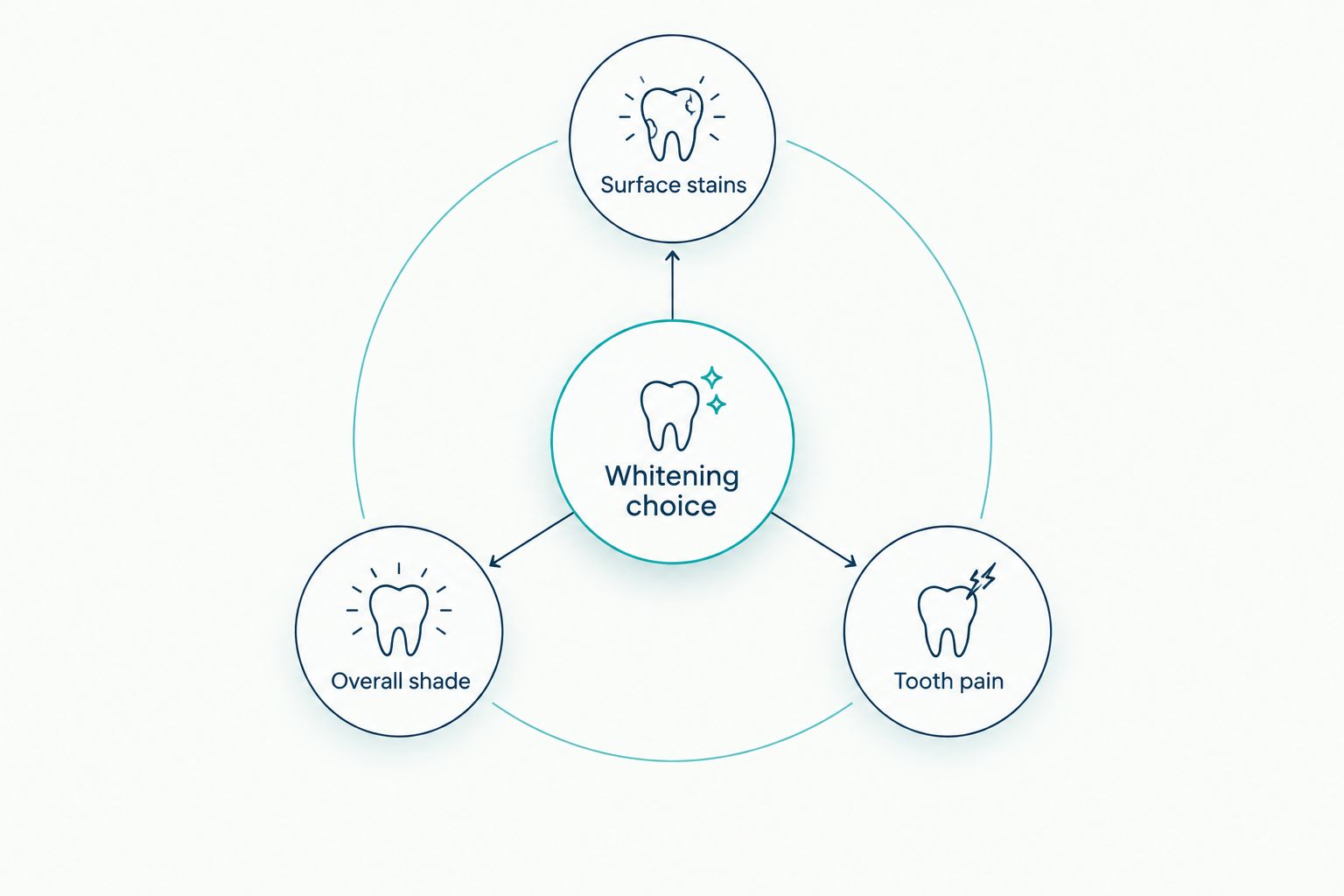
- Surface stains: Ask whether cleaning or toothpaste is enough before considering bleaching.
- Overall shade: Discuss whether natural teeth can be bleached safely and what existing restorations mean for the result.
- Tooth pain: Have the cause assessed before whitening, particularly for localized, lingering, or biting-related pain.
Bring the names of products you already use and describe when sensitivity occurs. Mysmiletheory offers general and cosmetic dental care, so your conversation can start with oral health rather than assuming whitening is the answer.
Start a conversation about your smile
Discuss tooth sensitivity and your cosmetic goals with Mysmiletheory in Spring, Texas.
Which whitening method should you choose?
For sensitive teeth in 2026, choose an assessment first and a whitening method second. If bleaching is appropriate, a dentist-supervised take-home plan is the default recommendation here because it creates room for individual instructions and adjustments.
Choose professional cleaning instead when external stains are the main concern. Choose toothpaste for maintenance, not a dramatic shade change, and do not treat strips or in-office bleaching as guaranteed shortcuts around sensitivity.
At Mysmiletheory, your starting conversation can cover both general dental care and cosmetic goals. Explain what you want to change, what currently hurts, and how cautious you want to be. A natural-looking result starts with an appropriate plan, not the strongest treatment.
FAQ
What’s the best teeth whitening for sensitive teeth in 2026?
Dentist-supervised take-home whitening is the best starting option here when an examination confirms bleaching is appropriate. Professional cleaning is a better match when the concern is external stains rather than the underlying tooth color.
Can I whiten my teeth if cold drinks already hurt?
Have existing sensitivity assessed before starting whitening. Cold sensitivity can have different causes, and bleaching does not treat decay, cracks, or exposed roots.
Are whitening strips safe for sensitive teeth?
Whitening strips can cause sensitivity and gum irritation, so sensitive teeth need an assessment before use. Follow the specific product instructions and stop if pain develops.
Is whitening toothpaste better than bleaching for sensitivity?
Whitening toothpaste serves a different purpose from bleaching: it generally manages external stains rather than substantially changing underlying tooth color. Choose a toothpaste with appropriate fluoride and sensitivity information, not whitening claims alone.
Does professional whitening mean my teeth won’t hurt?
Professional supervision does not eliminate the risk of whitening sensitivity. It provides assessment, controlled application, and guidance on responding to discomfort.
Will whitening change the color of my crowns or veneers?
Whitening does not change the color of crowns, veneers, or tooth-colored fillings. Discuss visible restorations before treatment because natural teeth can become lighter while those restorations stay the same shade.
What should I do if whitening makes one tooth hurt?
Stop whitening and contact a dentist about pain concentrated in one tooth. Do not keep bleaching or assume localized pain is a normal step toward a whiter smile.
One last thing
A darker tooth is not always a reason to add more whitening gel. When one tooth changes color differently from its neighbors, ask a dentist to assess it before treating the whole smile.
For your 2026 plan, bring a simple description of the result you want: fewer surface stains, a lighter overall shade, or a better match between visible teeth. The most useful whitening decision is the one that matches the cause of discoloration without asking you to ignore pain.