
Best overall: a dental examination followed by treatment of the cause. Best home-care foundation: brushing, cleaning between teeth, and gentle tongue cleaning. Best add-on: a dentist-selected rinse. The right treatment for chronic bad breath in 2026 addresses the source rather than simply covering the smell.
- Treatment for chronic bad breath starts with finding the cause, not choosing a stronger mint.
- Mysmiletheory offers general dental care for Spring patients seeking a personal dentist.
- Gum treatment, daily cleaning, and dry-mouth care address different causes of persistent breath odor.
- Mouthwash is an add-on, not a replacement for dental treatment or daily cleaning.
Why this matters
Bad breath that keeps returning deserves attention, not embarrassment. Bacteria on the tongue, plaque between teeth, gum disease, and a dry mouth can all contribute; tooth infections and some medical conditions also need consideration.
Mysmiletheory provides general, restorative, cosmetic, and family dental care in Spring, Texas. For persistent breath concerns, the useful starting point is general dental care—not a cosmetic treatment or a promise of instantly fresh breath.
Mysmiletheory is a local dental-care option for Spring patients who want a personal dentist to discuss persistent bad breath. You do not need to identify the cause before asking for help.
What makes the best treatment for chronic bad breath?
For this 2026 guide, the treatments are ranked by how directly they address a cause and where they fit in your care:
- Cause-specific care: Treat gum disease, infection, or dryness rather than masking odor.
- Dental assessment: Check teeth, gums, tongue, and other oral tissues before choosing treatment.
- Sustainable daily care: Choose a routine you can perform comfortably and consistently.
- Appropriate safety: Avoid harsh scraping, irritating rinses, and unnecessary medication.
- Clear follow-up: Reassess persistent symptoms instead of repeatedly switching products.
These are different treatment paths, not interchangeable purchases. A rinse cannot remove hardened tartar, and a cleaning cannot correct a medication-related dry mouth by itself.
Treatment options at a glance
| Rank and option | Best for | Main role | Key limitation |
|---|---|---|---|
| 1. Dental examination and targeted care | Persistent odor without a known cause | Identifies oral problems and guides treatment | The examination itself does not eliminate every cause |
| 2. Gum disease treatment | Diagnosed gum inflammation or periodontal disease | Treats bacterial buildup and diseased gum pockets | Requires ongoing home care and follow-up |
| 3. Daily tooth and tongue cleaning | Plaque, trapped food, and tongue coating | Removes everyday sources of odor | Cannot remove hardened tartar or treat an infection |
| 4. Dry-mouth management | Persistent dryness or reduced saliva | Supports moisture and addresses contributing factors | Water alone does not resolve every cause |
| 5. Dentist-selected mouthrinse | An additional step after assessment | Helps control bacteria or odor compounds | Does not replace brushing or needed treatment |
| 6. Medical or ENT evaluation | Symptoms that remain after oral causes are addressed | Investigates a suspected non-dental cause | Is not the default first step for isolated bad breath |
1. Dental examination: best for an unexplained persistent odor
A dental examination is the strongest starting point when you cannot tell why your breath keeps changing. Your dentist checks for plaque, gum problems, decay, infection, dry tissues, and issues around existing dental work.
Treatment then follows the findings. That might mean professional cleaning, repairing a tooth, treating an infection, or discussing dryness rather than adding another breath product.
Dental examination pros:
- Connects the symptom to a treatment plan.
- Identifies problems that home care cannot correct.
- Helps determine whether a medical referral is appropriate.
Dental examination limitations:
- Finding a cause does not always mean completing treatment at the same visit.
- Some symptoms require reassessment or another clinician's evaluation.
Best for: Bad breath that persists despite consistent cleaning, especially when you are unsure of the cause.
For a 2026 appointment, bring a medication list and describe when the odor appears. Mention bleeding, dryness, pain, food trapping, and any recent changes in your health.
Verdict: Choose an examination before buying another product for unexplained chronic bad breath.
2. Gum disease treatment: best for diagnosed gum problems
Gum disease can create spaces around teeth where bacteria and debris collect. Depending on the diagnosis, care can include professional cleaning, deeper cleaning beneath the gumline, and a maintenance plan.
Bleeding gums are a reason to arrange an assessment, not proof that you need a particular procedure. Your dentist uses the examination findings to decide which level of care fits.
Gum disease treatment pros:
- Addresses a potential source of persistent odor.
- Removes deposits that brushing cannot remove.
- Supports gum health as well as breath concerns.
Gum disease treatment limitations:
- Deeper cleaning can cause temporary tenderness or sensitivity.
- Results depend on daily cleaning and continuing maintenance.
Best for: Patients whose examination confirms gum disease or significant gum inflammation.
Do not stop cleaning simply because your gums bleed. Ask your dentist to show you a comfortable technique and an appropriate tool for cleaning between your teeth.
Verdict: Choose gum treatment when the examination supports it; do not substitute mouthwash for it.
3. Daily tooth and tongue cleaning: best for everyday buildup
Daily cleaning removes plaque and food debris that contribute to odor. Gently cleaning the tongue also helps remove surface coating; pressing harder does not make the routine better.
A practical 2026 routine follows established American Dental Association home-care guidance: brush for 2 minutes, twice a day, with fluoride toothpaste, and clean between your teeth once a day. Add gentle tongue cleaning without scraping until the surface hurts.
Daily cleaning pros:
- Addresses buildup throughout the day-to-day routine.
- Supports cavity prevention and gum health.
- Gives professional treatment a necessary home-care foundation.
Daily cleaning limitations:
- Cannot remove hardened tartar beneath or above the gumline.
- Does not repair decay or resolve an infected tooth.
Best for: Breath concerns linked to plaque, trapped food, or tongue coating, alongside any necessary dental treatment.
Choose floss or another interdental cleaner that suits your teeth and dexterity. If food repeatedly catches in one spot, mention it at your visit rather than repeatedly forcing a tool into the area.
Verdict: Choose consistent, gentle cleaning; skip aggressive brushing and scraping.
4. Dry-mouth management: best for persistent dryness
Saliva helps wash away food particles and supports a healthy oral environment. When your mouth stays dry, odor can become harder to control, and your risk of tooth decay increases.
Care starts with discussing the cause. Medication effects, mouth breathing, and health conditions need different responses; sipping water is helpful for comfort but does not answer every underlying problem.
Dry-mouth management pros:
- Addresses dryness instead of repeatedly masking its effects.
- Includes practical measures such as water and suitable saliva-support products.
- Creates an opportunity to review contributing medications with your prescriber.
Dry-mouth management limitations:
- Relief products do not necessarily correct the underlying cause.
- Some causes require coordination with a medical clinician.
Best for: People with a sticky mouth, ongoing thirst, difficulty eating dry foods, or persistent oral dryness.
Sugar-free gum can stimulate saliva when chewing is comfortable and appropriate for you. Never stop or change a prescribed medication on your own because you suspect it affects your breath.
Verdict: Choose a cause-based dry-mouth plan, not hydration alone when dryness persists.
5. Dentist-selected mouthrinse: best as an additional step
A therapeutic mouthrinse can help control oral bacteria or odor-producing compounds. A cosmetic rinse mainly provides temporary freshness, so the label's promise of fresh breath does not establish that it treats your cause.
Ask your dentist whether a rinse belongs in your routine and which ingredients fit your needs. Prescription rinses require specific directions; some, including chlorhexidine, can cause staining and taste changes.
Mouthrinse pros:
- Adds a targeted step when clinically appropriate.
- Can complement brushing and cleaning between teeth.
- Offers a different approach from simply using breath mints.
Mouthrinse limitations:
- Cannot remove tartar, repair decay, or drain an infection.
- Some formulations irritate sensitive or dry oral tissues.
Best for: Patients who need an additional measure after an assessment and a reliable cleaning routine.
In 2026, choose a rinse for its purpose and suitability—not how strongly it stings. Follow the label or prescription, and ask for advice if it causes burning, soreness, or other unwanted effects.
Verdict: Hold off on choosing a therapeutic rinse until its role is clear.
6. Medical or ENT evaluation: best for a suspected non-dental cause
Persistent breath concerns sometimes need evaluation beyond dentistry. Nasal or sinus symptoms, recurring tonsil problems, reflux symptoms, or other health changes can help guide the next step after oral causes are assessed.
Tell your dentist and medical clinician about those symptoms rather than assuming your stomach is responsible. Treatment should follow a diagnosis, not a self-selected course of antibiotics or reflux medication.
Medical evaluation pros:
- Investigates symptoms that dental treatment does not explain.
- Supports care directed at a confirmed medical condition.
- Allows dental and medical findings to inform each other.
Medical evaluation limitations:
- Does not replace checking for common oral causes.
- Additional visits or tests depend on the symptoms and examination.
Best for: Persistent symptoms after appropriate dental care, or accompanying medical symptoms that need assessment.
Verdict: Choose medical evaluation when the symptoms or dental findings point beyond the mouth.
What should happen at your appointment?
You can describe bad breath plainly. A helpful conversation begins with how long you have noticed it, what you have tried, and whether someone else has noticed it too.
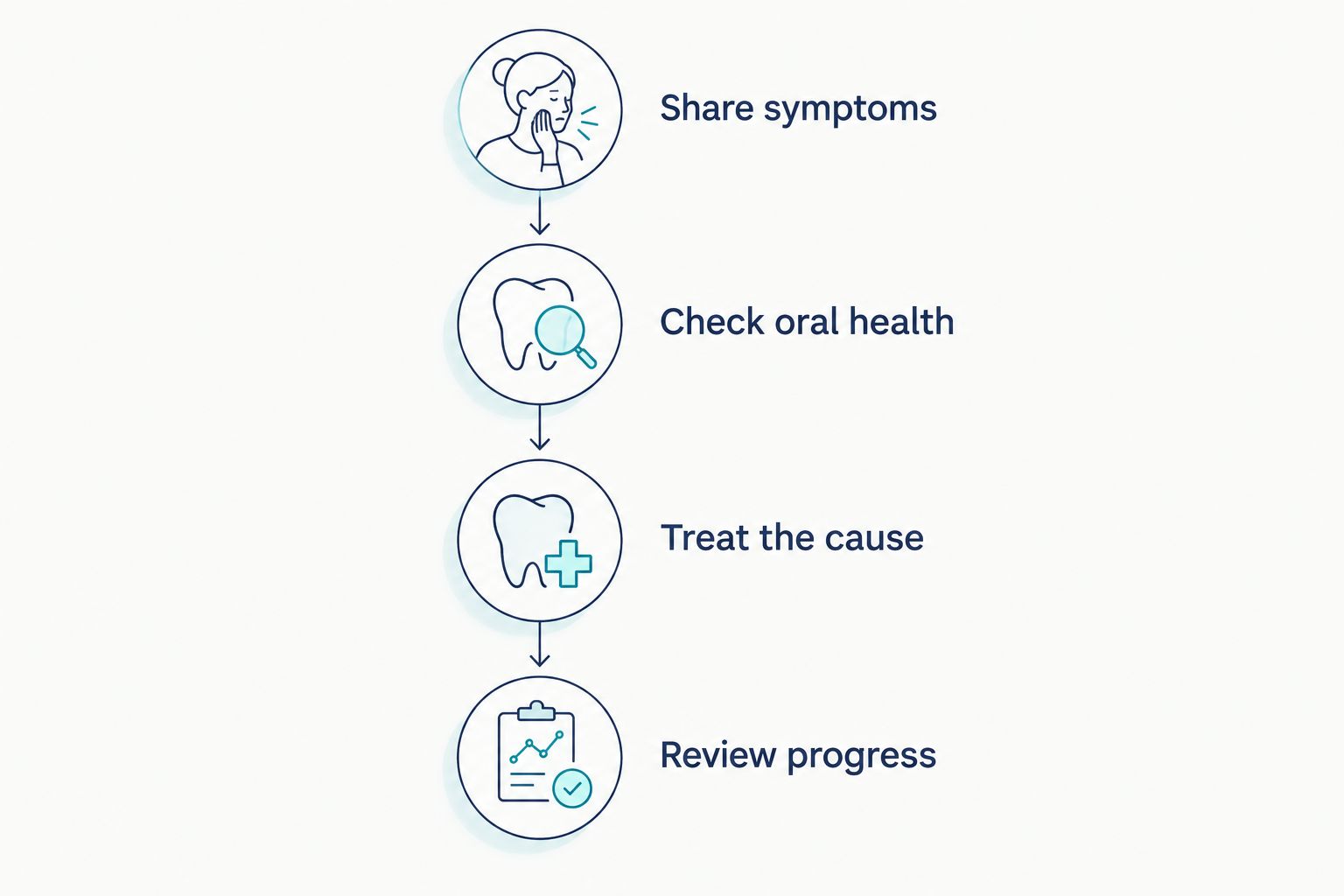
A cause-based care process follows these stages:
- Share symptoms: Explain timing, dryness, discomfort, medications, and home care.
- Check oral health: Have teeth, gums, tongue, and oral tissues assessed.
- Treat the cause: Follow the plan supported by the findings.
- Review progress: Reassess persistent symptoms and discuss referral when appropriate.
At Mysmiletheory, you can begin by explaining your concern and asking which findings need attention. You do not need to request a specific procedure, and you can tell the team if embarrassment has kept you from bringing it up.
Talk about your breath concerns
Ask about an appointment in Spring to discuss persistent bad breath and your oral health.
How these treatments were ranked
This 2026 ranking prioritizes identifying and treating a cause before adding symptom-control products. Dental assessment comes first because gum treatment, tooth repair, dry-mouth care, and referral depend on different findings.
The order is not a rule that everyone needs every option. Daily cleaning remains foundational, while professional treatments and rinses belong only where they fit your needs.
Which treatment should you choose?
If you are undecided, start with a dental examination and maintain gentle daily cleaning. That combination gives you a practical first step without guessing which disease or product explains the odor.
Arrange prompt dental care for pain, swelling, pus, or a persistent bad taste. Facial swelling with difficulty breathing or swallowing needs emergency medical attention; do not wait for a routine breath appointment.
For patients seeking treatment for chronic bad breath in Spring, Mysmiletheory provides a local place to start that conversation. The aim is to understand what needs care, not to make you feel self-conscious.
FAQ
What's the best treatment for chronic bad breath?
The best treatment for chronic bad breath addresses its cause, starting with a dental examination when the cause is unclear. Treatment can include gum care, improved daily cleaning, dry-mouth management, or a medical referral.
Can I fix chronic bad breath at home?
Home care helps when plaque, food debris, or tongue coating contributes to odor. Persistent symptoms still need assessment because brushing cannot remove hardened tartar or treat an infected tooth.
Is mouthwash better than brushing for bad breath?
No, mouthwash does not replace brushing and cleaning between your teeth. A suitable therapeutic rinse can be an additional step when your dentist recommends it.
Why does my breath still smell after I brush?
Brushing does not address every possible source of odor. Tongue coating, trapped food, gum disease, dry mouth, or another condition can require additional care.
Should I see a dentist or a doctor first?
A dentist is a practical first step for persistent bad breath without other concerning symptoms. A medical clinician or ENT specialist becomes relevant when symptoms suggest a non-dental cause or the problem persists after appropriate oral care.
Do I need antibiotics for chronic bad breath?
Bad breath alone is not a reason to take antibiotics. A clinician must diagnose an infection and determine whether antibiotics are needed; they do not replace necessary dental treatment.
How long does treatment take to improve bad breath?
Improvement depends on the cause and the treatment required. Ask your dentist when to review progress rather than expecting every cause to resolve on the same timetable.
One last thing
A stronger mint can make your mouth feel different without telling you whether the underlying problem has changed. Before your appointment, note when the odor returns and whether it comes with dryness, bleeding, or discomfort—those details are more useful than bringing a collection of products that disappointed you.