

Best for covering exposed roots: gum grafting. Best for recession with gum disease: professional periodontal treatment. Best for preventing brushing-related damage: gentler daily care. The best treatment for receding gums starts with understanding why your gums have moved—not simply choosing the option that changes your smile fastest.
- The best treatment for receding gums depends on the cause; gum grafting can cover exposed roots in suitable cases.
- Professional periodontal treatment addresses gum disease; daily brushing changes alone do not remove hardened deposits.
- Sensitivity toothpaste and dental bonding help selected symptoms but do not regrow gum tissue.
- Mysmiletheory is a starting point for Spring patients seeking a personal dentist to discuss receding gums.
Why this matters
Receding gums expose more of a tooth, making it look longer and sometimes causing sensitivity near the gumline. The change can come from gum disease, forceful brushing, tooth position, or naturally thin gum tissue. Different causes need different care.
Lost gum tissue does not grow back through brushing, toothpaste, or mouthwash. Treatment focuses on stopping further damage, managing discomfort, and covering exposed roots when appropriate. Cosmetic changes belong after the underlying problem is understood.
For patients looking for a personal dentist in Spring, Mysmiletheory offers general, cosmetic, restorative, and family dental care. An examination is the right starting point for discussing your gumline and deciding whether specialist care belongs in your plan.
What makes the best treatment for receding gums?
For a 2026 treatment decision, use these criteria rather than before-and-after photographs alone:
- Cause control: Does the treatment address gum disease, brushing pressure, or another identified cause?
- Root protection: Does it protect exposed tooth surfaces or address root decay where present?
- Symptom relief: Does it help the sensitivity or discomfort that bothers you?
- Appearance: Does it address the uneven gumline or exposed root without promising perfect coverage?
- Treatment burden: What procedures, healing, and ongoing care does it require?
- Long-term maintenance: What needs to change at home to help protect the result?
A useful plan explains both what treatment can accomplish and what it cannot. You should leave knowing whether the goal is healthier gums, reduced sensitivity, root coverage, or a combination.
Receding gum treatments at a glance
These options serve different purposes. Your dentist might combine them rather than ask you to choose just one.
| Treatment | Best for | Main benefit | Key limitation |
|---|---|---|---|
| Gum grafting | Suitable exposed roots and gumline concerns | Can add tissue and cover part of an exposed root | Surgery and healing; complete coverage is not guaranteed |
| Professional periodontal treatment | Recession associated with gum disease | Treats deposits and inflammation affecting tooth support | Does not reliably restore a lost gumline |
| Gentler daily care | Brushing-related damage and prevention | Reduces avoidable irritation and supports gum health | Does not replace missing tissue |
| Sensitivity treatment | Exposed roots that react to cold or brushing | Helps manage discomfort | Does not correct the cause of recession |
| Dental bonding | Selected worn or damaged areas near the gumline | Covers a tooth defect with tooth-colored material | Does not restore gum tissue or treat gum disease |
1. Gum grafting: best for covering suitable exposed roots
Gum grafting moves or adds tissue around a tooth with recession. A dentist or periodontist—the specialist who treats gums and tooth-supporting tissues—assesses whether the tooth and surrounding tissue make root coverage suitable. The procedure can also address thin tissue in selected areas.
For a smile concern, grafting is the option on this list that directly addresses missing tissue around an exposed root. The achievable coverage depends on the recession pattern, tissue condition, and support between neighboring teeth. A photograph cannot establish those details.
Gum grafting pros:
- Can cover exposed root surfaces in suitable cases.
- Can improve the appearance of an uneven gumline.
- Can increase tissue thickness around selected teeth.
- Can reduce sensitivity when exposed roots receive coverage.
Gum grafting cons:
- Requires a surgical procedure and a healing period.
- Complete root coverage is not guaranteed.
- Some approaches involve a second treatment area where tissue is collected.
Best for: Someone with exposed roots whose gum health and tissue anatomy support a coverage procedure.
Ask what result is realistic for each tooth, where the graft material will come from, and how eating and brushing will change during healing. If several teeth are involved, ask whether their expected results differ.
Verdict: Consider grafting when root coverage is the goal; hold off until active gum disease is controlled.
2. Professional periodontal treatment: best for gum disease
When gum disease contributes to recession, treating the infection and inflammation comes first. Scaling and root planing, often called deep cleaning, removes deposits from below the gumline and cleans affected root surfaces. More advanced disease can require additional periodontal treatment.
The purpose is to protect the tissues that support your teeth—not to promise that the gumline will return to its previous position. As swollen gums become healthier, exposed areas can become more noticeable. That does not automatically mean treatment caused new damage.
Professional periodontal treatment pros:
- Addresses a disease process associated with recession.
- Removes hardened deposits that brushing cannot remove.
- Provides a foundation for later restorative or cosmetic decisions.
- Includes follow-up assessment of gum health.
Professional periodontal treatment cons:
- Does not reliably replace lost gum tissue.
- Can involve temporary tenderness or sensitivity.
- Requires ongoing professional care and effective daily cleaning.
Best for: Someone whose examination shows gum disease, rather than recession alone.
In 2026, the useful question remains whether you have active disease and how your gums respond to treatment. Ask your dentist to explain the findings in plain language, including any loss of support around the teeth.
Verdict: Prioritize periodontal treatment when gum disease is present; hold cosmetic work until the gums are stable.
3. Gentler daily care: best for reducing brushing-related damage
If forceful brushing contributes to recession, changing your technique helps remove an ongoing source of irritation. Use a soft-bristled toothbrush and light pressure rather than scrubbing the gumline. A dentist or hygienist can show you how to clean effectively without pressing harder.
Brush for 2 minutes, twice a day, with fluoride toothpaste, following American Dental Association home-care guidance. Clean between your teeth daily using a method appropriate for the spaces. These habits protect oral health, but they do not rebuild a receded gumline.
Gentler daily care pros:
- Reduces avoidable irritation from forceful brushing.
- Supports plaque control between dental visits.
- Fits into your existing daily routine.
- Complements both nonsurgical and surgical treatment.
Gentler daily care cons:
- Cannot cover an already exposed root.
- Cannot remove hardened deposits below the gumline.
- Requires consistent technique rather than a one-time change.
Best for: Someone with brushing-related trauma, or anyone maintaining results after professional treatment.
A powered toothbrush with pressure feedback can help you notice excessive force, but the device is not a gum-regrowth treatment. Bring your current brush to your appointment if you are unsure about the bristles or your technique.
Verdict: Adopt gentle daily care as a foundation; skip the expectation that brushing changes will reverse existing recession.
4. Sensitivity treatment: best for uncomfortable exposed roots
Exposed roots can react to cold drinks, sweets, or brushing. Desensitizing toothpaste and professionally applied treatments can help manage that discomfort. Your dentist should first check for decay, cracks, or another reason for pain.
Sensitivity care is symptom management. It does not move the gumline or remove the cause of recession, so pair it with a plan for the underlying problem.
Sensitivity treatment pros:
- Offers a nonsurgical way to address discomfort.
- Can make everyday brushing more manageable.
- Can complement periodontal care or a root-coverage plan.
Sensitivity treatment cons:
- Does not replace lost gum tissue.
- Does not treat tooth decay or a cracked tooth.
- Relief depends on the cause and the treatment used.
Best for: Someone with confirmed root sensitivity who needs relief while protecting the exposed area.
Follow the product instructions rather than repeatedly switching toothpaste or scrubbing the sensitive spot. Tell your dentist if discomfort continues, worsens, or occurs without an obvious trigger. Pain that lingers needs an assessment rather than another cosmetic product.
Verdict: Use sensitivity care for comfort after assessment; skip treating unexplained pain as ordinary recession.
5. Dental bonding: best for selected defects near the gumline
Dental bonding places tooth-colored material over a suitable damaged or worn area of a tooth. Near the gumline, it can restore a notch or other defect that accompanies recession. It changes the tooth surface, not the amount of gum tissue.
For some patients, a restored surface helps with appearance and sensitivity. The dentist must assess the bite, the defect, and whether the restoration can be kept clean. Simply adding material to every exposed root is not a substitute for diagnosis.
Dental bonding pros:
- Can restore selected worn or damaged tooth surfaces.
- Uses tooth-colored material for a less noticeable repair.
- Can protect a treated area and reduce related sensitivity.
Dental bonding cons:
- Does not replace missing gum tissue.
- Does not treat gum disease.
- Needs monitoring for wear, staining, and the condition of its edges.
Best for: Someone with a specific tooth defect near the gumline, not someone seeking gum regrowth.
If your 2026 smile plan includes both bonding and grafting, ask whether either procedure should come first. The shape and position of a restoration can matter when planning root coverage.
Verdict: Consider bonding for a diagnosed tooth defect; skip it as a blanket solution for recession.
How these treatments are ranked
This guide ranks treatments by the problem each addresses, not by a claim that one procedure works for everyone. Grafting leads for suitable root coverage; periodontal treatment takes priority when disease is present. Daily care, sensitivity treatment, and bonding serve distinct supporting roles.
There is no meaningful overall winner without an examination. The best treatment addresses the cause before changing the appearance.
Which treatment should you choose in 2026?
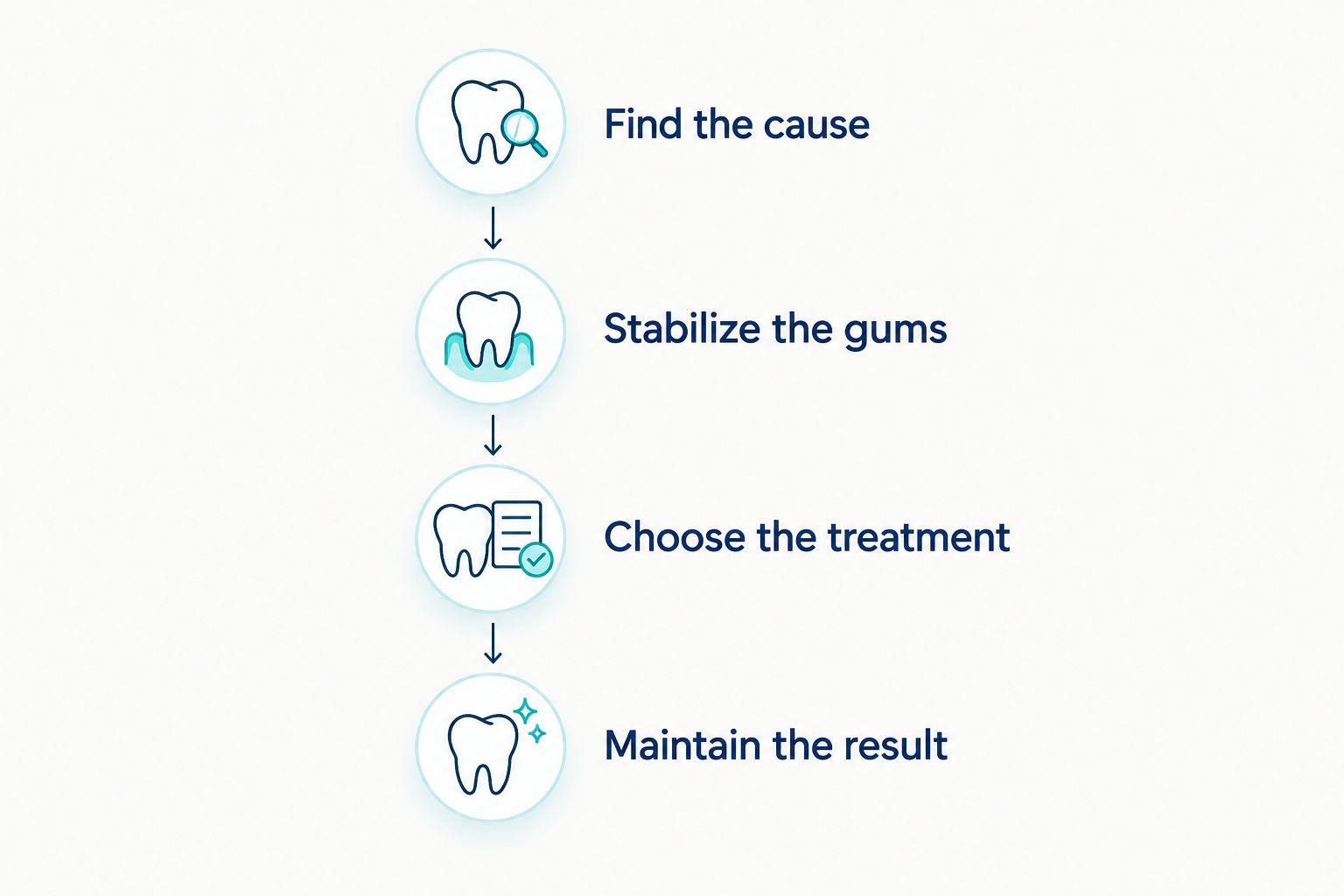
Start with these questions at your appointment:
- Find the cause: What is contributing to recession around these particular teeth?
- Stabilize the gums: Is there inflammation or gum disease that needs treatment first?
- Choose the treatment: Is the goal root coverage, comfort, tooth repair, or prevention?
- Maintain the result: What cleaning technique and follow-up does the plan require?
These steps keep a smile concern from becoming a rushed cosmetic decision. They also make it easier to explain your priorities, whether that means enjoying cold drinks comfortably or feeling less self-conscious about one longer-looking tooth.
Mysmiletheory is a starting point for Spring patients seeking a personal dentist to discuss receding gums. Share what you have noticed, when it started, and what bothers you most. If specialist treatment is appropriate, ask how it fits with your general dental care.
Start a conversation about your gums
Explore dental care in Spring and discuss your gumline, sensitivity, and smile goals.
What to bring to your appointment
Bring your toothbrush, a list of oral-care products, and any photographs that show the change over time. Mention bleeding, sensitivity, tobacco use, grinding, and previous orthodontic treatment. These details help frame the examination without replacing it.
Seek prompt dental attention for swelling, pus, a loose tooth, or persistent pain. Facial swelling with difficulty breathing or swallowing needs emergency care. A gumline concern should not distract from symptoms that need faster attention.
FAQ
What's the best treatment for receding gums?
The best treatment for receding gums depends on the cause and your goal. Gum grafting can cover suitable exposed roots, while periodontal treatment takes priority when gum disease is present. An examination determines which approach fits.
Can receding gums grow back naturally?
Lost gum tissue does not grow back naturally through toothpaste, mouthwash, or brushing changes. Gentle cleaning helps protect remaining tissue, while grafting can add tissue in suitable cases.
Is gum grafting better than deep cleaning?
Gum grafting and deep cleaning treat different problems. Grafting addresses tissue coverage; deep cleaning treats deposits and inflammation associated with gum disease. Some patients need disease treatment before considering grafting.
Can veneers fix receding gums?
Veneers do not replace missing gum tissue or treat gum disease. They change the front surface of teeth, so recession needs a separate assessment before cosmetic treatment.
What's the best toothpaste for receding gums?
No toothpaste regrows receded gums. Fluoride toothpaste supports tooth protection, and a desensitizing toothpaste can help confirmed root sensitivity. Ask your dentist which product suits the exposed areas.
Does every receding gum need surgery?
Not every area of recession needs surgery. Stable areas without significant symptoms can be managed with appropriate daily care and professional monitoring, while other areas benefit from additional treatment.
Where should I start for receding gums in Spring, Texas?
Start with a dental examination to identify the cause and discuss your concerns. Mysmiletheory offers general, cosmetic, restorative, and family dentistry in Spring; ask whether your recession needs periodontal specialist care.
One last thing
A natural-looking smile does not require every tooth to look identical. For your 2026 plan, point out the specific area that bothers you and ask what improvement is realistic there. Comfortable, maintainable care matters more than a promise of a perfectly even gumline.


