

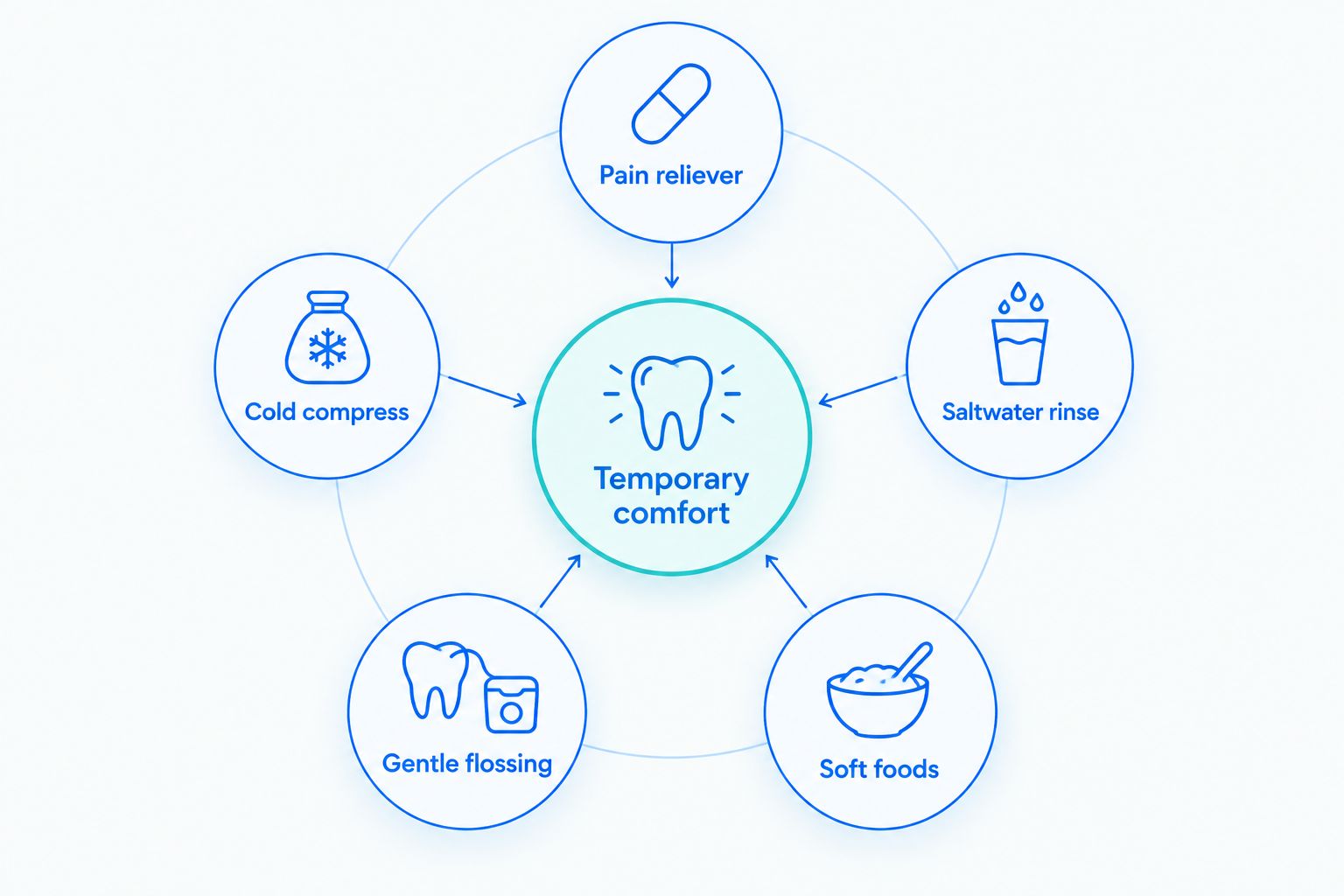
Best overall for temporary toothache relief: an over-the-counter pain reliever, if it is safe for you. Best for discomfort after an injury: a cold compress. Best for food caught between teeth: gentle flossing. This 2026 guide explains toothache relief before dentist visit, including when home care should stop and urgent care should begin. Mysmiletheory provides general and family dental care for patients in Spring, Texas.
- For toothache relief before dentist visit, use an appropriate pain reliever only as directed; home care cannot repair a tooth.
- Cold compresses, gentle cleaning, and soft foods offer temporary comfort, not treatment for infection.
- Trouble breathing or swallowing requires emergency care. Facial swelling or fever needs urgent assessment.
- Mysmiletheory provides general and family dentistry for local patients in Spring, Texas.
Why this matters: relief is not the same as repair
A toothache can come from decay, a crack, gum irritation, or an infection. The feeling alone does not tell you which problem you have, and even pain that settles deserves attention if it returns.
Get emergency medical help now if you have trouble breathing or swallowing, swelling around an eye, or rapidly spreading mouth or neck swelling. Call 911 for a life-threatening emergency. Do not wait for a routine dental appointment.
Facial or jaw swelling, fever with dental pain, pus, or difficulty opening your mouth needs urgent assessment. Contact a dentist promptly for persistent pain, pain when biting, or pain that interrupts sleep; ask for urgent advice if recommended pain medicine does not help.
For local care, contact Mysmiletheory and describe your symptoms so the team can advise you about arranging a visit. Do not assume an online appointment request is being monitored for emergencies.
What makes the best temporary toothache relief
The most useful option matches your symptoms without creating another problem. Use these criteria before choosing a remedy:
- Personal safety: Your medicines, health conditions, pregnancy status, and age affect what you can use.
- Symptom match: Food trapped between teeth calls for a different approach than discomfort after an injury.
- Gentle application: Nothing should burn your gums, scrape the tooth, or require force.
- Clear limits: A remedy should offer comfort without suggesting that decay or infection has healed.
- A care plan: Temporary relief should help you reach your appointment, not replace it.
These recommendations focus on adult self-care. For a child, ask a dentist, pediatrician, or pharmacist about age-appropriate options rather than adapting adult medication instructions.
Toothache relief options at a glance for 2026
| Option | Best for | What it does | Key limitation |
|---|---|---|---|
| Appropriate OTC pain reliever | Temporary pain control | Reduces pain while you arrange care | Not safe for everyone; does not treat the cause |
| Cold compress | Discomfort after an injury | Applies cooling outside the cheek | Does not repair damage or treat infection |
| Warm saltwater rinse | Mild gum irritation | Gently rinses the mouth | Does not reach infection inside a tooth |
| Gentle flossing | Food caught between teeth | Removes accessible trapped food | Forceful flossing can injure sore gums |
| Soft, mild-temperature foods | Eating with a tender tooth | Reduces chewing pressure and temperature triggers | Does not directly treat tooth pain |
You do not need to try every option. Choose the gentlest approach that fits your symptoms, and stop anything that makes the area hurt more.
1. OTC pain reliever: best for temporary pain control
An appropriate over-the-counter pain reliever can make a toothache more manageable while you arrange dental care. Ibuprofen reduces pain and inflammation; acetaminophen relieves pain but does not have the same anti-inflammatory effect.
Best for: Adults who can safely take the medicine and need short-term pain relief.
Pain reliever pros:
- Helps reduce discomfort without touching the painful tooth.
- Can make resting and eating more comfortable.
- Comes with label instructions for dosing and precautions.
Pain reliever cons:
- Does not repair decay, a crack, or an infection.
- Can cause harm when combined incorrectly or taken despite a medical restriction.
Follow the package directions. Ask a pharmacist first if you take other medicines or have a health condition. Ibuprofen needs particular caution with kidney disease, stomach ulcers, bleeding problems, blood thinners, or pregnancy. Acetaminophen needs caution with liver disease and alcohol use.
Check combination cold and pain medicines for duplicate ingredients. Do not combine ibuprofen with another anti-inflammatory pain reliever, such as naproxen, unless a clinician directs you.
Verdict: Use only a medicine that is safe for you, exactly as directed. Never place aspirin against a tooth or gum; it can burn the tissue.
2. Cold compress: best for discomfort after an injury
A cold compress rests against the outside of your cheek, not directly against the tooth. It offers temporary comfort after an injury while you arrange advice about possible dental damage.
Best for: Short periods of external cooling after a dental injury.
Cold compress pros:
- Does not require swallowing medicine.
- Avoids direct contact with a tender tooth.
- Is easy to remove immediately if uncomfortable.
Cold compress cons:
- Does not repair a broken tooth or treat infection.
- Can injure skin if ice touches it directly or stays on too long.
Wrap a cold pack in a thin towel and hold it against your cheek for about 15 minutes per session, with breaks between applications. Stop if your skin becomes painful or excessively numb, and do not fall asleep with it in place.
Swelling without an injury still needs prompt dental advice. A compress is not a reason to watch worsening swelling at home.
Verdict: Use gentle external cooling for comfort, not as a substitute for injury assessment.
3. Warm saltwater rinse: best for mild gum irritation
A warm saltwater rinse gently cleans around an irritated area and can help loosen surface debris. It does not disinfect the inside of a tooth or drain an abscess.
Best for: Adults with mild gum irritation who can rinse and spit comfortably.
Saltwater rinse pros:
- Does not require scrubbing a tender area.
- Helps wash away loose food particles.
- Uses familiar household ingredients.
Saltwater rinse cons:
- Does not treat decay or infection inside a tooth.
- Can sting if the mixture is too strong or the water is too hot.
Dissolve 1/2 teaspoon of salt in 8 ounces of warm water. Swish gently and spit it out; do not swallow it. Use comfortably warm water, not hot water.
If you recently had an extraction or oral surgery, follow your dentist's instructions instead. Rinsing too soon or too vigorously can disturb healing, so this general advice does not replace your aftercare plan.
Verdict: Use a gentle rinse for surface comfort, and stop if it increases pain.
4. Gentle flossing: best for food caught between teeth
Food wedged between teeth can press against the gum and cause localized soreness. Gentle flossing can remove an accessible piece, but it cannot fix a cavity or a broken filling that keeps catching food.
Best for: Discomfort that begins after eating when you suspect trapped food.
Gentle flossing pros:
- Addresses a specific, removable source of pressure.
- Cleans where a toothbrush does not reach well.
- Requires no medication.
Gentle flossing cons:
- Snapping floss into the gum can make soreness worse.
- Repeated food trapping can signal a problem that needs dental attention.
Guide the floss carefully between the teeth and curve it against each tooth. Do not saw into the gum, force floss through resistance, or use a pin, needle, or sharp toothpick to dig into the area.
If floss catches, shreds, or causes sharp pain, stop and tell your dentist. Persistent discomfort after the food is removed also needs attention.
Verdict: Try one gentle cleaning attempt; skip repeated digging or force.
5. Soft foods: best for eating with a tender tooth
Soft foods and mild temperatures reduce common triggers while you wait for care. Think of this as protecting a sore area, not treating the cause of the ache.
Best for: Getting through meals without unnecessary chewing pressure.
Soft-food pros:
- Reduces pressure on a tender tooth.
- Lets you avoid foods that trigger sensitivity.
- Fits alongside other appropriate comfort measures.
Soft-food cons:
- Does not directly treat inflammation or infection.
- Will not make a cracked or decayed tooth safe to ignore.
Choose foods such as soft eggs, oatmeal, or soup that has cooled to a comfortable temperature. Avoid hard, sticky, very sweet, very hot, or very cold foods if they trigger discomfort. Chew on the other side when comfortable, without repeatedly testing the sore tooth.
Keep brushing gently with fluoride toothpaste. Aim for 2 minutes per brushing, but do not scrub the painful area harder in an attempt to clean away the ache.
Verdict: Choose comfortable meals while keeping your dental appointment in place.
Home remedies to skip
A painful tooth can make an unfamiliar remedy sound tempting. Avoid anything that burns, numbs unpredictably, or promises to cure an infection without an examination.
- Aspirin on the gum: Direct contact can cause a chemical burn.
- Undiluted clove oil or other essential oils: These can irritate or damage mouth tissue.
- Household peroxide mixtures, alcohol, or bleach: Do not apply these as toothache treatments.
- Leftover antibiotics: The medicine may be inappropriate, and antibiotics alone do not repair the source of dental pain.
- Popping a swollen gum bump: Do not squeeze, puncture, or attempt to drain it yourself.
Tell your dentist what you have already taken or applied. That information helps guide safe care; there is no need to feel embarrassed about trying to get comfortable.
How these 2026 recommendations are ranked
The order reflects temporary pain control, symptom fit, and practical safety—not a claim that one remedy treats every toothache. An appropriate pain reliever leads for short-term pain control; the other options address narrower situations.
Your circumstances come first. If a medicine is unsafe for you, skip it. If you have swelling, fever, or worsening symptoms, arranging urgent assessment matters more than choosing another home remedy.
Which option should you choose?
Start by contacting a dentist, then choose a safe comfort measure while you wait. For an adult without medication restrictions, an appropriate OTC pain reliever is the default for temporary pain control. Use gentle flossing only for suspected trapped food, and use soft foods to avoid aggravating a tender tooth.
Before contacting the office, note when the pain started, what triggers it, whether swelling is present, and which medicines you have taken. Mention any injury, recent dental work, pregnancy, allergies, or medical conditions.
Mysmiletheory offers general, restorative, cosmetic, and family dentistry in Spring. Ask about an examination for your symptoms rather than trying to decide in advance which treatment you need.
Arrange a dental visit
Share your symptoms and ask about arranging an examination for your toothache.
FAQ
What's the best toothache relief before dentist visit in 2026?
An appropriate over-the-counter pain reliever is a useful first option for temporary pain control if you can take it safely. Follow the label and arrange dental care; pain relief does not repair the tooth.
Should I use a hot or cold compress for a toothache?
Use a wrapped cold compress outside the cheek for temporary comfort after an injury. Do not put ice directly on the skin or tooth, and seek prompt advice about swelling.
Can saltwater cure a tooth infection?
No. Saltwater can gently rinse an irritated area, but it cannot treat infection inside a tooth or replace dental treatment.
Can I take ibuprofen and acetaminophen together for tooth pain?
Some adults can use both, but combining them is not appropriate for everyone. Ask a dentist or pharmacist to check your health history, other medicines, and dosing instructions before doing so.
What if my toothache goes away before my appointment?
Keep the appointment unless your dentist advises otherwise. Pain can stop even when an underlying problem still needs treatment.
When is a toothache an emergency?
Trouble breathing or swallowing, swelling around an eye, or rapidly spreading mouth or neck swelling requires emergency medical care. Facial swelling, fever with dental pain, or difficulty opening your mouth needs urgent assessment.
What can I give my child for a toothache?
Ask a dentist, pediatrician, or pharmacist about an age-appropriate pain reliever and dose. Do not give aspirin to a child or teenager unless a clinician specifically directs it, and do not use adult dosing instructions.
One last thing
A quieter tooth is not proof of a healthier tooth. Pain can change even when the cause remains, so keep a brief symptom note rather than repeatedly biting on the tooth to check it.
For your 2026 dental visit, bring that note and a list of medicines you have used. You do not need to arrive with a diagnosis—just an honest description of what you are feeling.


