

Best overall for occasional dryness: frequent sips of water. Best for stimulating saliva: sugar-free gum. Best for lingering discomfort: a saliva substitute. This 2026 guide compares dry mouth remedies, explains their limits, and helps you recognize when a dental visit is the next step.
- Water is the first dry mouth remedy to try for occasional dryness, but persistent symptoms need evaluation.
- Sugar-free gum stimulates saliva; saliva substitutes provide moisture when drinking water is not enough.
- Fluoride toothpaste protects teeth from cavities but does not treat the cause of dry mouth.
- Mysmiletheory offers general dental care in Spring, Texas, for patients seeking a personal dentist.
Why this matters
Dry mouth is more than an uncomfortable feeling. Saliva helps you chew, swallow, clear food from your mouth, and protect your teeth against decay. When saliva is reduced, your mouth loses some of that protection.
You might notice sticky saliva, cracked lips, a burning feeling, or trouble eating dry foods. Medication, dehydration, mouth breathing, and certain health conditions are among the possible causes. You do not have to identify the cause yourself before asking for help.
Mysmiletheory is a local dental-care option for patients in Spring seeking a personal dentist. You can learn about Mysmiletheory while considering care for persistent dryness.
What makes the best dry mouth remedies?
The best choice in 2026 depends on whether you need immediate moisture, help producing saliva, or protection against dental problems. Use these criteria rather than choosing by flavor or packaging:
- Purpose: Does the remedy add moisture, stimulate saliva, or protect teeth?
- Comfort: Does it soothe your mouth without burning or irritating sensitive tissue?
- Tooth protection: Is it free of sugar and unnecessary acidic ingredients?
- Practical fit: Can you use it safely during your usual activities?
- Clear limits: Does it address the cause, or only make symptoms easier to manage?
No single remedy covers every need. Water and fluoride toothpaste, for example, serve different purposes and belong together rather than competing for the same job.
Dry mouth remedies at a glance
| Remedy | Best for | Standout benefit | Key limitation |
|---|---|---|---|
| Frequent water sips | Occasional daytime dryness | Adds moisture immediately | Does not restore reduced saliva production |
| Sugar-free gum | Stimulating saliva while awake | Chewing encourages saliva flow | Not suitable for everyone, including people with jaw pain |
| Saliva substitutes | Persistent surface dryness | Coats and moistens oral tissues | Relief is temporary |
| Fluoride toothpaste | Protecting teeth from decay | Supports enamel protection | Does not relieve the underlying dryness |
| Bedroom humidifier | Dryness associated with dry bedroom air | Adds moisture to the surrounding air | Does not treat medical causes or blocked nasal breathing |
| Avoiding irritants | Dryness accompanied by burning or irritation | Removes avoidable sources of discomfort | Does not correct reduced saliva production |
| Dental and medication review | Recurring or unexplained dry mouth | Helps identify causes and tooth-protection needs | Requires assessment rather than a quick home fix |
1. Frequent water sips: best for occasional daytime dryness
Water is a sensible starting point when your mouth feels dry during conversation, meals, or daily activities. Take small sips as needed, including with food that feels difficult to chew comfortably.
Water moistens your mouth, but it does not perform every protective job that saliva does. If you already drink regularly and still feel dry, adding more water is not the whole answer.
Water pros:
- Adds moisture without sugar or acid.
- Fits naturally into meals and daily routines.
- Helps moisten dry foods while you eat.
Water cons:
- Relief can be brief when saliva production is reduced.
- Excess drinking is not appropriate for people with prescribed fluid restrictions.
Best for: Occasional dryness and comfort during meals.
Verdict: Start here, but follow your clinician's fluid guidance and seek help for persistent symptoms.
2. Sugar-free gum: best for stimulating saliva while awake
Chewing sugar-free gum encourages saliva flow when your salivary glands can respond. It is a practical option when you feel dry between meals and can chew comfortably.
Choose sugar-free rather than regular gum. You do not need a strong flavor or tingling sensation for the chewing action to stimulate saliva.
Sugar-free gum pros:
- Encourages your own saliva production.
- Avoids the added sugar found in regular gum.
- Provides an option that does not require repeated drinking.
Sugar-free gum cons:
- Chewing can aggravate jaw discomfort.
- Gum is unsuitable during sleep or for anyone who cannot chew and swallow safely.
Some sugar substitutes cause digestive discomfort when consumed in larger amounts. Follow the package directions and stop if a product bothers you.
Best for: Daytime dryness when chewing is comfortable and safe.
Verdict: Try sugar-free gum while awake; skip it if chewing hurts your jaw.
3. Saliva substitutes: best for persistent surface dryness
Saliva substitutes come in forms such as gels, sprays, and rinses. They moisten and coat your mouth rather than asking your salivary glands to produce more saliva.
These products are useful when water provides only brief comfort. Choose a product intended for oral dryness, follow its directions, and ask your dentist or pharmacist about ingredients if your mouth is sensitive.
Saliva substitute pros:
- Provides moisture without chewing.
- Offers different formats for individual preferences.
- Helps manage discomfort when saliva remains limited.
Saliva substitute cons:
- Does not treat the reason for reduced saliva.
- Texture and flavor do not suit everyone.
A product that stings is not a better treatment. Stop using anything that causes irritation and discuss another option with your dental team.
Best for: Ongoing dryness that needs more than occasional water sips.
Verdict: Consider a saliva substitute for comfort, alongside an evaluation of persistent symptoms.
4. Fluoride toothpaste: best for protecting teeth from decay
Fluoride toothpaste belongs in a dry mouth routine because reduced saliva increases the risk of cavities. It protects teeth rather than replacing missing moisture.
Brush gently for 2 minutes per brushing session, 2 times per day, using fluoride toothpaste. Clean between your teeth 1 time per day with floss or another suitable interdental cleaner. These are established American Dental Association home-care recommendations, not a cure for dry mouth.
Fluoride toothpaste pros:
- Helps protect enamel against decay.
- Fits into your existing brushing routine.
- Supports prevention even when dryness continues.
Fluoride toothpaste cons:
- Does not increase saliva production.
- Some flavors or foaming ingredients irritate sensitive mouths.
Your dentist can assess whether your cavity risk calls for additional fluoride treatment. Do not replace brushing with mouth rinse or a moisturizing gel.
Best for: Daily cavity prevention when your mouth is dry.
Verdict: Keep fluoride toothpaste in your routine, even when another remedy provides the moisture.
5. A bedroom humidifier: best for dry bedroom air
A humidifier adds moisture to the air and can help when a dry bedroom contributes to morning discomfort. It does not treat every cause of waking with a dry mouth.
Persistent mouth breathing, nasal blockage, and sleep-related breathing problems need their own assessment. Mention loud snoring or witnessed breathing pauses to your medical clinician rather than relying on a humidifier alone.
Bedroom humidifier pros:
- Addresses dryness in the surrounding air.
- Does not require chewing or applying an oral product.
- Complements other bedtime comfort measures.
Bedroom humidifier cons:
- Requires regular cleaning according to the manufacturer's instructions.
- Does not correct reduced saliva production or airway problems.
Best for: Morning dryness associated with dry indoor air.
Verdict: Use a humidifier for the room, not as a substitute for evaluating persistent nighttime symptoms.
6. Avoiding irritants: best for a dry mouth that also burns
Alcohol-containing mouth rinses, tobacco, and irritating foods can make a dry mouth feel worse. Sour candies and acidic drinks are not good substitutes for saliva support because repeated acid exposure can damage enamel.
Choose an alcohol-free rinse if your dentist recommends rinsing. If spicy or acidic foods sting, set them aside while your mouth is uncomfortable and discuss ongoing burning with your dentist.
Avoiding irritants pros:
- Removes avoidable sources of discomfort.
- Reduces exposure to sugary or acidic substitutes.
- Helps you recognize products that consistently bother your mouth.
Avoiding irritants cons:
- Does not restore saliva production.
- Burning that persists still needs evaluation.
Best for: Dryness accompanied by stinging or irritation from foods and oral-care products.
Verdict: Skip products that burn; a strong sensation is not proof that a remedy works.
7. Dental and medication review: best for recurring dry mouth
A dental examination helps identify tooth decay, irritated tissues, and other problems associated with dryness. Your medication history matters too: prescription and nonprescription medicines can contribute to dry mouth.
Bring a list of medicines and supplements, including anything started or changed before the symptoms appeared. Do not stop or change prescribed medication yourself. Your prescriber can assess alternatives when appropriate.
Dental and medication review pros:
- Looks beyond temporary symptom relief.
- Checks for dental problems that need treatment.
- Connects prevention with your individual health history.
Dental and medication review cons:
- Assessment does not guarantee an immediate explanation.
- Some causes require coordination with a medical clinician.
Mysmiletheory provides general dental care in Spring. Explore the clinic's dental services if you are looking for a local place to discuss persistent dryness and tooth protection.
Best for: Recurring, unexplained, or disruptive dryness.
Verdict: Arrange an evaluation instead of repeatedly switching home remedies.
How these remedies are ranked
This 2026 guide ranks remedies by their purpose, comfort, tooth protection, practical fit, and limits. Water comes first as a simple starting point for occasional dryness—not because it treats every cause.
The ranking separates symptom relief from prevention and assessment. A remedy that makes your mouth feel better does not automatically protect your teeth or explain why dryness started.
Which dry mouth remedies should you choose in 2026?
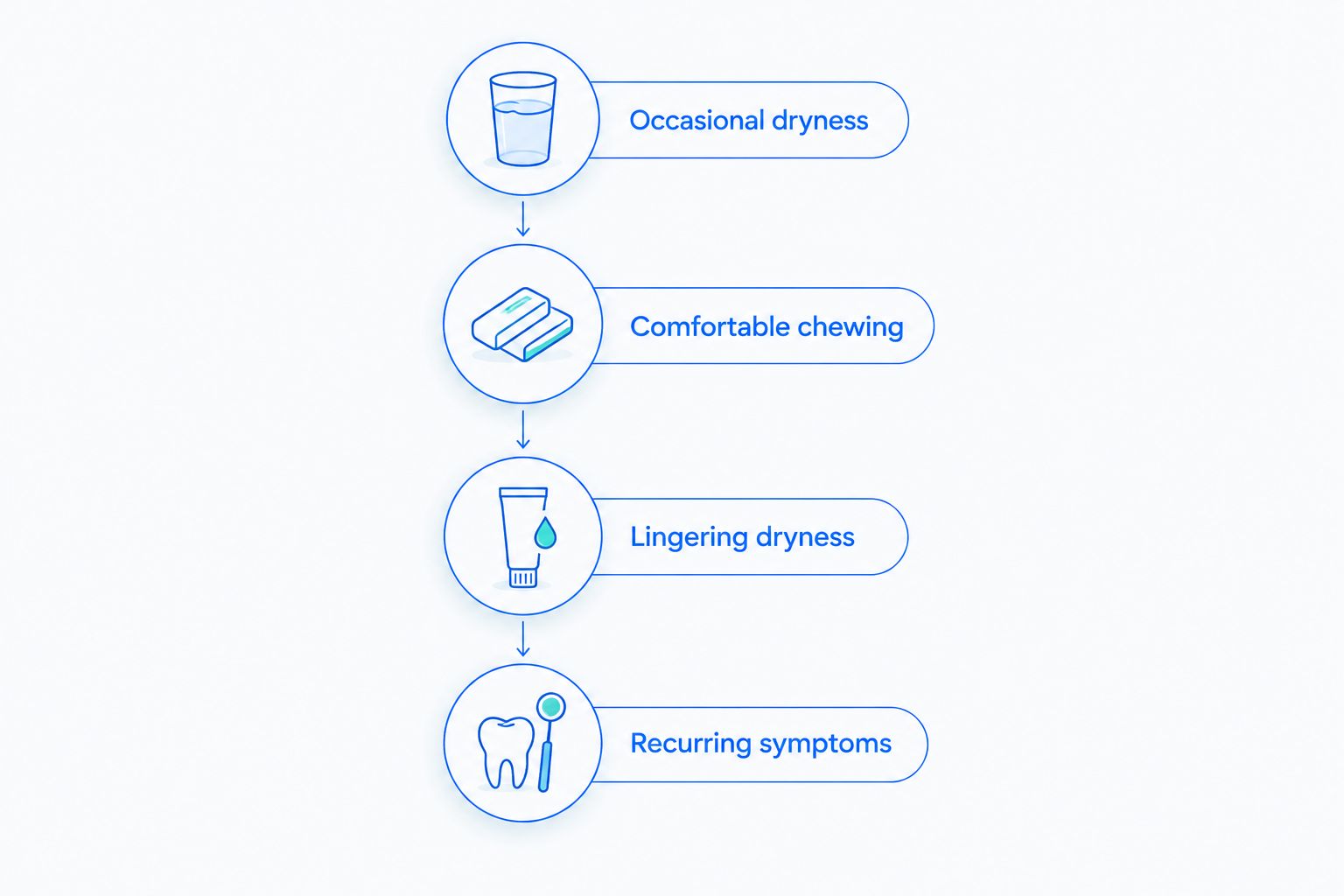
Start with water for occasional dryness, keep fluoride toothpaste in your routine, and add another remedy according to your symptoms. Use this simple decision path:
- Occasional dryness: Begin with small sips of water.
- Comfortable chewing: Consider sugar-free gum to stimulate saliva.
- Lingering dryness: Ask about a saliva substitute.
- Recurring symptoms: Arrange a dental evaluation and medication review.
Keep a brief note of when dryness happens, what helps, and whether it began after a medication change. Bring that information to your appointment; it gives your dentist a clearer picture than the symptom alone.
When not to wait
Seek prompt dental or medical care for persistent mouth sores, white patches, pain, or difficulty eating and swallowing. Dryness together with unusual thirst or frequent urination also deserves medical attention.
Trouble breathing or an inability to swallow needs emergency care. Do not try to manage those symptoms with gum, water, or a moisturizing product.
For nonurgent concerns, Mysmiletheory offers a local starting point for general dental care. You can ask about dryness without having a treatment decision already made.
Talk about your dry mouth
Share your symptoms and ask about an appointment for your oral health concerns.
FAQ
What's the best home remedy for dry mouth?
Small, frequent sips of water are a sensible first step for occasional dry mouth. Sugar-free gum can stimulate saliva when chewing is comfortable, but persistent dryness needs an assessment.
Is sugar-free gum better than a saliva substitute?
Sugar-free gum and saliva substitutes do different jobs. Gum stimulates saliva when the glands can respond; a substitute adds surface moisture without requiring chewing.
Why is my mouth dry even when I drink water?
Water adds moisture but does not correct every cause of reduced saliva. Medicines, mouth breathing, and certain health conditions can contribute, so ongoing symptoms deserve dental or medical review.
What helps a dry mouth at night?
A clean humidifier can help when dry bedroom air contributes to discomfort, and an oral moisturizing product can provide temporary relief. Persistent mouth breathing, loud snoring, or witnessed breathing pauses should be discussed with a medical clinician.
Can dry mouth cause cavities?
Dry mouth increases cavity risk because saliva helps clear food and protect teeth against acids. Continue fluoride brushing and cleaning between teeth, and ask your dentist about prevention suited to your risk.
Should I stop a medicine that gives me dry mouth?
Do not stop or change a prescribed medicine without speaking with your prescriber. Tell your prescriber when the dryness began and ask whether the medication or dose needs review.
When should I see a dentist about dry mouth?
See a dentist when dryness keeps returning, disrupts eating or sleep, or comes with pain, sores, or changes in your mouth. Difficulty breathing or an inability to swallow requires emergency care rather than a routine appointment.
One last thing
Feeling less dry does not necessarily mean your teeth are fully protected. A moisturizing gel can improve comfort while cavity risk still needs attention.
For your 2026 routine, pair symptom relief with prevention: fluoride toothpaste, cleaning between teeth, and a dental assessment when dryness persists. You deserve both a more comfortable mouth and a clear explanation of what needs care.


