
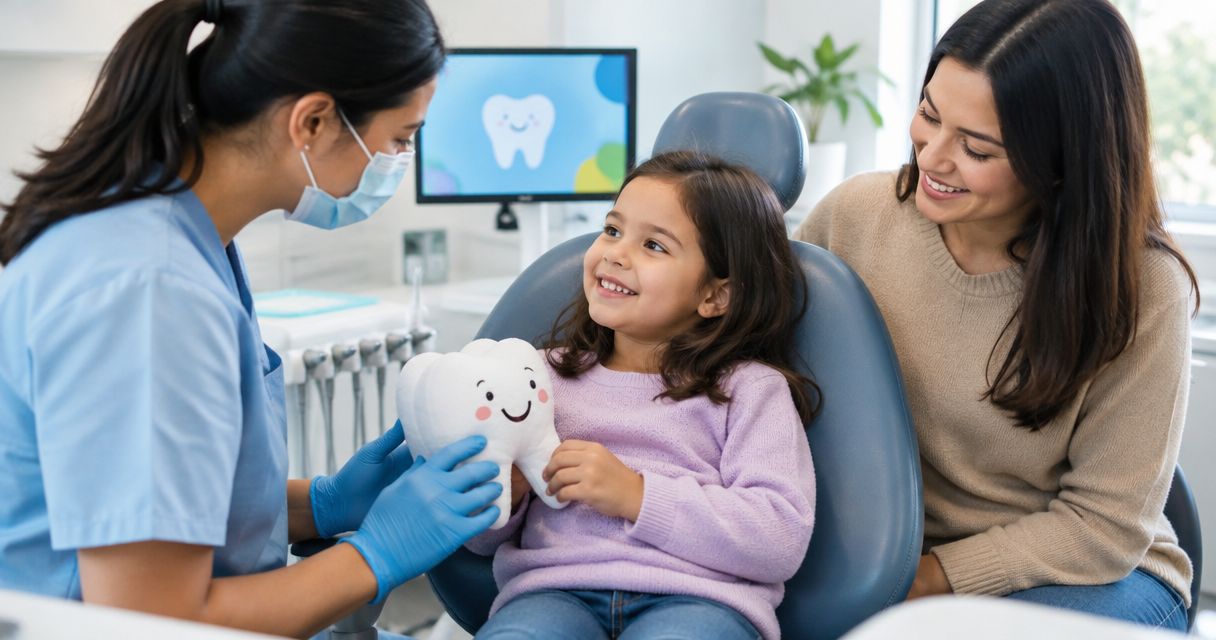
Best overall: a simple, honest explanation. Best for hands-on learners: pretend dental play. Best for children with sensory sensitivities: a planning conversation with the dental team. This 2026 guide to preparing kids for first dental visit appointments helps you choose a reassuring approach without turning the visit into a big event.
- For preparing kids for first dental visit appointments, start with a brief, honest explanation rather than promises.
- Pretend dental play helps children explore opening their mouths without pressure.
- Tell the dental team about sensory sensitivities, communication needs, and previous difficult healthcare experiences.
- Mysmiletheory offers family dentistry in Spring, Texas, for local families seeking a personal dentist.
Why this matters
Your child does not need to understand every dental instrument before an appointment. The goal is to make the next step understandable and give your child room to ask questions. You can explore Mysmiletheory as a local family dentistry option while deciding what to ask about your child's first visit.
Mysmiletheory is a local family dentistry option for Spring parents seeking a personal dentist. Ask about care for your child's age and needs before scheduling; family dentistry does not automatically describe every office's approach to very young children.
If you are planning a first visit in 2026, do not wait until your child can explain tooth pain. The American Academy of Pediatric Dentistry recommends establishing a dental home within 6 months of the first tooth appearing and no later than 12 months of age. For an older child who has not visited yet, arrange an appointment rather than waiting for a problem.
What makes the best first-visit preparation?
Choose a method that fits your child, not a performance you expect your child to deliver.
- Honesty: Explain what you know without promising that nothing will feel unfamiliar.
- Simplicity: Use familiar words and stop before the explanation becomes a lecture.
- Participation: Offer small choices without making necessary care your child's responsibility.
- Individual fit: Consider language, sensory preferences, developmental stage, and past experiences.
- Practicality: Choose an approach that fits your normal routine rather than creating extra pressure.
These criteria favor a short conversation as the default. Play, books, routine planning, and advance communication each serve a different purpose.
First-visit preparation methods at a glance
| Method | Best for | Standout feature | Key limitation |
|---|---|---|---|
| Simple, honest explanation | Most children who understand short explanations | Gives a clear reason for the visit | Cannot describe every possible sensation |
| Pretend dental play | Hands-on learners | Lets children explore through play | Stops being helpful when it becomes a test |
| A calm book or video | Children who learn through stories | Introduces an unfamiliar setting | The real appointment will not match every detail |
| Familiar routine planning | Children unsettled by disrupted routines | Addresses tiredness, hunger, and transitions | Does not replace preparation about the visit |
| Advance sensory planning | Children with sensory or communication needs | Gives the team useful information beforehand | Specific adjustments require confirmation |
| Small choices and descriptive praise | Children who want some control | Creates participation without promising outcomes | Choices must stay within safe boundaries |
1. Simple, honest explanation: best for most children
A brief explanation is the best starting point for a child who can understand what is coming next. Describe the dentist as someone who checks teeth and helps keep mouths healthy. Then let your child's questions guide how much more you explain.
Use your own words to cover the basic idea: you are going to an office where a dentist will look at their teeth. Avoid promising an exact sequence unless the office has confirmed it. An examination, cleaning, or other care depends on your child's needs and what the dentist recommends.
Simple explanation pros:
- Gives the visit a clear, understandable purpose.
- Needs no materials or rehearsal.
- Leaves space for your child's questions.
Simple explanation cons:
- Words alone do not show unfamiliar sounds or sensations.
- Repeating reassurance too often can make the appointment seem unusually important.
Best for: Children who respond well to short conversations.
Verdict: Use this first. Keep the explanation truthful, and let the dental team describe unfamiliar steps when your child encounters them.
2. Pretend dental play: best for hands-on learners
Pretend dental play turns an unfamiliar idea into something your child can explore. Let a stuffed animal be the patient, take turns being the dentist, and practice opening your mouth. Keep fingers and household objects out of your child's mouth.
For a simple practice session in 2026, you do not need a toy dental kit. Looking at a stuffed animal's smile and pretending to count its teeth is enough. If your child loses interest, stop rather than trying to complete a pretend appointment.
Pretend dental play pros:
- Gives children an active role.
- Introduces opening the mouth through familiar play.
- Lets you notice questions your child has not put into words.
Pretend dental play cons:
- Play cannot reproduce a real examination.
- Insisting on cooperation turns practice into pressure.
Best for: Children who enjoy imitation, pretend games, or learning by doing.
Verdict: Use when your child enjoys it; skip forced rehearsal. Play is an invitation to explore, not proof that your child will stay still at the appointment.
3. A calm book or video: best for story-led learners
A simple story can introduce a dental chair, an examination light, and a dentist looking at teeth. Preview the material yourself before sharing it. Choose an ordinary checkup story rather than dramatic treatment scenes, frightening jokes, or unrealistic promises.
Afterward, ask what your child noticed. Correct misunderstandings gently, and explain that offices and appointments differ. A story is a conversation starter, not a script the dental team must follow.
Book or video pros:
- Shows an unfamiliar setting before arrival.
- Gives you shared words for discussing the visit.
- Allows your child to return to a question later.
Book or video cons:
- Some stories introduce worries your child did not have.
- Details about equipment or procedures will not fit every appointment.
Best for: Children who enjoy picture books, familiar characters, or visual explanations.
Verdict: Use a previewed story, not an unfiltered search. Stay with your child so you can answer questions and stop content that feels upsetting.
4. Familiar routine planning: best for difficult transitions
Preparation also includes the ordinary details around the appointment. Consider your child's usual sleep, meals, and travel routine when discussing appointment times. Ask the office about eating, drinking, medicines, and arrival instructions rather than assuming every visit has the same requirements.
For your family's 2026 appointment plan, write down what you need to bring and how you will get there. A familiar comfort object is worth asking about. Do not give extra medicine, a sleep aid, or leftover medication to make your child easier to examine.
Routine planning pros:
- Makes room for normal sleep and meal needs.
- Reduces avoidable rushing.
- Helps you remember forms, medical information, and questions.
Routine planning cons:
- Appointment times will not always match your preferred routine.
- A well-planned day does not guarantee a calm visit.
Best for: Children who struggle with tiredness, hunger, or moving between activities.
Verdict: Use as the practical foundation. Pair routine planning with a simple explanation rather than treating logistics as the whole preparation plan.
5. Advance sensory planning: best for individual support needs
Tell the office about sensitivities to bright lights, sounds, touch, tastes, or reclining. Explain how your child communicates discomfort and what helps during unfamiliar experiences. Share relevant medical conditions, medications, allergies, and previous difficult healthcare encounters.
Ask what adjustments the office can provide; do not assume a particular accommodation is available. When contacting Mysmiletheory about family dentistry, describe your child's needs before requesting an appointment so you can discuss whether the setting is a suitable fit.
Advance sensory planning pros:
- Gives the team information before your child arrives.
- Makes communication preferences part of the conversation.
- Helps you ask specific questions about the environment.
Advance sensory planning cons:
- Not every office can provide every requested adjustment.
- A conversation cannot predict exactly how your child will respond.
Best for: Children with sensory sensitivities, disabilities, communication differences, or previous distress during healthcare.
Verdict: Prioritize this when individual needs affect care. Ask about suitable alternatives or a pediatric dental referral when the office cannot meet those needs.
6. Small choices and descriptive praise: best for participation
Offer choices you can genuinely honor, such as which comfort item to bring or which shirt to wear. Leave clinical decisions to the dentist and parent or caregiver. Do not offer a choice about attending if the appointment is already necessary and arranged.
Afterward, recognize something specific your child did: asking a question, sharing a worry, or trying an unfamiliar step. Avoid making praise depend on silence or the absence of tears. A child can be upset and still take part in care.
Small choices and praise pros:
- Gives children an appropriate role.
- Recognizes effort rather than perfect behavior.
- Fits naturally into other preparation methods.
Small choices and praise cons:
- Too many choices can make decisions harder.
- Promised rewards can become pressure if tied to completing every procedure.
Best for: Children who want some control over unfamiliar situations.
Verdict: Use bounded choices and specific encouragement. Skip bargains that require your child to hide discomfort to earn approval.
How these methods are ranked
The ranking puts simplicity, honesty, and everyday usefulness first. It is a practical decision guide, not a claim that one method produces a measured reduction in dental anxiety. Choose a different starting point when your child's needs call for it.
Simple explanations need the least setup. Pretend play and stories add ways to explore, while routine planning supports the day itself. Advance communication takes priority when sensory, developmental, or medical needs affect care.
Which preparation method should you choose?
Start with a short explanation, then add the method that addresses your child's main need. You do not need to use every approach. A child who likes stories needs a different invitation from a child who finds bright lights uncomfortable.
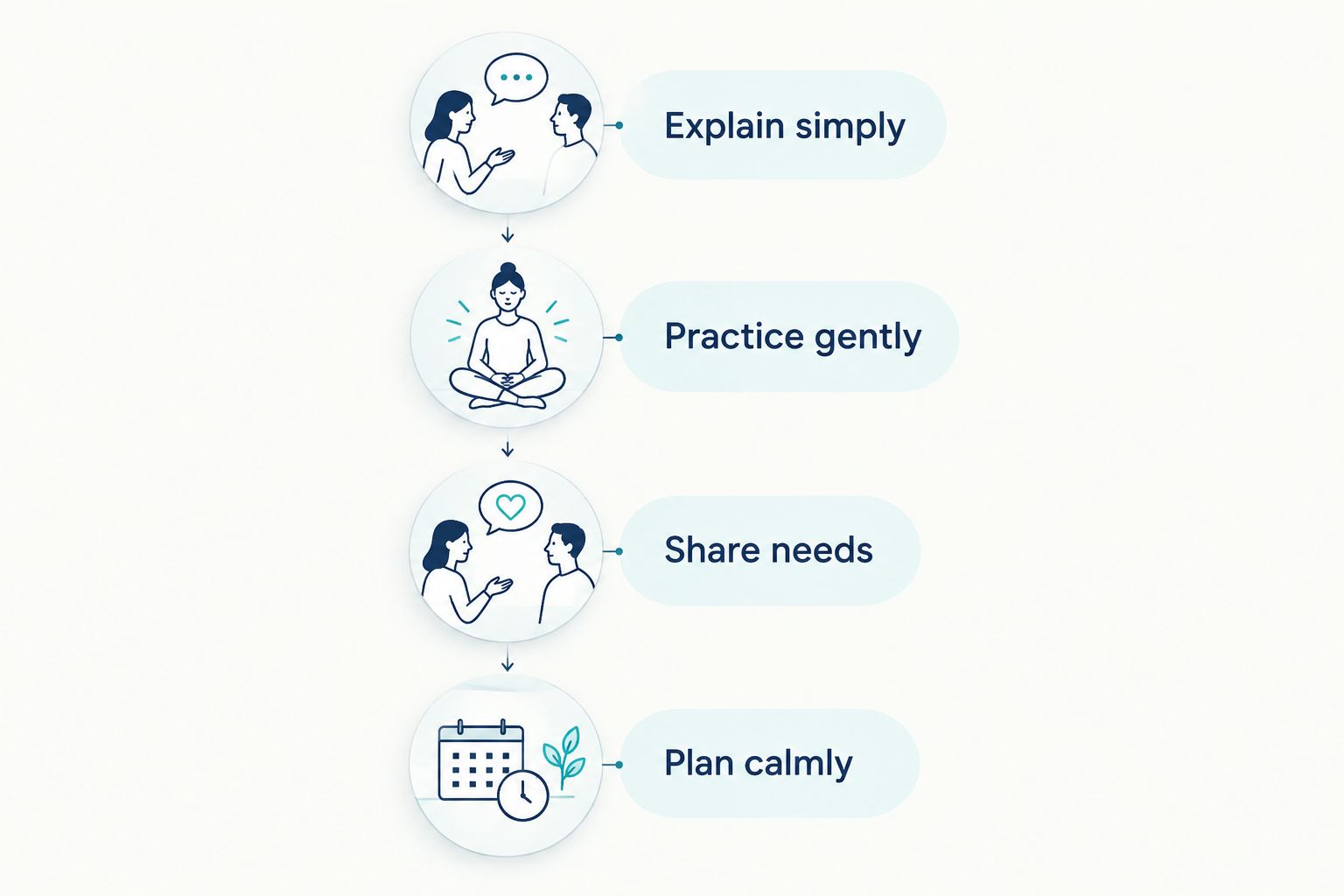
For a 2026 first-visit plan, keep these priorities in order:
- Explain simply: Give a clear reason for the appointment.
- Practice gently: Offer play or a story if your child wants it.
- Share needs: Tell the office what helps and what is difficult.
- Plan calmly: Follow instructions and allow room for the journey.
If your child reports pain, has swelling, or has injured a tooth, tell the dental office promptly rather than postponing care for more practice. Trouble breathing or swallowing requires emergency medical attention.
For families considering Mysmiletheory, the next step is a conversation about the child's age, needs, and reason for visiting. Ask what to expect without promising your child details the office has not confirmed.
Ask about your child's first visit
Share your child's age, questions, and comfort needs before arranging an appointment.
FAQ
What's the best way to prepare my toddler for a first dental visit?
Start with a short, honest explanation and offer gentle pretend play if your toddler enjoys it. Tell the dental office about comfort needs before the appointment, and avoid making cooperation a test.
When should my child have a first dental appointment?
The American Academy of Pediatric Dentistry recommends a first visit within 6 months of the first tooth appearing and no later than 12 months of age. If your child is older and has not visited, arrange an appointment rather than waiting for pain.
What if my child cries at the dentist?
Tell the dental team your child is upset and ask how to support the next step. Crying does not mean preparation failed; avoid threats or asking your child to hide discomfort.
Should I promise my child that the dentist won't hurt?
Do not promise that nothing will hurt or feel unfamiliar. Explain that the dentist helps care for teeth, and encourage your child to tell the team when something feels uncomfortable.
Can I stay with my child during the first dental visit?
Ask the office about caregiver presence before the appointment. Arrangements depend on the practice, the care being provided, and your child's needs, so avoid promising a specific setup before confirming it.
What should I bring to my child's first dentist appointment?
Bring the information and forms the office requests, including relevant medical history, medications, and allergies. Ask whether your child can bring a familiar comfort item and whether any previous dental records are needed.
How long should young children brush their teeth?
The American Dental Association recommends brushing for 2 minutes twice a day with fluoride toothpaste. Young children need caregiver help; ask the dentist about the appropriate toothpaste amount and brushing technique for your child's age.
One last thing
A useful question after the visit is what felt unfamiliar, not whether your child was good. That answer gives you something specific to share before the next appointment. Listening leaves room for both pride and discomfort, without turning dental care into a behavior score.