
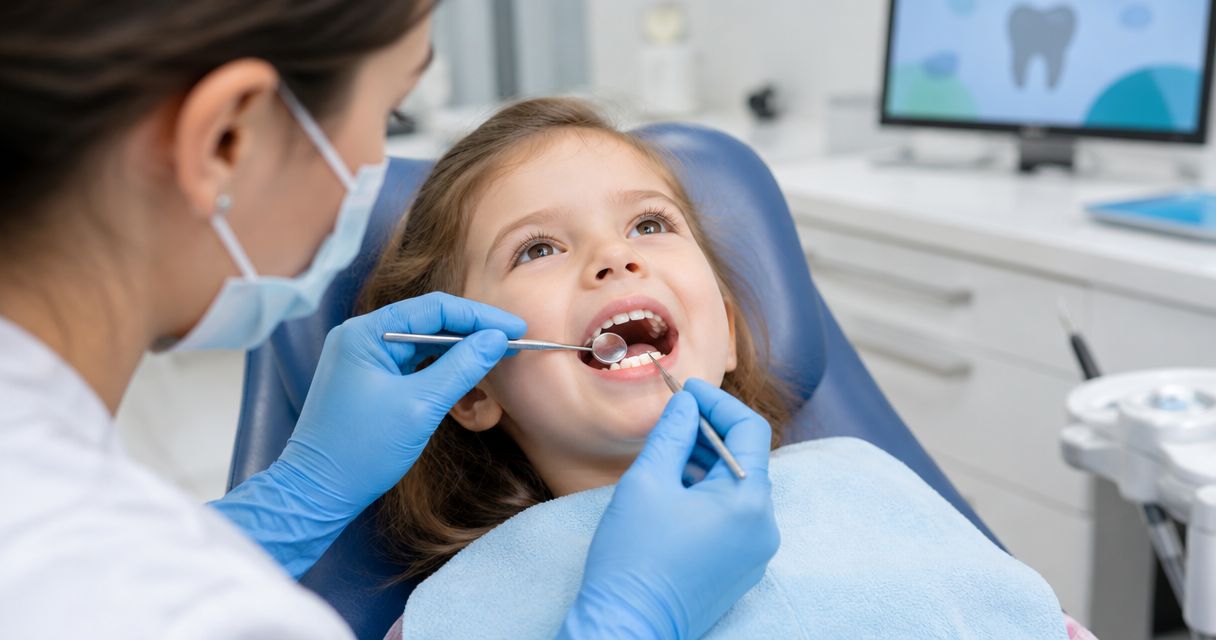
No—baby teeth cavities should not be left untreated simply because the teeth will fall out. Decay can cause pain, infection, and early tooth loss; a dentist should decide whether your child needs treatment or a closely monitored prevention plan. An early spot without a hole sometimes responds to fluoride and better daily care, but an established hole does not grow back.
- Can baby teeth cavities be left untreated? No—have a dentist assess decay, even when your child feels fine.
- The American Dental Association distinguishes reversible early enamel damage from cavities that need dental treatment.
- Facial swelling, fever with dental swelling, or trouble swallowing needs urgent attention.
- Baby teeth support chewing, speech development, and space for permanent teeth.
Can baby teeth cavities be left untreated?
A cavity needs a dental plan, not a wait-and-see decision at home. Your child’s comfort, the depth of decay, and how close the tooth is to falling out all affect that plan. A tooth that looks small from the outside can have decay you cannot see between teeth or beneath the surface.
For your family’s 2026 dental care, separate two situations: early enamel damage without a hole and decay that has already broken through the surface. The American Dental Association explains that early tooth decay can be stopped or reversed through remineralization, while a cavity is permanent damage requiring a dentist’s care.
Regular visits help identify that difference before pain becomes the reason for an appointment. This guide to how often kids should see a dentist explains the role of ongoing checkups.
| What the dentist finds | What it means | Appropriate next step |
|---|---|---|
| Early enamel change without a hole | Mineral loss has begun, but the surface remains intact | A dentist-directed fluoride and prevention plan |
| A visible or confirmed hole | Tooth structure has been lost | Assessment for treatment to repair or arrest decay |
| Decay reaching the tooth’s inner tissue | The nerve and surrounding tissue need evaluation | Assessment for pulp treatment or removal |
| A tooth close to natural shedding | Timing affects the treatment decision | An examination before choosing monitoring or treatment |
| Swelling or signs of infection | The problem extends beyond a simple surface defect | Urgent dental assessment |
Why this matters
Baby teeth do real work while your child grows. They help with chewing, support speech development, and hold space for permanent teeth. Losing one too early can allow nearby teeth to shift, although not every early loss requires a space maintainer.
Pain also reaches beyond the mouth. A sore tooth can interrupt eating and sleep, and a child does not always describe toothache clearly. Refusing crunchy foods, chewing on one side, or waking at night deserves attention even without a visible hole.
The goal is not to treat every mark the same way. It is to protect comfort and prevent infection while preserving teeth when appropriate. A calm explanation and an individualized plan help you understand why a dentist recommends care rather than waiting.
Which treatments are used for baby teeth cavities?
The right treatment depends on the examination, not just the appearance of a dark spot. Dentists also consider symptoms, X-rays when appropriate, the amount of healthy tooth remaining, and your child’s ability to participate comfortably.
Use this comparison to prepare questions for a 2026 appointment, not to choose treatment yourself. Each option has a purpose and a limitation.
| Option | Best for | Main benefit | Limitation or trade-off |
|---|---|---|---|
| Fluoride and monitoring | Early decay without a hole | Helps strengthen enamel and control early disease | Does not rebuild missing tooth structure |
| Silver diamine fluoride | Selected cavities suited to decay arrest | Can stop active decay without drilling in selected cases | Permanently darkens decayed areas and needs follow-up |
| Filling | Cavities with enough healthy tooth remaining | Replaces lost structure in a localized area | Does not address ongoing cavity risk by itself |
| Crown | More extensive damage in a restorable tooth | Covers and protects the remaining tooth | Requires preparation; appearance depends on the crown material |
| Pulp treatment | Selected teeth with involvement of inner tissue | Can preserve a tooth that needs more than a filling | Suitability depends on the condition of the pulp and roots |
| Extraction | Teeth that cannot be predictably restored | Removes the diseased tooth | Creates a space that needs assessment as the mouth develops |
Fluoride and monitoring
Best for: early mineral loss before a hole develops. A dentist can recommend fluoride, changes to brushing and eating habits, and a review schedule. Monitoring means checking whether the area is stable—not leaving it alone indefinitely.
Ask what improvement should look like and when the area needs another examination. A prevention plan only works when home care and follow-up support it.
Silver diamine fluoride
Best for: selected cavities where stopping decay is an appropriate goal. Silver diamine fluoride is a liquid applied by a dental professional to arrest decay. It does not replace the tooth structure already lost.
Its main visible drawback is permanent dark staining of the decayed area. Ask the dentist to explain that appearance before treatment, particularly for a front tooth, and whether a later restoration is needed.
Fillings and crowns
Best for: teeth that need damaged structure repaired or protected. A filling repairs a localized cavity; a crown covers more of the tooth when damage is extensive. The amount of sound tooth remaining helps determine which approach fits.
Neither option makes the tooth immune to future decay. Daily brushing, cleaning between touching teeth, and reducing frequent sugar exposure remain part of the treatment plan.
Pulp treatment and extraction
Best for: deeper disease requiring more than a surface repair. Pulp treatment addresses the soft tissue inside a tooth when keeping that tooth is appropriate. Extraction removes a tooth that cannot be suitably restored or retained.
Ask whether the tooth can be saved, what infection is present, and whether removing it creates a need to maintain space. These are different decisions, and each deserves a clear explanation.
Why treatment decisions vary
There is no single treatment for every baby tooth cavity. The recommendation should connect directly to what the dentist finds, with enough explanation for you to understand the alternatives.
- Decay depth: Surface enamel changes differ from a hole reaching the inner tooth.
- Symptoms and infection: Spontaneous pain, swelling, or drainage changes the urgency and treatment choices.
- Remaining tooth structure: A small repair needs a different approach from a badly weakened tooth.
- Natural shedding: The tooth’s expected loss matters, but age alone does not establish that timing.
- Cavity risk: Frequent sugar exposure, plaque buildup, and previous decay affect prevention and follow-up.
- Comfort and cooperation: Your child’s needs affect how care is planned and delivered.
What should you do if you notice a cavity?
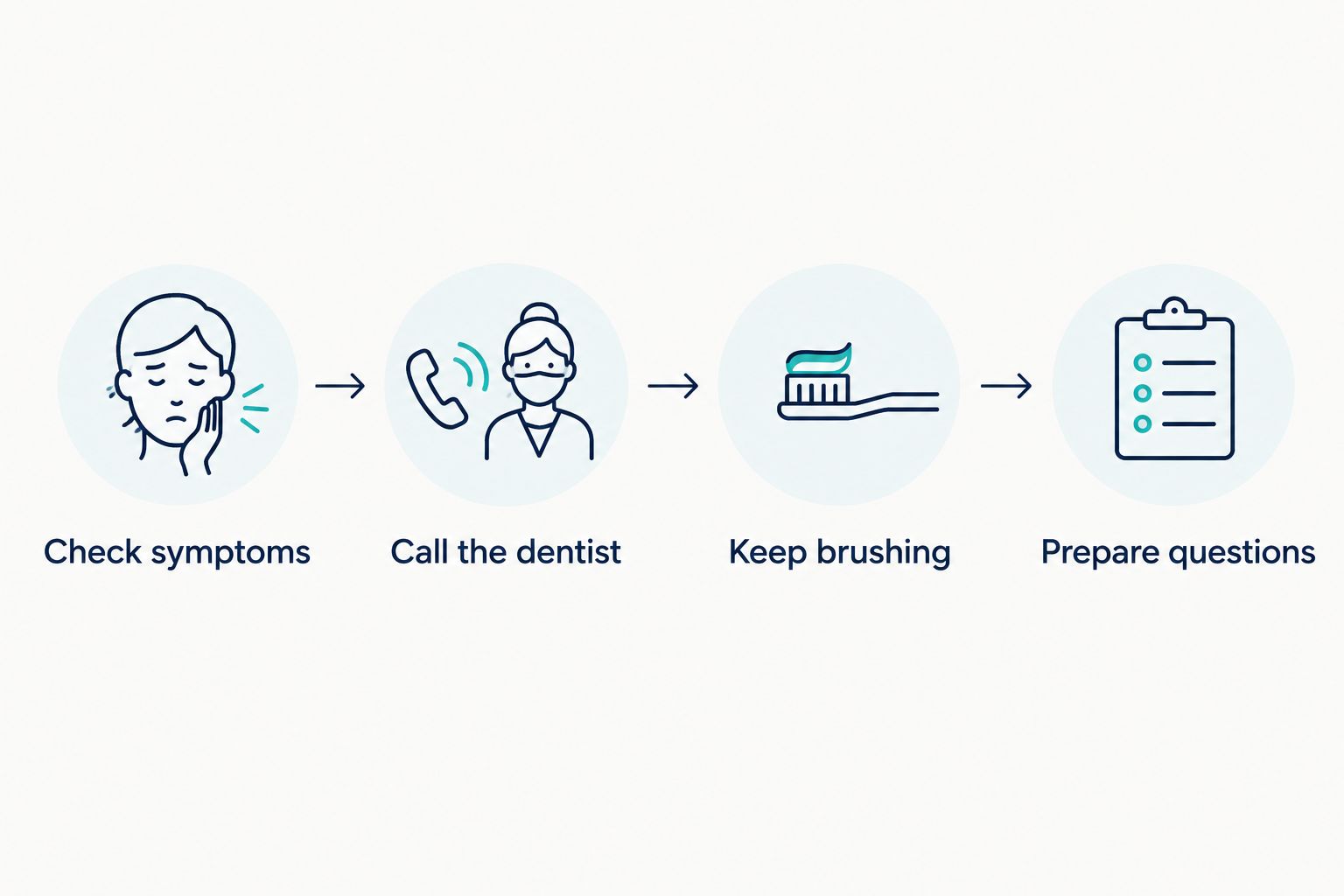
You do not need to identify the exact treatment before calling. Describe what you see and how your child is behaving so the dental team can help determine the next step.
- Check symptoms. Note pain, swelling, fever, drainage, nighttime waking, or difficulty eating. Tell the team about these when you call.
- Call the dentist. Explain which tooth concerns you and when you noticed the change. Ask how soon your child needs assessment.
- Keep brushing. Use a soft toothbrush and fluoride toothpaste. Clean gently rather than avoiding the tooth completely.
- Prepare questions. Ask whether the area is active decay, whether there is a hole, and what happens if treatment is delayed.
Until the appointment, offer foods your child can eat comfortably and avoid putting aspirin directly on the tooth or gums. Ask a dentist, pediatrician, or pharmacist about age-appropriate pain relief; pain medicine does not treat the cause of decay.
When does a child’s tooth problem need urgent care?
Seek emergency medical care for difficulty breathing or swallowing, swelling around the eye, or rapidly spreading facial or neck swelling. Do not wait for a routine dental appointment when these signs appear.
Facial swelling, fever with dental swelling, or a child who appears unwell needs urgent assessment. Contact a dentist promptly for persistent tooth pain, a gum bump, pus, or pain that disrupts eating or sleep, even if your child has no fever.
A draining gum bump is not evidence that the infection has healed. Likewise, pain stopping does not prove the tooth is healthy. Let a dentist assess the cause rather than using pain alone to judge recovery.
Can you wait if the baby tooth does not hurt?
No pain does not mean no decay. Cavities can develop before a child reports discomfort, and children sometimes adapt by avoiding the sore area. A dentist can assess whether the tooth needs repair, decay-arrest treatment, or structured monitoring.
For a 2026 checkup, bring up food avoidance, nighttime waking, or sensitivity even when symptoms come and go. Those details help the dentist understand what happens outside the examination room.
Can a baby tooth cavity heal with brushing?
A hole in a baby tooth does not heal with brushing. Fluoride and effective brushing can help reverse early mineral loss before a hole forms, but they do not replace missing tooth structure. Keep brushing while arranging an assessment rather than trying home remedies first.
Does a loose baby tooth still need treatment?
A loose baby tooth with decay still needs assessment. Natural shedding can affect the plan, but looseness alone does not show that leaving decay untreated is safe. Pain, swelling, infection, and the permanent tooth’s development all matter.
How can you help prevent another cavity?
Build your 2026 routine around consistent cleaning rather than a perfect diet. The American Dental Association recommends brushing twice a day for 2 minutes with fluoride toothpaste. Young children need an adult’s help to clean thoroughly.
For children younger than 3 years, the ADA recommends a smear of fluoride toothpaste about the size of a grain of rice. For ages 3–6 years, use a pea-sized amount and supervise brushing so your child spits out toothpaste rather than swallowing it.
Clean between teeth that touch. Offer water between meals, and reduce repeated sipping or snacking on sugary drinks and foods; the frequency of exposure matters alongside the amount consumed. Ask the dentist about fluoride varnish and whether sealants are appropriate for your child’s teeth.
Mysmiletheory offers family dental care for Spring, Texas, patients seeking a personal dentist. If you are organizing family appointments in 2026, contact the clinic to discuss your child’s concern and the appropriate next step. Tell the team about pain or swelling when you reach out.
FAQ
Can baby teeth cavities be left untreated until the teeth fall out?
No—baby teeth cavities should not be ignored while waiting for the teeth to fall out. A dentist should assess decay, symptoms, and the tooth’s expected shedding before recommending treatment or monitoring.
What happens if my child has a cavity but no pain?
A cavity without pain still needs dental assessment. Decay can progress before discomfort develops, so a comfortable tooth is not necessarily a healthy tooth.
Can brushing get rid of a cavity in a baby tooth?
Brushing cannot rebuild a hole in a baby tooth. Fluoride and good daily care can help reverse early mineral loss before a hole forms, but established cavities need a dentist’s treatment plan.
Does every cavity in a baby tooth need a filling?
Not every cavity needs a filling, but every suspected cavity needs assessment. Depending on the tooth, a dentist can recommend decay-arrest treatment, a filling, a crown, pulp treatment, or extraction.
Is silver diamine fluoride an option for children?
Silver diamine fluoride is an option for selected childhood cavities. It can arrest decay but permanently darkens decayed areas and does not replace missing tooth structure.
When is a baby tooth infection an emergency?
Trouble breathing or swallowing, swelling around the eye, or rapidly spreading facial or neck swelling requires emergency medical care. Facial swelling or fever with dental swelling also needs urgent assessment.
Can an untreated baby tooth infection affect permanent teeth?
An untreated baby tooth infection can affect the developing permanent tooth nearby. Early loss of a baby tooth can also affect spacing, so a dentist should assess both infection and tooth development.
One last thing
A toothache disappearing is not a reliable sign that a cavity has improved. Keep the appointment even if your child starts eating normally again. Symptoms are useful information, but an examination determines whether the tooth is healthy.
When you speak with Mysmiletheory about family dentistry, bring one practical question: what is the plan for this tooth, and how will we know it is working? You deserve an explanation you can follow without dental jargon.


