
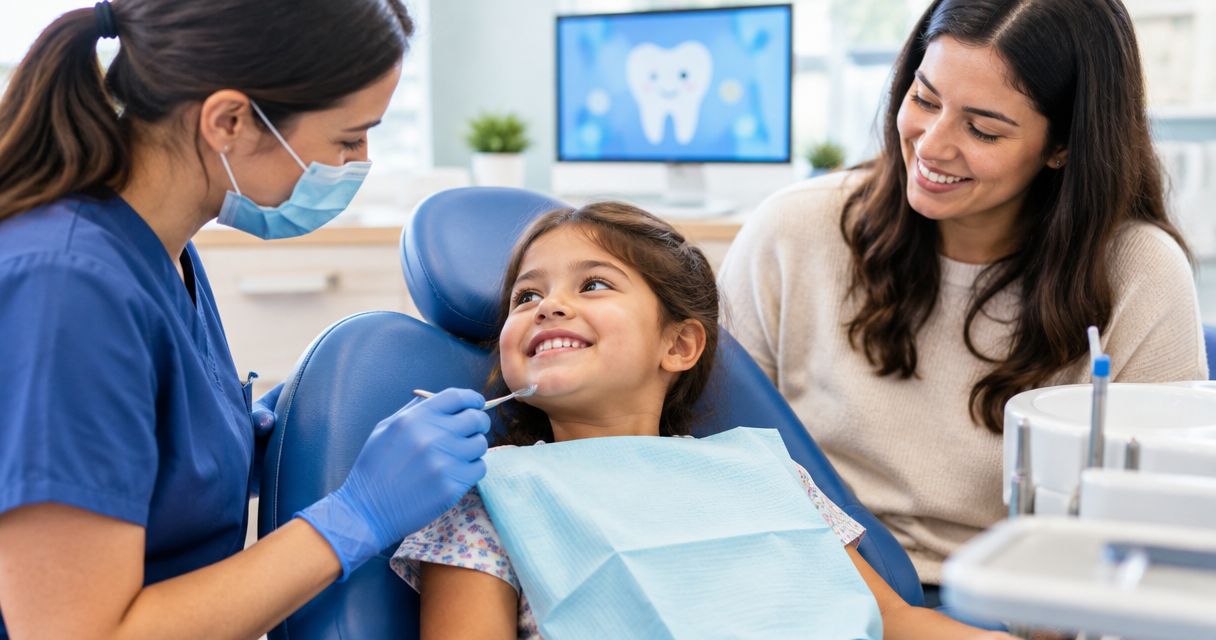
Kids generally should see a dentist every 6 months, with the first visit within 6 months of the first tooth appearing and no later than the first birthday—a practical starting point for your family's 2026 calendar. Your child's dentist should personalize that schedule, and pain, swelling, or a tooth injury needs attention sooner rather than waiting for the next checkup.
- Wondering how often should kids see a dentist? Every 6 months is the usual starting point, adjusted to individual needs.
- The American Academy of Pediatric Dentistry recommends a first visit by the first birthday, or earlier after teeth appear.
- Tooth pain, swelling, or an injury needs attention before the next scheduled checkup.
- Mysmiletheory offers family dentistry in Spring, Texas, for local patients seeking a personal dentist.
How often should kids see a dentist?
Every 6 months is the usual starting point, not a schedule that fits every child. The American Academy of Pediatric Dentistry recommends regular checkups at this interval and says the dentist should determine frequency based on a child's individual needs and risk of tooth decay.
For families comparing care in Spring and North Houston, Mysmiletheory offers general and family dentistry. When choosing a dentist, ask how the recommended visit schedule connects to your child's current dental health, rather than treating the calendar as the whole plan.
| Visit timing | Best for | What it helps address | Limitation |
|---|---|---|---|
| First visit by the first birthday, or within 6 months of the first tooth | Babies starting dental care | Early assessment and guidance for parents | Does not replace ongoing visits as teeth develop |
| Routine visits about every 6 months | Children following a regular preventive schedule | Checking teeth, gums, growth, and home-care needs | Does not mean waiting through new symptoms |
| Visits sooner than the routine checkup | Children with symptoms, recent decay, or a dentist's specific recommendation | Evaluating problems or following an individual care plan | Timing depends on the reason for the visit |
These are different reasons to visit, not competing packages. A child can follow a regular preventive schedule and still need an additional appointment for a broken tooth or a concern about brushing.
Why this matters
Children do not always describe dental problems clearly. A younger child might avoid chewing on one side or resist brushing instead of saying a tooth hurts. Regular examinations give the dentist a chance to identify problems that you cannot reliably judge at home.
For your 2026 family calendar, think of a checkup as a planned opportunity to reassess—not proof that nothing can change between visits. New symptoms deserve their own conversation, even when the previous examination was reassuring.
A useful appointment ends with more than a clean smile. You should understand what the dentist found, what your child needs at home, and when to return.
First dental visit: by 12 months of age
Arrange the first dental visit within 6 months of the first tooth appearing, and no later than age 12 months. This timing follows guidance from the American Academy of Pediatric Dentistry and the American Dental Association. You do not need to wait for a full set of baby teeth.
An early visit gives you a place to ask about cleaning tiny teeth, feeding habits, fluoride toothpaste, and thumb or pacifier sucking. It also lets the dentist examine your baby's mouth and explain what to watch as more teeth appear.
The limitation is simple: one early appointment does not establish a permanent schedule. Your child's needs change as teeth come in, eating habits develop, and brushing becomes a shared daily task.
If the first birthday has already passed, arrange a visit now rather than worrying about the missed milestone. Tell the dental office that this will be your child's first appointment and share any concerns when you book.
Routine checkups: about every 6 months
A visit about every 6 months is the usual starting point for ongoing children's dental care. At these appointments, the dentist assesses the teeth and gums, checks development, and reviews prevention needs. Cleaning, fluoride treatment, and other services depend on the child's needs and the care plan.
The benefit of a regular schedule is continuity. The dentist can compare findings over time, and you have recurring opportunities to ask about changes such as loose teeth, new permanent teeth, or brushing difficulties.
The limitation is that a calendar alone cannot tell you whether the interval is right. A child with recent cavities needs a different discussion from a child with no decay and consistently effective home care.
Before leaving a routine visit in 2026, ask: What makes this the right interval for my child? A clear answer should connect the return date to the examination and your child's risk factors.
Earlier visits: when symptoms or risk change
A child does not need to wait for the next routine appointment when something changes. Call the dentist about persistent tooth pain, a broken tooth, new swelling, or discomfort that affects eating or sleep. Describe what happened and when it started so the office can advise you about timing.
Facial swelling with fever, difficulty swallowing, or trouble breathing needs urgent medical attention. Do not treat those symptoms as a routine scheduling question.
Earlier planned visits also have a role when the dentist is monitoring an identified concern. The benefit is closer attention to a specific need; the trade-off is additional appointments and home-care steps. Ask what the follow-up is intended to assess and what would change the plan.
Avoid choosing a shorter interval on your own simply because your child has braces or has had a cavity. Share those details, then let the dentist explain whether they change the examination schedule, preventive care, or both.
Why children's dental visit frequency varies
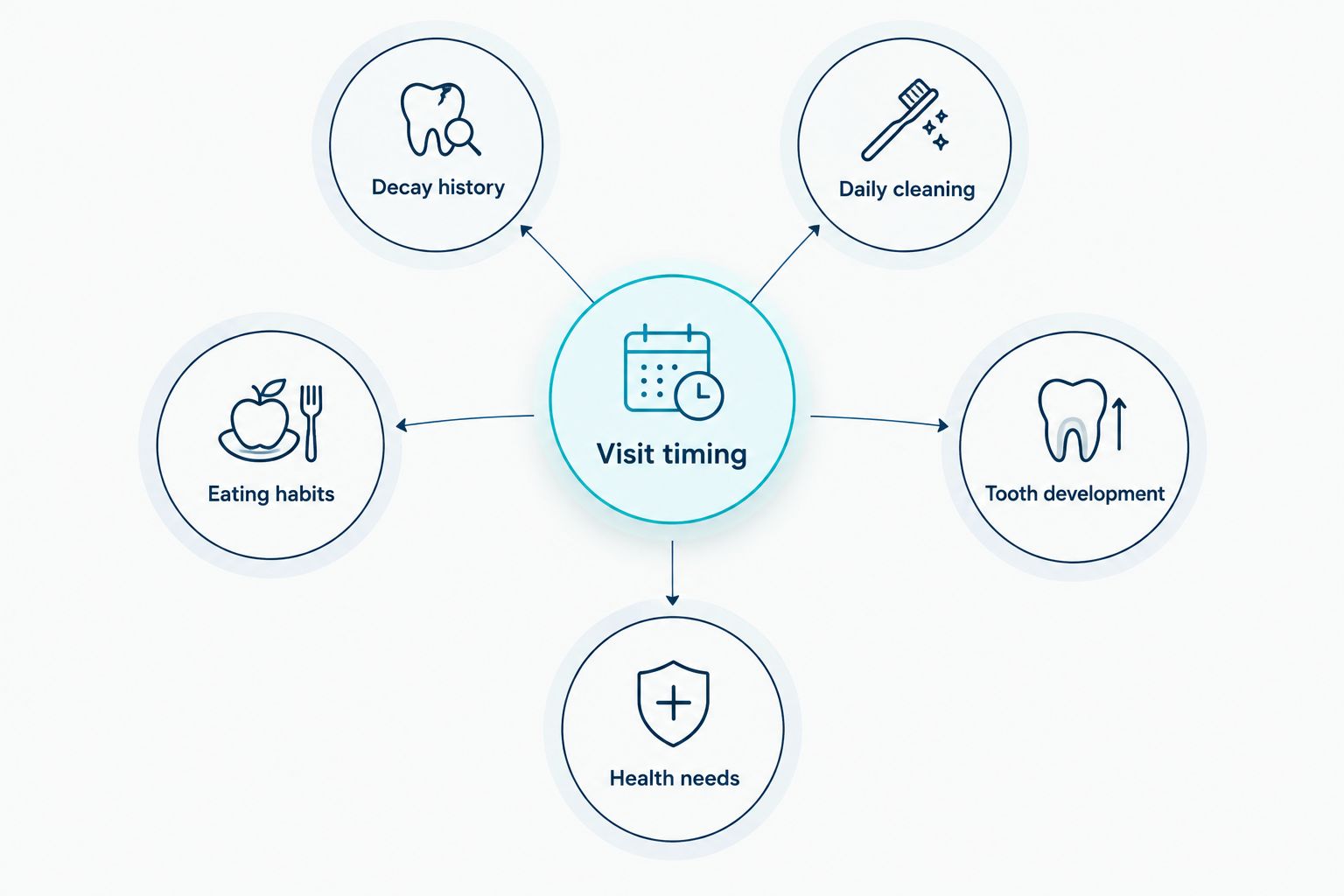
The right interval depends on more than age. These factors help explain why siblings do not necessarily need identical schedules:
- Decay history: Recent or repeated cavities affect the assessment of future decay risk. Ask whether the findings change your child's preventive plan or return date.
- Daily cleaning: Plaque buildup and difficulty cleaning particular areas give the dentist useful information. Demonstrating brushing technique can be more helpful than simply telling a child to brush better.
- Eating habits: Frequent exposure to sugary foods and drinks increases decay risk. Tell the dentist about snacks, drinks between meals, and bedtime feeding rather than describing only main meals.
- Tooth development: Newly appearing teeth, changes in the bite, and specific eruption concerns need assessment. A developing smile does not automatically require extra visits, but particular findings do.
- Health needs: Medical conditions, medicines that affect saliva, or difficulty tolerating home care can influence the plan. Bring an updated health and medication history.
These factors guide a conversation, not a home scoring system. You do not need to decide whether your child is low risk or high risk before the appointment; you need to share an accurate picture of everyday habits and concerns.
What should happen at a child's checkup?
A child's checkup should connect an examination with guidance you can use at home. The dentist checks for decay and other concerns, reviews development, and discusses appropriate prevention. What happens during the appointment depends on the child's age, cooperation, and dental needs.
Dental X-rays are not automatically required at every visit. The American Academy of Pediatric Dentistry recommends selecting them according to individual circumstances, including examination findings, dental history, and decay risk. Ask what an image would help the dentist evaluate.
You can also ask whether your child needs fluoride treatment or sealants. Fluoride helps protect teeth against decay; sealants cover susceptible chewing grooves. Neither replaces brushing or regular examinations, and neither is automatically necessary at every appointment.
Before you leave, make sure you understand any treatment recommendations separately from the next routine checkup. A scheduled cleaning is not a substitute for completing treatment the dentist has recommended.
How can I make dental visits easier for my child?
Start with a calm, truthful explanation. Tell your child that the dentist will look at their teeth and help you learn how to keep them healthy. Avoid promising that nothing will happen or that an appointment cannot feel uncomfortable.
For a first or unfamiliar visit, this simple sequence helps you prepare:
- Share concerns. Tell the office about anxiety, sensory sensitivities, medical needs, or a difficult previous experience before the appointment.
- Choose timing. Request a time when your child is usually rested and able to participate, when scheduling allows.
- Bring information. Have an updated medication list and details of previous dental treatment available. Ask about transferring records instead of assuming they are already accessible.
- Ask together. Invite your child to share a question, and ask the dentist to explain unfamiliar steps in age-appropriate language.
If your family is changing dentists in 2026, this guide to connecting previous dental records to your first visit offers a useful preparation topic.
A familiar routine helps, but anxiety is not a reason to force a child through an unexplained experience. Tell the team what your child needs and ask how the appointment can be approached thoughtfully.
Does a child without cavities still need regular visits?
About every 6 months remains the usual starting point even when a child has never had a cavity. The dentist also checks gum health, tooth development, and changes that affect prevention.
A cavity-free history is useful information, not a guarantee about future teeth. Ask whether your child's current findings support the same interval or a different schedule.
Should kids with braces see a dentist every 6 months?
About every 6 months remains a common starting point for general dental checkups during orthodontic treatment. Orthodontic appointments focus on tooth movement and appliances; they do not replace examinations for decay and gum health.
Your child's dentist and orthodontist should guide any changes. Tell each office about the other's recommendations, especially if cleaning around brackets is difficult or the gums bleed regularly.
Can we wait until summer break for the next appointment?
Every 6 months is a useful planning interval, but school holidays should not override your child's recommended return date. For 2026, use breaks as scheduling opportunities rather than reasons to postpone needed care.
If your child is overdue, call for an appointment and describe any symptoms. A missed date without symptoms calls for rescheduling; pain or swelling calls for a separate discussion about how soon your child needs assessment.
Make the next appointment a conversation
Mysmiletheory is a family dentistry option for parents seeking a personal dentist in Spring, Texas. A useful first conversation is about your child's age, previous dental experiences, and what prompted you to arrange care.
When considering Mysmiletheory family dentistry, ask how the practice would approach your child's specific needs. General information cannot establish the right visit interval or treatment plan without an examination.
Plan your child's next dental visit
Start a conversation about your child's dental history, comfort needs, and checkup schedule.
FAQ
How often should kids see a dentist?
Kids generally should see a dentist every 6 months, with timing personalized to their dental health and decay risk. New pain, swelling, or an injury needs attention before the next routine visit.
When should my baby have a first dental appointment?
Your baby should have a first dental appointment within 6 months of the first tooth appearing and no later than age 12 months. You do not need to wait until all the baby teeth have arrived.
Does my toddler need a dentist if the baby teeth will fall out?
Yes, toddlers need dental care because baby teeth can develop cavities and infections. Baby teeth also support eating, speech development, and space for permanent teeth.
Does my child need dental X-rays at every checkup?
No, dental X-rays are not automatically needed at every checkup. The dentist selects them based on examination findings, dental history, development, and decay risk.
Should I wait for a checkup if my child has tooth pain?
No, contact the dentist about tooth pain rather than waiting for the next checkup. Facial swelling with fever, difficulty swallowing, or trouble breathing needs urgent medical attention.
How often should kids brush between dental visits?
Kids should brush twice a day with fluoride toothpaste, with help or supervision appropriate to their abilities. The American Dental Association recommends brushing for 2 minutes each time.
What if my child missed a dental checkup?
Arrange the next appointment rather than waiting for another school break. Tell the office about symptoms and previous dental treatment so the dentist can assess the right next steps.
One last thing
Before you leave your child's next appointment, ask the dentist to show you one spot that needs extra help with cleaning. A specific demonstration gives you something practical to use that evening, rather than another reminder to brush better.
The goal is not simply to keep a date on the calendar. It is to understand what your child's smile needs between visits.


