

Yes, you can often get veneers after cavities have been treated, provided the teeth still have enough healthy structure to support them. Veneers do not treat decay, so your dentist needs to address cavities and assess each tooth before deciding whether a veneer, filling, or crown fits your needs.
- Can you get veneers if you have cavities? Often yes, after treating decay and checking the remaining tooth structure.
- Dental veneers improve appearance; fillings repair cavities, and crowns can protect more extensively damaged teeth.
- Mysmiletheory is best suited to Spring patients seeking general and cosmetic dental care in one clinic.
- A history of cavities does not automatically rule out veneers, but ongoing decay needs attention first.
Why this matters
If veneers are part of your 2026 plans, discovering a cavity does not mean you have to give up on changing your smile. It means the plan needs to begin with tooth health, not the final appearance.
Mysmiletheory offers general, restorative, family, and cosmetic dental care in Spring, Texas. You can bring both concerns to the conversation: what needs repair and what you would like your smile to look like.
There is no need to feel embarrassed about an old filling or a new cavity. Those details help your dentist choose a repair that supports the tooth rather than simply covers what you can see.
Can you get veneers if you have cavities?
You can be considered for veneers after cavity treatment, but not every repaired tooth is a good veneer candidate. The decision depends on where the decay sits, how much tooth remains, and whether the tooth needs more protection than a veneer provides.
A cavity on a back tooth does not automatically disqualify healthy front teeth from veneers. Your dentist still needs to assess your overall decay risk and plan treatment in an appropriate order.
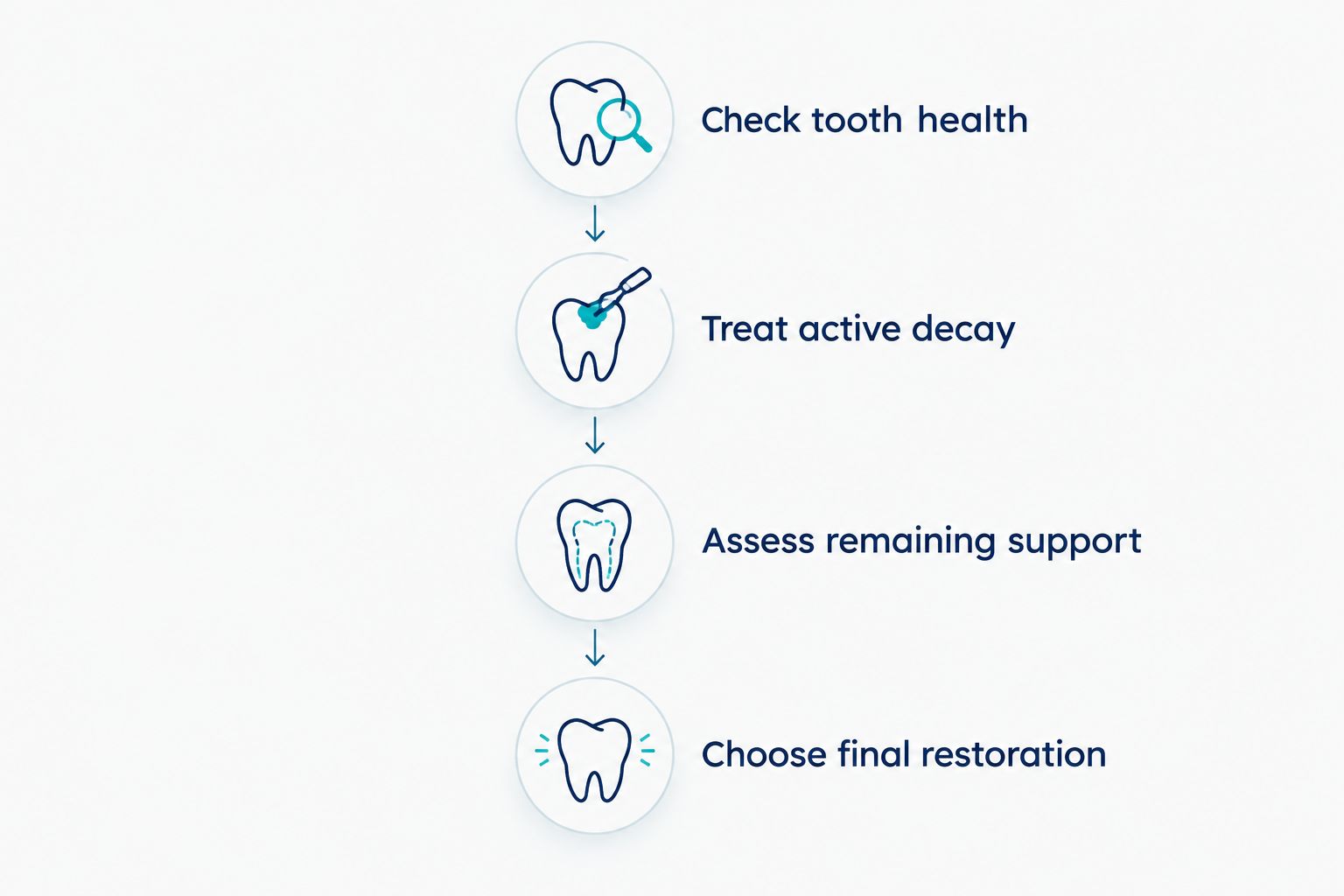
The process generally follows these steps:
- Check tooth health. Your dentist examines your teeth and gums and takes dental X-rays when indicated. Some cavities are not visible when you look in the mirror.
- Treat active decay. A cavity usually needs a filling or another restorative treatment before cosmetic work proceeds. Very early enamel changes sometimes call for preventive treatment instead of drilling.
- Assess remaining support. Your dentist checks the healthy enamel, existing fillings, cracks, and bite forces affecting the proposed veneer.
- Choose the final restoration. A veneer fits some repaired teeth; others need a filling, bonding, or a crown instead.
The important distinction is between having a history of cavities and having untreated decay now. Past dental treatment is part of the assessment, not an automatic rejection.
What if you have a small cavity?
A small cavity does not automatically prevent a veneer later. After repairing the decay, your dentist assesses whether the remaining enamel and the location of the filling provide a suitable foundation.
Location matters as much as size. A small filling away from the planned bonding area presents a different situation from decay affecting much of the front surface or the edge near the gumline.
You also do not necessarily need a veneer because a tooth has had a cavity. If a tooth-colored filling restores the tooth and you like its appearance, additional cosmetic treatment might not serve a useful purpose.
Ask what the veneer would improve beyond the cavity repair. That question keeps your treatment connected to an actual goal, such as changing shape, rather than adding work simply because it is available.
What if the tooth has a large filling or extensive decay?
A tooth with substantial damage needs a strength assessment before a cosmetic decision. A veneer covers mainly the front surface; it does not surround the tooth the way a crown does.
When little healthy tooth remains, your dentist may recommend a crown rather than a veneer. That recommendation should follow the condition of the tooth, not a preference for making every visible tooth look the same way.
Decay that reaches the inner part of a tooth can require root canal treatment if the tissue becomes inflamed or infected. Root canal treatment addresses that problem; it is not a routine step before veneers.
Some severely damaged teeth cannot be predictably restored. An examination is necessary before anyone can promise that a veneer—or any other restoration—will save a particular tooth.
Is a filling, bonding, veneer, or crown the better choice?
Choose the least extensive treatment that addresses both the tooth's health and your appearance goals. These options have different jobs, even when they use tooth-colored materials.
| Option | Best for | Main advantage | Main limitation |
|---|---|---|---|
| Tooth-colored filling | Repairing a localized cavity | Replaces tooth structure lost to decay | Does not necessarily change the appearance of the whole front surface |
| Dental bonding | Making selected cosmetic changes to shape or small chips | Often requires less tooth alteration than a porcelain veneer | Can stain or chip and need repair |
| Veneer | Changing the visible surface of a suitable tooth | Can adjust color, shape, and proportion | Does not treat decay; porcelain veneers generally involve irreversible enamel changes |
| Crown | Restoring a tooth needing broader coverage | Covers more of the tooth than a veneer | Usually requires more tooth preparation |
Fillings and cosmetic bonding can use similar tooth-colored resin, but the purpose differs. A filling repairs decay-related damage; cosmetic bonding changes appearance.
If your concern is a small chip or uneven edge after a cavity repair, understanding how long dental bonding lasts can help you compare the maintenance involved. Neither bonding nor veneers eliminate the need for regular dental care.
Why veneer suitability varies
There is no useful rule that says every filled tooth qualifies—or that every filled tooth is excluded. For your 2026 treatment discussion, focus on these individual factors:
- Remaining enamel: Veneers rely on a suitable bonding surface. Your dentist checks how much healthy enamel remains after decay treatment.
- Decay location: A cavity near the gumline, between teeth, or beneath an old filling affects planning differently.
- Existing restoration size: A large filling can leave less natural tooth available to support a veneer.
- Gum health: Inflamed or receding gums need assessment because they affect the area around a restoration's edges.
- Bite and grinding: Clenching, grinding, or an unfavorable bite can put added stress on veneers and other restorations.
- Ongoing cavity risk: Frequent sugar exposure, dry mouth, and difficulty cleaning between teeth deserve attention before cosmetic work.
These are reasons for a personalized assessment, not reasons to assume the worst. Your dentist should explain which factors apply to your teeth and which do not.
Can you put a veneer over a filling?
A veneer can sometimes be placed on a tooth that already has a filling, depending on the filling's condition and the remaining healthy tooth. An old filling does not automatically need replacement simply because you want cosmetic treatment.
Your dentist checks for decay around the filling, gaps, damage, and whether the planned veneer has adequate support. A large restoration on the front surface raises different concerns from a small restoration elsewhere on the tooth.
Ask whether the filling can stay, whether it needs repair, and why a veneer is preferable to another option. You should understand the reason before agreeing to permanent changes.
How long after a filling can you get veneers?
There is no single waiting period that fits every tooth. Timing depends on the depth of the cavity, the tooth's symptoms, the condition of the gums, and the final restoration plan.
A straightforward repair and a tooth with lingering sensitivity do not call for the same approach. If symptoms suggest a deeper problem, your dentist needs to reassess the tooth before committing to cosmetic treatment.
Ask what needs to be stable before veneer preparation begins, rather than asking only for the earliest appointment. That keeps your timeline tied to readiness rather than a calendar promise.
Can you still get cavities after veneers?
Yes. Veneer material does not decay, but the natural tooth around and behind it can still develop cavities.
The edges where a veneer meets the tooth deserve careful cleaning. Gum recession can also expose areas of natural tooth that need protection.
Your 2026 veneer care routine should include the same basics that protect teeth without veneers:
- Brush 2 times a day with fluoride toothpaste.
- Brush for 2 minutes per session, cleaning along the gumline gently.
- Clean between teeth 1 time a day with floss or another tool your dentist recommends.
- Keep dental visits at an interval based on your individual needs.
- Tell your dentist about dry mouth, grinding, or changes in sensitivity.
Avoid using your teeth to open packaging or biting hard objects. Veneers can chip, and a cosmetic restoration does not make the underlying tooth immune to damage.
What should you ask at your appointment?
Bring your cosmetic goals and any symptoms, even if they seem unrelated. Mention pain when biting, sensitivity that lingers, an old filling that catches floss, or a tooth that has changed color.
Useful questions include:
- Is there active decay, or is this an early enamel change?
- How much healthy tooth will remain after treatment?
- What would a veneer improve that a filling would not?
- Would a crown protect this particular tooth better?
- What permanent changes would veneer treatment involve?
- What needs attention before cosmetic treatment starts?
Mysmiletheory provides general and cosmetic dentistry for local patients seeking a personal dentist. An appointment gives you a place to discuss tooth health and appearance together; the appropriate treatment still depends on your examination.
Start with your tooth health
Discuss cavities, existing fillings, and your cosmetic goals before choosing veneers.
When should you seek care sooner?
Do not wait for a cosmetic consultation if you have persistent tooth pain, swelling, or a broken tooth. Contact a dentist promptly so the underlying problem can be assessed.
Facial swelling with fever needs urgent attention. Trouble breathing or swallowing is an emergency and requires immediate medical care.
A painless tooth is not proof that it is cavity-free. Keep the examination even if your only concern is how your teeth look.
FAQ
Can you get veneers if you have cavities in 2026?
Yes, veneers can be considered after cavities are treated and the remaining teeth are assessed. A veneer is not a substitute for repairing decay, and some damaged teeth need a different restoration.
Can I get veneers if I have lots of fillings?
Having multiple fillings does not automatically rule out veneers. Your dentist evaluates each proposed tooth, including the size and condition of its fillings and the healthy enamel remaining.
Can a dentist cover a cavity with a veneer instead of a filling?
A veneer should not simply cover untreated decay. Your dentist needs to address the cavity and then decide which restoration supports the tooth appropriately.
Is a crown better than a veneer after a large cavity?
A crown can be more appropriate when a large cavity leaves a tooth needing broader protection. A veneer mainly changes the front surface and does not provide the same coverage.
Do I need a root canal before getting veneers?
Root canal treatment is not a routine requirement before veneers. It is used when the inner tissue of a tooth needs treatment, such as with certain infections or inflammation.
Can a tooth get another cavity underneath a veneer?
A veneered tooth can develop decay in its remaining natural structure, including around the restoration's edges. Fluoride toothpaste, daily cleaning between teeth, and dental examinations remain necessary.
Can Mysmiletheory help me discuss cavities and cosmetic dentistry?
Mysmiletheory offers general, restorative, and cosmetic dental care in Spring, Texas. You can discuss cavity treatment and your appearance goals during an appointment, with treatment choices based on an examination.
One last thing
Your healthiest smile plan does not have to use the same treatment on every tooth. One tooth might need a filling, another might suit a veneer, and another might need no treatment at all.
For your 2026 consultation, bring a short list of what bothers you rather than a fixed list of procedures. Start with the result you want, then choose the treatment your teeth actually need.