

Yes, wisdom teeth removal can be done the same day as your examination when the dentist has enough information to plan a safe extraction and the necessary care can be arranged. Same-day treatment is not guaranteed: the tooth’s position, your health history, sedation preparation, and the need for an oral surgeon can mean a separate appointment.
- Can wisdom teeth removal be done same day? Yes, after an examination confirms a safe treatment plan.
- Impacted wisdom teeth and sedation preparation can require a separate extraction appointment.
- Mysmiletheory is best for Spring patients seeking a personal dentist for general and family dental care.
- Trouble breathing or swallowing with dental swelling needs emergency medical attention, not a routine appointment.
Can wisdom teeth removal be done the same day?
Same-day wisdom tooth removal is possible, but an examination comes first. The dentist needs to identify the source of your symptoms, review appropriate X-rays, and decide whether removal is the right treatment. Pain near a wisdom tooth does not establish that the tooth needs extraction.
For patients in Spring and North Houston, Mysmiletheory provides general and family dental care. Ask directly whether your concern needs an assessment, an extraction appointment, or a referral; do not assume these are interchangeable.
The following situations explain why an appointment in 2026 might lead to treatment that day or to a separate plan.
| Treatment route | Best for | Main benefit | Main limitation |
|---|---|---|---|
| Same-day assessment and extraction | Patients whose examination supports a safe, straightforward removal | Assessment and treatment happen during the same visit | Requires an appropriate clinical plan and preparation |
| Assessment followed by scheduled extraction | Patients needing additional planning or sedation arrangements | Gives you time to prepare and discuss treatment | Removal happens at a later appointment |
| Assessment followed by oral surgeon referral | Patients whose tooth position or health needs call for specialist care | Matches the procedure to the appropriate clinician | Requires coordination with another provider |
None of these routes is automatically better. The best appointment is the one that matches your tooth, your health, and your comfort needs—not simply the earliest removal.
Why this matters
When your jaw hurts, waiting feels difficult. But a rushed assumption about treatment can leave you unprepared for sedation, transportation, or recovery at home.
A same-day examination is also different from a same-day extraction. Ask which appointment you are arranging so you know what to expect before leaving work, changing childcare plans, or asking someone to drive you.
For a 2026 appointment, explain whether you want help with new pain, an existing extraction recommendation, or a previously diagnosed impacted tooth. Those details help the office understand what needs assessment without promising a procedure before the dentist sees you.
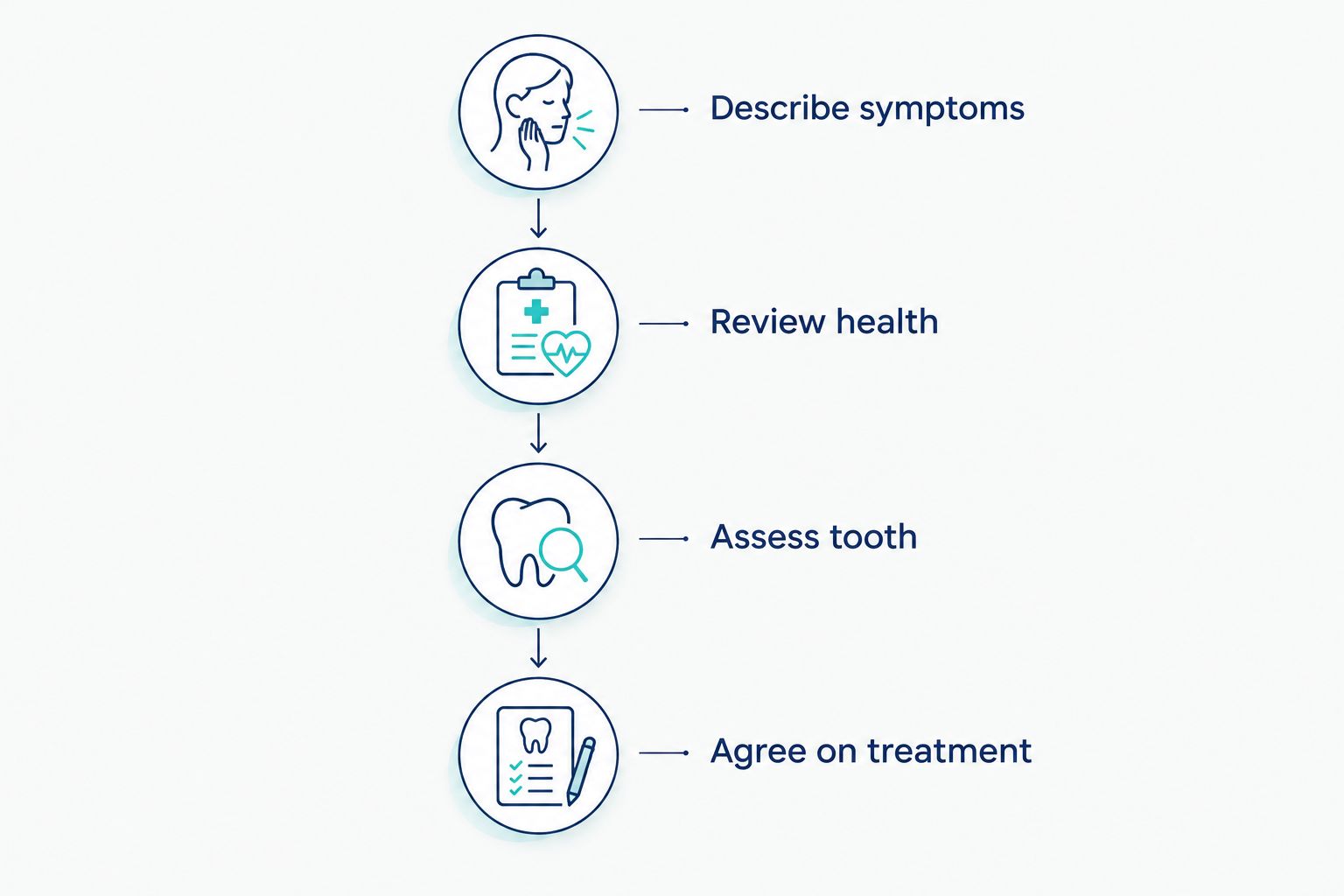
What happens before a same-day extraction?
The decision follows a clinical assessment, not just a description of pain over the phone. You should understand the reason for removal, the alternatives, and the recovery instructions before agreeing to treatment.
Describe your symptoms
Explain where the pain is, when it started, and whether you have swelling, a bad taste, difficulty opening your mouth, or fever. Tell the office if eating or sleeping has become difficult.
Mention previous problems in the same area. A partly erupted wisdom tooth can develop inflamed gum tissue around it, but similar symptoms can come from decay or a neighboring tooth.
Review your health
Bring a current medication list and explain allergies, medical conditions, pregnancy, and previous reactions to dental treatment or anesthesia. Include prescription medicines, over-the-counter medicines, and supplements.
Do not stop blood thinners or other prescribed medication on your own. The dental clinician needs to decide whether coordination with your medical prescriber is necessary.
Assess the tooth
The dentist examines the area and uses appropriate imaging to evaluate the tooth and surrounding structures. Existing X-rays can help, but the treating clinician decides whether they answer the current treatment question.
The examination also checks whether the painful tooth is actually the wisdom tooth. Removing the wrong source of concern would not solve the underlying problem.
Agree on treatment
Discuss the recommended procedure, numbing or sedation, relevant risks, and aftercare. Ask whether the treating dentist recommends an oral surgeon.
Before treatment begins, make sure you understand how you will get home and whom to contact if recovery does not follow the instructions provided.
When is same-day removal a reasonable option?
A wisdom tooth that has come through the gum and is accessible can be more straightforward to remove than one trapped beneath gum or bone. Even then, the visible part of the tooth does not reveal everything about its roots or nearby structures.
Same-day removal becomes a reasonable option when the examination supports extraction, the clinician can provide the appropriate care, and you can meet the preparation and aftercare requirements. Your agreement matters, too. You do not have to accept immediate treatment simply because it is offered.
For your 2026 visit, ask: “What makes removal today appropriate for my tooth?” A useful answer explains the clinical reason and the plan for keeping you comfortable, rather than focusing only on scheduling.
When is a separate appointment the better choice?
A separate appointment gives you time to prepare when the procedure needs more planning. It is not evidence that your concern has been dismissed.
For example, a tooth lying beneath the gum, a difficult root position, or a close relationship to important surrounding structures can affect the approach. The dentist might recommend specialist assessment rather than attempting removal immediately.
A separate visit also makes sense when you need more time to discuss anxiety or sedation. Feeling informed is part of consenting to care; you should not feel pressured to make a decision while frightened or uncomfortable.
If treatment is deferred, leave with clear instructions about symptom management, the next appointment, and warning signs that require more urgent help.
Why same-day wisdom tooth removal varies
The decision depends on clinical and practical factors. These are the questions that matter most:
- Tooth position: A fully erupted tooth and a tooth trapped beneath gum or bone can require different approaches.
- Imaging findings: Root shape and the tooth’s relationship to nearby nerves or the sinus can affect planning.
- Your health history: Medical conditions, medications, and previous anesthesia problems can require additional precautions.
- Infection or swelling: The location and extent of infection influence immediate treatment and whether urgent escalation is needed.
- Numbing and sedation: Your preferred approach must match the procedure, your health, and any preparation requirements.
- Clinical arrangements: The appropriate clinician, equipment, appointment time, and aftercare support must be in place.
A telephone conversation helps identify these issues, but it cannot replace an examination. Do not treat a same-day appointment confirmation as confirmation that extraction will happen.
Can an infected wisdom tooth be removed the same day?
An infected wisdom tooth can sometimes be removed the same day; infection does not automatically require delaying extraction. The dentist decides whether removal, drainage, medication, or another immediate step is appropriate after assessing the infection and your overall condition.
Antibiotics are not a substitute for treating the source of a dental infection. They are also not necessary for every painful wisdom tooth, so avoid using leftover medication or someone else’s prescription.
Seek emergency medical care for trouble breathing or swallowing, rapidly spreading swelling, or swelling involving the neck or eye area. Do not wait for a routine dental appointment when these symptoms occur.
Can I get sedation and have my wisdom tooth removed today?
Same-day sedation depends on the assessment, the type of sedation, and whether you meet its preparation requirements. Local anesthetic numbs the treatment area; sedation addresses anxiety or awareness and does not replace numbing.
Some sedation plans require fasting and an adult escort. Do not guess about either requirement, and do not fast without instructions, especially if you have a condition affected by missed meals.
Tell the office when you last ate or drank and whether you have someone who can accompany you. If sedation is used, follow the clinician’s restrictions on driving, work, and other activities afterward.
Does same-day removal mean I can work afterward?
Same-day removal does not mean same-day recovery. The procedure, your symptoms, your job, and any sedation determine what you can safely do afterward.
A desk-based workday and a shift involving lifting, driving, or machinery create different recovery demands. Ask for guidance that matches your actual duties rather than assuming you can return immediately.
During the first 24 hours, standard extraction aftercare generally includes avoiding vigorous rinsing or spitting so you do not disturb the healing blood clot. Swelling can be most noticeable around 48–72 hours, and soreness can take 1–2 weeks to settle after wisdom tooth removal. Your clinician’s instructions take priority because recovery varies with the procedure.
How should I prepare before calling?
You do not need to diagnose yourself. A clear description of your symptoms and circumstances is more useful than deciding in advance that extraction is the only answer.
Have the following information ready when requesting a 2026 appointment:
- Where the pain or swelling is and whether it is getting worse.
- Whether you have fever, drainage, difficulty swallowing, or trouble opening your mouth.
- Any previous examination, extraction recommendation, or relevant X-rays.
- Your current medicines, allergies, and significant health conditions.
- Whether you want to discuss anxiety, numbing, or sedation.
- Whether an adult can accompany you if the treatment plan requires it.
At Mysmiletheory, general and family dental care serves local patients seeking a personal dentist. Use the contact page to ask about an assessment and explain your symptoms; the page itself does not confirm same-day extraction or sedation services.
Ask about your next step
Describe your symptoms and ask what kind of dental assessment to arrange.
FAQ
Can I have a wisdom tooth removed at my first visit?
Yes, a wisdom tooth can be removed at your first visit when the examination supports extraction and the appropriate treatment arrangements are in place. Imaging, health considerations, or sedation preparation can require a separate appointment.
Will a dentist remove my wisdom tooth just because it hurts?
No, pain alone does not establish that a wisdom tooth needs removal. The dentist checks the source of the pain and discusses the appropriate treatment before recommending extraction.
Do I need an oral surgeon for wisdom teeth removal?
Not every wisdom tooth requires an oral surgeon. The tooth’s position, the procedure’s complexity, and your medical needs help determine the appropriate treating clinician.
Should I stop eating before a same-day wisdom tooth appointment?
Do not stop eating unless the treating office gives you preparation instructions. Fasting requirements depend on the planned sedation or anesthesia, and your health conditions also matter.
Can I drive home after wisdom tooth removal?
Driving depends on the anesthesia, sedation, medication, and instructions given for your treatment. Sedation can require an adult escort and restrictions on driving afterward, so confirm transportation before the procedure.
Does swelling mean I need antibiotics before extraction?
Swelling does not automatically mean antibiotics must come before extraction. The dentist assesses the infection and decides whether extraction, drainage, antibiotics, or urgent medical care is appropriate.
Does Mysmiletheory offer same-day wisdom tooth removal?
Contact Mysmiletheory directly to ask whether an assessment and any recommended treatment can be arranged. The clinic provides general and family dental care in Spring, but same-day wisdom tooth extraction is not confirmed here.
One last thing
Pain at the back of your mouth does not prove that a wisdom tooth is responsible. A neighboring molar, inflamed gum tissue, or another dental problem can feel similar, which is why an examination matters even when you are certain you know the cause.
For your 2026 appointment, focus on getting the right diagnosis before choosing the fastest procedure. You deserve a clear explanation, a chance to ask questions, and a treatment plan you understand.


