

Yes, you can eat after getting veneers once any numbness has worn off and your dentist has cleared you to eat; start with soft foods and follow the instructions for your specific veneers. This 2026 guide explains how temporary veneers, tenderness, and your bite affect that first meal—there is no single waiting period that fits every appointment.
- Can you eat after getting veneers? Yes—wait for numbness to wear off and follow your dentist’s aftercare instructions.
- Temporary veneers need extra care: avoid sticky foods and biting directly into hard foods.
- Permanent veneers allow everyday eating, but chewing ice and using teeth as tools can damage them.
- Mysmiletheory offers cosmetic and family dentistry for patients seeking a personal dentist in Spring, Texas.
Can you eat after getting dental veneers?
Yes. Your dentist’s instructions and the return of normal feeling—not a countdown—determine when to eat. The main distinction is whether you leave with temporary veneers or your final veneers.
| Veneer stage | Best for your first meal | Main benefit | Main limitation |
|---|---|---|---|
| Temporary veneers | Soft foods that require little biting | You can eat while waiting for the final restorations | Sticky foods and hard bites can loosen or damage temporaries |
| Permanent veneers | Soft foods initially, then comfortable everyday foods as directed | You can return to a varied diet | Hard objects and heavy biting forces can still cause damage |
Mysmiletheory provides general, cosmetic, restorative, and family dental care in Spring, Texas. For your own appointment, ask which veneer stage you are in before deciding what to eat.
Why this matters
Your mouth can feel ready before it actually is. While local anesthetic is still working, you can bite your cheek, lip, or tongue without realizing it, and hot food or drinks can burn numb tissues.
Protecting veneers also means protecting the teeth underneath and the gums around them. A comfortable first meal helps you avoid unnecessary pressure while you learn how your bite feels.
For a veneer appointment in 2026, the useful question is not simply whether eating is allowed. Ask what you can comfortably chew with the restorations you have today.
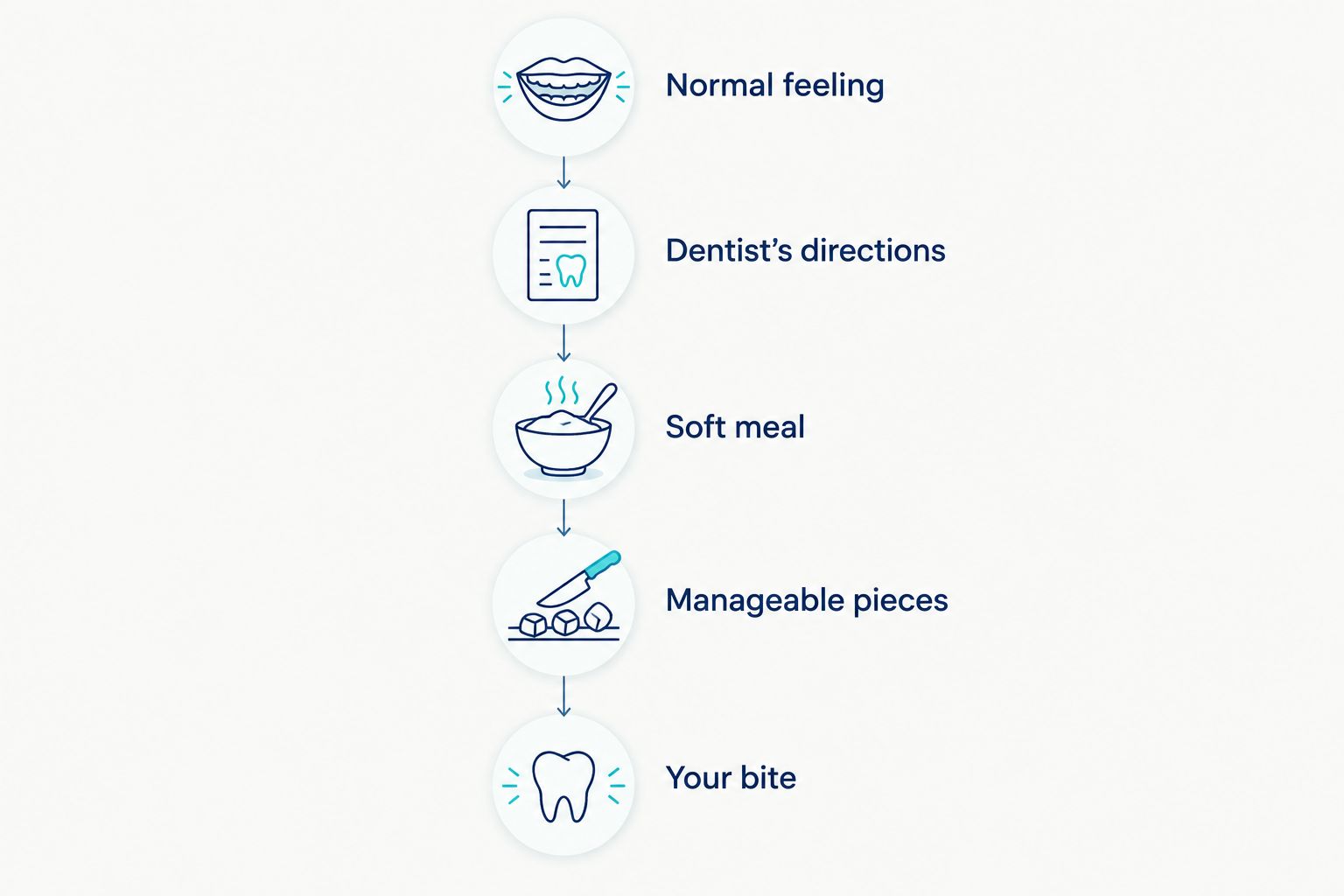
How should you approach your first meal?
Keep your first meal simple. You do not need to test your new smile with something crunchy to find out whether it works.
- Wait for normal feeling. If your lip, cheek, tongue, or gums remain numb, hold off on chewing. Follow any separate instructions if you received sedation.
- Confirm your dentist’s directions. Ask whether the bonding material or temporary restorations require any additional restrictions. Do not substitute an online waiting time for those instructions.
- Choose a soft, mild-temperature meal. Scrambled eggs, soft pasta, yogurt, or cooled soup require less force than crusty or chewy foods.
- Cut food into manageable pieces. Avoid pulling or tearing food with your front teeth, especially while wearing temporary veneers.
- Pay attention to your bite. Stop if chewing causes sharp pain, a veneer moves, or a tooth seems to hit before the others.
These steps are a practical first-meal checklist for 2026, not a replacement for your dentist’s written aftercare. If you forget an instruction, contact the treating office before experimenting.
Eating with temporary veneers
Temporary veneers need a gentler approach because they are not intended to function as your final restorations. Their attachment is designed to allow removal when your permanent veneers are ready.
Choose foods you can eat without pulling, tearing, or forceful front-tooth biting. Soft cooked vegetables, tender foods cut into small pieces, and smooth foods are practical choices. Let very hot foods cool before eating, particularly if your teeth feel sensitive.
The advantage of a temporary veneer is that it covers the prepared tooth while your treatment continues. Its limitation is that it can loosen or break, so this is not the stage for testing hard or sticky foods.
Avoid chewing gum, sticky candy, and foods that cling firmly to your teeth. Cut foods rather than biting into them whole, and follow your dentist’s instructions for cleaning around the temporary edges. If a temporary comes off, contact the office; do not use household glue to reattach it.
Eating with permanent veneers
Permanent veneers are intended to function during everyday eating, but they do not make your teeth damage-proof. Once your dentist clears you to eat, begin with foods that feel comfortable and gradually return to your usual meals as directed.
You should not need to live on soft food indefinitely because you have veneers. The long-term goal is comfortable chewing, not avoiding every food with texture. However, biting ice, hard candy, pens, or packaging can chip veneers or natural teeth.
Permanent veneers offer a lasting change to the appearance of treated teeth, but they still require cleaning, dental visits, and sensible biting habits. If a normal meal consistently hurts, do not assume discomfort is simply part of having veneers.
Your 2026 aftercare plan should distinguish between temporary tenderness and a bite that needs attention. Describe exactly what happens: sensitivity to cold, pressure on one tooth, or a feeling that your teeth no longer meet evenly.
Why eating comfort varies after veneers
Your friend’s experience is not a reliable schedule for your mouth. These factors help explain why your dentist’s advice takes priority:
- Numbness: Local anesthetic changes your ability to feel temperature and accidental biting. Wait until normal sensation returns before chewing.
- Temporary or permanent placement: Temporary restorations need protection from foods that pull or place heavy pressure on them.
- Tooth sensitivity: Recently treated teeth can react to temperature. Mild-temperature food is easier to tolerate when hot or cold food feels uncomfortable.
- Gum tenderness: Sore gum edges can make rough or strongly irritating foods unpleasant, even when the veneers themselves feel secure.
- How your teeth meet: A bite that feels uneven or causes pain needs a dental check rather than repeated testing at home.
- Other treatment at the appointment: Additional dental work or sedation can come with separate eating instructions. Follow the directions for the entire visit, not veneers alone.
What foods are easiest to eat after veneers?
Soft food is a useful starting point, not a special diet you must follow forever. Choose something familiar that needs little chewing and does not leave you working around a tough crust or sticky center.
| Food choice | Best for | Advantage | Limitation |
|---|---|---|---|
| Scrambled eggs or soft pasta | A gentle first meal | Requires relatively little chewing | Very hot servings can irritate sensitive teeth or tissues |
| Yogurt or smooth foods | Minimal chewing | Easy to manage without biting with your front teeth | Very cold servings can trigger sensitivity |
| Cooled soup | A mild-temperature meal | Little chewing when ingredients are soft | Large, firm ingredients still need chewing |
| Soft cooked vegetables | Returning to more textured food | Can be cut into manageable pieces | Firm or undercooked pieces need more biting force |
Let comfort guide the texture, but do not keep chewing through pain. A food that feels uncomfortable today does not automatically belong on a permanent avoid list; it is a reason to pause and follow your dentist’s advice.
Can I bite into an apple or sandwich with veneers?
You can eat many everyday foods with permanent veneers, but biting directly into something hard or tearing a chewy sandwich puts force on the front edges. Cutting food into pieces reduces the need to pull with your front teeth.
With temporary veneers, be especially careful about direct biting and sticky fillings. After permanent placement, ask your dentist whether your bite or individual restorations require additional limits.
Can I drink coffee after getting veneers?
You can generally return to coffee when normal feeling has returned and your dentist’s instructions allow it. Avoid drinking it very hot while your mouth is numb or your teeth feel sensitive.
Veneers do not remove the need to care for surrounding natural teeth. If color is a concern, remember that whitening natural teeth and changing the shade of a veneer are different questions.
Should chewing hurt after veneers?
Chewing should not cause sharp pain, a moving veneer, or a persistent feeling that one tooth hits first. Mild sensitivity can occur after treatment, but worsening or ongoing discomfort deserves a call to your dentist.
Avoid repeatedly biting down to test a painful tooth. Explain whether the discomfort happens with pressure, temperature, or both so the office can advise you appropriately.
What should you do if a veneer feels loose?
Stop chewing on the affected area and contact your dentist. A loose veneer is not something to push back into place with your bite or secure with an over-the-counter household adhesive.
If a veneer comes off, keep it in a clean container and bring it to the appointment. Avoid hard, sticky, or temperature-triggering foods around the exposed tooth while awaiting instructions.
Seek prompt dental attention for significant pain, swelling, or an injury. Trouble breathing or swallowing requires emergency medical care, not a routine aftercare appointment.
How do you care for veneers after meals?
Veneers cover part of a tooth; they do not protect every surface from decay or keep the gumline clean by themselves. The natural tooth and surrounding gums still need daily care.
For your 2026 home-care routine, follow the American Dental Association’s general advice to brush for 2 minutes per session, 2 times per day, using fluoride toothpaste. Clean between your teeth 1 time per day, with the method your dental team recommends.
If you have temporary veneers, ask how to clean around them without pulling on the restorations. Tell your dentist if floss catches, shreds, or becomes difficult to pass; do not force it against a new edge.
Long-term care also means avoiding teeth-as-tools habits. Opening a packet with your teeth or chewing a pen creates a different kind of stress from eating a normal meal.
Talk through your veneer questions
Ask about cosmetic dental care and the eating instructions for your treatment.
FAQ
Can you eat after getting veneers on the same day?
Yes, you can often eat the same day once numbness has worn off and your dentist has cleared you to eat. Start with soft foods and follow any restrictions for temporary veneers, bonding materials, or other treatment.
How long should I wait to eat after veneers?
Wait until normal feeling returns and your dentist’s eating instructions allow it. There is no single waiting period that applies to every anesthetic, bonding material, and veneer appointment.
What is the best first meal after getting veneers?
A soft, mild-temperature meal is a good first choice after getting veneers. Scrambled eggs, soft pasta, yogurt, or cooled soup can reduce the need for forceful biting.
Can I eat pizza with temporary veneers?
Avoid biting and pulling on chewy or hard pizza crust with temporary veneers. Choose softer food instead, or ask your dentist whether small, soft pieces fit your aftercare instructions.
Can I chew gum after getting veneers?
Avoid chewing gum while wearing temporary veneers because sticky foods can pull on them. With permanent veneers, ask your dentist about gum if you have bite concerns or specific restrictions.
Will I always need to avoid crunchy foods with veneers?
Permanent veneers do not automatically require a lifelong soft-food diet. Avoid chewing ice and other hard objects, cut difficult foods into pieces, and follow any restrictions specific to your bite.
Who should I ask if eating feels uncomfortable after veneers?
Contact the dentist who placed your veneers if eating causes pain, looseness, or an uneven bite. Mysmiletheory provides cosmetic dentistry for local patients seeking a personal dentist in Spring, Texas.
One last thing
Before leaving your veneer appointment, ask: What should I eat tonight, and what should make me call you? Those questions are more useful than a generic list of forbidden foods.
Mysmiletheory is for Spring, Texas patients seeking a personal dentist for cosmetic and family dental care. Bring your everyday concerns—including coffee, favorite meals, or a sensitive tooth—to the conversation so you understand what your own care requires.


