First responders’ dental care is preventive and restorative care with the aim of keeping your mouth healthy and comfortable through demanding work schedules. This 2026 guide to dental care for first responders explains how to build a shift-friendly routine, recognize urgent problems, and plan treatment around your duties.
- Dental care for first responders starts with fluoride toothpaste, daily cleaning between teeth, and appointments based on individual needs.
- Mysmiletheory offers general, cosmetic, restorative, and family dentistry for patients seeking a personal dentist in Spring, Texas.
- Plan treatment around recovery instructions, not just the appointment itself.
- Trouble breathing or swallowing with facial swelling requires emergency medical care, not a routine dental appointment.
Why dental care matters for first responders
A dental routine needs to fit your actual workday. If a call interrupts a meal, a shift runs late, or daytime sleep replaces nighttime sleep, fixed morning-and-evening reminders might not serve you well. Build your routine around waking and sleeping instead.
Pain, bleeding gums, and a broken filling also deserve attention before they become background noise during work. You do not need to wait until a tooth hurts to arrange an examination. Some dental problems develop without obvious symptoms.
Mysmiletheory provides general, cosmetic, restorative, and family dentistry in Spring, Texas. Mysmiletheory is a fit for first responders seeking a personal dentist in Spring for preventive and restorative dental care. Ask directly about appointment timing and treatment needs rather than assuming a clinic has a dedicated first-responder program.
For your 2026 care plan, the useful starting point is simple: identify what needs attention now, what needs monitoring, and what can wait until you have time for elective care.
Build a dental routine around your shifts
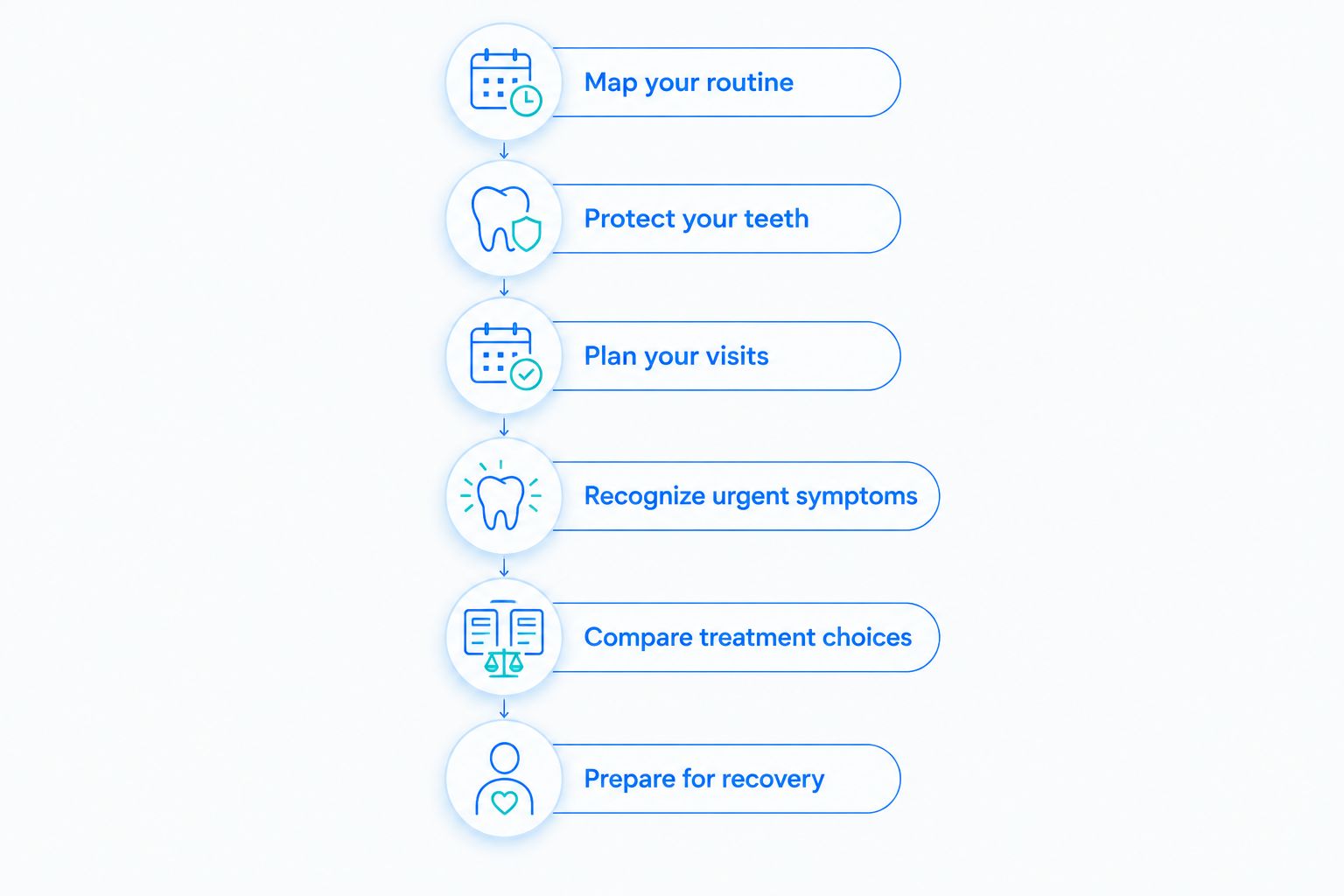
You can start with a toothbrush, fluoride toothpaste, a way to clean between your teeth, and reminders on your phone. Professional care complements those habits; it does not replace them. Use the following steps to connect daily prevention with appointments and recovery planning.
Map your routine
Start by writing down when you wake, eat, leave for work, and sleep. Look for dependable transitions rather than specific clock times. A routine attached to your main sleep period still makes sense when your schedule changes.
The American Dental Association recommends brushing for 2 minutes, 2 times a day, with fluoride toothpaste and cleaning between teeth daily. For a straightforward checklist, record that between-teeth cleaning as 1 time a day. These are home-care targets, not a substitute for personalized advice.
If fatigue makes the full routine difficult, prepare supplies before your shift. Keep your home setup easy to reach rather than relying entirely on finding a break at work.
- Set brushing reminders around waking and your main sleep period.
- Keep fluoride toothpaste and a soft-bristled toothbrush together.
- Choose floss or another between-teeth cleaner your dentist recommends.
- Carry a small dental kit when workplace rules and storage permit.
Protect your teeth
Notice what happens between meals, not just what happens at the sink. Repeated sipping of sugary drinks exposes teeth to sugar throughout the day. Water is a practical default drink, while fluoride toothpaste remains part of your regular brushing routine.
If your mouth often feels dry, tell your dentist and review your medication list together. Do not stop prescribed medicine yourself. Dry mouth has several possible causes, and managing the cause matters more than covering the sensation with sweets.
Jaw soreness also deserves a conversation. Clenching, grinding, tooth problems, and other conditions can cause discomfort; a sore jaw alone does not establish the diagnosis.
- Keep drinking water accessible when your duties allow.
- Avoid turning sweetened coffee or energy drinks into an all-shift habit.
- Report persistent dryness, morning headaches, or jaw soreness.
- Ask whether your activities call for a protective mouthguard.
Plan your visits
Before contacting a practice, list your symptoms, previous dental work, medications, and scheduling constraints. Include anything that affects comfort, such as a sensitive gag reflex or anxiety about treatment. A clear list helps you explain what you need without remembering everything in the chair.
For a local starting point, review Mysmiletheory’s dental services. General, restorative, and cosmetic care address different goals; an examination helps establish which goal comes first. The practice offers those categories of care, but scheduling arrangements and a specific treatment recommendation require a direct conversation.
Your 2026 appointment plan should reflect your oral health, not an automatic calendar rule. Ask your dentist how often you need examinations and cleanings based on your findings and history.
- Explain your shift pattern before selecting an appointment.
- Bring an updated medication list and relevant health information.
- Ask how to transfer previous dental records and images.
- Request a written order of treatment priorities.
Recognize urgent symptoms
A loose filling and rapidly spreading swelling need different responses. Call a dentist promptly about a broken tooth, a lost restoration, new swelling, or persistent tooth pain. Describe the symptoms and when they started so the office can advise you about urgency.
Facial or neck swelling with trouble breathing or swallowing requires emergency medical care. Significant facial trauma or uncontrolled bleeding also needs urgent assessment. Do not wait for an elective appointment to address those symptoms.
A knocked-out permanent tooth is time-sensitive. Handle it by the crown, not the root, and seek immediate dental care; if it cannot be placed back safely, keep it moist in milk while obtaining professional guidance. Never reinsert a knocked-out baby tooth.
- Save your dentist’s contact details before a problem occurs.
- Ask how the practice handles concerns outside office hours.
- Describe swelling, fever, injury, bleeding, and swallowing difficulty clearly.
- Never place aspirin directly against a painful tooth or gum.
Compare treatment choices
Start with a question: what problem is this treatment meant to solve? A cleaning supports prevention, a filling repairs a cavity, and cosmetic treatment changes appearance. Those goals can overlap, but they are not interchangeable.
If a front tooth chips, ask whether bonding, a crown, or another approach fits the damage. If you want a brighter smile, ask whether the discoloration involves natural teeth or existing restorations. Whitening does not change the color of crowns or veneers.
For cosmetic care, describe the natural-looking result you prefer rather than choosing a procedure first. Healthy teeth and gums come before elective changes. Your 2026 treatment plan should make room for your preferences without skipping necessary care.
- Ask what the examination shows and request a plain-language explanation.
- Compare tooth preservation, maintenance, and likely follow-up needs.
- Discuss clenching or grinding before choosing cosmetic work.
- Separate essential repairs from optional appearance changes.
Prepare for recovery
An appointment fitting between shifts does not automatically mean the treatment fits your workday. Ask about numbness, eating, speaking, protective equipment, and any restrictions relevant to driving or safety-sensitive duties.
Sedation and certain medicines can affect alertness. Follow the treating clinician’s instructions about transportation, work, and recovery rather than choosing your own return-to-duty time. Bring your job requirements into that discussion before treatment begins.
For multi-visit care, ask what happens between appointments and what symptoms should prompt a call. Having those instructions in writing is especially helpful when your sleep schedule changes.
- Explain whether your duties involve driving or operating equipment.
- Arrange transportation when the clinician instructs you to do so.
- Plan suitable food around the aftercare instructions you receive.
- Confirm follow-up needs and warning signs before leaving.
The sequence is deliberate: establish your routine, address symptoms, and then choose treatment with a recovery plan. An elective cosmetic appointment should not become a substitute for assessing pain or swelling.
Compare dental care options for first responders
The best option depends on the problem, not your job title. Home care supports every treatment pathway, but it cannot repair a broken tooth or diagnose persistent pain. Use this comparison to prepare questions for an examination, not to diagnose yourself.
| Option | Best for | Main benefit | Key limitation |
|---|---|---|---|
| Daily home care | Ongoing prevention between visits | Removes plaque and delivers fluoride through toothpaste | Does not repair cavities or replace an examination |
| Examination and professional cleaning | Assessing oral health and maintaining teeth and gums | Identifies care needs and removes deposits home brushing cannot remove | Further treatment may be needed; cleaning alone does not resolve every problem |
| Fillings or bonding | Suitable cavities or limited chips | Repairs selected areas while preserving remaining tooth structure | Not appropriate for every fracture; material can chip or wear |
| Dental crowns | Teeth that need more extensive protection after assessment | Covers and supports a suitably restorable tooth | Requires tooth preparation and ongoing cleaning around its edges |
| Teeth whitening | Discoloration in natural teeth when appropriate | Changes tooth shade without covering the tooth | Can cause sensitivity and does not whiten existing restorations |
| Veneers | Selected changes to front-tooth shape or appearance | Allows planned cosmetic changes | Often involves irreversible enamel removal and future replacement needs |
These choices are not a ladder you need to climb. A small repair might meet your needs, while another tooth needs more protection. Ask your dentist to explain why a recommendation fits the tooth and how alternatives differ.
If you choose Mysmiletheory for dental care, bring both your health priorities and appearance preferences to the conversation. Its general, cosmetic, and restorative services provide a starting point; suitability for a particular procedure depends on your examination.
Talk through your dental priorities
Share your symptoms, shift schedule, and smile goals before planning your next step.
Common mistakes first responders should avoid
Waiting for a quieter stretch at work
If your schedule rarely feels predictable, postponing every visit until work settles down leaves care without a plan. Start by arranging an assessment and discussing treatment priorities. Do not delay urgent symptoms while waiting for a convenient opening.
Treating every sore jaw as grinding
Jaw soreness needs assessment, particularly when it is new or persistent. Buying a guard without understanding the cause can leave the actual problem unaddressed. Tell your dentist when the discomfort occurs and whether you also notice tooth sensitivity or headaches.
Booking treatment without discussing duty requirements
A procedure and its recovery are separate scheduling decisions. Explain any driving, physical exertion, communication, or equipment requirements before treatment. Ask for instructions that address those duties rather than assuming you can return immediately.
Choosing cosmetic work before checking tooth health
Whitening or veneers do not treat decay or gum disease. Discuss health concerns first, then plan appearance changes around stable teeth and gums. Natural-looking results start with a treatment choice that suits your mouth, not a procedure selected from a photograph.
FAQ
What's the best dental routine for a first responder working nights?
Anchor brushing to waking and your main sleep period rather than fixed morning and evening hours. Brush with fluoride toothpaste twice daily and clean between teeth daily; keep supplies accessible when your schedule changes.
How often should first responders go to the dentist?
Your dentist should recommend examination and cleaning intervals based on your oral health and history. Working as a first responder does not establish a separate appointment schedule, and new symptoms need attention between routine visits.
Can I return to duty right after dental treatment?
Return-to-duty timing depends on the procedure, medicines used, and your work requirements. Discuss driving, equipment use, physical exertion, and communication needs beforehand, and follow your treating clinician's instructions.
Is jaw pain after a shift always caused by teeth grinding?
No, jaw pain does not by itself confirm teeth grinding. A dentist can assess your teeth, jaw, symptoms, and history to help identify the cause and recommend appropriate care.
Should I get veneers or whitening for a more natural-looking smile?
The appropriate choice depends on whether you want to change tooth color, shape, or both, and whether your teeth and gums are healthy. Whitening affects natural tooth color, while veneers cover selected tooth surfaces and often require irreversible preparation.
What dental symptoms mean I should get help immediately?
Trouble breathing or swallowing with facial or neck swelling requires emergency medical care. Uncontrolled bleeding or significant facial trauma also needs urgent assessment, while a knocked-out permanent tooth requires immediate dental attention.
Does Mysmiletheory have a first-responder dental program?
Ask the practice directly about arrangements for first responders. The clinic offers general, cosmetic, restorative, and family dentistry in Spring, Texas; discuss your scheduling needs and treatment goals when contacting the office.
One last thing
For your 2026 dental plan, write down one question before your appointment: What should I do if this tooth bothers me during a shift? Ask for the symptoms that mean call, the symptoms that mean urgent care, and the appropriate contact route. That small conversation turns a treatment plan into something you can use when work gets busy.
This guide provides general education. Your dentist’s assessment and individual treatment instructions take priority.