
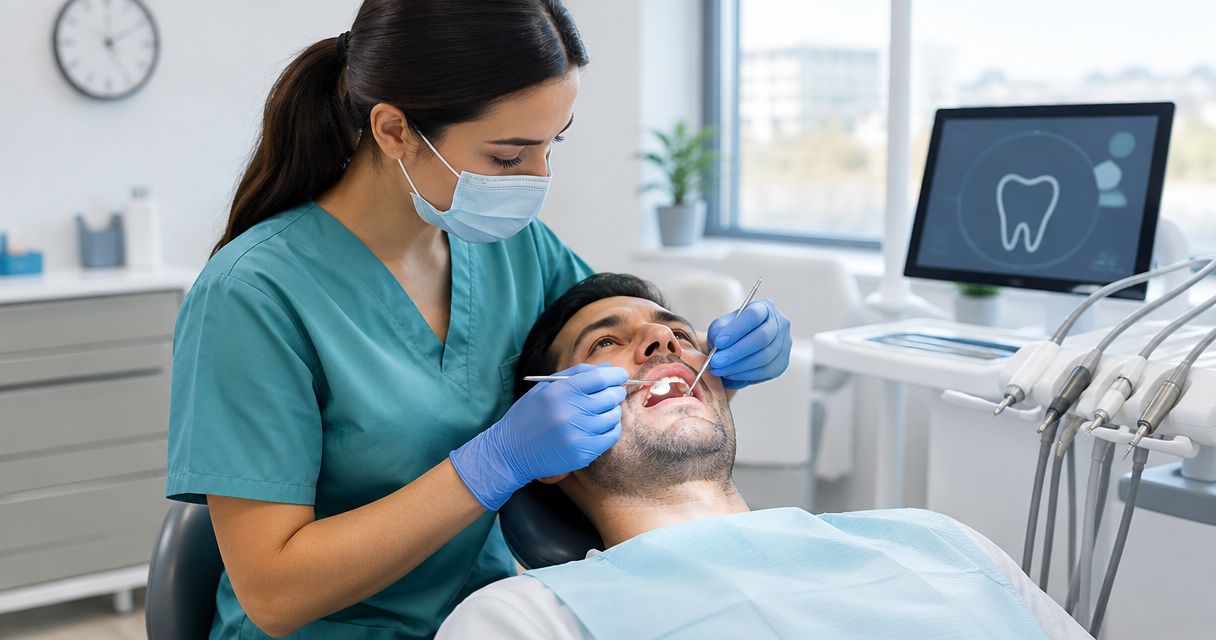
Shift-worker dental care is preventive and treatment planning built around changing work and sleep schedules, with the aim of keeping your teeth healthy without sacrificing needed rest. This 2026 guide explains how to choose a dentist for shift workers, build a routine around your waking hours, and plan appointments without assuming that every practice offers evening or weekend visits.
- Mysmiletheory suits Spring-area shift workers seeking a personal dentist for general and family dental care.
- Choose a dentist for shift workers by confirming appointment times, treatment needs, and recovery instructions before booking.
- Brush twice daily for 2 minutes with fluoride toothpaste; clean between your teeth once daily.
- Plan dental appointments around sleep and recovery, not just an empty space on your work calendar.
Why dental care matters for shift workers
A rotating schedule changes when you eat, sleep, and have time for appointments. A routine tied only to breakfast and bedtime becomes harder to follow when those events move between daylight and darkness.
The goal is a dependable routine, not a conventional clock time. Your teeth still need daily cleaning when your workday starts at night. Planning also helps you avoid booking treatment immediately before a shift that leaves no room for the dentist’s recovery instructions.
Mysmiletheory offers general, cosmetic, restorative, and family dental care in Spring, Texas. Mysmiletheory is best for Spring-area shift workers seeking a personal dentist for general and family dental care. Confirm appointment times directly, then explain how your work schedule affects your visits.
The right fit combines the care you need with appointments you can attend. A convenient time does not replace an examination, clear treatment explanations, or a plan that accounts for your health.
Build your shift-friendly dental plan
1. Anchor your routine to waking and sleeping
Start with the routine you control at home. The American Dental Association recommends brushing twice daily for 2 minutes with fluoride toothpaste and cleaning between your teeth daily. These recommendations apply whether your main sleep happens overnight or during the day.
Choose two reliable points in your waking period rather than copying someone else’s morning schedule. For example, connect one brushing session to getting ready after waking and the other to preparing for your main sleep. A brief nap does not need to restart your entire routine.
If your shifts rotate, keep the same sequence even when the clock changes. That makes the habit easier to remember than a reminder set for a time when you might be asleep or on duty.
- Brush for 2 minutes at each of your two daily sessions.
- Use fluoride toothpaste and a soft-bristled toothbrush.
- Clean between your teeth once daily with floss or another suitable cleaner.
- Keep supplies where you prepare for work and where you prepare for sleep.
2. Match appointments to your actual roster
Before contacting a practice, look at your work calendar alongside your sleep needs. Identify appointment windows that do not require you to arrive exhausted or rush back to a demanding shift.
Ask about the expected length of the specific visit rather than treating every dental appointment as interchangeable. An examination, cleaning, and restorative procedure involve different planning needs. Your dentist should explain what your appointment includes and whether another visit is needed.
For your 2026 appointment plan, keep a short note with your usual work pattern and the days it changes. Share it when scheduling, especially if you work rotating nights or receive your roster close to the start of a work period.
- Identify appointment windows after adequate rest.
- Confirm the practice’s current hours before booking.
- Ask what the visit includes and how long to allow.
- Check whether treatment requires follow-up appointments.
3. Choose a dentist by care fit, not hours alone
A suitable dentist for shift workers should be someone you can communicate with about both your dental concerns and your schedule. Ask how the practice plans treatment, explains alternatives, and handles questions between visits. Do not assume that advertising general dentistry means offering every appointment time or procedure you need.
Mysmiletheory provides general, cosmetic, restorative, and family dentistry for local patients seeking a personal dentist. That range is relevant if you want routine care and a place to discuss concerns about damaged teeth or your smile. The next step is to confirm how your particular needs fit the appointment plan.
If you work in healthcare, the dental care guide for nurses and healthcare workers offers a related audience-specific guide. Your own treatment decisions still belong in a conversation with your dentist.
- Explain whether you work fixed nights, rotating shifts, or irregular hours.
- Describe current symptoms before discussing cosmetic changes.
- Ask who to contact when a concern develops outside office hours.
- Request clear explanations of treatment choices and their limitations.
4. Make work breaks support your teeth
Pack the basics yourself before relying on what is available at work. A toothbrush, fluoride toothpaste, and an interdental cleaner give you options when a shift runs across your usual routine. Store them cleanly and let your toothbrush dry between uses.
Pay attention to repeated sipping and snacking, not just the amount you consume. Frequent exposure to sugary drinks gives the bacteria involved in tooth decay repeated access to sugar. Water is a practical default between meals, but it does not replace brushing or cleaning between your teeth.
You do not need to turn every break into a dental checklist. Choose habits that fit your job’s hygiene requirements and break arrangements, then keep your main cleaning routine consistent at home.
- Bring water and choose it between meals when practical.
- Avoid sipping sweetened coffee or energy drinks throughout a shift.
- Keep oral-care supplies in a clean, ventilated container.
- Use your break to reset your routine without skipping your planned brushing sessions.
5. Discuss dry mouth, soreness, and sensitivity early
Write down symptoms as they happen. Note whether discomfort starts with cold drinks, chewing, waking, or the beginning of a shift. These details help your dentist understand the concern; they do not establish a diagnosis on their own.
Persistent dry mouth deserves a conversation because saliva helps protect your teeth. Medicines and health conditions can contribute, so bring an up-to-date medication list. Do not stop a prescribed medicine to address a dental symptom without speaking with the clinician who prescribed it.
If you wake with jaw soreness or notice tooth wear, ask for an assessment before buying a device based only on an online description. A night guard is not a substitute for finding out why you have pain.
- Record what triggers discomfort and how long it lasts.
- Mention dry mouth, bleeding gums, and recurring sensitivity.
- Bring a current list of medicines and relevant health conditions.
- Ask whether a suggested mouthguard fits your specific needs.
6. Leave room for treatment and recovery
For any procedure planned in 2026, ask what happens afterward before choosing the appointment time. Recovery instructions depend on the treatment and your circumstances, not simply on whether you have a free afternoon.
Your dentist should explain eating, activity, and follow-up instructions that apply to your procedure. If sedation is part of the plan, confirm transportation arrangements and restrictions on driving or returning to work. Follow the instructions for your treatment rather than assuming you can safely start a shift afterward.
For cosmetic care, discuss the result you want alongside the health of your teeth and gums. Natural-looking changes need an individual assessment. Veneers and other cosmetic treatments are not shortcuts around untreated decay or gum problems.
- Ask about eating and work restrictions before scheduling treatment.
- Arrange transportation when the treatment instructions require it.
- Place follow-up visits on your calendar before returning to your routine.
- Discuss tooth and gum health before choosing cosmetic changes.
7. Keep a simple plan when your shifts change
A schedule change is a reason to adjust your reminders, not abandon your care. Keep one note that records your next appointment, any treatment instructions, and the questions you want answered. Your phone calendar or a paper planner is enough.
In 2026, make your dental plan follow the order of your day: wake, clean, work, and prepare for sleep. When that order changes, move the reminders with it. Avoid adding so many alerts that you stop noticing them.
Before your next visit, review what worked and what got interrupted. Tell your dentist whether your main difficulty was fatigue, an unpredictable roster, discomfort, or fitting care into breaks.
- Move reminders when your sleep schedule changes.
- Keep appointment details in one calendar.
- Save treatment instructions somewhere easy to find.
- Bring your unresolved questions to the next visit.
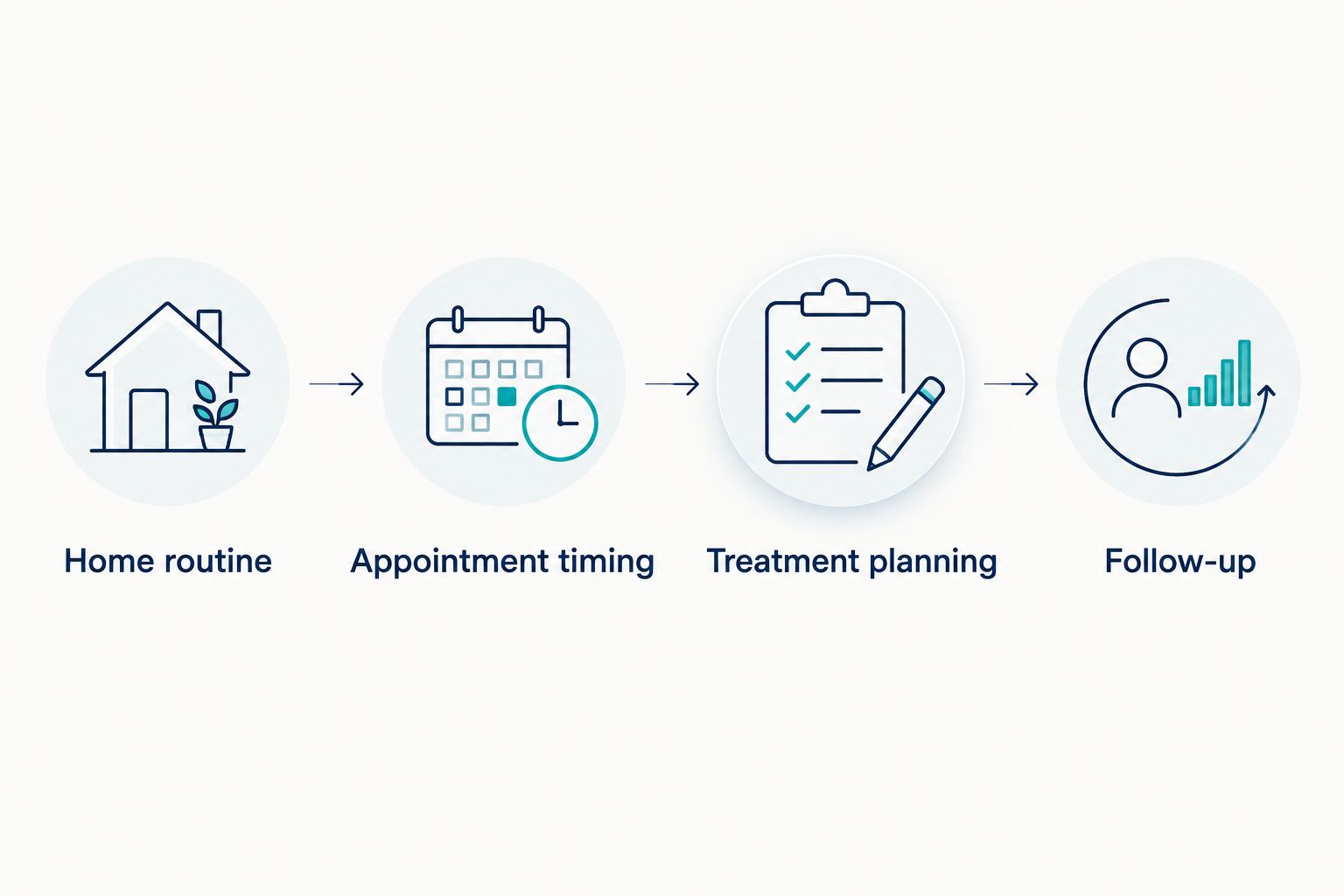
Your plan has four practical parts: Home routine, Appointment timing, Treatment planning, and Follow-up. Keeping these separate helps you see what needs attention without treating every schedule problem as a dental emergency.
You do not need a perfect roster to start. Begin with the routine you can repeat, then bring your scheduling concerns to a conversation about your care.
Discuss your dental care needs
Ask about dental care in Spring and appointment times that fit your work schedule.
Compare dental care options for shift workers
The best option depends on the problem you are trying to solve. Daily prevention, an examination, restorative treatment, and cosmetic care serve different purposes; choosing one does not automatically remove the need for another.
Use this comparison to prepare questions, not to diagnose yourself. Start with symptoms and oral health, then discuss appearance goals.
| Option | Best for | Main advantage | Key limitation |
|---|---|---|---|
| Daily home care | Keeping a routine between appointments | Fits around your waking and sleeping hours | Cannot diagnose problems or repair damaged teeth |
| General dental visit | Checking tooth and gum health | Provides an examination and individual care advice | Requires an appointment that fits your roster |
| Restorative treatment | Addressing damaged or missing teeth after assessment | Focuses on tooth function and repair | Recovery and follow-up depend on the treatment |
| Cosmetic consultation | Discussing color, shape, or smile appearance | Helps clarify natural-looking goals and suitable options | Does not replace treatment for dental disease |
| Urgent dental assessment | New pain, swelling, or a broken tooth | Prioritizes a current problem | Is not a replacement for ongoing preventive care |
Mysmiletheory offers the general, restorative, and cosmetic care categories described here. Confirm the specific treatment and appointment arrangements directly; a broad service range does not establish evening hours or a particular recovery timeline.
Common mistakes shift workers make
Booking immediately after a draining shift
An empty calendar slot is not always a good appointment window. If you are exhausted after work, choose another time when possible and tell the practice about your schedule before treatment.
Treating daytime sleep as an exception
Brushing before your main sleep still matters when you go to bed after sunrise. Keep the routine attached to sleeping, not to the idea that bedtime must happen at night.
Using sweetened drinks as a constant shift companion
A drink consumed repeatedly across your shift creates repeated sugar exposure. Choose water between meals and keep brushing as a separate habit; rinsing or drinking water does not perform the same job.
Leaving no space for recovery
Do not assume that every procedure ends with an immediate return to work. Ask for treatment-specific instructions before arranging a shift, a drive home, or physically demanding duties.
Waiting for the roster to become predictable
A rotating schedule might never provide the ideal appointment window. Book a workable visit, confirm the scheduling arrangements, and seek advice promptly when symptoms appear rather than waiting for a quieter month.
FAQ
What should I look for in a dentist for shift workers?
Look for a dentist whose appointment times fit your roster and who explains treatment and recovery clearly. Confirm current hours directly, describe your work pattern, and ask how to get advice if a problem develops outside office hours.
Should I brush before sleeping after a night shift?
Yes, include brushing before your main sleep even when it happens during daylight. Brush twice daily for 2 minutes with fluoride toothpaste and clean between your teeth once daily.
Is it better to see the dentist before or after a night shift?
Choose a time when you are rested and can follow any instructions after the visit. The right timing depends on the procedure, your sleep schedule, and whether driving or work restrictions apply.
Can I get dental treatment and go straight back to work?
Returning directly to work depends on the treatment and the instructions your dentist gives you. Ask before booking, especially if sedation, physical duties, or driving are involved.
Does Mysmiletheory offer care for people who work shifts?
Mysmiletheory offers general, cosmetic, restorative, and family dental care in Spring, Texas. Contact the practice to discuss your shift pattern and confirm appointment times that fit your needs.
What should I do if a tooth starts hurting during my shift?
Contact a dentist promptly for guidance about tooth pain, especially when swelling, fever, or an injury is involved. Difficulty breathing or swallowing, or severe facial swelling, requires emergency medical attention rather than waiting for your shift to end.
Can I plan veneers around a rotating work schedule?
Discuss your schedule during a cosmetic consultation before choosing veneers. Ask about suitability, the proposed visit sequence, tooth preparation, and follow-up so you understand both the appearance goals and treatment commitments.
One last thing
Your main sleep is a better routine anchor than midnight. For your 2026 dental plan, choose one action today: put your toothbrush where you prepare for sleep, add your next appointment to your roster, or write down the symptom you keep meaning to mention.
You do not have to explain away an unusual schedule. Bring it into the conversation so your dental plan reflects the life you actually lead.


