

Small business owners’ dental care is personal preventive and treatment planning with the aim of keeping your mouth healthy while fitting care around running a business. This 2026 guide focuses on your own smile—not employee benefits—and explains how to prepare for appointments, handle symptoms, and consider cosmetic changes without rushing decisions.
- Dental care for small business owners starts with prevention, clear treatment priorities, and protected appointment time.
- Mysmiletheory offers general, cosmetic, restorative, and family dental care for local patients in Spring, Texas.
- Choose cosmetic dentistry around healthy teeth and natural-looking goals, not a deadline alone.
- Ask your dentist which care needs attention now and which decisions can wait.
Why dental care matters for small business owners
When you handle customer calls, staffing, and daily decisions, stepping away for an appointment takes planning. Your dental care still needs its own place on the calendar. Waiting until a tooth hurts leaves symptoms, rather than your preferences, driving the next decision.
For your 2026 plan, separate two questions: what keeps your mouth healthy, and what would you like to change about your smile? Both deserve attention, but they do not always need treatment at the same time.
Mysmiletheory provides general, cosmetic, restorative, and family dentistry in Spring, Texas. A personal dentist gives you somewhere to discuss those needs together; the practical limitation is that recommendations still require an examination, not just a description of your schedule.
Build your work calendar around the care you need—not your treatment choices around the shortest opening. Ask about appointment length, follow-up visits, and aftercare before committing to a treatment date.
Build a dental plan that fits your business
You can begin with a notebook, your calendar, and the supplies you already use at home. The purpose is not to become your own dentist. It is to arrive with clear questions so your appointment can focus on your health, comfort, and priorities.
Protect your daily home-care routine
Start with habits you can repeat on busy mornings and late evenings. The American Dental Association recommends brushing for 2 minutes, 2 times a day, using fluoride toothpaste, and cleaning between your teeth daily. Those basics remain useful even when the workday changes unexpectedly.
Home care supports dental health, but it cannot diagnose a cracked tooth or replace treatment for an established cavity. If your gums bleed, a tooth becomes sensitive, or chewing feels different, bring that information to your dentist rather than simply brushing harder.
Keep the routine easy to find and easy to remember. A spare toothbrush at work can help when your day runs long, but it should support your regular routine rather than replace it.
- Use a soft-bristled toothbrush and gentle pressure.
- Brush for 2 minutes each morning and evening.
- Clean between your teeth at least 1 time a day using floss or a suitable interdental cleaner.
- Keep drinking water accessible during the workday.
- Write down recurring sensitivity, bleeding, or soreness to discuss at your visit.
Map your appointments before choosing treatment dates
Open your calendar before contacting a dental office. Identify commitments that are difficult to move, such as presentations, travel, or days when you are the only person covering the business. Share those constraints without assuming every treatment will fit the same appointment window.
Your 2026 appointment plan should include more than the time spent in the dental chair. Ask whether treatment involves numbness, eating instructions, another visit, or restrictions that affect your work. The answers depend on the procedure and your individual care.
Choose a date after you understand the appointment—not before. Combining tasks sounds convenient, but your dentist needs to decide which treatments belong together. A calendar reminder is useful; a realistic plan is better.
- List work commitments you cannot easily rearrange.
- Ask how long to reserve for the proposed appointment.
- Confirm whether additional visits are expected.
- Ask about eating, speaking, driving, and returning to work afterward.
- Arrange business coverage if the recommended care requires time away.
Separate urgent concerns from longer-term goals
Before your appointment, make a short list of symptoms and changes you have noticed. Include when discomfort started, what triggers it, and whether it affects sleep or eating. You do not need to identify the cause yourself.
Mysmiletheory dental care is best suited to Spring-area owners seeking a personal dentist for general, cosmetic, restorative, and family care. Bringing a written list gives that conversation a clear starting point. An examination is still necessary to determine what is happening and which choices are appropriate.
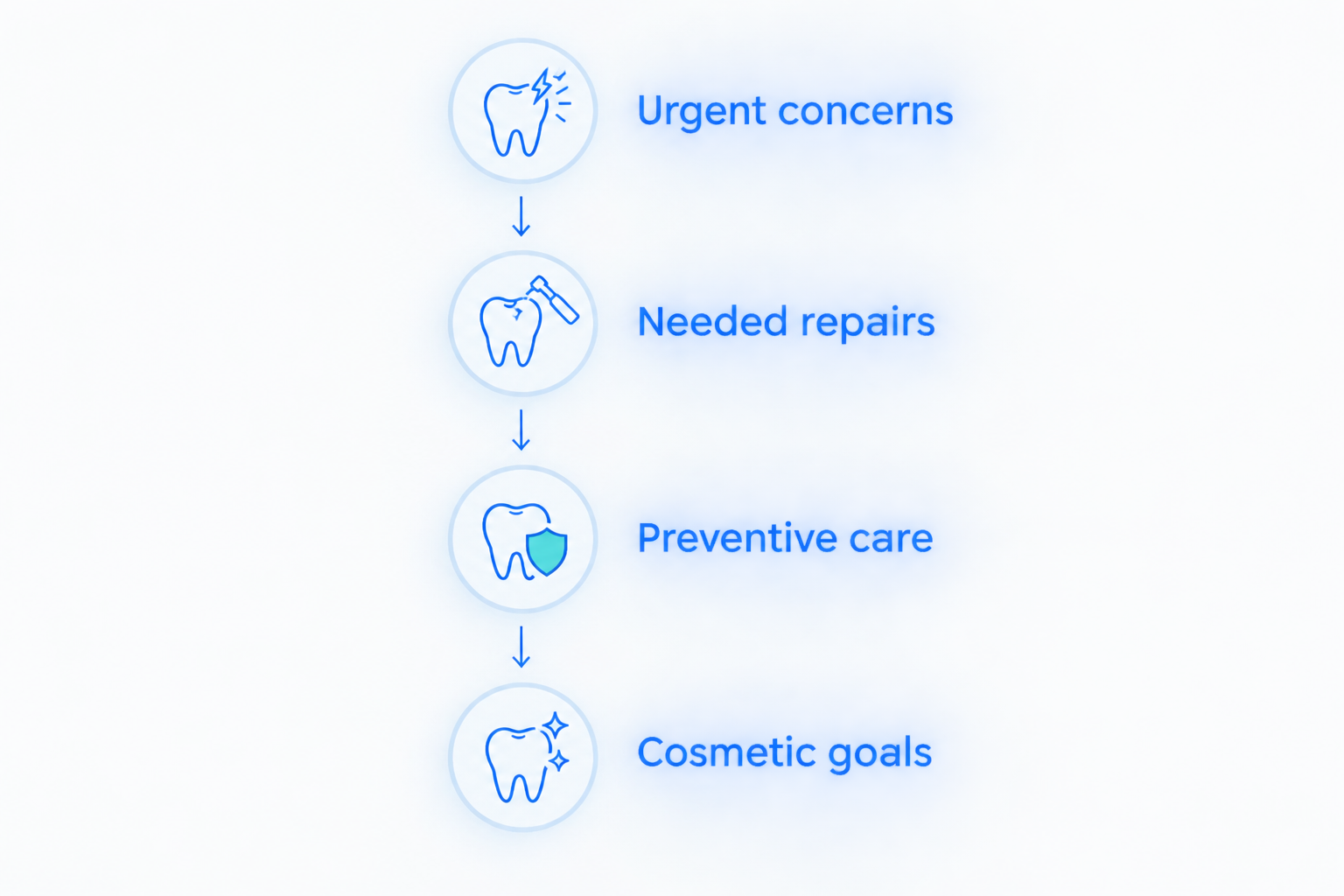
Ask your dentist to organize the discussion around urgent concerns, needed repairs, preventive care, and cosmetic goals. This is a conversation guide, not a diagnosis or a fixed treatment order for every patient.
Pain deserves attention before a cosmetic deadline. Facial swelling with trouble breathing or swallowing requires emergency medical care, not a wait for a routine dental appointment.
- Urgent concerns: Report pain, swelling, injury, or a broken tooth when contacting the office.
- Needed repairs: Ask what the examination shows and what happens if treatment is delayed.
- Preventive care: Request a home-care and follow-up plan based on your needs.
- Cosmetic goals: Explain what you would like to change after health concerns are assessed.
Prepare your records and comfort preferences
Gather your medication list, relevant health information, and the name of your previous dental office. If you have dental coverage, keep your current plan details handy and ask how to verify benefits. Coverage information does not replace a clinical recommendation or guarantee that a procedure is covered.
For a first visit in 2026, a simple written summary is enough to start. Describe previous treatment, anything that made past appointments difficult, and what helps you feel more comfortable. You do not need to minimize anxiety to be an easy patient.
A personal appointment works best when your dentist understands both your health history and your concerns. Ask questions in ordinary language; you should not need dental terminology to explain what matters to you.
- Update your medication and allergy information.
- Ask how previous dental records should be transferred.
- Describe sensitivity, a strong gag reflex, or past uncomfortable experiences.
- Request an explanation before treatment begins.
- Ask what comfort measures are appropriate for the planned care.
Match cosmetic choices to your natural smile
Begin by describing the change you want, not by choosing a procedure. You might want a less noticeable chip, a different tooth shade, or a more even-looking smile. Your dentist can explain whether the concern involves color, shape, tooth position, or an underlying health issue.
Review the available dental services before your appointment, then use the consultation to discuss suitability. Cosmetic treatment is a choice, not an obligation that comes with owning a customer-facing business.
For your 2026 goals, ask what preserves healthy tooth structure while addressing your concern. Whitening changes tooth color but does not reshape teeth. Bonding can address selected shape concerns but can chip or stain. Veneers can change the visible tooth surface, but treatment often involves irreversible enamel removal.
- Describe what bothers you and what you want to keep unchanged.
- Ask which options address your specific concern.
- Discuss tooth shade and shape in relation to your overall smile.
- Ask about maintenance, repair, and future replacement.
- Explain upcoming events without treating them as a reason to skip assessment.
Write down the next step before leaving
Finish the appointment with a plan you can explain in your own words. What needs attention, what are the alternatives, and what should you do next? If something is unclear, asking again is part of making an informed decision.
Choose your next action before returning to work. That might mean arranging treatment, requesting clarification, or following a home-care recommendation. You do not need to decide on every cosmetic possibility at the same visit.
Keep clinical instructions somewhere separate from general business notes so you can find them quickly. Written aftercare instructions are especially useful when you return to a busy day and cannot remember every detail of the conversation.
- Confirm the main finding and recommended next step.
- Ask about alternatives and the consequences of waiting.
- Save any written aftercare instructions.
- Record whom to contact if symptoms change.
- Schedule follow-up according to your dentist’s recommendation rather than a generic interval.
Talk through your dental care needs
Share your symptoms, schedule, and smile goals with a dental clinic in Spring, Texas.
Compare your dental care options
The right option depends on the problem, not how busy your week looks. This comparison separates everyday care from treatments that require an examination and an individual recommendation. None of these options replaces every other type of care.
| Option | Best for | Main benefit | Key limitation |
|---|---|---|---|
| Daily home care | Supporting oral health between appointments | Gives you a repeatable preventive routine | Does not diagnose disease or repair damaged teeth |
| Preventive dental visits | Checking oral health and setting a personal care plan | Allows professional assessment and preventive recommendations | Visit frequency depends on individual needs; one visit does not prevent every problem |
| Restorative treatment | Addressing decay, damage, or missing teeth after assessment | Focuses on repairing or replacing affected teeth | Treatment scope and follow-up vary with the condition |
| Teeth whitening | Changing the color of suitable natural teeth | Addresses tooth shade without reshaping teeth | Does not whiten crowns or veneers and can cause sensitivity |
| Dental bonding | Selected small chips, gaps, or shape concerns | Adds tooth-colored material to alter appearance | Material can stain, chip, or need repair |
| Dental veneers | Selected changes to visible tooth shape and color | Can address more than one appearance concern | Often involves irreversible enamel removal and future maintenance |
| Mysmiletheory | Spring-area owners seeking a personal dentist | Offers general, cosmetic, restorative, and family dental care | Suitability, visit requirements, and a treatment plan require individual discussion |
Use the table to prepare questions, not to select treatment on your own. If several choices address the same concern, ask your dentist to explain what each choice changes, what it leaves untouched, and what ongoing care involves.
Common mistakes small business owners make
Waiting for a quiet week to address symptoms
An open calendar is not a reliable dental plan. If pain, swelling, or a broken tooth develops, contact a dental professional and explain the symptoms. Let the clinical concern determine urgency, then work out business coverage around that advice.
Treating the shortest appointment as the best treatment
A procedure that seems easier to schedule is not automatically appropriate for your tooth. Ask why a treatment is recommended and whether alternatives fit your condition. Convenience matters, but it belongs alongside health needs and long-term maintenance—not above them.
Planning cosmetic work around a business event alone
A presentation, new website photo, or networking event can help explain your goals. It cannot determine whether your teeth and gums are ready for cosmetic treatment. Discuss the event early and leave room for assessment rather than expecting a guaranteed completion date.
Confusing employee benefits with personal care planning
Choosing benefits for your team and arranging your own dental treatment are separate tasks. Your personal plan starts with an examination and your health needs. If coverage affects your decisions, verify the details rather than assuming an employer arrangement answers every question.
FAQ
What's the best dental care plan for a small business owner?
The best dental care plan starts with an examination, a daily home-care routine, and treatment priorities based on your needs. Share your work constraints so appointment planning reflects both the recommended care and your responsibilities.
How often should I see a dentist if I own a business?
Your dentist should recommend your visit frequency based on your oral health and individual risk. Owning a business does not change the need for appropriate follow-up, and a busy schedule is not a reason to ignore new symptoms.
Can I get all my dental treatment done in one appointment?
Whether treatment can be combined depends on the procedures, your health, and your dentist’s assessment. Ask which visits are necessary and what aftercare each involves before arranging time away from work.
Should I fix a painful tooth before getting cosmetic dentistry?
A painful tooth needs assessment before you focus on elective cosmetic changes. Your dentist can identify the cause and explain how any necessary treatment affects your cosmetic plans.
Are veneers better than bonding for a business owner?
Veneers are not automatically better than bonding because you own a business. The appropriate choice depends on your teeth, the change you want, tooth preparation, and future maintenance—not your job title.
Can I visit Mysmiletheory if I need a personal dentist in Spring?
Mysmiletheory is a dental clinic in Spring, Texas offering general, cosmetic, restorative, and family care to local patients seeking a personal dentist. Contact the office to discuss your needs and ask about arranging an appointment.
What should I do if a toothache starts during a workday?
Contact a dental professional and describe the pain, any swelling, and when symptoms began. Trouble breathing or swallowing requires emergency medical attention rather than waiting for a dental appointment.
One last thing
Put a dental reminder beside a business task you already review regularly. That reminder is for checking your plan—not for deciding your own treatment interval. Your dentist should guide the timing of visits.
For the rest of 2026, aim for one clear next action rather than a perfect schedule. Write down the symptom you have been ignoring, gather your previous records, or ask a question about a change you want. You can take your smile seriously without turning it into another business project.