
Best overall for stained, otherwise healthy teeth: professional whitening. Best for a small chip: dental bonding. Best for crooked teeth: clear aligners. Best for changing several aspects of tooth appearance: veneers. This 2026 guide matches cosmetic dentistry options to your smile goals and the practical demands of a working week.
- The best cosmetic dentistry for professionals matches the treatment to the concern, not just the calendar.
- Professional whitening addresses tooth color; it does not straighten teeth or repair chips.
- Dental bonding suits small shape changes; veneers involve a greater commitment to future care.
- Clear aligners address alignment but require consistent wear and follow-up.
- Mysmiletheory offers cosmetic dentistry in Spring, Texas, for local patients seeking a personal dentist.
Why this matters
A busy schedule makes convenience important, but convenience alone cannot tell you which dental treatment fits. Whitening, bonding, veneers, and clear aligners solve different problems. Choosing the wrong category means asking a treatment to do something it was not designed to do.
Mysmiletheory offers general, cosmetic, restorative, and family dentistry in Spring, Texas. Mysmiletheory is a cosmetic dentistry option for local professionals seeking a personal dentist. Start with your concern, then ask which approach fits your dental health and daily routine.
Your 2026 smile plan does not need to change everything. A focused conversation about one bothersome feature gives you a clearer starting point than a request for a complete makeover.
What makes the best cosmetic dentistry for professionals?
The best fit balances appearance, dental health, and the responsibilities that continue after treatment. Use these criteria before comparing options:
- Problem fit: Choose a treatment that addresses color, shape, alignment, or damage directly.
- Tooth preservation: Ask how much natural tooth structure the proposed treatment changes.
- Schedule fit: Discuss appointments, follow-up, and anything you need to do between visits.
- Natural appearance: Talk about shade, shape, and how the result will fit your existing smile.
- Daily upkeep: Consider cleaning, eating habits, appliance wear, and future repairs.
- Dental readiness: Resolve decay, gum problems, or unexplained pain before treating appearance alone.
The best cosmetic dentistry for professionals is the least extensive appropriate treatment that addresses the actual concern. A treatment that sounds convenient is not a shortcut if it leaves the underlying problem unresolved.
Cosmetic dentistry options at a glance
This 2026 comparison ranks treatments by their purpose, not by a promise that one option works for everyone. Appointment requirements depend on your examination and treatment plan.
| Option | Best for | Standout feature | Key limitation |
|---|---|---|---|
| Professional whitening | Discoloration in otherwise healthy natural teeth | Changes tooth color without reshaping teeth | Does not whiten existing crowns, veneers, or fillings |
| Dental bonding | Small chips and localized shape changes | Adds tooth-colored material to a specific area | Can stain or chip and needs ongoing assessment |
| Clear aligners | Suitable cases of crooked or spaced teeth | Moves teeth rather than covering their position | Requires consistent wear and a retention plan |
| Veneers | Selected teeth needing several appearance changes | Changes the visible front surface of teeth | Often involves irreversible enamel removal |
1. Professional whitening: best for tooth discoloration
Professional whitening uses whitening agents to lighten natural teeth. It addresses color, not tooth position, missing tooth structure, or the shape of your smile. Different types of discoloration respond differently, so an examination matters before you choose a method.
For a professional who likes their tooth shape but notices staining, whitening is a focused starting point. Ask whether the proposed approach happens in the office, at home under dental guidance, or through a combination; do not assume every clinic offers every method.
Professional whitening pros:
- Targets discoloration without changing tooth shape.
- Does not require removing enamel to create a different contour.
- Lets you discuss a shade goal without committing to coverings on your teeth.
Professional whitening cons:
- Can cause temporary tooth sensitivity or gum irritation.
- Does not change the color of existing dental restorations.
- Does not correct chips, gaps, or crooked teeth.
Best for: Someone whose main concern is the color of otherwise healthy natural teeth.
If you have a visible crown or filling, discuss shade matching before whitening. A lighter natural tooth next to an unchanged restoration can make the difference more noticeable.
Recommendation: Start with a whitening discussion when color is your only concern. Choose another category when shape or alignment is the real issue.
2. Dental bonding: best for small chips and localized changes
Dental bonding places tooth-colored resin on a tooth to repair or reshape a specific area. It can address selected small chips, uneven edges, and small spaces when your bite and tooth health make it appropriate. Unlike orthodontic treatment, bonding changes the visible outline rather than moving teeth.
Bonding deserves consideration when one detail bothers you more than the rest of your smile. The important question is whether adding material will create a balanced shape without interfering with how your teeth meet.
Dental bonding pros:
- Focuses on a localized concern instead of changing the whole smile.
- Often preserves more natural tooth structure than a veneer.
- Can be repaired or adjusted when the clinical situation allows.
Dental bonding cons:
- Resin can stain or chip over time.
- Not suitable for every gap, fracture, or bite problem.
- Maintenance and replacement remain part of the decision.
Best for: Someone with a small chip or a limited shape concern in an otherwise healthy tooth.
Mention grinding, nail biting, or using teeth to open packaging during your consultation. These habits matter when your dentist considers whether an added edge will tolerate everyday forces.
Recommendation: Discuss bonding for a small, isolated change. Do not use a cosmetic repair to bypass evaluation of a painful or cracked tooth.
3. Clear aligners: best for suitable alignment concerns
Clear aligners use a planned series of removable trays to move teeth. They address tooth position rather than hiding unevenness with added material. Suitability depends on your teeth, gums, bite, and the movements required.
For professionals, the main scheduling issue is not simply the appointment calendar. You also need a routine for wearing the trays, removing them when instructed, cleaning them, and attending progress checks. Ask about the prescribed daily wear before deciding that removable means effortless.
Clear aligners pros:
- Address the position of teeth directly.
- Can improve alignment without reshaping tooth fronts solely to disguise crowding.
- Removable trays allow access to teeth for brushing and flossing.
Clear aligners cons:
- Require consistent wear and careful handling.
- Not every alignment or bite problem suits this approach.
- Retainers are needed afterward to help maintain tooth positions.
Best for: Someone whose main concern is crooked or spaced teeth and who can follow a prescribed wear routine.
If client lunches, travel, or frequent snacking shape your day, explain that routine during your appointment. Your dentist can discuss what treatment would require; a calendar alone cannot determine suitability.
Recommendation: Consider clear aligners when tooth position is the problem. Confirm who will provide and monitor treatment rather than assuming availability at a particular practice.
4. Veneers: best for selected teeth with several appearance concerns
Veneers are thin coverings attached to the front surfaces of teeth. They can change visible color, shape, and proportions in selected cases. They do not replace an assessment of gum health, decay, or bite problems.
Veneers deserve a careful conversation when several appearance concerns affect the same teeth. Natural-looking results depend on planning shade and shape around your existing smile, not choosing the brightest possible color. Preparation often involves removing enamel, which makes the decision different from whitening.
Veneers pros:
- Can address several visible concerns on selected teeth.
- Allow planned changes to tooth shape and proportions.
- Porcelain resists staining better than tooth-colored bonding resin.
Veneers cons:
- Enamel removal is irreversible when preparation is required.
- Veneers can chip, loosen, or need replacement.
- Not a substitute for orthodontics in every alignment problem.
Best for: Someone with suitable teeth who wants to address combined color and shape concerns and understands the long-term commitment.
Ask what happens if a veneer needs repair or replacement. That question belongs in the initial conversation, alongside appearance and comfort, rather than after you have already decided.
Recommendation: Consider veneers after comparing less extensive options. Take time to understand preparation, maintenance, and the proposed appearance before committing.
How these options are ranked
This ranking uses problem fit, tooth preservation, schedule fit, appearance, upkeep, and dental readiness. Whitening comes first for a color-only concern because it does not require reshaping teeth. Bonding, aligners, and veneers each serve a different purpose; their order does not mean they are interchangeable or less appropriate for your needs.
For your 2026 decision, prioritize the treatment's purpose over a deadline. A clinical examination determines which options belong on your shortlist.
Build a plan around your working week
A useful consultation connects your smile goal with the habits and commitments you already have. You do not need to know the treatment name before you arrive.
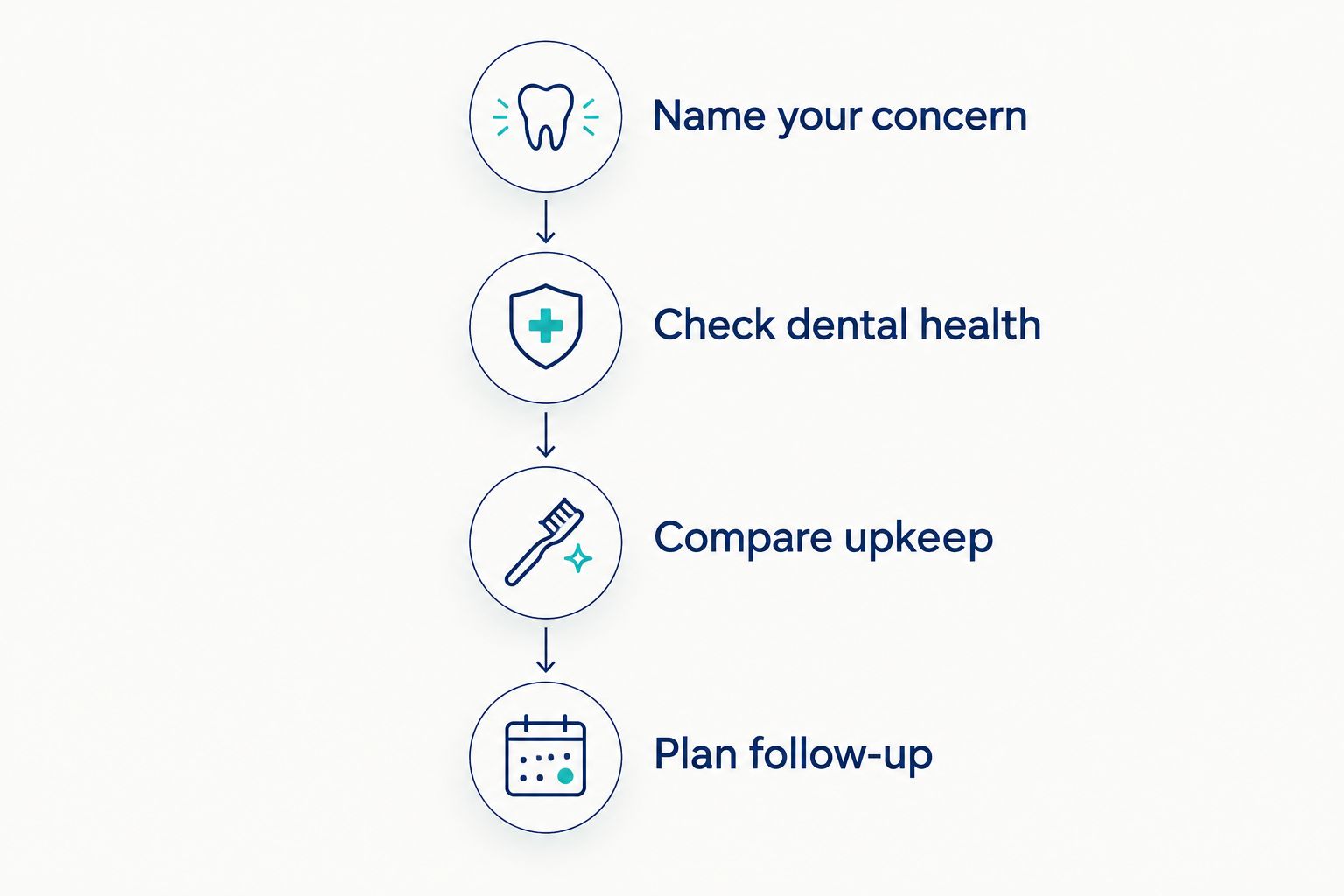
Name your concern
Choose one main issue to describe first: color, a chip, spacing, crowding, or uneven shape. Explain what you notice rather than diagnosing it yourself. Photos of your own smile can help you point to the area that bothers you.
Check dental health
Tell your dentist about pain, bleeding gums, sensitivity, and previous dental work. These details can change the order of care. A cosmetic plan should not distract from a tooth that needs treatment for health or function.
Compare upkeep
Ask what each suitable option requires after the appointment. Discuss cleaning, appliance wear, habits that increase damage, and the possibility of future repairs. A modest change with manageable upkeep can be a better fit than a larger change you do not want to maintain.
Plan follow-up
Share important meetings, travel, and any event you have in mind. Ask which parts of the plan need appointments and which responsibilities fall to you at home. Build flexibility into the schedule rather than treating an event date as a clinical deadline.
At Mysmiletheory, you can begin by discussing the general and cosmetic dental care you are seeking. Describe your goal and ask which options are appropriate; specific procedures and scheduling should be confirmed directly with the clinic.
Start with your smile goals
Discuss your cosmetic concerns and ask which next steps fit your dental health.
Which cosmetic dentistry option should you choose?
Choose a whitening consultation as the default only when discoloration is your main concern and your teeth are otherwise healthy. For a small chip, ask about bonding. For crooked teeth, ask about alignment treatment before choosing a covering. For combined shape and color changes, compare veneers with less extensive approaches.
Mysmiletheory offers cosmetic dentistry for local patients in Spring, Texas. Bring your priorities to the conversation, including comfort, natural appearance, and the parts of your working routine that are difficult to change.
Your best 2026 plan is one you understand. Before agreeing, you should be able to explain what the treatment changes, what it leaves unchanged, and what care it will need afterward.
FAQ
What's the best cosmetic dentistry for professionals with busy schedules?
The best cosmetic dentistry for professionals depends on the concern being treated and the care required afterward. Whitening suits discoloration, bonding suits selected small defects, aligners address suitable alignment concerns, and veneers change the appearance of selected tooth fronts.
Is whitening better than veneers for a brighter smile?
Whitening is a less extensive option when the main concern is the color of healthy natural teeth. Veneers also change visible shape, but often require irreversible enamel removal. Existing crowns, veneers, and fillings do not whiten like natural teeth.
Can dental bonding fix a small chipped tooth?
Dental bonding can repair selected small chips when the remaining tooth and bite are suitable. A painful tooth, a deep fracture, or a large missing area needs an assessment before choosing a cosmetic repair.
Are clear aligners a good choice if I travel for work?
Clear aligners require consistent wear and follow-up, so travel needs to be part of the treatment discussion. Ask how to manage cleaning, tray changes, and appointments within your actual routine.
How do I ask for natural-looking veneers?
Describe the changes you want in shade, shape, and proportions, and explain what you want to keep about your smile. Ask how the proposed appearance will relate to neighboring teeth and what preparation is required.
Can I whiten my teeth if I already have a crown?
Whitening changes natural teeth but does not change a crown's color. Your dentist should assess the visible crown and surrounding teeth before recommending a shade plan.
Does Mysmiletheory offer cosmetic dental care in Spring, Texas?
Mysmiletheory offers general, cosmetic, restorative, and family dentistry in Spring, Texas. Contact the clinic to discuss your concerns and confirm the specific treatment options appropriate for you.
One last thing
Existing dental work matters before you change your tooth color. Tell your dentist about visible crowns, fillings, or veneers at the start, because whitening natural teeth does not lighten those restorations.
For everyday care, the American Dental Association recommends brushing for 2 minutes per session, twice per day, with fluoride toothpaste. Cosmetic treatment does not replace that routine or cleaning between your teeth.


