
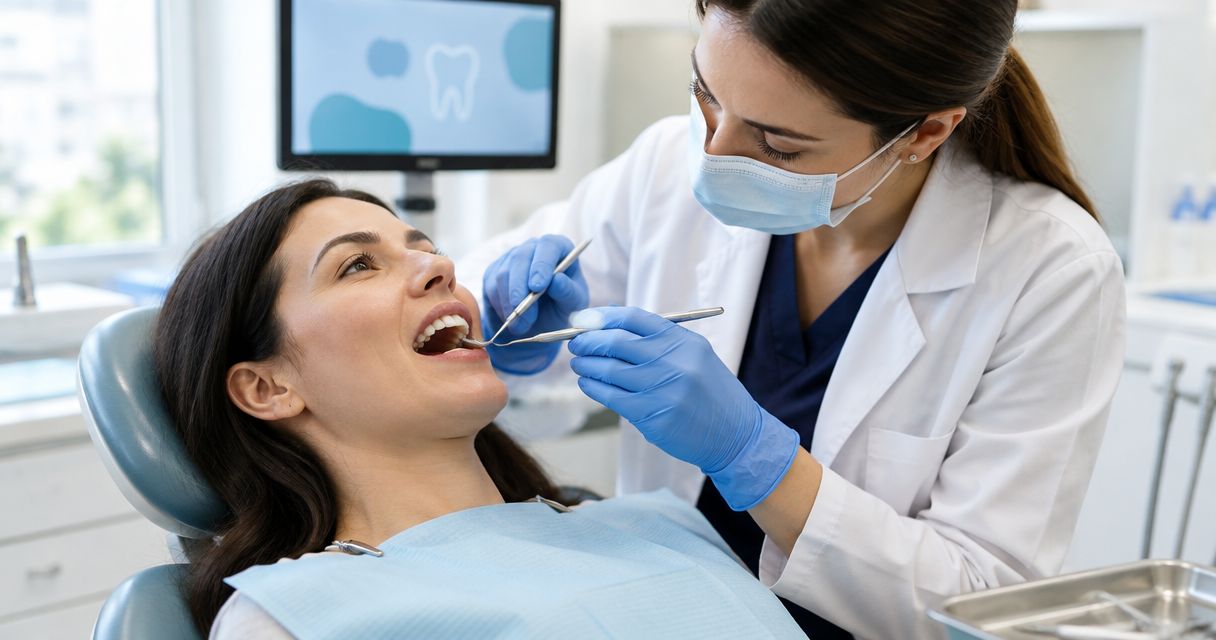
A routine dental cleaning has no single fixed duration: the time you need depends on buildup, gum health, and what else your appointment includes. The cleaning itself is only part of the visit, so ask whether your scheduled time also includes an examination, X-rays, and a discussion with your dentist.
- How long does a dental cleaning take? Confirm the full appointment length, not just the cleaning time.
- A routine cleaning and treatment for gum disease are different appointments with different scheduling needs.
- Mysmiletheory offers general and family dental care for local patients seeking a personal dentist in Spring, Texas.
- Mention sensitivity, a long gap between visits, or a firm departure time when booking.
How long does a routine dental cleaning take?
The most useful estimate is the appointment length your dental office gives you after confirming the type of visit you need. A cleaning for an established patient is not the same scheduling task as a first appointment that includes records, an examination, and a conversation about concerns.
If you are arranging dental care in Spring in 2026, Mysmiletheory offers general and family dentistry for local patients. Ask what your appointment includes before deciding whether it fits between work, school, or other commitments.
| Appointment type | Best for | What affects the schedule | Benefit and limitation |
|---|---|---|---|
| Routine cleaning | Preventive care when the dental team finds it appropriate | Buildup, sensitivity, and any accompanying examination | Removes deposits you cannot brush away; does not replace treatment for gum disease |
| First dental visit | Establishing care with a new dentist | Health history, records, examination, and any needed images | Gives the dentist context for your care; involves more than cleaning alone |
| Periodontal maintenance | Ongoing care after treatment for gum disease | Gum condition and the maintenance plan | Supports continued gum care; differs from a standard preventive cleaning |
| Scaling and root planing | Diagnosed gum disease requiring treatment below the gumline | Areas needing treatment and the dentist's plan | Treats deposits below the gumline; can require separate appointments |
These are different kinds of care, not interchangeable booking choices. Your dental team recommends the appropriate visit after assessing your mouth.
Why this matters
An unclear appointment estimate can leave you watching the clock instead of asking questions. Knowing what is included lets you arrange transportation, work coverage, or school pickup without treating the appointment as a race.
For your 2026 calendar, separate travel and check-in from treatment time. A scheduled clinical appointment does not necessarily include everything between arriving at the building and leaving the parking lot.
Ask about the whole visit, not only the time spent cleaning your teeth. That distinction is especially helpful when you are seeing a new dentist or returning after a long break.
What happens during a routine dental cleaning?
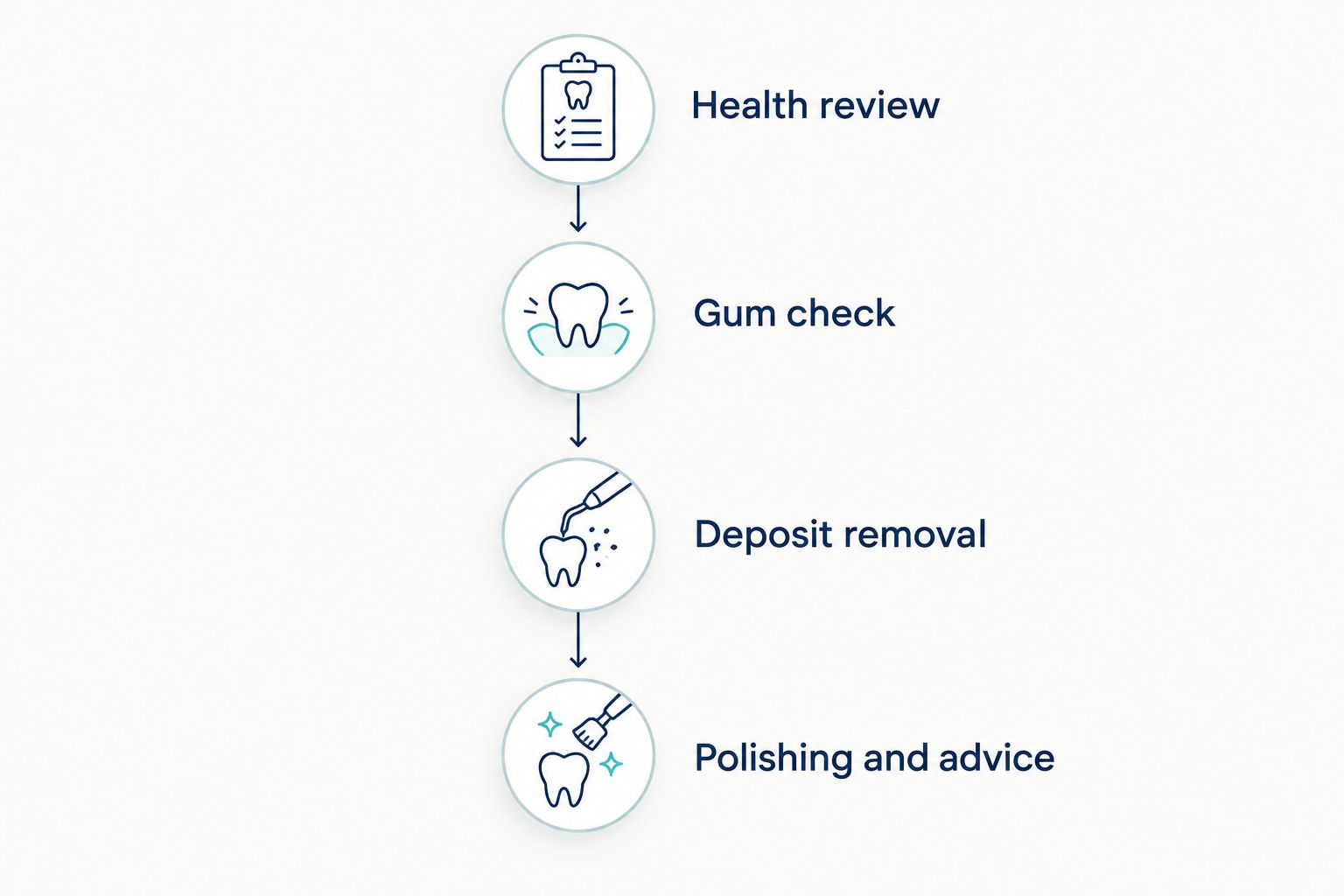
The sequence varies with your needs and the office's workflow. In general, a preventive visit includes checking your health information, assessing your mouth, removing deposits, and discussing home care; a dentist's examination or other services can add to that sequence.
Health review
Tell the dental team about changes in your health, medications, pregnancy, allergies, or recent dental symptoms. Even when you feel well, that information helps the team plan appropriate care.
Mention sensitivity before cleaning begins. You do not need to wait until something feels uncomfortable to ask for an adjustment or a pause.
Gum check
The dental team looks for signs that your gums need attention. Depending on your visit, this can include checking the spaces around teeth and reviewing areas that bleed or feel tender.
Bleeding does not, by itself, tell you which treatment you need. An assessment helps distinguish routine preventive care from treatment for a gum problem.
Deposit removal
A dental professional removes plaque and hardened buildup using appropriate instruments. Hardened deposits cannot be removed with ordinary brushing at home.
The amount and location of buildup affect the work involved. This is why a timing estimate is more useful when the office knows your dental history.
Polishing and advice
Polishing can remove some surface stains, and the team can discuss brushing and cleaning between your teeth. Cleaning is not the same as a whitening treatment and does not change the underlying color of teeth or restorations.
Ask for advice that fits the areas you find difficult to clean. A specific demonstration is more useful than leaving with a general reminder to brush better.
Why dental cleaning appointment times vary
The following factors explain why another person's appointment length is not a dependable estimate for yours. Share relevant details when booking rather than assuming every cleaning uses the same appointment slot.
- Buildup: More hardened deposits give the dental professional more material to remove, particularly around difficult-to-reach areas.
- Gum health: Signs of gum disease can change the recommended care rather than simply extend a routine cleaning.
- Visit scope: An examination, needed X-rays, or discussion of a dental concern takes time beyond cleaning.
- Comfort needs: Sensitivity, jaw discomfort, or requests for pauses affect how the team approaches treatment.
- Dental history: A new patient visit or a return after a long gap requires context that an established preventive visit does not.
These are useful booking details, not reasons to feel embarrassed. Your role is to describe what you know; the dental team's role is to assess what care you need.
Does more buildup mean I need a deep cleaning?
More buildup alone does not establish that you need scaling and root planing. Your dentist considers the condition of your gums and supporting tissues before recommending treatment.
Ask what findings explain the recommendation. Understanding the reason for treatment matters more than choosing the appointment that sounds shortest.
Will a routine cleaning include X-rays?
X-rays are based on your individual dental needs rather than automatically being required at every cleaning. Existing records, symptoms, and the dentist's assessment help determine whether images are needed.
When booking in 2026, ask whether the office expects to review previous images or take new ones. Do not assume that cleaning time includes imaging time.
How should I plan around a dental cleaning?
Start with the appointment details, then plan your day around them. If you have a firm departure time, share it before the visit rather than mentioning it once treatment has started.
- Confirm the visit type. Ask whether you are booking an established-patient cleaning, a first visit, or a gum-care appointment.
- Confirm what is included. Find out whether the scheduled time covers an examination, imaging if needed, and questions for the dentist.
- Share relevant concerns. Mention sensitivity, bleeding, tooth pain, jaw discomfort, or a long gap since your last visit.
- Ask about preparation. Check which forms and records the office wants before you arrive.
- Explain your schedule. Give the office your actual departure constraint and ask whether the planned visit fits.
A useful booking question is: Does that estimate cover everything from the start of my appointment through my conversation with the dentist? It gets you closer to the information you need without asking anyone to promise an exact finishing time.
If you are changing dentists, this guide to connecting your previous dentist's records to your first visit explains another part of preparation. Ask your new office which records it needs and how to send them securely.
Will a cleaning hurt if my teeth are sensitive?
Sensitivity does not mean you must simply endure discomfort. Tell the dental professional where you feel it and ask how the approach can be adjusted.
Some areas can feel tender during cleaning, especially when gums are inflamed or exposed tooth surfaces are sensitive. Sharp pain deserves an immediate conversation, not silent tolerance.
Before your 2026 appointment, think about what makes you uncomfortable: cold water, a particular tooth, keeping your mouth open, or uncertainty about what happens next. Specific information helps your dental team respond to the concern you actually have.
Agreeing on a hand signal for a pause can also make communication easier. You remain part of the conversation throughout your care.
Can I go back to work after a routine cleaning?
A routine cleaning without sedation generally does not require recovery time away from ordinary activities. Ask for individual guidance if your appointment involves numbing, additional treatment, or another service beyond preventive cleaning.
Do not assume aftercare instructions are identical for every visit. If you receive fluoride or another treatment, follow the team's directions about eating and drinking afterward.
For a busy workday, the main planning issue is the complete appointment rather than recovery from the cleaning itself. Leave room to understand any findings before returning to your next commitment.
What should I ask before I leave?
Before leaving, make sure you understand whether the visit completed your planned care or identified something that needs another appointment. A recommendation for treatment is different from a completed treatment.
Ask which areas need attention at home, when your next visit should be, and whether any symptoms need follow-up. If you are unsure what a term means, ask the team to explain it in everyday language.
Mysmiletheory is a local dental-care option for patients seeking a personal dentist in Spring, Texas. When considering care, ask how the proposed visit addresses both your dental needs and your comfort concerns.
Plan your next dental visit
Ask about the right appointment for your needs and what to expect during your visit.
FAQ
How long does a dental cleaning take if I am a new patient?
A new-patient appointment involves more than cleaning alone, so confirm the full scheduled length with the office. Health history, an examination, records, and any needed X-rays affect what the visit includes.
Can I fit a dental cleaning into my lunch break?
Only book a lunch-break cleaning after confirming that the full appointment fits your available time. Include travel and check-in, and tell the office when you must leave.
Is a deep cleaning the same as a routine cleaning?
No, scaling and root planing treats diagnosed gum disease and is not interchangeable with routine preventive cleaning. Your dentist recommends care based on an assessment, not simply on how long an appointment you want.
Will my cleaning take longer if I have not seen a dentist recently?
A long gap between visits can change the assessment and care you need. Tell the office when you last received dental care and mention symptoms so it can plan an appropriate appointment.
Can I ask for a break during a dental cleaning?
Yes, ask for a pause if you feel uncomfortable or need to rest your jaw. Agree on a signal before treatment begins and mention any areas of sensitivity.
Does a dental cleaning whiten my teeth?
A dental cleaning can remove some surface stains, but it is not a whitening treatment. Your natural tooth color and the color of existing crowns or veneers do not change simply because your teeth are cleaned.
Can I book general dental care at Mysmiletheory?
Mysmiletheory offers general and family dentistry in Spring, Texas. Ask which appointment fits your needs and whether the scheduled visit includes a cleaning, an examination, or additional assessment.
One last thing
A shorter cleaning is not proof of better dental health, and a longer visit is not a personal failing. Appointment length reflects the work planned, your needs, and the time spent communicating with you.
For your next dental visit in 2026, bring one question you want answered before you leave. Understanding your care is a better goal than getting out of the chair as quickly as possible.


