

Wisdom teeth recovery usually takes a few days before you feel ready for light daily activities, while soreness, swelling, and jaw stiffness can take longer to settle. Feeling better does not mean the tooth sockets have finished healing, and a difficult extraction or a complication can extend recovery. Your dentist’s written instructions take priority over any general timeline.
- How long does wisdom teeth recovery take? Expect gradual improvement over days, with some symptoms lasting up to two weeks.
- The NHS distinguishes returning to normal activities from complete healing after wisdom tooth removal.
- Worsening pain, fever, or swelling needs a dental assessment rather than extra waiting.
- Smile Theory provides general and family dentistry for local patients seeking a personal dentist in Spring, Texas.
How long does it take to recover from wisdom teeth removal?
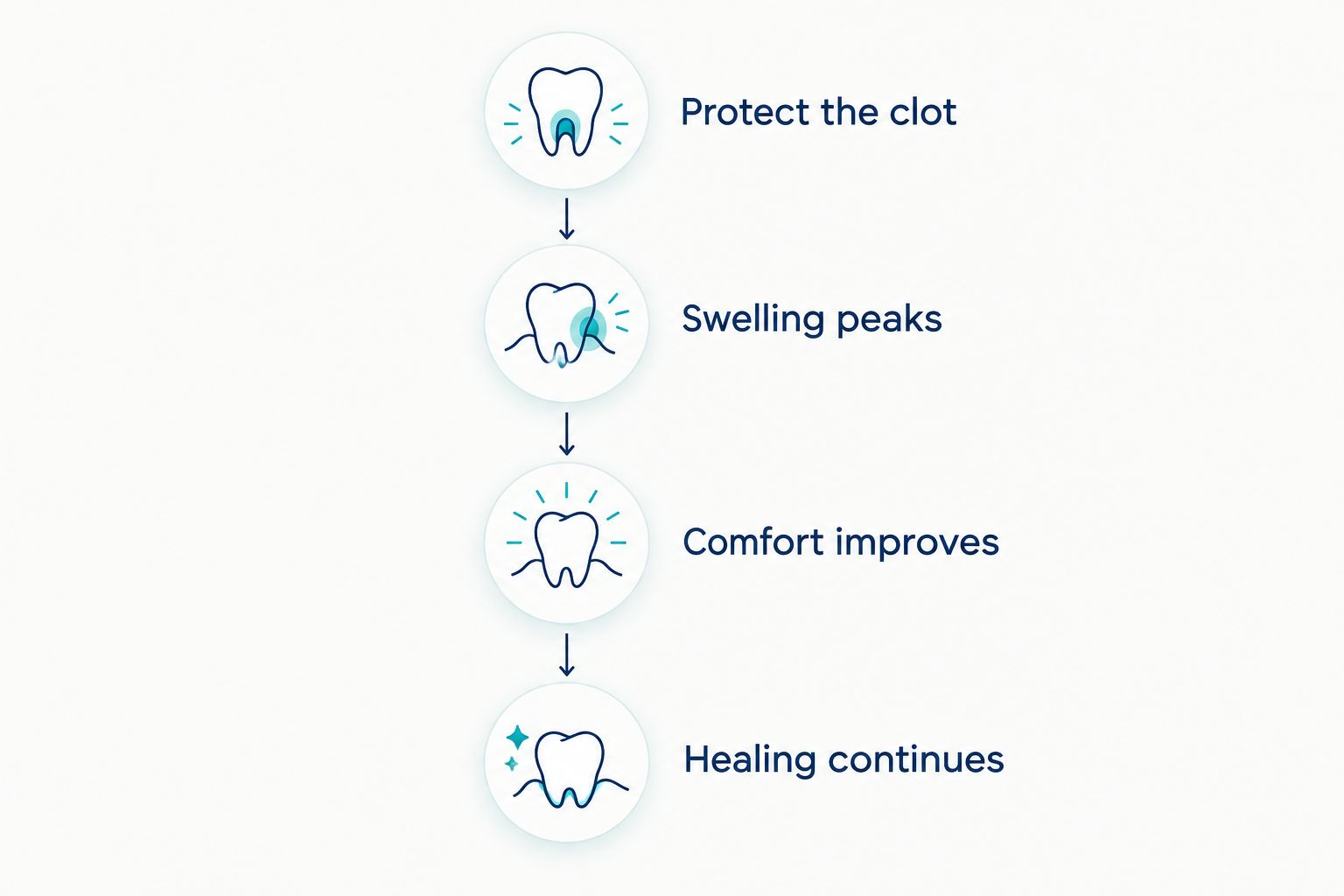
Plan for recovery in stages, not a single finish date. NHS patient guidance on wisdom tooth removal describes pain, swelling, bruising, and jaw stiffness that can last up to 2 weeks. Returning to work or school often happens earlier, depending on the extraction and the demands of your day.
Use this general timeline for planning in 2026, not as personal clearance to exercise, drive, or return to a physical job.
| Recovery stage | What to expect | What to do |
|---|---|---|
| First 24 hours | A clot forms in each socket; some blood-stained saliva is common | Rest and protect the extraction sites |
| Days 2–3 | Swelling often reaches its highest point; chewing can remain uncomfortable | Follow your aftercare instructions and watch the symptom trend |
| Following days | Discomfort and swelling should gradually ease | Return to activities according to comfort and your clinician’s advice |
| Up to 2 weeks | Some soreness, bruising, or jaw stiffness can remain | Contact the dental team if symptoms worsen rather than improve |
| Longer-term healing | Healing below the gum continues after you feel better | Keep follow-up appointments and follow cleaning instructions |
For everyday dental care in Spring, Smile Theory offers general, restorative, cosmetic, and family dentistry. Questions about a recent extraction should go first to the clinician who performed it, because that team knows what happened during your procedure.
Why this matters
Recovery affects more than your calendar. You need enough comfort to drink, eat, sleep, and manage your usual responsibilities without disturbing the healing sockets.
For a procedure scheduled in 2026, leave room to adjust your plans rather than promising yourself an immediate return to normal. A desk-based day and a shift involving lifting do not place the same demands on your body.
The direction of your symptoms matters more than matching someone else’s recovery day. Gradual improvement is reassuring; worsening pain or swelling deserves a call.
The first 24 hours: protect the healing sites
The first 24 hours after wisdom tooth removal are mainly about rest and protecting the blood clots in the sockets. Those clots help cover the healing tissue, so avoid disturbing them with forceful rinsing, spitting, or poking at the area.
Follow the instructions you receive about gauze, eating, drinking, and medication. If you still feel numb, avoid hot food and drinks and take care not to bite your cheek or tongue.
Choose soft food that you can manage comfortably, and drink water without a straw. Do not smoke or vape during recovery; ask your treating clinician for specific guidance about how long to avoid them.
Some blood-stained saliva is different from active bleeding that will not stop. Apply pressure as directed in your discharge instructions, and contact the treating team if bleeding continues despite those measures.
Days 2–3: swelling can peak before it settles
Swelling often reaches its highest point around 48–72 hours after oral surgery. A puffy cheek during this stage does not automatically mean you have an infection, especially if you otherwise feel well and your symptoms follow the expected course explained by your surgeon.
Pay attention to the whole picture. Increasing pain, fever, discharge, or swelling that continues to worsen needs assessment rather than reassurance from a calendar.
Take medication only as prescribed or directed, and check before combining medicines that contain the same ingredient. Do not take leftover antibiotics or someone else’s prescription to try to speed recovery.
Your jaw can also feel tight. Eat without forcing your mouth open, and ask the dental team what level of stiffness is expected after your particular procedure.
Up to 2 weeks: comfort returns before healing finishes
The NHS advises that symptoms after wisdom tooth removal can last up to 2 weeks. That does not mean you need to spend the entire period in bed, or that every symptom should remain equally strong throughout it.
You should generally notice progress: easier eating, less swelling, and less need for pain relief. A socket can still look like an opening even when you feel much better, so appearance alone does not tell you whether healing is complete.
Use this distinction when arranging your 2026 schedule: returning to ordinary activities is one milestone; finishing tissue healing is another. Do not test the socket with your tongue, a fingernail, or an object to see whether it has closed.
The stages overlap, and your treating clinician can explain which restrictions still apply after your discomfort improves.
Why wisdom teeth recovery varies
Two people can have wisdom teeth removed on the same day and need different amounts of recovery time. The details of the procedure and your health matter more than a friend’s experience.
- Tooth position: A tooth that is trapped beneath the gum or bone can require more involved removal than an accessible tooth.
- Procedure complexity: An incision, bone removal, or dividing a tooth changes the amount of tissue that needs to recover.
- Number of extraction sites: More healing areas can make chewing and keeping your mouth comfortable more difficult.
- Health and medication history: Medical conditions and medicines can affect bleeding, healing, and the aftercare advice you receive.
- Smoking and aftercare: Smoking and disturbing the socket increase the risk of healing problems, including dry socket.
- Complications: Infection or dry socket changes the expected course and needs professional treatment.
These factors explain why a generic recovery estimate cannot replace your discharge instructions. Before leaving, ask what your clinician expects specifically for your mouth.
How can you make recovery more comfortable?
You do not need an elaborate routine. Consistent, gentle care is more useful than trying to rush healing with extra products or aggressive cleaning.
- Keep your instructions nearby. Save the treating team’s contact details and the instructions for bleeding, medication, food, and activity.
- Prepare manageable food. Choose soft foods that provide nourishment without difficult chewing. Avoid hard or sharp pieces that can irritate the sockets.
- Protect your rest. Arrange help with demanding tasks, especially while you are affected by sedation or prescribed medication.
- Clean gently. Avoid vigorous rinsing during the first 24 hours. After that, follow your clinician’s directions for gentle rinsing and brushing around the extraction sites.
- Check your progress. Notice whether eating, swelling, and discomfort are getting easier rather than repeatedly inspecting or touching the sockets.
Do not start using a socket-cleaning syringe unless your treating clinician tells you when and how to use it. The right cleaning method depends on your procedure and stage of healing.
When can you go back to work or school?
Returning to work or school depends on how you feel, the procedure, and what your day involves. NHS guidance notes that more difficult removal or general anesthesia can require 1–3 days away from work, but that is not a guarantee that every patient will be ready then.
For your 2026 work or school plans, discuss the actual demands of your day before choosing a return date. Long periods of talking, limited access to suitable food, heavy lifting, and strenuous activity deserve specific consideration.
Sedation introduces separate restrictions. Do not drive, operate equipment, or make important decisions until the restrictions in your discharge instructions have ended; feeling awake is not enough to clear yourself.
Ask for an activity plan, not just a number of days off. Knowing what you can safely do is more useful than being told only when to return.
When can you eat normally again?
Return to your usual food gradually as chewing becomes comfortable and your clinician’s instructions allow. Start with soft foods, then add more texture without forcing yourself through pain.
Avoid chewing directly over tender sockets when possible. Hard, crunchy, or sharp foods can irritate healing areas even after the rest of your mouth feels normal.
If eating remains difficult, focus on fluids and manageable nourishment rather than testing a full meal. Contact the dental team if pain prevents you from drinking enough or your ability to eat is getting worse instead of better.
When should you call the dentist about recovery?
Call your treating dentist or oral surgeon when symptoms worsen instead of gradually improving. Do not wait for a scheduled follow-up if something feels clearly wrong.
Ask for prompt advice about:
- Severe or increasing pain, particularly after an initial improvement.
- Fever, pus, or a persistent unpleasant taste with worsening symptoms.
- Swelling that keeps increasing or spreads.
- Bleeding that does not stop with the pressure measures you were given.
- Difficulty drinking enough fluids.
- Numbness that lasts longer than the treating clinician told you to expect.
Dry socket can cause significant pain after extraction when the protective clot is lost or does not form properly. It needs a dental assessment; repeatedly rinsing harder or taking extra medicine does not address the cause.
Trouble breathing or swallowing, rapidly spreading swelling, or heavy uncontrolled bleeding requires emergency medical care. Do not wait for a routine dental appointment.
How can a local dentist help you plan?
Smile Theory is a local dental-care option for Spring patients seeking general and family dentistry. For extraction planning, bring your medication list, relevant health history, and questions about time away from work or school.
If you are looking for a personal dentist, you can contact Smile Theory to discuss an appointment. If another clinician performed your extraction, keep that team involved in recovery concerns rather than assuming a new office has your surgical details.
FAQ
How long does wisdom teeth recovery take for most daily activities?
Light daily activities often become manageable within a few days, while soreness, swelling, or stiffness can last up to 2 weeks. Your extraction, health, and activity level determine when returning is appropriate.
Is it normal to still feel sore a week after wisdom teeth removal?
Some soreness can remain a week after wisdom teeth removal, but it should generally be improving. Increasing pain, fever, or worsening swelling needs a call to your treating dentist or oral surgeon.
Why does wisdom tooth pain get worse after it starts improving?
Pain that worsens after initial improvement needs a dental assessment because dry socket or infection can interrupt recovery. Contact the team that performed your extraction rather than waiting for the pain to pass.
When can I brush my teeth after wisdom teeth removal?
Follow your clinician’s instructions for brushing, and keep the brush away from healing sockets until advised otherwise. Avoid vigorous rinsing during the first 24 hours and clean gently afterward as directed.
Can I exercise as soon as the pain stops?
Pain stopping does not automatically mean you are ready for strenuous exercise. Follow the activity restrictions provided after your extraction and ask your clinician when lifting, running, or contact sports are appropriate.
Does having stitches mean my wisdom tooth socket is healed?
Stitches do not mean the extraction site has finished healing. Continue your prescribed aftercare and avoid pulling at stitches or testing the socket with your tongue or fingers.
Who should I call if I am worried about wisdom tooth healing?
Call the dentist or oral surgeon who performed the extraction first because that team knows the procedure details. Seek emergency medical care for breathing or swallowing difficulty, rapidly spreading swelling, or heavy uncontrolled bleeding.
One last thing
Before your 2026 appointment, write down one question: What should make me call you rather than keep waiting? A clear answer, written aftercare instructions, and the right contact details give you a more useful recovery plan than a promised finish date.
This guide provides general education, not a diagnosis or personal clearance to resume activities. Your treating clinician’s advice comes first.