
College student dental care is preventive and problem-focused care aimed at keeping your teeth healthy while you move between home and campus. If you need a dentist for college students home for break in 2026, start with your symptoms, your return date, and a plan for any follow-up—not just a cleaning squeezed into your last afternoon.
- Mysmiletheory fits students seeking a personal dentist in Spring for general and family dental care.
- Choose a dentist for college students home for break who can discuss follow-up before you return to campus.
- Address tooth pain and damaged teeth before planning cosmetic dentistry.
- Bring your retainer, medication list, and recent dental records to your appointment.
Why dental care matters for college students on break
Being home gives you a chance to reconnect with a dentist, but your travel schedule creates a real constraint: treatment and follow-up must fit around your return to school. A routine visit, a painful tooth, and a cosmetic concern need different plans. Tell the dental office when you leave before choosing an appointment date.
Mysmiletheory offers general, cosmetic, restorative, and family dentistry in Spring, Texas. Mysmiletheory is best for college students seeking a personal dentist in Spring for general and family dental care. For students returning to North Houston, that is a local option to discuss; students staying near campus need a plan that works where they actually live.
Your 2026 break calendar should guide scheduling, not determine whether a tooth needs attention. Pain, swelling, a broken tooth, or a loose filling deserves a conversation with a dentist rather than an assumption that it can wait until the next holiday.
Plan your dental visit around your break
1. Identify what needs attention before you travel
Start with a short note on your phone. Write down what feels different, when it started, and what brings it on. Sensitivity to cold, discomfort when chewing, bleeding gums, and a rough edge on a tooth are useful details—not reasons to feel embarrassed.
Separate routine care from a specific problem. If you have no symptoms, ask what preventive care is due based on your dental history. If something hurts, describe it when requesting an appointment so the office can discuss the appropriate visit.
Do not wait to get home if symptoms suggest an urgent problem. Facial swelling with fever needs urgent professional assessment. Trouble breathing or swallowing requires emergency medical care, not a routine dental booking.
Before your 2026 trip home:
- Write down the location and pattern of any discomfort.
- Note a chipped tooth, loose filling, or change in your bite.
- Tell the office about swelling, fever, or worsening pain.
- Give your arrival date and return-to-campus date.
- Ask whether your concern needs attention before you travel.
2. Gather your records and everyday dental items
You can prepare without buying anything or using a special app. Make a medication list, collect your insurance information if you have it, and request records from another dental office when relevant. Tell the receiving office where your previous care took place rather than assuming records transfer automatically.
Bring appliances you use, such as a retainer, night guard, or sports mouthguard. A dentist can assess how an appliance fits; describing it from memory is less useful. If your retainer no longer fits, do not force it into place.
You also get to decide how involved a parent or family member is in the visit. Tell the office whether you want help coordinating care or prefer to discuss your health information privately. College students returning to a family dentist still deserve a conversation centered on their own concerns.
Prepare these items:
- Your medication list, including supplements and allergies.
- Relevant dental records or the previous office's details.
- Insurance information for the office to verify.
- Your retainer, night guard, or mouthguard.
- Questions about comfort, symptoms, and treatment choices.
3. Choose the appointment that matches your concern
A useful first step is calling an office and explaining what you need in everyday language. You do not need to diagnose yourself. Say whether you want routine care, have a painful tooth, or want to talk about your smile, then ask how the visit will be organized.
Mysmiletheory's general, restorative, and cosmetic dental care gives local students a place to discuss these different concerns. An examination helps separate a cosmetic issue from a tooth that needs treatment. The limitation is your calendar: choosing a local clinic does not guarantee that every treatment can be completed during one break.
If you feel anxious, say so before the appointment. Ask how questions, pauses, and explanations can be handled. Comfort starts with a clear conversation, not with pretending you are fine. Specific comfort options should be discussed with the office rather than assumed.
When arranging your visit:
- Describe your main concern before requesting a cleaning.
- Ask whether an examination is needed before treatment decisions.
- Share what makes dental visits uncomfortable for you.
- Ask what the visit includes and what requires another appointment.
- Confirm how follow-up would work after you leave Spring.
4. Address health concerns before cosmetic changes
Wanting a brighter or more even smile is reasonable, especially before returning to campus. Start by asking whether your teeth and gums are healthy enough for the cosmetic treatment you are considering. Whitening changes tooth color; it does not repair decay, a crack, or a damaged filling.
A chipped tooth also needs an assessment before you treat it as a cosmetic detail. Your dentist needs to understand the damage and how the tooth functions. This guide to ways to fix a chipped or cracked tooth explains why repair choices depend on the tooth, not just its appearance.
If you are considering veneers or another cosmetic treatment, describe the natural-looking result you want. Ask about alternatives, whether tooth structure would be changed, and how future maintenance would work while you are away. A short break is a reason to plan carefully—not to rush a lasting decision.
Keep the discussion focused:
- Explain whether your priority is comfort, function, or appearance.
- Have pain, decay, and gum concerns assessed first.
- Ask what a cosmetic treatment changes and what it leaves unchanged.
- Discuss natural-looking results rather than a particular shade alone.
- Understand any lasting tooth changes before agreeing to treatment.
5. Build a follow-up plan before returning to campus
Before treatment begins, ask what happens afterward. Some care needs a review, an adjustment, or another stage. Your dentist should explain the sequence for your situation; do not assume that finishing an appointment means the entire plan is complete.
For your 2026 break, make the return date part of the treatment conversation. Ask what should be completed at home, what can be coordinated near school, and which symptoms mean you should seek help sooner. If travel interrupts treatment, request clear instructions rather than relying on memory.
A home dentist and a campus-area dentist serve different practical needs. Care near home supports continuity when you return; care near school is easier to reach during the semester. If both are involved, tell each office about the other and ask how relevant records should be shared.
Leave with answers to these questions:
- What is complete, and what still needs attention?
- Is another visit needed before departure?
- What symptoms require a call or an urgent assessment?
- Who should you contact while you are at school?
- What records or instructions should another dentist receive?
6. Set up a routine you can keep at school
Your routine does not need to be elaborate. The American Dental Association recommends brushing for 2 minutes, 2 times a day, with fluoride toothpaste and cleaning between your teeth daily. Keep the supplies where you will actually use them, whether that is a shared bathroom or a small dorm-room kit.
Build the routine around reliable moments, such as getting ready and preparing for bed, rather than an ideal class schedule. Clean between your teeth 1 time a day using a method your dentist recommends. Ask for a demonstration if flossing is difficult or uncomfortable; technique matters more than pretending you already know.
A preventive visit supports this routine but does not replace it. Before the 2026 semester resumes, ask whether you have any areas that need particular attention and how to care for dental work or an appliance. Follow your dentist's instructions for your own teeth rather than copying a roommate's routine.
Make the setup practical:
- Keep fluoride toothpaste and a toothbrush within easy reach.
- Choose a daily time for cleaning between your teeth.
- Pack your retainer or other prescribed appliance before leaving.
- Follow the appliance's cleaning and wear instructions.
- Save your dental office's contact details somewhere accessible.
Compare appointment options for your break
Choose the visit by its purpose, not by which one sounds quickest. Preventive care, symptom assessment, cosmetic planning, and follow-up solve different problems. You can discuss more than one concern, but ask the office what can reasonably be covered during the appointment.
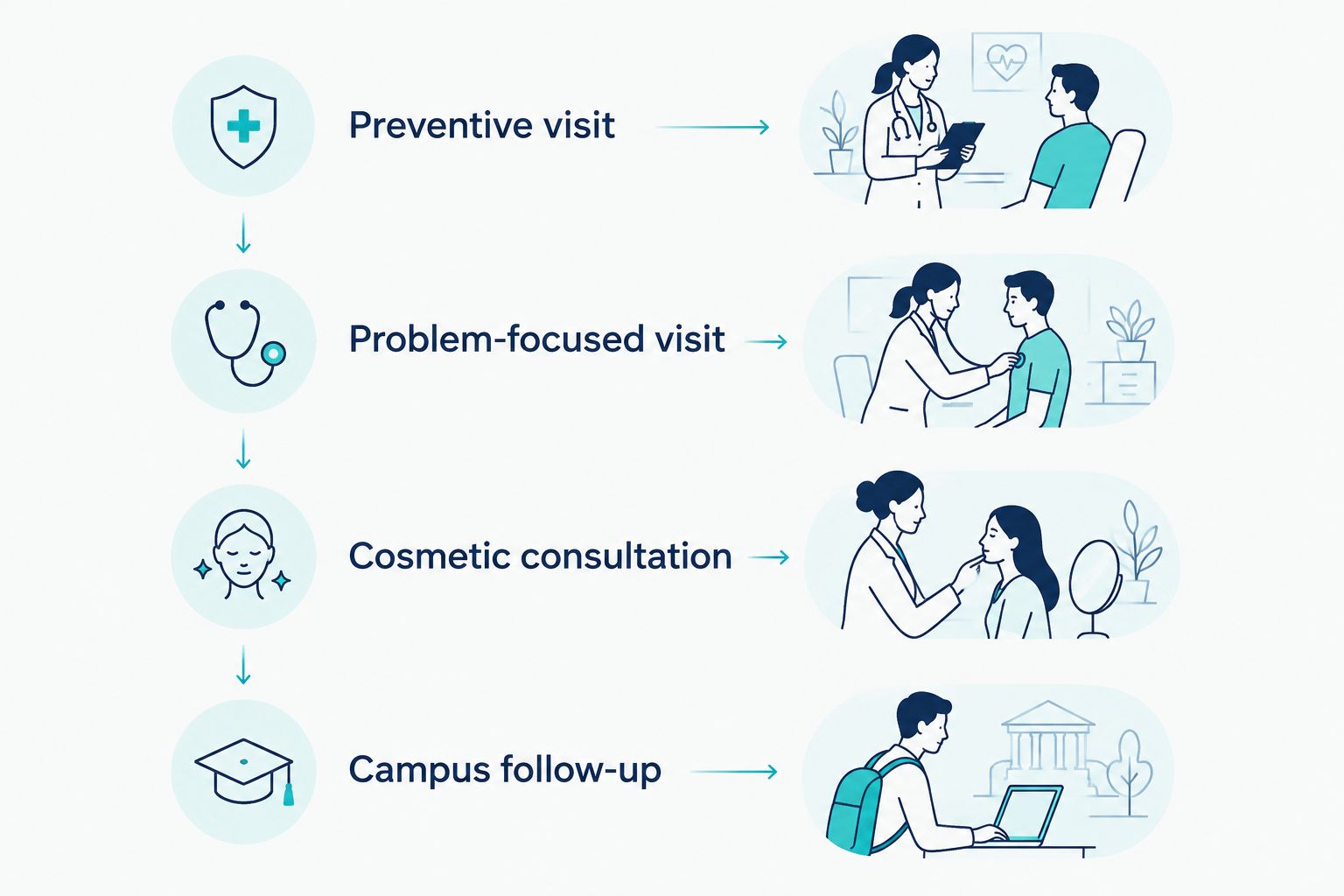
| Option | Best for | Main benefit | Key limitation |
|---|---|---|---|
| Preventive visit | Students checking what routine care is due | Reviews oral health and supports ongoing care | Does not guarantee treatment of a separate problem during the same visit |
| Problem-focused visit | Students with pain, damage, or a changed bite | Centers the examination on a specific concern | Further testing or treatment visits can be needed |
| Cosmetic consultation | Students considering changes to tooth appearance | Clarifies goals, alternatives, and maintenance | Does not replace an assessment of dental health |
| Campus follow-up | Students needing care after returning to school | Keeps care accessible during the semester | Requires coordination if another dentist began treatment |
The table is a starting point for a conversation, not a self-diagnosis tool. Describe your symptoms and let the office help identify the appropriate appointment; a routine label should never hide a painful tooth.
A local visit is useful only if the plan also works after departure. Mysmiletheory's dental care is one option for students returning to Spring; discuss your schedule and any campus-area care before deciding where to begin treatment.
Explore care for your next break
Review general, cosmetic, restorative, and family dental care in Spring before arranging your visit.
Common mistakes college students make during break
Booking the last available day at home
An appointment immediately before departure leaves little room for another visit if the examination identifies a problem. Share your full travel window when scheduling. If the last day is your only option, ask about the limits of that timing before starting treatment that needs follow-up.
Calling a painful tooth a cleaning request
A cleaning and an assessment of tooth pain have different purposes. Mention discomfort when you contact the office, even if you also want routine care. That gives the office the information needed to discuss the visit rather than discovering your main concern after you arrive.
Treating a smile change as a quick cosmetic fix
A darker tooth, new gap, or chipped edge deserves an examination before choosing whitening or another cosmetic treatment. Appearance alone does not tell you what caused the change. Explain when you noticed it, and ask about tooth health and function as well as natural-looking results.
Leaving your retainer or guard at school
An appliance is easier to assess when you bring it. Add it to your packing list before leaving campus, especially if it feels tight, loose, or uncomfortable. If you forget it, tell the dentist and discuss whether a separate assessment is needed rather than guessing about the fit.
Leaving without knowing who handles follow-up
Do not let the treatment plan stop at the edge of your break. Ask which office to call for concerns and what information a campus-area dentist needs. Save written instructions so you can find them during the semester, not just while you are sitting in the dental chair.
FAQ
What's the best dentist for college students home for break?
The best fit is a dentist who can assess your concerns and discuss follow-up around your return date. Mysmiletheory offers general, cosmetic, restorative, and family dental care in Spring for students seeking a local personal dentist.
Should I get a dental cleaning every time I come home?
Your cleaning schedule should follow your dental needs, not automatically every school break. Ask your dentist what interval is appropriate based on your oral health and previous care.
Can I finish all my dental treatment during spring break?
An examination and treatment plan determine whether care fits within your break. Tell the office your departure date and ask about additional visits before starting treatment.
What should I bring to a dentist appointment while I'm home?
Bring your medication list, relevant dental records, insurance information, and any retainer or guard you use. Include your return-to-campus date and a short list of symptoms or questions.
Should I wait until I'm home if my tooth hurts at college?
Do not wait for a school break to have persistent or worsening tooth pain assessed. Seek urgent professional assessment for facial swelling with fever, and emergency medical care for trouble breathing or swallowing.
Can I get whitening or veneers while I'm home from college?
You can discuss whitening or veneers during a cosmetic consultation, but suitability and timing require a dental assessment. Ask about alternatives, sensitivity, lasting tooth changes, and follow-up before making a decision.
Is a dentist near campus better than my dentist at home?
A campus-area dentist is easier to reach during the semester, while a home dentist supports care when you return. Choose based on where you need access and coordinate records if both offices are involved.
One last thing
Your return date belongs in the treatment plan, not just on your calendar. Before leaving your 2026 appointment, ask: what is finished, what comes next, and who do I contact from campus? Clear answers make it easier to care for your smile without carrying uncertainty back to school. You do not need a perfect schedule—you need a plan you understand.


