

Emergency dental care has no single standard cost: your total depends on the examination, any necessary X-rays, and the treatment your tooth needs. For a 2026 visit, ask whether the estimate covers only the urgent appointment or also the repair and follow-up care, because relieving pain and completing treatment are not always the same step.
- How much does emergency dental care cost? Your diagnosis, treatment, and insurance determine your personal estimate.
- An emergency examination does not necessarily include the final tooth repair; ask for an itemized treatment plan.
- Mysmiletheory offers general and restorative dental care in Spring, Texas; confirm urgent appointment arrangements directly.
- Trouble breathing or swallowing with dental swelling needs immediate emergency medical attention.
How much does emergency dental care cost?
The useful number is an itemized estimate for your tooth, not a general emergency-visit figure. An examination identifies the problem; treatment addresses it. Those are different parts of your care, and an appointment described as an emergency visit does not tell you everything included.
For local patients considering Mysmiletheory, confirm urgent appointment arrangements directly and describe your symptoms before traveling. The clinic provides general, cosmetic, restorative, and family dentistry in Spring, Texas; that service description alone does not establish emergency hours or appointment availability.
Ask the dental office to explain these parts separately:
| Part of your care | What it addresses | What to clarify |
|---|---|---|
| Urgent examination | Identifies the likely source of pain or damage | Whether the estimate includes the examination |
| Necessary X-rays | Help assess areas the dentist cannot see directly | Which images are needed and whether they are included |
| Immediate treatment | Addresses the diagnosed urgent problem | Whether treatment is temporary or definitive |
| Final repair | Restores the tooth when further treatment is needed | Whether a filling, crown, or other repair is separate |
| Follow-up care | Checks healing or completes the treatment plan | Which return appointments are part of the estimate |
Not every patient needs every item. A small fracture and an infected tooth require different decisions, so a useful estimate follows an examination rather than a guess based on symptoms alone.
Why this matters
When your tooth hurts, you want relief—not a confusing explanation of what happens next. Understanding the treatment plan helps you distinguish the care needed now from work that can be discussed after the urgent problem is addressed.
Ask what today's treatment accomplishes and what remains afterward. A temporary repair can protect a tooth without being its final restoration. Pain relief also does not prove that the underlying problem has resolved.
You deserve a plain-language explanation before agreeing to treatment. Tell the team if you feel anxious, need a pause, or want the options explained again; understanding your care is part of making an informed decision.
What can an emergency dental visit include?
The dentist starts with your symptoms and an examination, then recommends care based on the findings. Tooth pain alone cannot tell you whether you need a filling, root canal treatment, an extraction, or something else.
The comparison below explains common treatment paths. It is not a way to diagnose your own tooth or choose treatment without an examination.
| Treatment path | Best suited to | Main benefit | Limitation or trade-off |
|---|---|---|---|
| Filling or bonding | Repairable areas of decay or limited tooth damage | Repairs the affected area while preserving remaining tooth structure | Not suitable for every deep cavity or fracture |
| Crown | A restorable tooth that needs more coverage and support | Covers and protects the prepared tooth | Requires tooth preparation and does not resolve every type of damage |
| Root canal treatment | A restorable tooth with inflamed or infected inner tissue | Treats the tissue inside the tooth while keeping the tooth | A final restoration can still be needed afterward |
| Extraction | A tooth the dentist determines cannot reasonably be saved | Removes the affected tooth | Permanently removes the natural tooth and creates a separate replacement decision |
| Temporary stabilization | A problem that needs protection before further treatment | Helps manage the immediate situation | Does not necessarily complete treatment |
If a filling or bonding is appropriate
A filling or bonding repairs a localized area when enough healthy tooth remains. Ask whether the proposed repair is intended to be permanent and what you should avoid while it settles or until treatment is completed.
A visible chip does not always reveal the full extent of damage. Pain when biting, a sharp edge, or sensitivity should be described to the dentist rather than used to select a repair yourself.
If root canal treatment or a crown is recommended
Root canal treatment addresses tissue inside the tooth. A crown addresses the tooth's outer structure; these treatments serve different purposes and can be part of the same treatment plan.
For your 2026 estimate, ask whether the proposed plan includes the final restoration after root canal treatment. Also ask whether a referral is needed and which office will complete each part of your care.
If an extraction is recommended
An extraction permanently removes a tooth. Ask why the dentist recommends removal, whether saving the tooth is a reasonable alternative, and what recovery instructions apply to you.
Replacing the tooth is a separate discussion. Not every urgent visit needs to resolve that decision immediately, but you should understand whether the estimate includes only removal or any later restorative work.
Why emergency dental care costs vary
The label “emergency” describes the urgency of the problem, not a standard package of treatment. These factors explain why an individual estimate matters:
- The diagnosis: A damaged filling, deep cavity, and dental infection involve different treatment needs.
- The extent of damage: The amount of healthy tooth remaining affects which repairs are appropriate.
- The examination and imaging: The dentist selects diagnostic steps based on your symptoms and findings.
- Temporary versus completed treatment: Stabilizing a tooth and finishing its restoration can involve separate appointments.
- Referral needs: Specialist evaluation or treatment can create a separate treatment plan and estimate.
- Your insurance benefits: Deductibles, coverage rules, annual limits, and network status affect your share.
Tell the dentist about recent injuries, previous treatment on the tooth, and changes in your symptoms. That history helps the team assess the problem; it does not replace an examination.
How do I get a clear estimate before treatment?
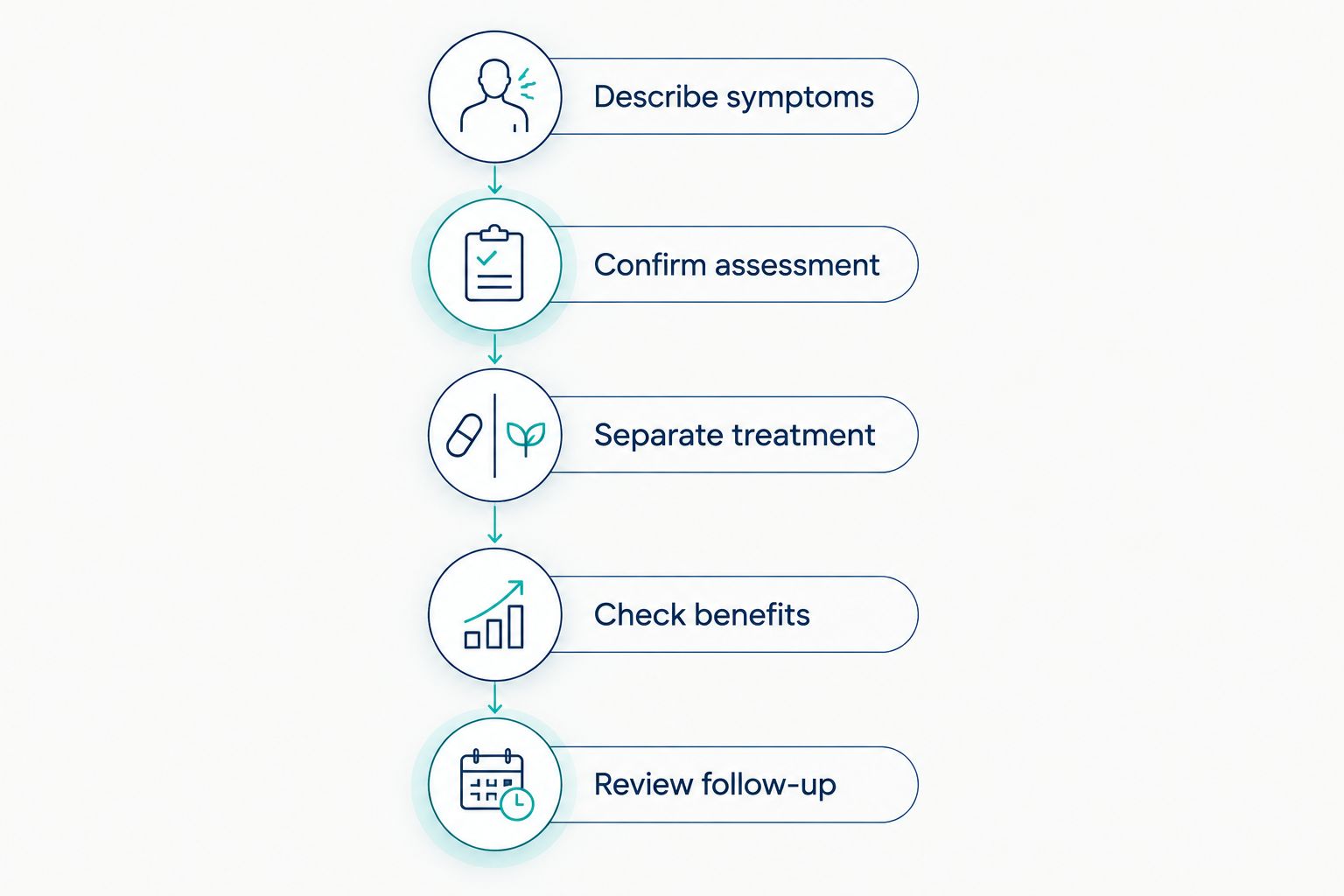
Ask for a written plan that separates the immediate visit from any later repair. You do not need dental terminology to have this conversation.
- Describe symptoms. Explain where it hurts, when it started, and whether you have swelling, bleeding, a broken tooth, or a recent injury.
- Confirm assessment. Ask what the examination includes and how the office handles any necessary X-rays.
- Separate treatment. Have the team distinguish urgent care, temporary protection, and the final restoration.
- Check benefits. Request an insurance estimate, then confirm relevant benefits with your insurer.
- Review follow-up. Ask what happens next, what remains unfinished, and which symptoms need another call.
A helpful question is: Does this estimate include everything needed to finish treating this tooth? If the answer is no, ask the team to identify the remaining steps rather than leaving them as an open-ended possibility.
You can also ask what changes the plan. Sometimes an examination or treatment reveals damage that was not apparent initially; ask how the office will explain a revised recommendation before proceeding.
Does dental insurance cover emergency dental care?
Dental insurance coverage depends on your plan and the specific services performed. An urgent appointment does not automatically make every service fully covered, and an insurance estimate is not a guarantee of payment.
For a 2026 appointment, confirm your current benefits rather than relying on a previous visit's coverage. Ask your insurer about:
- Whether the treating dentist is in your plan's network.
- Whether a deductible applies to the recommended services.
- How much of your annual benefit remains.
- Whether the proposed treatment has exclusions or waiting periods.
- Whether a specialist requires separate benefit checks.
Ask the office to distinguish the total treatment estimate from your estimated responsibility. Those figures answer different questions, especially when treatment extends beyond the urgent appointment.
If you do not have insurance, tell the office before your visit and request a direct explanation of the recommended care. Do not assume a clinic offers a particular payment arrangement; confirm its current policies directly.
Can I wait to see a dentist if my tooth hurts?
Persistent tooth pain, swelling, a broken tooth, or a lost restoration warrants a call to a dentist for guidance. Do not use pain intensity alone to decide whether a dental problem is serious. Describe the symptoms and ask how urgently you need an assessment.
Trouble breathing or swallowing, rapidly worsening facial or neck swelling, or uncontrolled bleeding needs immediate emergency medical attention. Call 911 if you have a life-threatening emergency.
A knocked-out permanent tooth also needs immediate dental attention. The American Dental Association's MouthHealthy guidance advises seeing a dentist right away, ideally within 30 minutes; handle the tooth by its crown rather than its root and do not let it dry out. Never put a knocked-out baby tooth back into its socket.
Should I go to an emergency room for tooth pain?
An emergency room is appropriate for a life-threatening problem, serious facial injury, or symptoms suggesting a spreading infection. A dentist is generally the appropriate clinician for diagnosing and repairing the tooth itself.
Medical emergency care does not necessarily complete dental treatment. Follow any discharge instructions and arrange the dental follow-up recommended by the treating clinician.
Can antibiotics replace treatment for an infected tooth?
Antibiotics do not replace dental treatment for the source of a tooth infection. A dentist determines whether medication is needed and whether the tooth requires drainage, root canal treatment, extraction, or another approach.
Do not take leftover antibiotics or someone else's prescription. Tell the treating clinician about allergies, medications, pregnancy, and relevant health conditions before receiving treatment.
What should I prepare before calling?
Have a short symptom summary ready. Explain when the problem began, whether it followed an injury, and whether swelling, fever, bleeding, or difficulty swallowing is present.
For your 2026 appointment, gather your current insurance details, medication list, allergies, and any available information about previous work on the tooth. Do not delay urgent care while trying to collect records.
If comfort is a concern, say so when you call. Ask the office to explain the visit and discuss how your needs can be accommodated; do not assume a particular comfort measure or sedation service is offered.
Mysmiletheory fits Spring, Texas, patients seeking a personal dentist for general and restorative dental care. Contact the clinic directly to discuss your concern and confirm the appropriate next step, without assuming emergency scheduling or a specific treatment before assessment.
Discuss your dental concern
Learn about the clinic and contact the team to ask about your symptoms and the next step.
FAQ
How much does emergency dental care cost in 2026?
Emergency dental care has no single standard cost; your examination, necessary X-rays, treatment, and insurance determine your estimate. Ask for an itemized plan that separates immediate care from any final repair.
Does an emergency dental examination include treatment?
An emergency dental examination does not necessarily include treatment. Ask whether the estimate covers diagnosis only, immediate treatment, or the complete repair.
Can I get an emergency dental estimate over the phone?
You can ask what the initial assessment includes, but a complete treatment estimate depends on the dentist's findings. Describe your symptoms and request a written plan after the examination.
Will dental insurance cover an emergency root canal?
Coverage for an emergency root canal depends on your dental plan. Confirm deductibles, remaining benefits, network status, and whether the final restoration is included in the treatment estimate.
Should I wait until my toothache gets worse?
Do not wait for a toothache to worsen before contacting a dentist. Persistent pain, swelling, or a broken tooth needs guidance; trouble breathing or swallowing requires immediate emergency medical attention.
Is pulling a tooth always the best emergency option?
Pulling a tooth is not always the best emergency option. The dentist must assess whether the tooth can be saved and explain the benefits and limitations of appropriate treatments.
Does Mysmiletheory offer emergency appointments?
Confirm emergency appointment arrangements directly with Mysmiletheory. The clinic provides general, cosmetic, restorative, and family dental care in Spring, Texas; contact the team to discuss your symptoms and next steps.
One last thing
A tooth that stops hurting is not necessarily a tooth that has healed. Symptoms can change while the underlying problem remains, so keep the follow-up your dentist recommends even if you feel better.
Before leaving an urgent visit, ask what has been completed, what remains, and which symptoms mean you should call again. That short conversation helps you leave with a treatment plan—not just temporary relief.


