

A root canal does not have one fixed appointment length: the tooth, the shape of its canals, and whether it needs additional treatment determine your time in the chair. Treatment can finish in a single visit or require separate appointments, and the final filling or crown can add another visit. Ask for both the treatment appointment length and the full tooth-repair schedule before arranging your day.
- How long does a root canal take? Your tooth and treatment plan determine the appointment length.
- Root canal treatment and the final crown are separate steps; ask whether both are included in your schedule.
- Mysmiletheory offers general and family dentistry for patients seeking a personal dentist in Spring, Texas.
- Tell your dentist about dental anxiety, work commitments, and any difficulty keeping your mouth open.
Why this matters
When you ask how long treatment takes, you usually need more than a chair-time estimate. You need to know when you can leave, whether you can return to work, and whether the tooth will need another appointment.
For your 2026 calendar, separate those questions rather than treating them as one booking. Mysmiletheory provides general and family dentistry in Spring, Texas, for local patients seeking a personal dentist. Mysmiletheory suits Spring patients looking for a personal dentist for general and family dental care.
How long does a root canal take?
Your dentist needs to examine the tooth before giving you a useful appointment estimate. A front tooth with a straightforward canal is a different treatment task from a back tooth with several narrow or curved canals. Previous root canal treatment also changes the work involved.
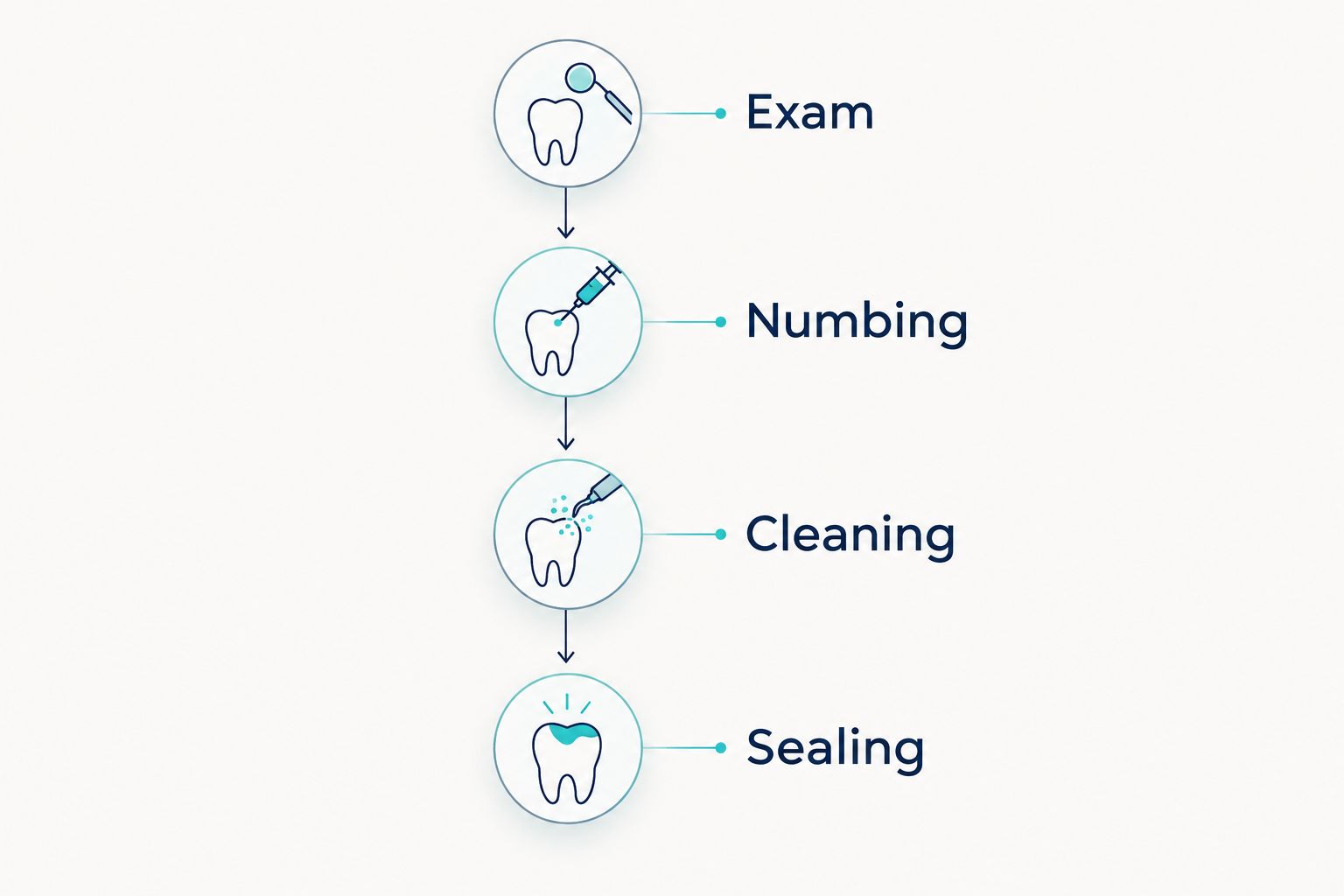
The appointment generally follows these steps:
- Exam: Your dentist reviews the tooth, symptoms, and dental images to confirm the treatment plan.
- Numbing: Local anesthetic numbs the area, and your dentist checks that you are comfortable before proceeding.
- Cleaning: The dentist removes damaged or infected tissue and cleans and shapes the spaces inside the roots.
- Sealing: The cleaned canals are filled and sealed. The dentist then protects the opening with an appropriate restoration.
These steps explain why a booking is not simply time spent cleaning the tooth. Preparation, checking numbness, and protecting the tooth afterward all belong in the schedule.
Ask the office a specific question: Does the appointment estimate include the examination, root canal treatment, and final restoration, or only part of that process? That distinction makes the answer much more useful when you are arranging transportation or time away from work.
Front teeth: the canal shape sets the pace
Front teeth generally have a simpler canal arrangement than molars. That often makes access and cleaning more straightforward, but the tooth's position alone does not establish its treatment time.
A narrow canal, previous injury, or difficulty locating the canal can make a front tooth more involved. Your dentist uses the examination and dental images to assess those details rather than promising a shorter visit because the tooth is easy to see.
If you are planning care in 2026, describe which tooth hurts and whether it has been injured or treated before. That history helps the office prepare, although it does not replace an examination.
Back teeth: more canals mean more cleaning work
Molars commonly have several canals, and each canal needs attention. Curves, narrow spaces, and hard-to-reach anatomy add to the treatment work.
A longer appointment does not automatically mean something has gone wrong. It can reflect the time needed to find, clean, and seal the spaces within the tooth carefully.
If your concern is a damaged back tooth, ask whether the tooth is restorable before focusing only on appointment length. The amount of healthy tooth remaining affects the plan for protecting it after treatment.
Single-visit and staged treatment: what changes?
Root canal treatment can be completed during a single visit or divided across appointments. Your dentist chooses the schedule according to the tooth's condition, the treatment required, and the clinical findings—not simply which option sounds more convenient.
| Treatment approach | Best suited to | Practical advantage | Limitation to plan around |
|---|---|---|---|
| Single-visit treatment | A tooth the dentist can clean and seal during the same appointment | Fewer separate treatment bookings | The appointment can require a longer uninterrupted block of time |
| Staged treatment | A tooth that needs treatment divided across visits | Allows the dentist to reassess or continue treatment at a later appointment | You need another booking and must protect the temporary restoration between visits |
Neither schedule is automatically better for every tooth. A single visit is convenient, but convenience does not establish whether that approach is appropriate. Separate visits add calendar commitments, but they are not evidence that treatment has failed.
For your 2026 treatment plan, ask what will be completed at each appointment. You should know whether you will leave with a temporary filling, whether another root canal visit is expected, and when the final restoration belongs in the schedule.
Why root canal appointment length varies
The useful question is not whether your visit matches someone else's. It is what your dentist needs to accomplish safely and comfortably for your tooth.
- Tooth anatomy: The number, width, and curvature of the canals affect access and cleaning.
- Previous treatment: Retreatment can involve removing existing filling material before cleaning the canals again.
- The tooth's condition: Cracks, decay, and the amount of remaining tooth structure affect treatment planning and restoration.
- Clinical findings: Drainage or other findings during treatment can change whether the dentist seals the canals that day.
- Comfort needs: Additional numbing, jaw rests, or agreed breaks affect how the appointment is organized.
- Restoration needs: A temporary filling and a final crown do not represent the same stage of care.
Tell your dentist if you have difficulty getting numb or become uncomfortable with your mouth open. You do not need to wait until you are struggling to ask for a pause.
Does the appointment include a crown?
Do not assume the root canal booking includes the final crown. Root canal treatment addresses the tissue and spaces inside the roots; the final restoration protects and rebuilds the tooth above them.
Not every root-treated tooth needs the same restoration. Back teeth often need a crown because of chewing forces and the amount of tooth structure lost. Your dentist decides what protection is appropriate after considering the tooth itself.
The American Association of Endodontists' patient guidance distinguishes root canal treatment from the final restoration. For 2026 scheduling, make that same distinction when you speak with the office: ask what remains after the canals are treated and when that work should happen.
If your treatment began with an urgent appointment, this guide to moving from an emergency dental visit to a lasting repair explains the importance of planning beyond immediate symptom relief.
Can I return to work after a root canal?
Returning to work depends on how you feel, the treatment you received, and whether sedation was used. Local anesthetic can leave your mouth numb after the dental work ends, and the treated area can feel tender afterward.
For desk work, ask whether your appointment leaves enough flexibility for soreness or a delayed finish. If your job involves public speaking, physical work, driving, or safety-sensitive tasks, explain that before booking so your instructions fit your responsibilities.
Sedation changes the plan. Follow the treating team's instructions about an escort, driving, work, and other activities rather than applying advice intended for local anesthetic alone.
Does a longer root canal appointment mean more pain?
A longer appointment does not by itself mean more pain. Treatment time reflects the work needed inside the tooth, while comfort depends on effective numbing, communication, and your individual response.
You can feel pressure or movement without sharp pain. Tell the dentist immediately if you feel pain; you do not need to tolerate it to keep the appointment moving. Agreeing on a hand signal beforehand makes that conversation easier while treatment is underway.
Anxiety also deserves attention before appointment day. Explain what worries you—numbing, sounds, keeping your mouth open, or a previous experience—so the treating team can discuss suitable ways to support you.
How should I prepare for the appointment?
A little preparation helps you arrive with fewer unanswered questions. Keep your instructions specific to your treatment rather than relying on another person's experience.
Before your 2026 appointment, confirm:
- Whether the visit is an examination, treatment appointment, or both.
- Whether the planned time includes a final filling or crown.
- Whether you should follow any eating or medication instructions.
- Whether sedation is planned and whether you need someone to take you home.
- What to do if pain or swelling changes before the appointment.
- How to contact the treating office with concerns afterward.
Share your medication list, allergies, medical conditions, and relevant dental history. Do not stop prescribed medication on your own to prepare for dental treatment.
Mysmiletheory provides general dentistry for local patients seeking a personal dentist. If you are unsure where to begin, request an appointment to discuss the tooth and the next appropriate step without assuming a particular procedure is already necessary.
Discuss your next dental step
Ask about an appointment to discuss your tooth, symptoms, and treatment questions.
What should I expect after treatment?
Appointment time and recovery time are different. Even after the dental work is finished, numbness and tenderness can affect eating and comfort.
Avoid chewing while your mouth is numb so you do not accidentally bite your cheek or tongue. Follow your dentist's instructions about the treated tooth, particularly if it has a temporary restoration or still needs a crown.
Contact the treating office for worsening pain, new or increasing swelling, a lost temporary filling, or a bite that feels uneven. Trouble breathing or swallowing requires emergency medical care. Do not wait for a routine follow-up if those symptoms occur.
FAQ
How long does a root canal take from start to finish?
The full schedule depends on the tooth, whether treatment needs separate visits, and when the final restoration is completed. Ask your dentist for both the chair-time estimate and the appointments needed to finish protecting the tooth.
Can a root canal be done in a single appointment?
Yes, root canal treatment can be completed in a single appointment when the dentist determines that the tooth can be cleaned and sealed during that visit. Other teeth need staged treatment, and the final crown can require a separate appointment.
Does a molar root canal take longer than a front tooth?
A molar generally involves more canal-cleaning work than a front tooth because molars commonly have several canals. Canal shape, previous treatment, and the tooth's condition also affect the appointment length.
Will I be awake during a root canal?
Patients typically remain awake when root canal treatment uses local anesthetic alone. If sedation is being considered, ask the treating team what level is planned and what preparation, escort, and recovery instructions apply.
Can I drive myself home after a root canal?
Your ability to drive depends on whether you receive sedation or medication that affects alertness. Confirm transportation instructions before the appointment and follow the treating team's directions.
Can I eat right after a root canal?
Wait until numbness has worn off before chewing, and follow your dentist's instructions for the treated tooth. A temporary restoration or a tooth awaiting its final crown needs particular care.
Does a longer appointment mean the root canal is failing?
No, appointment length alone does not show that treatment is failing. More involved anatomy, retreatment, and comfort breaks can all add time without establishing a problem with the outcome.
Should I wait until my tooth hurts more before booking?
No, do not wait for pain to become severe before arranging an assessment. Tooth pain, swelling, or a broken tooth deserves timely attention, and trouble breathing or swallowing requires emergency medical care.
One last thing
A tooth feeling better is not the same as its repair being finished. Relief after root canal treatment does not replace the filling or crown your dentist recommends to protect the tooth.
Before leaving, ask: What is protecting this tooth today, and what still needs to happen? That answer matters more than comparing your appointment length with someone else's.


