
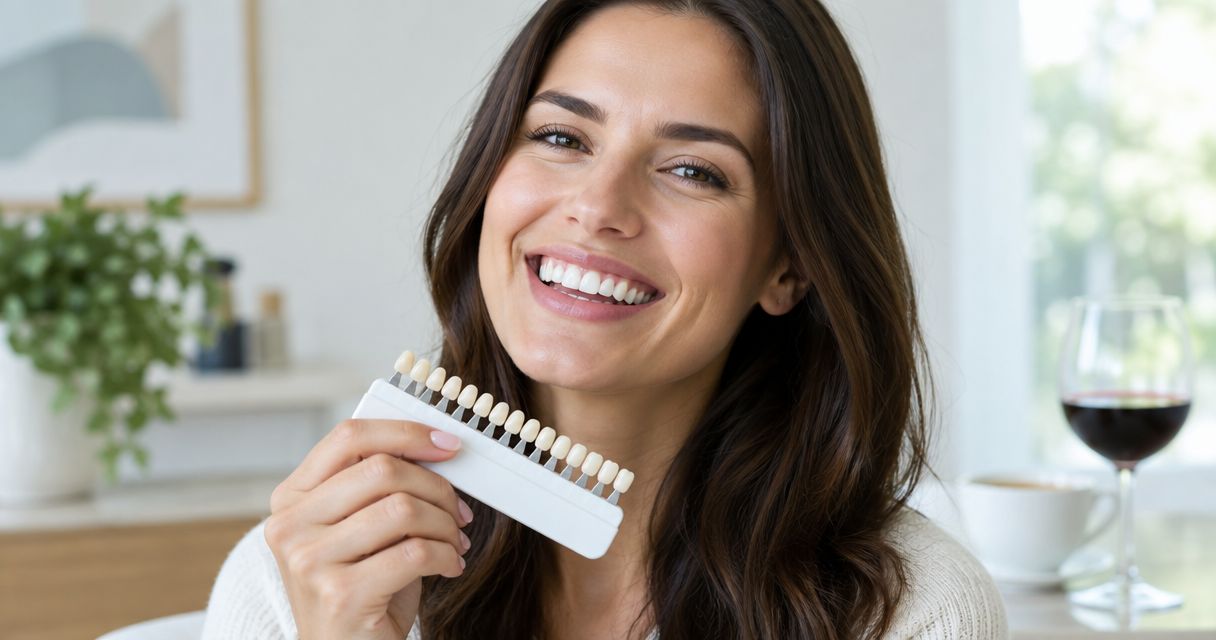
Best overall: dentist-supervised whitening for healthy natural teeth with coffee or wine discoloration. Best for surface buildup: professional cleaning. Best for mild stains at home: whitening strips used as directed. This 2026 guide compares those choices with bonding and veneers, and explains when to discuss your smile with Mysmiletheory.
- The best treatment for stained teeth depends on whether discoloration is surface buildup, tooth color, or a restoration.
- Professional cleaning removes surface deposits; whitening changes the color of natural teeth.
- Bonding and veneers cover discoloration but involve more maintenance and treatment than whitening.
- Mysmiletheory offers general and cosmetic dentistry for Spring patients seeking a personal dentist.
Why this matters
Coffee and red wine can leave pigments on your teeth, but a darker smile does not always need stronger whitening. Surface deposits, natural tooth color, existing dental work, and changes inside a tooth require different approaches. Choose the treatment after identifying the cause, not before.
A single tooth that suddenly looks darker deserves a dental examination, especially after an injury or alongside pain. Do not assume every dark area is a drink stain. Cavities and damaged teeth need care rather than cosmetic coverage alone.
Mysmiletheory provides general, cosmetic, restorative, and family dentistry in Spring, Texas. That makes a conversation about tooth health and appearance a natural starting point, without committing you to a particular treatment.
What makes the best treatment for stained teeth?
The most useful comparison in 2026 starts with what your teeth need, rather than which treatment promises the brightest shade.
- Stain location: Surface deposits respond differently from discoloration within a tooth.
- Tooth health: Decay, gum problems, cracks, and exposed roots need attention before cosmetic treatment.
- Existing dental work: Whitening does not lighten crowns, veneers, or tooth-colored fillings the way it lightens natural teeth.
- Sensitivity: Your comfort matters when selecting a whitening product and deciding how to use it.
- Amount of tooth alteration: Cleaning and whitening do not require the tooth preparation that some veneers require.
- Maintenance: Every option still needs daily cleaning and attention to habits that contribute to staining.
Bring one clear goal to your appointment: removing brown deposits, brightening an overall yellow tone, or improving a particular tooth. Those are different goals. Naming yours makes the treatment discussion more useful.
Stained-teeth treatments at a glance
| Treatment | Best for | Standout feature | Key limitation |
|---|---|---|---|
| In-office whitening | Natural teeth needing supervised color change | Whitening applied under professional supervision | Can cause temporary sensitivity; does not whiten restorations |
| Professional cleaning | Visible surface stain and hardened buildup | Removes deposits that whitening cannot remove | Does not change the underlying tooth shade |
| Dentist-supervised take-home whitening | Gradual whitening with professional guidance | Treatment instructions tailored to your dental situation | Requires consistent use and careful adherence to instructions |
| Over-the-counter whitening strips | Mild, straightforward discoloration on healthy natural teeth | At-home whitening without a custom tray | Fit and coverage are not customized |
| Dental bonding | A localized color problem with a small shape flaw | Tooth-colored resin can cover an area and adjust its shape | Resin can stain or chip and need repair |
| Dental veneers | Persistent discoloration combined with broader appearance concerns | Covers the visible front surface of selected teeth | Often involves irreversible tooth preparation |
1. In-office whitening: best for professionally supervised brightening
In-office whitening uses a bleaching agent to lighten natural teeth under dental supervision. It suits coffee and wine discoloration when the teeth and gums are healthy and the concern is tooth color rather than removable deposits.
The dentist first needs to distinguish stains from dental problems and account for existing fillings or crowns. Professional supervision does not guarantee a particular shade, and natural-looking results do not require choosing the brightest possible color.
In-office whitening pros:
- Professional assessment helps identify problems that should be treated first.
- The dental team manages application and protects surrounding tissues.
- Treatment focuses on changing natural tooth color without covering the tooth.
In-office whitening cons:
- Temporary tooth sensitivity or gum irritation can occur.
- Existing restorations do not whiten along with natural teeth.
Best for: People who want professional oversight during whitening rather than applying the treatment themselves.
Ask what change is realistic for your starting shade and whether visible dental work will match afterward. If you already have sensitive teeth, say so before treatment begins.
Verdict: Choose in-office whitening when tooth health, restoration matching, and sensitivity have been assessed.
2. Professional cleaning: best for surface stains and buildup
Professional cleaning removes plaque, hardened deposits, and some external staining. Polishing can help remove surface marks left by drinks, but it does not bleach the underlying tooth color.
This is the right first discussion when you notice rough deposits or staining around areas that are difficult to clean. Whitening gel is not a substitute for removing hardened buildup.
Professional cleaning pros:
- Addresses deposits rather than trying to bleach over them.
- Can improve the appearance of externally stained teeth without whitening agents.
- Supports routine oral health care as well as appearance.
Professional cleaning cons:
- Will not change natural yellow tones or discoloration inside a tooth.
- New surface stains can develop if the contributing habits continue.
Best for: People whose main concern is surface staining accompanied by plaque or hardened deposits.
You do not need to decide on whitening before seeing how your teeth look after appropriate cleaning. Your clean, natural shade gives you a clearer starting point for any cosmetic decision.
Verdict: Choose cleaning first when deposits are part of the problem; reassess the remaining color afterward.
3. Take-home whitening: best for gradual treatment with guidance
Dentist-supervised take-home whitening uses a prescribed whitening approach outside the dental office. Depending on the treatment, that can include trays and specific instructions for applying the whitening agent.
Its main distinction is guidance, not a promise of a particular result. You need to follow the prescribed amount, application schedule, and advice about sensitivity rather than adding extra treatment on your own.
Dentist-supervised take-home whitening pros:
- Offers professional guidance while you apply treatment at home.
- Allows questions about sensitivity, application, and uneven color.
- Provides a structured alternative to choosing products without an assessment.
Dentist-supervised take-home whitening cons:
- Requires consistent use according to the treatment instructions.
- Sensitivity and gum irritation remain possible.
Best for: People comfortable following an at-home routine who still want a dentist involved in the decision.
Discuss any front-tooth fillings before starting. A lighter natural tooth beside an unchanged filling can create a contrast that was less noticeable before whitening.
Verdict: Choose supervised take-home whitening when you prefer gradual treatment and can follow the instructions consistently.
4. Whitening strips: best for mild, uncomplicated stains
Over-the-counter whitening strips hold a whitening agent against the teeth. They can lighten natural teeth, but they do not remove hardened deposits or resolve decay, cracks, or an unexplained dark tooth.
Use the product exactly as labeled. More frequent application or combining whitening products is not a sensible shortcut to a healthier-looking smile.
Whitening strips pros:
- Offer a straightforward at-home application method.
- Do not require tooth preparation or a permanent covering.
- Can address mild discoloration on natural teeth.
Whitening strips cons:
- Coverage depends on how the strip fits your teeth.
- Can cause sensitivity or irritation, and will not whiten restorations.
Best for: Adults with healthy natural teeth, mild discoloration, and no unresolved sensitivity or dental concerns.
If a strip overlaps your gums or misses an area you want to whiten, do not improvise a stronger application. Stop and ask a dentist when irritation or significant sensitivity occurs.
Verdict: Choose strips only for straightforward staining; skip self-treatment when the cause or tooth health is uncertain.
5. Dental bonding: best for a localized stain with a small shape flaw
Dental bonding places tooth-colored resin on a tooth to improve its appearance. It can cover a localized discolored area while also addressing a small chip or shape concern.
Bonding changes what you see by covering the area, not by bleaching it. That distinction matters if your main concern is simply an overall darker shade across otherwise healthy teeth.
Dental bonding pros:
- Can address a localized color and shape concern together.
- Often requires less tooth alteration than veneers.
- Resin can be repaired when appropriate.
Dental bonding cons:
- Resin can pick up stains, including from staining drinks.
- Bonding can chip and need maintenance or replacement.
Best for: A specific tooth or small area where discoloration accompanies a minor appearance flaw.
Ask how the resin shade will fit the rest of your smile. If you are considering whitening too, discuss the sequence before bonding because the resin will not lighten afterward like natural enamel.
Verdict: Choose bonding for a focused color-and-shape correction, not as the default for an entirely stained smile.
6. Dental veneers: best for persistent color and broader appearance concerns
Veneers cover the front surfaces of selected teeth. They can address discoloration together with concerns about shape or proportions, but they involve a different commitment from cleaning or whitening.
Porcelain veneers resist staining, yet the surrounding teeth and veneer edges still need care. Veneers are not a reason to stop protecting the teeth underneath them.
Dental veneers pros:
- Can cover discoloration that whitening does not adequately address.
- Can change visible tooth shape as well as color.
- Allow a coordinated appearance across selected teeth.
Dental veneers cons:
- Often require removal of enamel, making treatment irreversible.
- Can chip or need replacement and do not prevent decay.
Best for: People with persistent discoloration plus shape or proportion concerns who understand the long-term commitment.
Ask what tooth preparation is necessary and what maintenance involves. For coffee stains alone, it makes sense to discuss cleaning and whitening before covering healthy teeth.
Verdict: Consider veneers for combined appearance concerns; skip them as the automatic first choice for drink stains.
How these treatments are ranked
The ranking prioritizes matching the treatment to the stain, preserving tooth structure, managing sensitivity, and understanding maintenance. It does not treat a more involved procedure as a better procedure.
Cleaning moves to the top when deposits are the main concern. Whitening leads when healthy natural teeth need a color change. Bonding and veneers become relevant when coverage or shape correction is part of the goal.
Which treatment should you choose?
For a 2026 treatment decision, start with the least involved option that addresses the actual cause. The default for healthy natural teeth with beverage-related discoloration is dentist-supervised whitening; the default for stained deposits is cleaning.
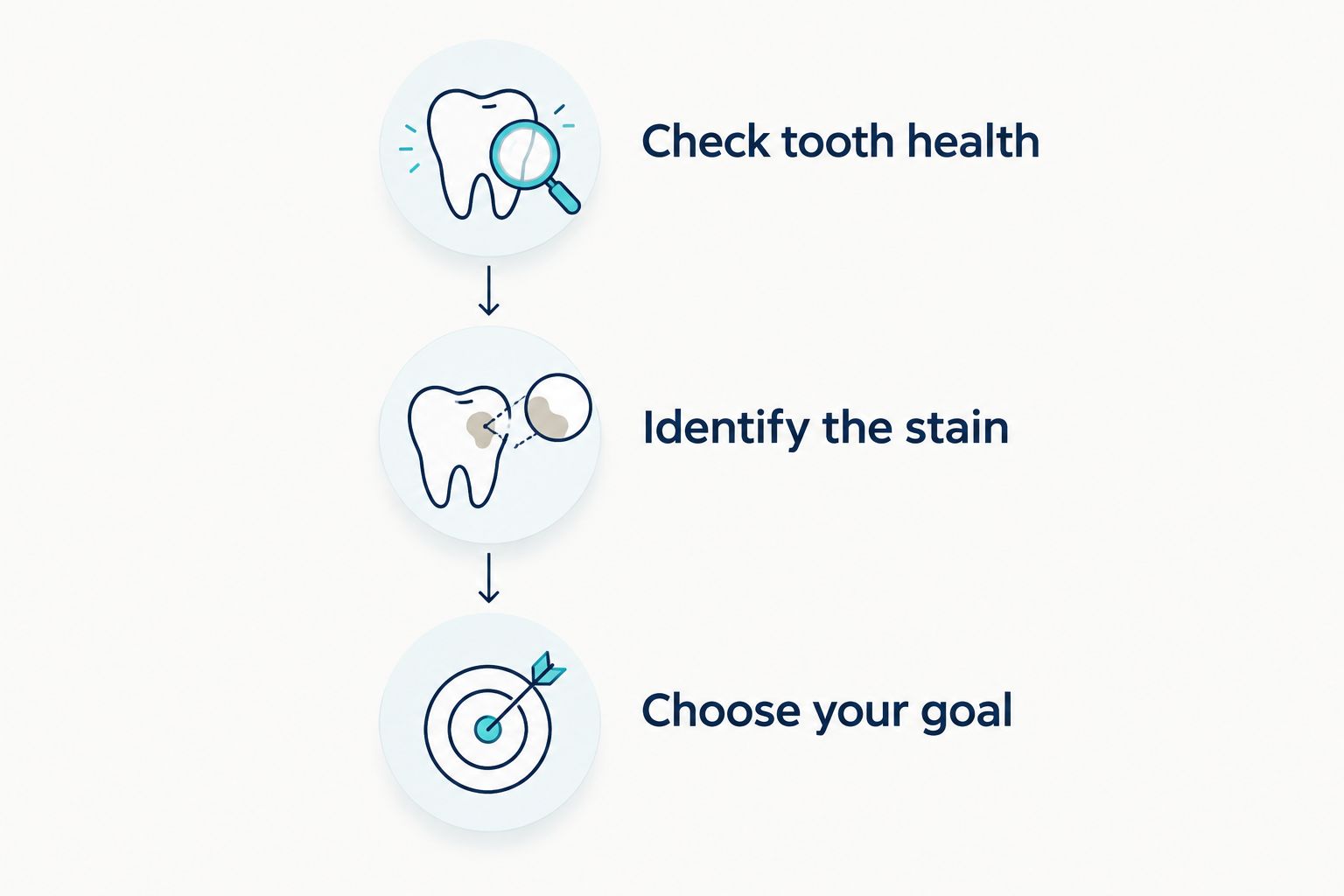
Use this appointment sequence:
- Check tooth health: Mention pain, sensitivity, injury, and any tooth that has changed color on its own.
- Identify the stain: Ask whether the concern is a removable deposit, natural tooth color, or existing dental work.
- Choose your goal: Decide whether you want stain removal, overall brightening, or a color-and-shape change.
Mysmiletheory is best suited to Spring patients seeking a personal dentist for general and cosmetic dentistry. Bring your questions and describe what bothers you; you do not need to arrive knowing which procedure to request.
Start with a conversation
Discuss stained teeth and your cosmetic goals with a dental clinic in Spring, Texas.
Keeping your smile comfortable after treatment
Your 2026 stain-care routine should protect your teeth, not just their color. Brush for 2 minutes per session, complete 2 brushing sessions per day with fluoride toothpaste, and clean between your teeth 1 time per day.
Rinse with water after coffee or wine. Avoid forceful scrubbing and do not use lemon juice, charcoal, or abrasive homemade mixtures as whitening substitutes; acid and abrasion can damage tooth surfaces.
Tell your dentist about sensitivity rather than repeatedly pushing through it. The next step depends on the cause, and a stronger whitening routine is not automatically the answer.
FAQ
What's the best treatment for stained teeth from coffee and wine?
Dentist-supervised whitening is a leading choice for beverage-related discoloration on healthy natural teeth. Professional cleaning comes first when surface deposits are the main cause, while a single unexplained dark tooth needs an examination.
Can a dental cleaning remove coffee stains?
A dental cleaning can remove some external coffee stains and hardened deposits. It does not bleach the natural tooth shade or change discoloration inside a tooth.
Is whitening better than veneers for stained teeth?
Whitening is the less involved choice when healthy natural teeth only need a color change. Veneers become relevant when persistent discoloration is combined with shape concerns and you accept the tooth preparation and maintenance involved.
Will whitening change the color of my crowns or fillings?
Whitening does not lighten crowns, veneers, or tooth-colored fillings the way it lightens natural teeth. Discuss visible restorations before treatment so you understand the possibility of a shade mismatch.
What should I do if whitening makes my teeth sensitive?
Stop using the whitening product and ask your dentist for guidance if it causes significant sensitivity. Do not increase application time or combine products to compensate for an interrupted routine.
Can I still drink coffee after whitening?
Coffee can contribute to new staining after whitening. Follow your treatment instructions, rinse with water after drinking, and maintain daily cleaning rather than assuming the result is permanent.
Should I whiten one tooth that suddenly turned dark?
A tooth that suddenly turns dark needs a dental examination before whitening. Injury, decay, or changes inside the tooth require a different assessment from ordinary coffee or wine staining.
How do I choose a stained-teeth treatment in 2026?
Choose a stained-teeth treatment in 2026 by identifying the cause and checking tooth health first. Compare cleaning, whitening, and cosmetic coverage according to your sensitivity, existing restorations, and appearance goals.
One last thing
Whitening can make an old front-tooth filling more noticeable because your natural tooth changes color while the filling does not. Discuss the order of treatment before changing the shade, especially if bonding or replacement dental work is also part of your plan.
For your 2026 conversation with Mysmiletheory, bring a simple description of the result you want: cleaner-looking teeth, a lighter natural shade, or a particular tooth that blends in better. That is enough to start a thoughtful discussion.


