Best overall for crooked tooth positions: orthodontic treatment with clear aligners or braces. Best for small uneven edges: dental bonding. Best for broader changes to visible tooth shape: veneers. The best cosmetic treatment for crooked teeth depends on whether your teeth need to move or simply look more even; this 2026 guide explains the difference without asking you to choose treatment before an exam.
- The best cosmetic treatment for crooked teeth depends on tooth position, tooth shape, and bite health.
- Clear aligners and braces move teeth; dental bonding and veneers change their appearance.
- Veneers suit selected cosmetic concerns, but they do not correct the underlying position of tooth roots.
- Mysmiletheory provides general and cosmetic dental care for local patients in Spring, Texas.
Why this matters
A crooked-looking smile does not always mean you need to straighten every tooth. A chipped corner, an uneven edge, or a tooth that is smaller than its neighbor can create an uneven appearance even when tooth positions are acceptable. Actual crowding or a rotated tooth calls for a different conversation.
Choose treatment around the cause, not just the photograph. Covering a tooth changes its appearance; moving a tooth changes its position. Your dentist also needs to check your gums, existing dental work, and the way your teeth meet before recommending either approach.
For patients looking for local general and cosmetic dentistry, Mysmiletheory is a dental clinic in Spring, Texas. Start the conversation with what bothers you about your smile and what you want to preserve.
What makes the best treatment for crooked teeth?
Use these criteria to compare your options in 2026:
- Tooth position: Does treatment move crowded or rotated teeth, or only change how they look?
- Tooth shape: Can it address the uneven edges, proportions, or surface appearance that concern you?
- Tooth strength: Is the tooth healthy enough for a cosmetic change, or does it need protection first?
- Healthy tooth preservation: How much natural tooth structure needs to change, and is that change permanent?
- Daily upkeep: Will you need removable appliances, retainers, repairs, or particular cleaning habits?
- Bite compatibility: Will the proposed result work with the way your upper and lower teeth meet?
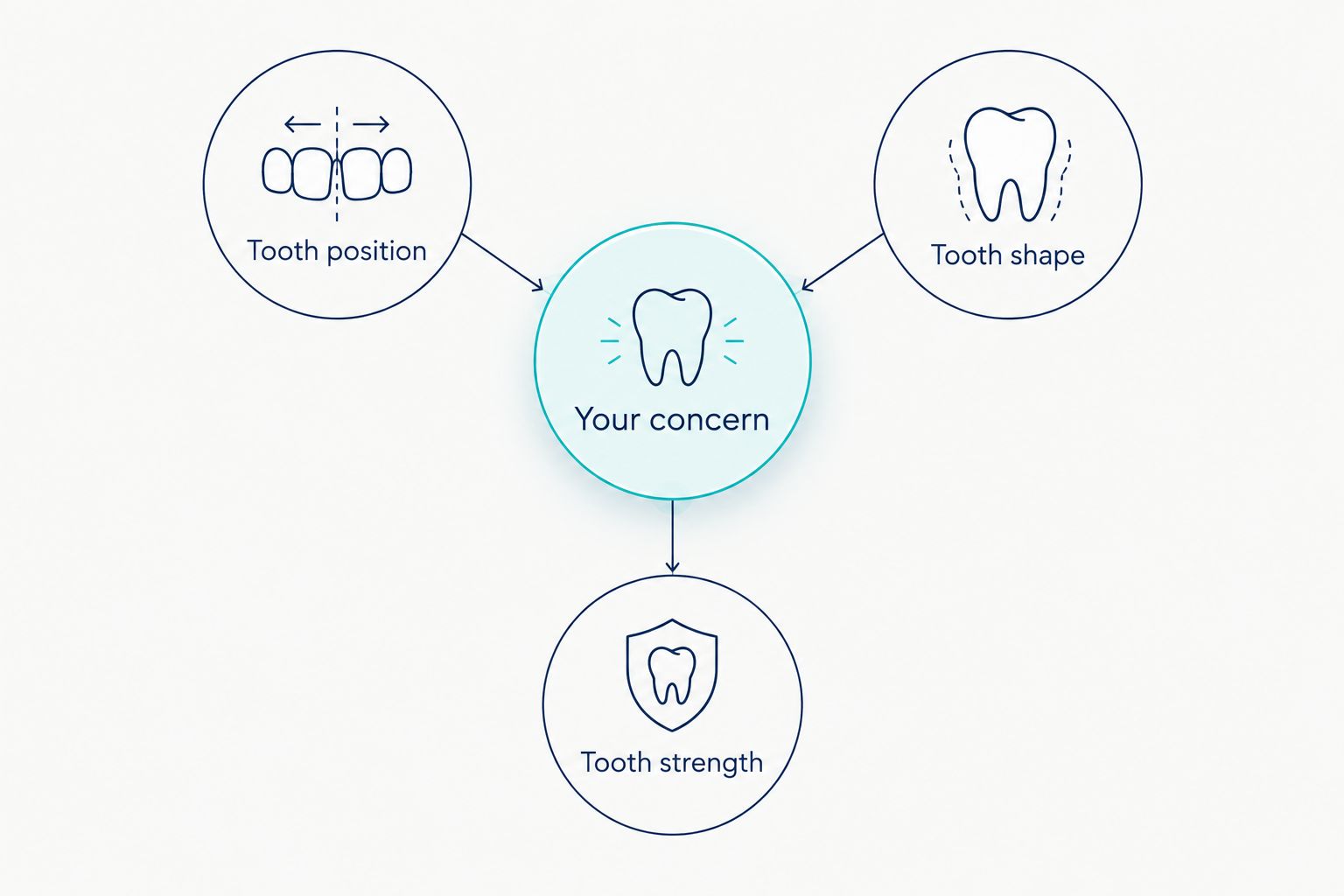
A useful starting point is to separate tooth position, tooth shape, and tooth strength. These concerns can overlap, but they are not interchangeable. A treatment that improves the outline of a tooth does not necessarily address crowding or protect a weakened tooth.
Cosmetic treatments at a glance
This 2026 comparison ranks treatments by the problem they address, not by how dramatically they change a smile.
| Treatment | Best for | Standout feature | Key limitation |
|---|---|---|---|
| Clear aligners or braces | Crowding, rotation, or misplaced teeth | Move teeth into different positions | Require a treatment plan and ongoing retention |
| Dental bonding | Small shape differences and chipped edges | Adds tooth-colored material to reshape a tooth | Can stain, chip, or need repair |
| Veneers | Selected visible shape and color concerns | Change the front appearance of teeth | Often involve permanent enamel removal |
| Tooth contouring | Minor rough or uneven edges | Smooths small areas of enamel | Cannot move teeth or replace missing structure |
| Dental crowns | Uneven teeth that also need structural protection | Cover and restore a weakened tooth | Require more tooth preparation than a small cosmetic repair |
1. Clear aligners or braces: best for actual tooth misalignment
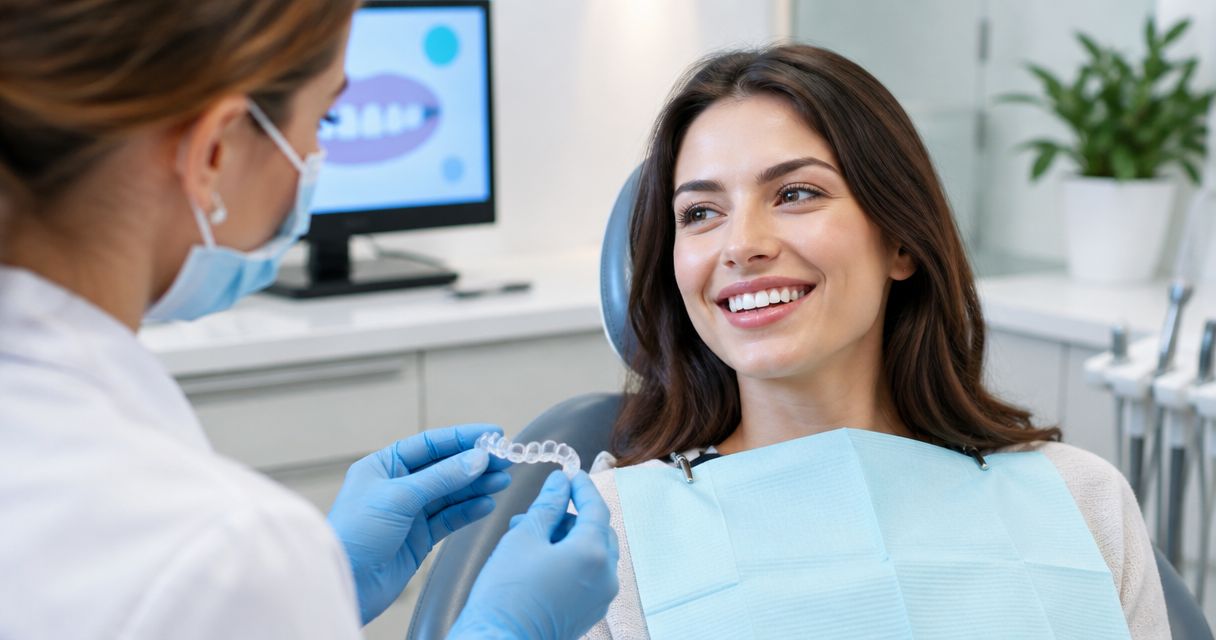
Clear aligners and braces move teeth rather than disguising their position. They belong at the top of the discussion when the main issue is crowding, rotation, spacing, or a bite that needs correction.
Clear aligners use removable trays; braces use attached brackets and wires. The suitable approach depends on the movement needed and your ability to follow the treatment plan. Neither option should be selected from appearance alone.
Clear aligners or braces pros:
- Address tooth position instead of covering it.
- Can address bite concerns as part of an appropriate orthodontic plan.
- Do not require veneers solely to make crooked teeth appear straighter.
- Allow cosmetic finishing to be considered after teeth move.
Clear aligners or braces cons:
- Treatment involves appointments, cleaning responsibilities, and adjustments to daily habits.
- Removable aligners depend on consistent wear as directed.
- Retainers are needed afterward to help maintain tooth positions.
Best for: Teeth that are genuinely crowded, rotated, or out of position, particularly when your bite also needs attention.
Ask whether your concern comes from tooth position or tooth shape. A tooth can move into a better position and still have a chipped edge or an unusual outline. That does not mean orthodontic treatment failed; it means movement and reshaping solve different problems.
Verdict: Choose an orthodontic assessment first when crooked tooth positions are the main concern. Do not assume veneers are a substitute for moving teeth.
2. Dental bonding: best for small uneven edges and shape differences
Dental bonding uses tooth-colored resin to change a tooth's outline. A dentist can add material to a chipped corner, reshape an edge, or adjust selected small gaps when the bite and tooth condition support it.
Bonding does not move a crooked tooth. Its strongest role is correcting a limited shape concern without treating every visible tooth. For someone who likes their smile apart from a small irregularity, that distinction matters.
Dental bonding pros:
- Targets individual areas instead of requiring a broad smile change.
- Often preserves more natural tooth structure than a veneer or crown.
- Can address a chipped edge and a shape difference together.
- Can be repaired when the condition of the tooth and material allows.
Dental bonding cons:
- Resin can stain or lose its surface finish over time.
- Bonded edges can chip, especially under unfavorable biting forces.
- Adding material to a crowded tooth can create an overly bulky outline.
Best for: A small chip, uneven corner, or limited shape difference in an otherwise suitable tooth.
Ask your dentist to explain where material would be added and how that changes the tooth's width. More material is not automatically a better result. The goal is an outline that looks natural and remains easy to clean, not simply hiding every visible irregularity.
Verdict: Choose bonding for a focused shape correction when tooth movement is not the main need.
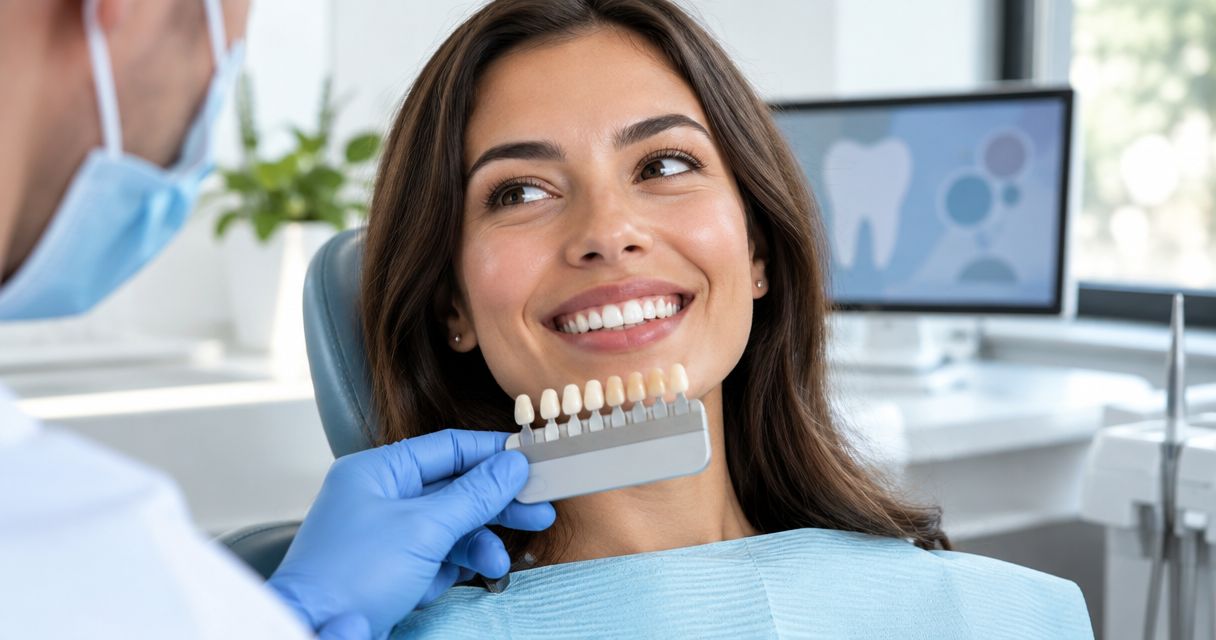
3. Veneers: best for selected visible shape and color concerns
Veneers cover the front surfaces of teeth to change their appearance. They can address selected concerns involving shape, proportions, color, and the appearance of minor unevenness when the teeth and bite are suitable.
Veneers do not straighten tooth roots. A visibly rotated or crowded tooth can require substantial reshaping to accommodate a veneer, making an orthodontic assessment important before committing to a cosmetic covering.
Veneers pros:
- Can address shape and color within the same treatment plan.
- Allow coordinated changes across several visible teeth when appropriate.
- Offer a way to change the appearance of suitable teeth without moving them.
- Let you discuss proportions and the intended appearance before treatment.
Veneers cons:
- Many veneer preparations involve irreversible enamel removal.
- Veneers can chip, detach, or need replacement.
- They do not treat gum disease, tooth decay, or an underlying bite problem.
Best for: Healthy, suitable teeth with visible shape or color concerns that are not better addressed by movement or a smaller repair.
For a natural-looking result, bring up the features you want to keep as well as those you want to change. Ask how the proposed tooth shapes relate to neighboring teeth and whether the plan leaves space for cleaning. A cosmetic plan should explain the trade-off between the desired appearance and the natural tooth structure involved.
Verdict: Consider veneers after your dentist explains why they fit better than orthodontics, bonding, or leaving healthy teeth unchanged.
4. Tooth contouring: best for minor rough or uneven edges
Tooth contouring removes a small amount of enamel to smooth or adjust a tooth's outline. It is a subtractive treatment: unlike bonding, it takes material away rather than adding it.
Contouring fits a narrow set of concerns, such as a minor edge irregularity in a suitable healthy tooth. It cannot uncrowd teeth, change their root positions, or rebuild a chipped area that needs additional material.
Tooth contouring pros:
- Focuses on a small, specific edge concern.
- Does not add a covering or bonded material.
- Can smooth an irregular outline when enough suitable enamel remains.
Tooth contouring cons:
- Removed enamel does not grow back.
- The amount of safe reshaping is limited by the individual tooth.
- Excessive removal can affect sensitivity, appearance, or tooth function.
Best for: A slight edge mismatch or rough area that your dentist confirms can be safely smoothed.
Avoid trying to file a tooth at home. What looks like a tiny adjustment in a mirror can change the bite or remove enamel that should remain. An uneven edge can also reflect a chip or wear pattern that deserves examination rather than automatic smoothing.
Ask whether smoothing the longer edge or adding material to the shorter one better preserves your teeth. Those approaches can produce a similar-looking outline but have different consequences.
Verdict: Choose contouring only for a minor, dentist-assessed enamel adjustment. It is not a treatment for substantial crookedness.
5. Dental crowns: best for uneven teeth that also need protection
A dental crown covers a prepared tooth to restore its shape and function. Crowns belong in this comparison because a damaged or heavily restored tooth can look uneven and need structural care as well as an appearance change.
A crown is not the default cosmetic answer for a healthy crooked tooth. Your dentist should explain the restorative reason for covering the tooth and whether a more conservative option meets the same need.
Dental crowns pros:
- Can restore the shape of a tooth that needs broader repair.
- Combine an appearance change with protection when clinically appropriate.
- Address more extensive damage than a small edge repair can manage.
Dental crowns cons:
- Usually require substantial preparation of the natural tooth.
- Do not move the tooth into a different position.
- Need ongoing cleaning and can require replacement or further treatment.
Best for: A tooth whose uneven appearance accompanies damage, extensive existing restoration, or another confirmed need for coverage.
Ask what problem the crown solves beyond appearance. If the answer concerns tooth strength, request a plain-language explanation of the damage and alternatives. If the tooth is healthy and the concern is only its position, discuss orthodontics before accepting extensive preparation.
Verdict: Choose a crown for a tooth that needs restoration, not simply because it looks crooked.
How these treatments are ranked
This 2026 ranking prioritizes matching treatment to its purpose: moving misplaced teeth, repairing small shape differences, changing suitable front surfaces, smoothing minor edges, or protecting damaged teeth. It also considers natural tooth preservation, bite compatibility, and maintenance.
No single treatment wins every category. An option becomes the better choice when it addresses your actual concern without creating an unnecessary permanent change. An examination determines whether that option fits your teeth.
Which treatment should you choose?
Start with an orthodontic assessment if your teeth are crowded or rotated. If their positions are acceptable and only a corner or outline bothers you, discuss bonding or limited contouring. Consider veneers for selected broader appearance changes and crowns when tooth damage creates a restorative need.
You do not have to decide on a procedure before making an appointment. Bring photographs of your smile and describe what you notice when talking, laughing, or looking in the mirror. Ask which changes are cosmetic, which affect function, and which involve irreversible preparation.
Mysmiletheory is a local option for Spring patients seeking general and cosmetic dental care. For your 2026 appointment conversation, focus on the concern you want addressed rather than arriving committed to a particular treatment.
Discuss your smile goals
Start with your concerns and ask which changes fit your teeth, bite, and daily care.
Protect your teeth before and after treatment
Cosmetic treatment does not replace everyday care. Brush with fluoride toothpaste for 2 minutes per session, 2 times per day, and clean between teeth 1 time per day. Continue dental visits on the schedule recommended for your oral health.
Tell your dentist about grinding, clenching, sensitivity, or a tooth that feels different when you bite. Those details can affect the treatment choice and how you protect the result. Do not treat recurring chips as an appearance problem alone.
If you choose orthodontic treatment, follow the retainer instructions afterward. If you choose bonding, veneers, or crowns, ask how to clean around the treated teeth and what changes should prompt a call.
FAQ
What's the best cosmetic treatment for crooked teeth?
Orthodontic treatment is the strongest starting point when tooth positions need correction. Bonding, veneers, or contouring suit selected appearance concerns, but they do not move tooth roots.
Are veneers better than clear aligners for crooked teeth?
Veneers and clear aligners address different problems. Clear aligners move teeth, while veneers change their front appearance; an examination helps determine which approach fits your teeth and bite.
Can bonding make an uneven tooth look straighter?
Bonding can improve the appearance of selected small shape differences without moving the tooth. It is not a substitute for treating substantial crowding, rotation, or a bite problem.
Can I fix crooked teeth without removing enamel?
Orthodontic treatment moves teeth without using veneers or crowns to cover them. Some treatment plans include enamel reshaping, so ask your dentist to explain every proposed step before starting.
Is tooth contouring safe for uneven edges?
Tooth contouring is appropriate only when a dentist confirms that the planned enamel removal is suitable. It is irreversible and should not be attempted at home.
Do I need crowns just because my teeth look crooked?
Crooked appearance alone does not establish a need for crowns. Crowns are generally considered when a tooth also needs restoration or protection; discuss more conservative options for healthy teeth.
What should I ask a dentist about cosmetic treatment in 2026?
Ask whether your concern involves tooth position, tooth shape, or tooth damage. Then ask about permanent changes, alternatives, daily care, and how the proposed result will work with your bite.
One last thing
The most useful question is: What happens if we move the tooth before changing its shape? The answer can reveal whether a cosmetic covering is necessary or whether a smaller finishing repair would address your concern. At Mysmiletheory, start the discussion with your goals and ask for the reason behind each proposed change.