
Best overall for small shape flaws: dental bonding. Best for stained natural teeth: dentist-supervised whitening. Best for broader changes to tooth shape and color: veneers. The best treatment to fix smile after braces depends on what still bothers you, whether that is color, uneven edges, white spots, or teeth that have shifted.
- The best treatment to fix smile after braces matches the remaining concern, not simply the most noticeable cosmetic option.
- Dental bonding suits small chips and shape differences; whitening treats discoloration in natural teeth.
- Veneers change tooth shape and color but usually require irreversible preparation.
- Mysmiletheory offers cosmetic dentistry in Spring, Texas, for local patients seeking a personal dentist.
Why this matters
Braces move teeth, but they do not automatically change tooth color, repair chipped edges, or make every tooth the same shape. A straight smile can still have details you want to adjust. Those concerns deserve different treatments.
Mysmiletheory provides general, cosmetic, restorative, and family dental care in Spring, Texas. For your 2026 smile plan, start by describing what you notice rather than arriving committed to a particular procedure.
Treat the cause before changing the appearance. A reopened gap needs a different assessment from a tooth that was always narrow, and a white patch needs a different assessment from a surface stain.
What makes the best treatment after braces?
The right cosmetic treatment preserves healthy teeth while addressing the concern you actually have. Use these criteria to compare your options:
- Matching the problem: Whitening changes color; bonding changes shape; orthodontic treatment changes position.
- Healthy foundations: Cavities, inflamed gums, and bite problems need attention before cosmetic work.
- Tooth preservation: Ask whether treatment adds material, removes enamel, or leaves tooth structure unchanged.
- Natural appearance: Consider tooth proportions, surface texture, and how the result fits the rest of your smile.
- Ongoing care: Understand sensitivity, staining, repair needs, and retainer use before deciding.
- Treatment order: Color changes, shape changes, and retention need a coordinated plan rather than separate decisions.
A treatment that looks appealing in a photograph is not automatically right for your enamel or bite. Bring your retainer to the discussion, particularly if you want to change the shape of your front teeth.
Cosmetic treatments after braces at a glance
This 2026 comparison separates the options by the concern each addresses. The order prioritizes small, targeted corrections before broader changes; it is not a recommendation that everyone needs treatment.
| Treatment | Best for | Standout feature | Key limitation |
|---|---|---|---|
| Dental bonding | Small chips, narrow teeth, and minor shape differences | Adds tooth-colored material to selected areas | Can stain or chip and needs maintenance |
| Dentist-supervised whitening | Discolored natural teeth | Changes tooth color without reshaping teeth | Does not whiten existing fillings, bonding, or veneers |
| Dental veneers | Several visible shape and color concerns | Covers the front surface of selected teeth | Usually involves irreversible enamel removal |
| Resin infiltration | Selected white spots after braces | Treats porous enamel within the affected area | Not suitable for every white spot or cavity |
| Enamel contouring | Small uneven edges | Reshapes a limited amount of enamel | Removed enamel does not grow back |
| Orthodontic refinement | Teeth that shifted or gaps caused by position | Corrects tooth position rather than disguising it | Requires further orthodontic treatment and retention |
1. Dental bonding: best for small shape flaws after braces
Dental bonding adds tooth-colored resin to a tooth. A dentist shapes the material to repair a small chip, improve an uneven outline, or fill selected spaces caused by tooth proportions. It does not move a tooth or correct an underlying bite problem.
Best for: A small, localized detail that remains after alignment, especially when you want to preserve healthy tooth structure.
Dental bonding pros:
- Adds material where a tooth needs more shape.
- Often requires little or no enamel removal.
- Allows targeted treatment rather than changing the whole smile.
- Can be repaired when material chips or wears.
Dental bonding cons:
- Resin can pick up stains and lose its finish.
- Biting forces can chip or damage the material.
- Closing a gap with resin can make a tooth look too wide if proportions are not considered.
For 2026 planning, ask the dentist to explain whether the concern comes from tooth size or tooth position. That distinction determines whether adding material makes sense.
Verdict: Consider dental bonding first for a small shape defect when your bite and tooth position are already suitable.
2. Whitening: best for stained natural teeth after braces
Dentist-supervised whitening lightens discoloration in natural teeth. It is a color treatment, not a repair for chips, gaps, uneven edges, or tooth movement. A dental examination helps distinguish removable surface stains from discoloration that needs another approach.
Best for: Teeth that are aligned well but look darker than you would like.
Whitening pros:
- Changes color without removing enamel to reshape teeth.
- Treats natural teeth without adding a covering.
- Can be planned before color-matched bonding or veneers.
Whitening cons:
- Tooth sensitivity and gum irritation can occur.
- Existing fillings, bonding, and veneers do not whiten like natural enamel.
- White spots and different types of discoloration do not respond uniformly.
If you are considering whitening alongside bonding, discuss the order before either treatment starts. The dentist needs a stable shade to match new restorative material, and the timing belongs in your individual plan.
Verdict: Consider whitening when color is the main concern; skip whitening as a solution for shape or alignment.
3. Veneers: best for several shape and color concerns
Veneers are thin coverings placed over the front surfaces of teeth. They can change visible shape, proportions, and color when a limited repair does not address the full concern. They do not replace orthodontic treatment for a bite that needs correction.
Best for: Selected front teeth with a combination of concerns that simpler treatments do not adequately address.
Veneers pros:
- Address shape and color within one treatment plan.
- Allow the dentist to plan tooth proportions together.
- Cover selected visible imperfections on the treated surfaces.
Veneers cons:
- Preparation usually removes enamel and is irreversible.
- Veneers can chip, loosen, or require replacement.
- Healthy gums, suitable tooth structure, and a manageable bite are essential.
A natural-looking result is about more than choosing a lighter shade. Discuss length, texture, and how the planned teeth fit your face and neighboring teeth. For a 2026 veneer decision, ask what bonding or whitening would accomplish before choosing a more permanent change.
Verdict: Consider veneers for combined concerns, not as the automatic next step after braces.
4. Resin infiltration: best for selected white spots after braces
White spots around former brackets can result from mineral loss in enamel. Resin infiltration uses a low-viscosity resin to enter selected porous areas and reduce the visible contrast. A dentist must first determine whether the spot is suitable for this approach.
Best for: Certain non-cavitated white-spot lesions, meaning affected areas without a hole in the tooth surface.
Resin infiltration pros:
- Targets the affected area rather than covering the whole tooth.
- Preserves more tooth structure than preparing a veneer.
- Addresses selected enamel changes rather than overall tooth color.
Resin infiltration cons:
- Not every white spot has the same cause or depth.
- The color change is not identical for every lesion.
- Cavities and ongoing decay need a different treatment plan.
Do not assume a white patch is simply a stain. Ask whether the area is active, stable, shallow, or deeper before considering a cosmetic change. Your dentist can also discuss whether remineralization or another enamel-focused approach belongs first.
Verdict: Hold until the white spots are diagnosed; consider infiltration only for suitable lesions.
5. Enamel contouring: best for slightly uneven tooth edges
Enamel contouring removes a small amount of enamel to smooth or reshape an edge. It suits limited differences, not teeth that need substantial shortening or rebuilding. The dentist checks enamel thickness and the way your teeth meet before recommending it.
Best for: Minor edge irregularities when the tooth has enough healthy enamel for a conservative adjustment.
Enamel contouring pros:
- Makes a targeted change without adding restorative material.
- Smooths selected small irregularities.
- Does not create a bonded restoration that needs color matching.
Enamel contouring cons:
- Removed enamel cannot grow back.
- It cannot add length or repair missing tooth structure.
- Excessive removal risks sensitivity and weakens the tooth.
Do not file your teeth at home. What looks like a tiny adjustment can affect enamel thickness or the bite, and shortening one edge can make neighboring teeth appear uneven.
Verdict: Consider contouring only for a genuinely small edge correction; skip it when the tooth needs added structure.
6. Orthodontic refinement: best for teeth that shifted after braces
Orthodontic refinement means additional treatment to adjust tooth position after the original course of braces. It addresses movement, rotation, or spacing rather than masking those concerns with cosmetic material. Your dentist or orthodontist also needs to review retention.
Best for: A reopened gap, a rotated tooth, or a position change that affects appearance or the bite.
Orthodontic refinement pros:
- Treats the position of the tooth itself.
- Avoids widening teeth solely to disguise positional gaps.
- Allows bite relationships to be assessed alongside appearance.
Orthodontic refinement cons:
- Requires further treatment and follow-up.
- Does not change tooth color or repair a chipped edge.
- Retention remains necessary after teeth are repositioned.
A retainer that suddenly feels different deserves attention. Do not force an appliance that no longer fits; ask your treating dental professional to assess the change.
Verdict: Consider orthodontic refinement when the problem is tooth position, before using bonding or veneers to hide it.
How these treatments are ranked
Dental bonding leads this guide because it addresses small shape flaws with an additive approach. Whitening takes the color-only slot, while veneers belong to broader shape-and-color decisions. White-spot treatment, contouring, and orthodontic refinement each solve a different problem.
This is a treatment-matching guide, not a claim that one procedure works best for every patient. Mysmiletheory's cosmetic dentistry discussion should begin with your goals and an examination, rather than a predetermined treatment.
How to plan a natural-looking result
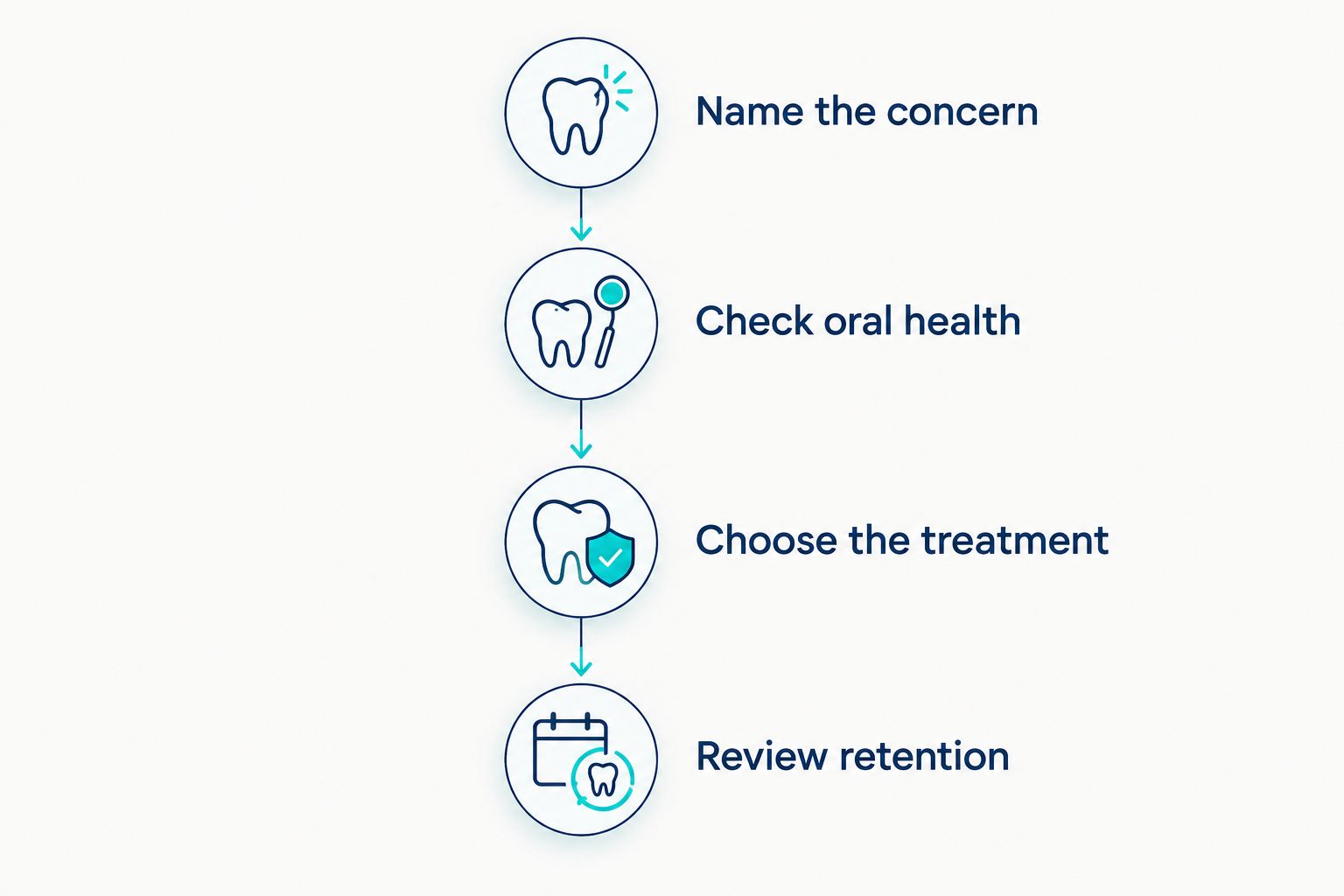
Use this sequence to organize your 2026 appointment. It helps you explain what you want while leaving room for a less involved solution.
- Name the concern. Identify whether you notice color, shape, white spots, or movement. Point to the specific teeth rather than describing your whole smile as wrong.
- Check oral health. Ask about gums, enamel, cavities, and the bite. A cosmetic change should not hide an untreated dental problem.
- Choose the treatment. Compare what each option changes and what it leaves alone. Ask which healthy tooth structure the plan preserves.
- Review retention. Confirm whether your retainer will still fit after treatment. A change in tooth shape can require an appliance adjustment or replacement.
Bring 2 clear photographs if they help: one showing the detail that bothers you and one showing your full smile. Use them to explain your preference, not to request an exact copy of someone else's teeth.
For everyday care, brush for 2 minutes twice a day with fluoride toothpaste and clean between your teeth daily. Follow your own retainer instructions; cosmetic treatment does not replace retention.
Which treatment should you choose?
Start with the smallest treatment that addresses the actual concern. For a chip or narrow tooth, discuss bonding. For discoloration alone, discuss whitening. For shifted teeth, return to the alignment question before changing tooth shape.
Mysmiletheory is best suited to local patients seeking a personal dentist for general and cosmetic dental care in Spring, Texas. You can bring a specific concern without having to choose a procedure beforehand.
Discuss your smile after braces
Start with the detail you want to change and ask which treatment fits your teeth.
FAQ
What's the best treatment to fix smile after braces?
The best treatment to fix smile after braces depends on the remaining concern: bonding for small shape flaws, whitening for discoloration, and orthodontic refinement for shifted teeth. An examination determines whether your teeth, gums, and bite are ready for cosmetic care.
Is bonding better than veneers after braces?
Bonding is often the more conservative option for a small chip or shape difference. Veneers address broader visible changes but usually involve irreversible enamel removal, so the choice depends on the extent of the concern.
Can whitening remove white spots left by braces?
Whitening does not reliably remove white spots left by braces. A dentist needs to diagnose the enamel change and discuss suitable options, which can include remineralization, resin infiltration, or other treatment.
Do I need veneers if my teeth are already straight?
Straight teeth do not automatically need veneers. If the concern is limited to color or a small edge defect, whitening, bonding, or conservative contouring can be more appropriate.
Will my retainer still fit after dental bonding?
Dental bonding can change tooth shape and affect retainer fit. Have your dentist and orthodontist coordinate the plan, and do not force a retainer that no longer fits.
Can I get cosmetic treatment immediately after braces come off?
Cosmetic treatment should begin only after your dentist checks your teeth, gums, enamel, and bite. The timing also depends on the treatment sequence and retention plan, rather than one waiting period for everyone.
Where can I discuss cosmetic dentistry after braces in Spring, Texas?
Mysmiletheory provides cosmetic dentistry alongside general, restorative, and family dental care in Spring, Texas. Bring your concerns and retainer so the conversation can address appearance and ongoing care together.
One last thing
Your retainer belongs in your cosmetic appointment, not just your orthodontic visits. Adding material or changing an edge can alter how it fits, even when the tooth itself has not moved.
For your 2026 smile plan, ask one useful question: What is the least tooth-changing way to address this concern? You do not need to change every visible detail to feel more comfortable with your smile.


