
Best overall for mild edge wear: composite bonding; best for front-tooth shape and color changes: veneers; best for a weakened tooth: a crown after a dental assessment. This 2026 guide explains the best treatment for worn down teeth by the amount of damage, the cause of wear, and the changes you want to make to your smile.
- Composite bonding is a tooth-preserving option for small worn edges when the bite supports it.
- Veneers address front-tooth shape and color; crowns protect teeth that need more extensive coverage.
- The best treatment for worn down teeth addresses both lost tooth structure and the cause of wear.
- Mysmiletheory offers general, cosmetic, restorative, and family dental care in Spring, Texas.
Why this matters
Teeth that look short do not all need the same treatment. Some have lost structure through grinding or acid exposure; others look short because gum tissue covers more of the tooth. Those differences change the treatment plan.
You also need to know whether the wear is still happening. Adding length without addressing the cause leaves the new edges exposed to the same forces that damaged the original teeth. A comfortable result should work when you chew, not just look good in a photograph.
Mysmiletheory is a local option for patients in Spring, Texas seeking general, cosmetic, and restorative dental care. You can start with Mysmiletheory to discuss your concerns and ask which type of assessment fits your situation.
What makes the best treatment for worn down teeth?
The strongest choice for your smile in 2026 is the treatment that matches the damage without removing more healthy tooth than necessary. Use these criteria to understand a recommendation:
- Remaining tooth structure: A small worn edge needs a different approach from a tooth with a large filling or substantial damage.
- Cause of wear: Grinding, acid exposure, and an uneven bite need attention alongside any cosmetic repair.
- Bite comfort: Added length must fit the way your upper and lower teeth meet and move.
- Natural appearance: Shape, shade, and proportions should suit the surrounding teeth rather than make every tooth identical.
- Repair and maintenance: Understand what happens if a restoration chips, stains, or needs replacement.
- Scope of treatment: A single affected tooth and widespread wear call for different planning.
A useful consultation leaves you understanding both what the dentist recommends and why a less extensive option does or does not fit.
Treatments at a glance
This 2026 comparison separates rebuilding a tooth from protecting it against further wear. A night guard belongs in the second category: it does not replace missing tooth structure.
| Treatment | Best for | Standout feature | Key limitation |
|---|---|---|---|
| Composite bonding | Mild wear on front-tooth edges | Adds tooth-colored material directly to the tooth | Can chip or stain; bite forces affect suitability |
| Veneers | Front-tooth shape and color changes | Covers the visible front surface | Often involves irreversible enamel removal |
| Onlays | Localized wear on back-tooth chewing surfaces | Covers damaged chewing areas while retaining other tooth surfaces | Requires enough suitable tooth structure |
| Crowns | A substantially weakened individual tooth | Covers and rebuilds the visible tooth | Requires more tooth preparation than a small repair |
| Coordinated restorative treatment | Widespread wear affecting several teeth | Plans tooth shape and bite together | More involved than repairing one tooth |
| Custom night guard | Protecting teeth and restorations from grinding | Separates the teeth during wear | Does not regrow teeth or stop every cause of wear |
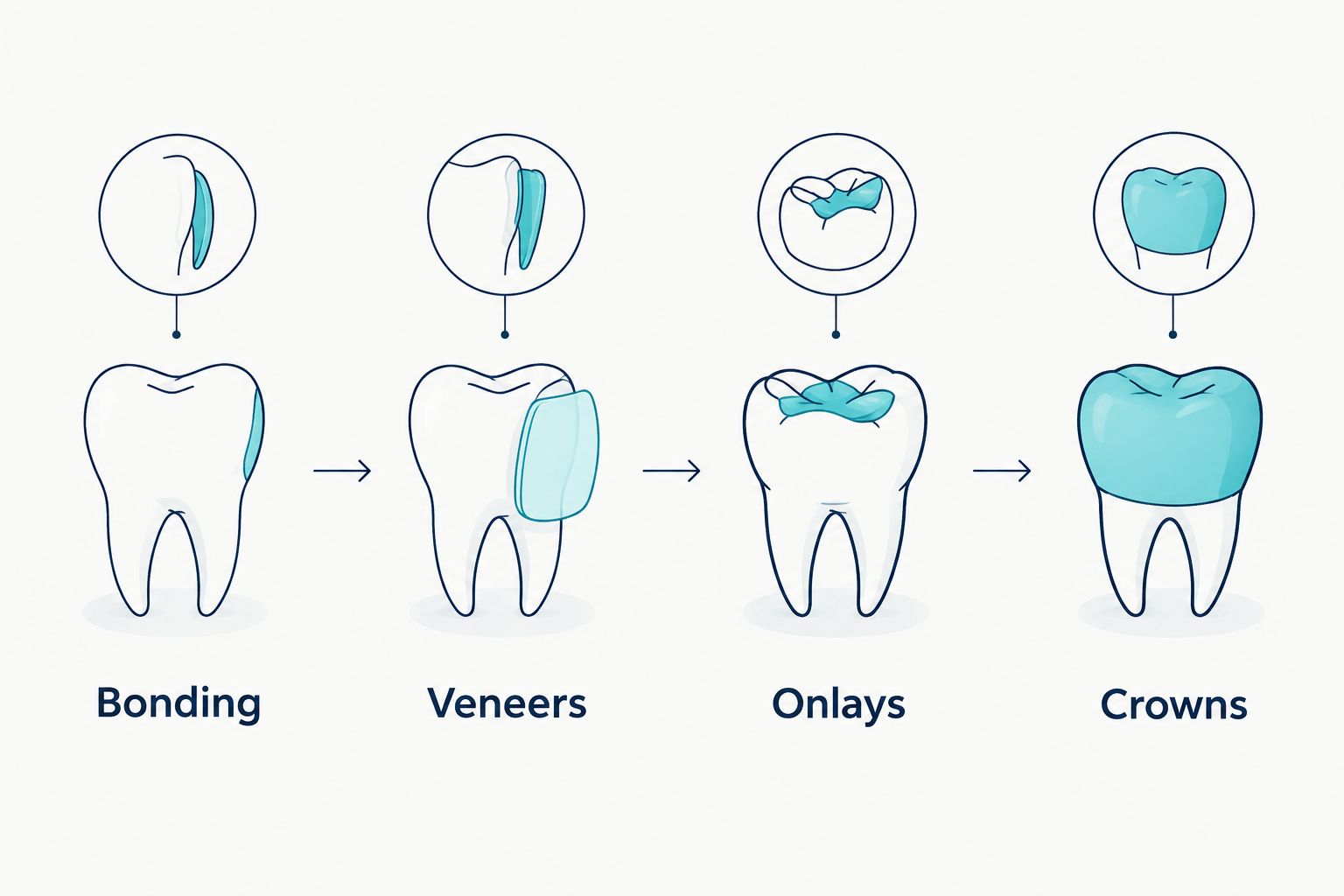
The distinction between coverage types matters. Bonding adds material to a damaged area, veneers cover the front, onlays cover part of the chewing surface, and crowns cover the visible tooth more extensively.
1. Composite bonding: best for mildly worn front-tooth edges
Composite bonding adds tooth-colored material to rebuild a small edge or improve a tooth's outline. It is a useful starting point when the tooth remains largely intact and the proposed change works with your bite.
Bonding does not require every tooth to be treated. If one edge looks uneven, ask whether a localized repair will meet your goal before considering a wider smile treatment.
Composite bonding pros:
- Rebuilds small areas without automatically covering the whole tooth.
- Allows targeted changes to length and outline.
- Can often be repaired if a small area chips.
Composite bonding cons:
- Can stain and lose its polished appearance.
- Added edges can chip under heavy or poorly directed bite forces.
- Does not address grinding or acid exposure by itself.
Best for: Small areas of front-tooth wear with enough healthy tooth remaining.
Verdict: Choose composite bonding for a modest repair when your dentist confirms that the bite supports the added length.
2. Veneers: best for front-tooth shape and color changes
Veneers cover the visible front surfaces of teeth. They can address a combination of shortened appearance, uneven outlines, and color concerns when the teeth are suitable for this approach.
A natural-looking result depends on more than making teeth longer. Ask how the proposed shape will relate to your lips, neighboring teeth, and bite, and how much tooth preparation the plan requires.
Veneers pros:
- Address shape and color within the same treatment plan.
- Create a coordinated appearance across selected front teeth.
- Leave more of the tooth uncovered than a full crown in suitable cases.
Veneers cons:
- Often require enamel removal that cannot be reversed.
- Can chip or detach and require repair or replacement.
- Are not the right answer for every severely damaged tooth.
Best for: Front teeth needing coordinated cosmetic changes, rather than extensive structural rebuilding.
Verdict: Consider veneers when shape and color both matter, but do not choose them solely because teeth look short.
3. Onlays: best for localized wear on back teeth
An onlay restores a damaged chewing surface and can cover one or more of the raised areas used to bite and grind food. It is an alternative to full coverage when enough suitable tooth structure remains.
Back teeth carry chewing forces differently from front teeth. The decision depends on the damaged area, existing fillings, cracks, and how the tooth contacts the opposing teeth.
Onlays pros:
- Rebuild damaged chewing areas.
- Preserve tooth surfaces that do not need coverage.
- Offer an option between a direct repair and a full crown.
Onlays cons:
- Need suitable remaining tooth structure for support.
- Are not appropriate for every crack or pattern of damage.
- Can develop problems at their edges or fracture under unfavorable forces.
Best for: A back tooth with localized chewing-surface damage rather than weakness throughout the visible tooth.
Verdict: Ask about an onlay when a back tooth needs rebuilding but full coverage is not clearly necessary.
4. Crowns: best for a substantially weakened individual tooth
A crown covers the visible part of a tooth and restores its shape. It is a stronger candidate when substantial damage, a large existing restoration, or structural weakness makes a smaller repair unsuitable.
Short appearance alone is not a reason to crown an otherwise healthy tooth. Your dentist should explain what needs protection and why bonding, a veneer, or an onlay would not provide the right support.
Crowns pros:
- Rebuild the shape of a substantially damaged tooth.
- Provide coverage around the visible tooth.
- Address structural needs as well as appearance.
Crowns cons:
- Require removal of tooth structure during preparation.
- Do not eliminate the possibility of decay around the edges.
- Still need protection from damaging bite forces.
Best for: An individual tooth that needs extensive coverage rather than a small cosmetic addition.
Verdict: Choose a crown for a clear structural reason, not as the automatic first treatment for every worn tooth.
5. Coordinated restorative treatment: best for widespread wear
When several teeth are worn, repairing each one separately can miss how the teeth work together. Coordinated restorative treatment considers the overall bite, the remaining tooth structure, and the proposed changes before individual restorations are chosen.
This is a planning approach, not a single material or a requirement to crown every tooth. A plan can combine different treatments because different teeth have different needs.
Coordinated restorative treatment pros:
- Addresses the relationship between upper and lower teeth.
- Allows treatment choices to differ from tooth to tooth.
- Connects appearance, chewing comfort, and protection against further damage.
Coordinated restorative treatment cons:
- Involves more planning than an isolated repair.
- Can require staged treatment and adjustment.
- Does not remove the need to manage grinding or erosion.
Best for: Wear across several teeth, especially when your bite or chewing comfort has changed.
Verdict: Seek a coordinated assessment for widespread wear rather than choosing a restoration tooth by tooth.
6. Custom night guard: best for protecting against grinding damage
A custom night guard creates a protective barrier between the upper and lower teeth during wear. It can be part of a plan for grinding-related damage, including protection after teeth have been restored.
A guard does not make short teeth longer, and it is not a cure for every cause of tooth wear. Acid erosion, for example, needs its own assessment and management.
Custom night guard pros:
- Helps protect tooth surfaces from direct grinding contact.
- Can protect restorations as well as natural teeth.
- Provides a non-restorative part of a broader wear-management plan.
Custom night guard cons:
- Does not rebuild lost enamel or tooth length.
- Requires regular use and cleaning.
- Does not guarantee that grinding stops.
Best for: Protection when grinding contributes to damage, rather than cosmetic rebuilding.
Verdict: Use a professionally assessed guard as protection when indicated, not as a replacement for needed restorative care.
What if your teeth look short but are not worn?
Gum coverage and tooth position can make healthy teeth look shorter than expected. In that situation, adding restorative material does not necessarily address the real issue.
Ask whether the visible tooth length reflects lost enamel, gum coverage, or position. Gum treatment or orthodontic assessment belongs in the discussion only when the examination supports it; neither is an automatic substitute for repairing true wear.
Bring a photograph of your smile from before you noticed the change, if you have one. It gives you and your dentist something specific to discuss without treating a photograph as a diagnosis.
How these treatments are ranked
This 2026 ranking prioritizes matching treatment to damage, preserving healthy tooth structure, and addressing the cause. It is a decision guide, not a claim that one material wins for every patient.
Bonding comes first for mild edge wear because it offers a localized approach. More extensive coverage moves into consideration as the structural need increases; protective treatment remains separate because it cannot replace what has already been lost.
Which treatment should you choose?
For mild wear, start by asking whether composite bonding is sufficient. For extensive damage or several worn teeth, ask for a restorative assessment before deciding on a cosmetic procedure.
For your 2026 appointment, bring a short list of concerns: appearance, sensitivity, chewing discomfort, and any change in your bite. Tell the dentist about grinding, frequent acidic drinks, or reflux symptoms rather than trying to identify the cause yourself.
Mysmiletheory offers cosmetic dentistry and restorative dental care to local patients. You can discuss the result you want while asking what your teeth need to stay comfortable and functional.
Start with your smile concerns
Discuss worn or short teeth and the type of dental assessment that fits your concerns.
Protect the result between appointments
Restorations still need daily care. The American Dental Association recommends brushing with fluoride toothpaste for 2 minutes per session, 2 times per day, and cleaning between teeth 1 time per day.
Those habits help protect oral health, but they do not replace treatment for grinding or acid exposure. Follow the care instructions for your specific restoration and any prescribed guard.
If wear is progressing, ask what needs to change before adding more material. A repair and a prevention plan should work together.
FAQ
What's the best treatment for worn down teeth?
The best treatment for worn down teeth depends on how much structure is missing and what caused the wear. Composite bonding suits some mild edge damage, while onlays, crowns, or coordinated restorative treatment address different structural needs.
Can worn teeth grow back naturally?
Lost tooth structure does not grow back naturally. Fluoride supports enamel health, but it does not rebuild a missing edge or restore lost tooth length.
Is bonding better than veneers for short teeth?
Bonding is a useful option for small, localized changes; veneers address broader front-surface shape and color concerns. The better choice depends on the remaining tooth structure, bite, and amount of preparation required.
Do all worn teeth need crowns?
No, worn teeth do not all need crowns. Small defects can call for more localized treatment, while substantially weakened teeth need an assessment for more extensive coverage.
Will a night guard make my teeth longer?
A night guard will not make your teeth longer. It helps protect teeth from grinding contact during wear, while restorative treatment replaces missing structure.
Can veneers fix damage caused by grinding?
Veneers can address some front-tooth damage, but grinding must be considered before treatment. Continued damaging forces can chip or detach restorations, so protection and bite assessment belong in the plan.
Who can I see in Spring, Texas about worn teeth?
Mysmiletheory provides general, cosmetic, restorative, and family dental care in Spring, Texas. Discuss your worn or short teeth so the assessment can address appearance, comfort, and the condition of the teeth.
One last thing
For a 2026 consultation, ask this question: What will protect the new tooth length from the process that shortened it? A clear answer connects your cosmetic goal with the practical care your teeth need.
You do not need to arrive knowing which treatment to choose. Describe what bothers you, ask about the least extensive suitable option, and make the decision once you understand the trade-offs.


