
Best overall: gentle brushing and daily flossing. Best for coffee and tea drinkers: reduce repeated stain exposure. Best for recurring discoloration: dentist-guided maintenance. The best way to maintain teeth whitening results is a consistent routine, not constant bleaching; Mysmiletheory is a fit for Spring, Texas patients seeking personal dental care and cosmetic guidance.
- The best way to maintain teeth whitening results is gentle brushing, daily flossing, and fewer repeated stain exposures.
- Mysmiletheory offers general and cosmetic dentistry for local patients seeking a personal dentist.
- Dentist-guided whitening maintenance should account for sensitivity, existing restorations, and the cause of discoloration.
- Whitening toothpaste addresses surface stains; it does not replace professional evaluation or change the color of crowns.
Why this matters
Whitening changes tooth color, but it does not stop future staining. Coffee, tea, tobacco, and plaque buildup can affect how your smile looks afterward. More whitening is not automatically the right answer.
For your 2026 routine, separate three concerns: surface stains, changes in natural tooth color, and changes involving fillings or other dental work. They do not respond to the same approach. A comfortable maintenance plan starts with understanding which concern you have.
What makes the best whitening maintenance routine?
Choose habits that protect your teeth as well as their appearance. These criteria matter more than promises of a permanently white smile:
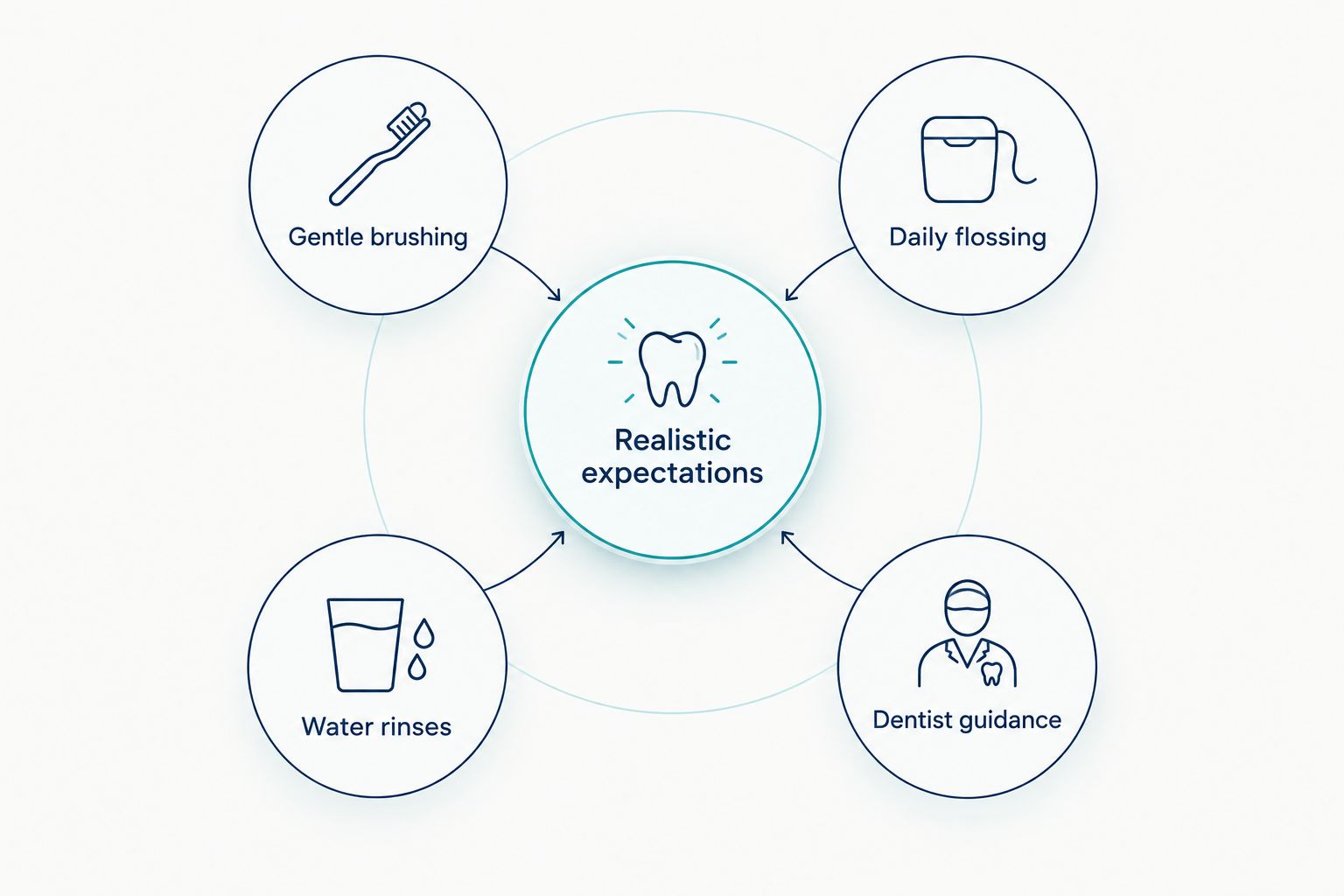
- Gentle brushing: Remove plaque without aggressive scrubbing or abrasive home mixtures.
- Daily flossing: Clean between teeth, where a toothbrush cannot fully reach.
- Water rinses: Use water after staining drinks rather than treating every drink as a reason to brush immediately.
- Dentist guidance: Match cleanings and whitening touch-ups to your oral health and treatment instructions.
- Realistic expectations: Recognize that whitening does not change the color of crowns, veneers, or tooth-colored fillings.
A good maintenance routine preserves a healthy smile without asking you to chase a lighter shade every week. For 2026, use these criteria to assess both everyday habits and whitening products.
Whitening maintenance options at a glance
These options work together rather than compete as substitutes. Start with daily care, then address the reason your teeth are becoming discolored.
| Rank and option | Best for | Standout benefit | Key limitation |
|---|---|---|---|
| 1. Gentle brushing and flossing | Everyday maintenance | Removes plaque and supports oral health | Does not bleach deeper discoloration |
| 2. Managing staining drinks | Coffee and tea drinkers | Reduces repeated contact with staining beverages | Does not remove existing stains |
| 3. Avoiding tobacco | Tobacco-related staining | Removes an ongoing source of staining | Existing discoloration still needs assessment |
| 4. Professional cleaning | Plaque, tartar, and surface buildup | Removes deposits home brushing cannot remove | Is not the same as whitening |
| 5. Dentist-guided touch-ups | Color changes after whitening | Matches additional treatment to your teeth | Can cause sensitivity and is unsuitable for some concerns |
| 6. Whitening toothpaste | Mild surface stains | Fits into an existing brushing routine | Has limited effect on deeper tooth color |
1. Gentle brushing and flossing: best for everyday maintenance
Gentle brushing and flossing are the foundation of whitening maintenance. They remove plaque and help protect the teeth and gums that frame your smile. They also keep you from treating an oral-health problem as a cosmetic problem.
The American Dental Association recommends brushing twice a day for 2 minutes with fluoride toothpaste and cleaning between teeth daily. Use a soft-bristled toothbrush and light pressure. Scrubbing harder does not make a whitening result last longer.
Gentle brushing and flossing pros:
- Supports tooth and gum health alongside appearance.
- Fits into a daily routine without adding bleaching treatments.
- Cleans tooth surfaces and the spaces between teeth.
Gentle brushing and flossing cons:
- Does not lighten discoloration within a tooth.
- Does not remove hardened tartar.
Best for: Anyone maintaining a whitening result, including people who want a simpler routine in 2026.
Verdict: Buy into this habit first. Keep brushing gentle, and make daily cleaning between teeth part of the same routine.
2. Managing staining drinks: best for coffee and tea drinkers
You do not need to turn whitening maintenance into a list of forbidden foods. Start by looking at how often your teeth encounter coffee, tea, red wine, or other staining drinks. Repeated sipping creates repeated contact.
Finish your drink rather than carrying it through the day, and rinse with plain water afterward. Water helps clear residue, but it does not bleach teeth or cancel out every effect of a drink. After acidic drinks, avoid brushing immediately; follow your dentist's advice about timing.
Managing staining drinks pros:
- Addresses a source of new surface discoloration.
- Lets you adjust habits without eliminating everything you enjoy.
- Pairs easily with your existing brushing routine.
Managing staining drinks cons:
- Cannot remove stains already present.
- Does not treat discoloration unrelated to drinks.
Best for: People who notice staining return around a regular coffee, tea, or wine habit.
Verdict: Buy into fewer repeated exposures. A manageable change is more useful than a strict rule you cannot maintain.
3. Avoiding tobacco: best for tobacco-related staining
Tobacco use can stain teeth and harms oral health. If tobacco is part of your routine, whitening alone leaves an ongoing source of discoloration in place. Stopping tobacco use addresses more than the appearance of your smile.
Ask a healthcare professional for cessation support rather than relying on cosmetic treatment to offset tobacco use. Existing stains still need dental assessment. A dentist can distinguish removable surface buildup from discoloration requiring another approach.
Avoiding tobacco pros:
- Removes an ongoing contributor to staining.
- Supports oral and overall health.
- Addresses the cause rather than repeatedly treating its appearance.
Avoiding tobacco cons:
- Does not erase existing discoloration by itself.
- Stopping can require structured support, not just a new dental routine.
Best for: People maintaining whitening results while addressing tobacco-related stains.
Verdict: Buy into cessation support; skip treating repeated whitening as a substitute. Your oral health deserves attention beyond tooth color.
4. Professional cleaning: best for plaque and surface buildup
A professional cleaning removes plaque and hardened tartar that home care cannot fully address. It can also remove certain surface stains. That makes cleaning useful when buildup is affecting how bright or clean your teeth appear.
Cleaning and whitening serve different purposes. Cleaning removes deposits; whitening changes the color of natural teeth. Mysmiletheory offers general and cosmetic dentistry, so you can discuss the health and appearance of your smile in the context of personal dental care.
Professional cleaning pros:
- Removes hardened deposits that brushing cannot remove.
- Addresses some external staining.
- Gives you an opportunity to discuss new discoloration or discomfort.
Professional cleaning cons:
- Does not bleach the underlying color of natural teeth.
- Does not replace daily brushing and flossing.
Best for: People whose teeth look duller because of surface deposits or who need an oral-health assessment.
Verdict: Buy into a dentist-recommended cleaning schedule. Do not assume everyone needs the same interval, and do not book whitening as a replacement for needed care.
5. Dentist-guided touch-ups: best for color changes after whitening
Additional whitening can be appropriate when natural tooth color changes after treatment. The right timing depends on the whitening method, your dental health, and your response to earlier treatment. Follow the instructions you received rather than inventing a calendar from online advice.
Sensitivity matters. So do visible crowns, veneers, and fillings, which do not whiten like natural teeth. If sensitivity has interrupted your routine, the guide to teeth whitening methods for sensitive teeth explains the considerations to discuss before another treatment.
Dentist-guided touch-ups pros:
- Addresses tooth color beyond removable surface stains.
- Allows sensitivity and dental work to inform the plan.
- Avoids treating every change in appearance with the same product.
Dentist-guided touch-ups cons:
- Whitening can cause tooth sensitivity or gum irritation.
- Whitening natural teeth can make a mismatch with restorations more noticeable.
Best for: People who previously whitened their teeth and want advice about a genuine color change in 2026.
Verdict: Hold until the timing and method are clear. Ask Mysmiletheory about your cosmetic concerns rather than assuming that more whitening will produce a more natural-looking result.
6. Whitening toothpaste: best for mild surface stains
Whitening toothpaste generally helps remove surface stains. It is not equivalent to a whitening treatment designed to change natural tooth color. Think of it as an optional part of maintenance, not a solution for every kind of discoloration.
Choose a fluoride toothpaste and use it as directed. If a product causes discomfort, stop using it and ask your dentist for guidance. Avoid combining it with charcoal powders, acidic mixtures, or aggressive scrubbing in pursuit of a brighter shade.
Whitening toothpaste pros:
- Fits into brushing you already do.
- Can help address everyday surface staining.
- Does not require a separate tray-based routine.
Whitening toothpaste cons:
- Has limited effect on deeper discoloration.
- Some formulations can aggravate sensitivity.
Best for: People with mild surface stains who tolerate the product comfortably.
Verdict: Hold unless it solves a specific surface-stain concern. A comfortable fluoride toothpaste and consistent brushing remain more important than a whitening label.
How these options are ranked
This ranking puts oral health, suitability, and manageable habits ahead of stronger bleaching. Daily care comes first because every maintenance plan needs it. The remaining options address distinct causes: staining drinks, tobacco, deposits, changing tooth color, and mild surface stains.
No option earns its place by promising a permanent result. For a 2026 maintenance plan, choose the least intensive approach that addresses the actual concern, then reassess with your dentist when symptoms or appearance change.
Which whitening maintenance routine should you choose?
Choose gentle brushing and daily flossing as your default. Add water rinses and changes to repeated staining exposures where they fit your life. Keep professional cleaning separate from whitening, and use touch-ups only according to appropriate instructions.
Before seeking another whitening treatment, describe what has changed: a general return of color, a stain near the gumline, one darker tooth, or a mismatch beside dental work. Those details help your dentist identify the next step. They are more useful than simply asking for stronger whitening.
Mysmiletheory is a dental clinic in Spring, Texas offering general, cosmetic, restorative, and family dentistry. If you want personal guidance for your smile in 2026, an appointment is a place to discuss your goals, comfort, and existing dental work without committing to a particular cosmetic treatment.
Discuss your smile goals
Talk about whitening maintenance, sensitivity, and the dental care that fits your smile.
FAQ
What's the best way to maintain teeth whitening results?
The best way to maintain teeth whitening results is gentle brushing, daily cleaning between teeth, and reducing repeated stain exposure. Follow your dentist's whitening instructions instead of adding frequent bleaching on your own.
Can I still drink coffee after teeth whitening?
Coffee can remain part of your routine, but it can contribute to surface staining. Follow your treatment's aftercare instructions, avoid prolonged sipping, and rinse with water afterward.
How often should I whiten my teeth again?
The appropriate touch-up schedule depends on your treatment, dental health, and sensitivity. Follow the product and dentist instructions; there is no single schedule that suits every smile.
Is whitening toothpaste enough to keep my teeth white?
Whitening toothpaste can help with surface stains, but it does not address every cause of discoloration. Daily oral care and dental assessment remain important, especially if tooth color changes despite your routine.
Will whitening change the color of my crowns or veneers?
Whitening does not change the color of crowns, veneers, or tooth-colored fillings. Discuss visible dental work with your dentist before whitening natural teeth, because their colors can become less closely matched.
What should I do if whitening makes my teeth sensitive?
Stop whitening and ask your dentist for guidance if treatment causes sensitivity. Do not increase treatment strength or duration, and seek dental assessment for persistent or localized pain.
Does a dental cleaning maintain whitening results?
A dental cleaning removes deposits and some surface stains, which can improve your smile's appearance. It does not bleach natural teeth, so cleaning and whitening are not interchangeable.
One last thing
A single tooth getting darker is not the same as your whole smile gradually collecting stains. An injury or another dental problem can change an individual tooth's color. Arrange a dental assessment rather than applying more whitening to that tooth, particularly if you also notice pain.


