
Best first option to discuss for mild anxiety: nitrous oxide. Best for needle-free medication: oral sedation. Best for adjustable medication delivery: IV sedation. Best for selected cases requiring unconsciousness: general anesthesia. This 2026 guide explains the best sedation options for anxious dental patients so you can discuss comfort, safety, and recovery with your dentist.
- The best sedation options for anxious dental patients depend on medical history, treatment needs, and anxiety severity.
- Nitrous oxide is a useful first discussion for mild anxiety because its effects usually clear quickly.
- Oral sedation avoids an IV for medication delivery but requires careful planning and an escort.
- IV sedation describes how medication enters your body, not necessarily how deeply you are sedated.
- Mysmiletheory is a local dental-care option for Spring patients seeking general, cosmetic, restorative, and family dentistry.
Why this matters
Dental anxiety deserves a plan, not a lecture about relaxing. Tell your dentist whether your biggest concern is pain, needles, sounds, gagging, loss of control, or a previous difficult experience. Those details help shape the conversation.
Sedation helps with anxiety; local anesthesia numbs the treatment area. They do different jobs, and your dentist often uses them together. Feeling calmer does not automatically mean a tooth is numb.
Mysmiletheory provides general, cosmetic, restorative, and family dental care in Spring, Texas. Bring your comfort concerns into the appointment conversation, and ask which sedation services are offered before making treatment arrangements.
What makes the best dental sedation option?
For your 2026 treatment plan, judge sedation by these criteria rather than by which option sounds strongest:
- Anxiety fit: The plan should address your specific triggers and the treatment you need.
- Medical suitability: Your health conditions, medications, allergies, pregnancy status, and previous anesthesia experiences affect the choice.
- Responsiveness: Understand whether you will remain awake, respond to instructions, or be unconscious.
- Adjustability: Some methods allow medication to be adjusted during treatment more readily than a swallowed tablet.
- Recovery demands: Transportation, supervision, work, and caregiving responsibilities belong in the decision.
- Qualified oversight: Ask who administers sedation, who monitors you, and how the team handles an unexpected reaction.
A familiar name alone is not enough. Your dentist should explain the intended sedation level and the practical instructions that come with it.
Dental sedation options at a glance
These options have different strengths, but they are not interchangeable. In particular, oral and IV describe medication delivery methods; either label alone does not tell you the exact depth of sedation.
| Option | Best for | Standout feature | Key limitation |
|---|---|---|---|
| Nitrous oxide | Mild anxiety and a preference for lighter sedation | Inhaled through a nose mask and adjusted during treatment | Requires comfortable nasal breathing and does not guarantee enough relief for severe anxiety |
| Oral sedation | Patients who prefer swallowing medication rather than receiving it through an IV | Medication is taken by mouth | Effects are less immediately adjustable once swallowed; an escort is generally needed |
| IV sedation | Patients whose treatment plan calls for adjustable medication delivery | Medication enters through a vein | Requires IV placement, monitoring, and recovery arrangements |
| General anesthesia | Selected cases requiring unconsciousness | The patient is unconscious during treatment | Requires specialized personnel, monitoring, and a suitable setting |
1. Nitrous oxide: best for mild anxiety and lighter sedation
Nitrous oxide, often called laughing gas, is inhaled with oxygen through a small mask over your nose. When used alone at appropriate concentrations, it generally helps you feel calmer while remaining awake and able to respond.
The dental team can adjust the inhaled mixture during care. Its effects usually clear quickly after administration stops, making it a useful first option to discuss if your main concern is feeling tense rather than needing deeper sedation.
Nitrous oxide pros:
- Medication delivery does not require an IV.
- The inhaled mixture can be adjusted during treatment.
- You generally remain able to communicate.
- Recovery is usually quicker than with oral or IV sedative medication.
Nitrous oxide cons:
- A blocked nose or difficulty tolerating the mask interferes with use.
- It does not provide enough anxiety relief for every patient.
- Nausea and other unwanted effects can occur.
Best for: Patients with mild anxiety who prefer to stay engaged with the dental team.
Ask how the practice confirms that you are ready to leave. Do not assume you can drive afterward, especially if nitrous oxide is combined with another medication.
Verdict: Discuss nitrous oxide first when you want lighter sedation and your dentist considers it appropriate.
2. Oral sedation: best for needle-free medication delivery
Oral sedation uses medication taken by mouth to reduce anxiety and cause drowsiness. Depending on the medication, dose, and your response, you can remain awake while feeling less aware of the appointment.
Swallowing medication does not make its effects predictable for every person. Once you have taken it, the dentist cannot adjust its effect as immediately as medication delivered through an IV.
Oral sedation pros:
- Medication delivery does not require IV placement.
- It offers another option when lighter sedation is not the right fit.
- It can reduce awareness of an anxiety-provoking appointment.
Oral sedation cons:
- The effect varies between patients.
- Drowsiness can continue after treatment ends.
- Transportation and supervision generally need advance arrangements.
Best for: Patients who prefer medication by mouth and can follow the prescribed preparation and recovery instructions.
Oral sedation does not eliminate the possible need for a local anesthetic injection. If needles are your main trigger, say so explicitly rather than assuming the tablet solves that concern.
Verdict: Discuss oral sedation when avoiding an IV matters, but plan for an escort and a less flexible recovery day.
3. IV sedation: best for adjustable medication delivery
IV sedation delivers medication through a small tube placed in a vein. This route lets a qualified clinician adjust medication during the procedure according to your response and the treatment plan.
IV sedation does not automatically mean you are fully asleep. Your intended sedation level matters more than the route alone, so ask whether the plan involves moderate sedation, deeper sedation, or something else.
IV sedation pros:
- Medication delivery can be adjusted during treatment.
- The clinician can respond to changes in your comfort and sedation needs.
- It can support treatment plans requiring more than lighter anxiety relief.
IV sedation cons:
- IV placement itself can be stressful if you fear needles.
- Appropriate monitoring and trained personnel are essential.
- You need transportation and recovery arrangements.
Best for: Patients whose anxiety and treatment needs warrant adjustable medication delivery after a medical assessment.
Ask what you are expected to remember, whether you will respond to instructions, and who monitors your breathing. Memory varies; no one should promise that you will remember nothing.
Verdict: Discuss IV sedation when adjustability is a priority and you accept IV placement and recovery requirements.
4. General anesthesia: best for selected cases needing unconsciousness
General anesthesia makes you unconscious and unable to respond normally during treatment. It requires specialized management of breathing and other vital functions, with appropriately qualified personnel and equipment.
Some patients need this level of care because of their medical, behavioral, or treatment circumstances. It is not the default answer to routine dental nervousness.
General anesthesia pros:
- The patient is unconscious during the procedure.
- It can make necessary care possible when other approaches are unsuitable.
- It provides an option for selected complex treatment circumstances.
General anesthesia cons:
- It requires a more involved preparation and recovery plan.
- Breathing support and close monitoring are essential.
- It is not appropriate for every patient or dental setting.
Best for: Patients whose clinical assessment supports unconsciousness rather than a lighter sedation approach.
Ask where treatment takes place and who provides anesthesia. A recommendation for a different setting or specialist is part of matching care to your needs, not a reason to feel embarrassed.
Verdict: Consider general anesthesia only when the treating clinicians identify a clear reason for that level of care.
How these options are ranked
This 2026 guide orders the options by their practical role in a patient discussion, not by a claim that one method is safest for everyone. Nitrous oxide comes first for lighter anxiety relief; oral and IV sedation address different medication preferences and treatment needs.
General anesthesia belongs in a separate discussion because it involves unconsciousness. The right recommendation depends on your assessment, not your position on a list.
Build your comfort plan before treatment
A useful 2026 sedation conversation begins before the procedure day. You do not need to know which medication to request; you need to describe what makes care difficult and what would help you feel more in control.
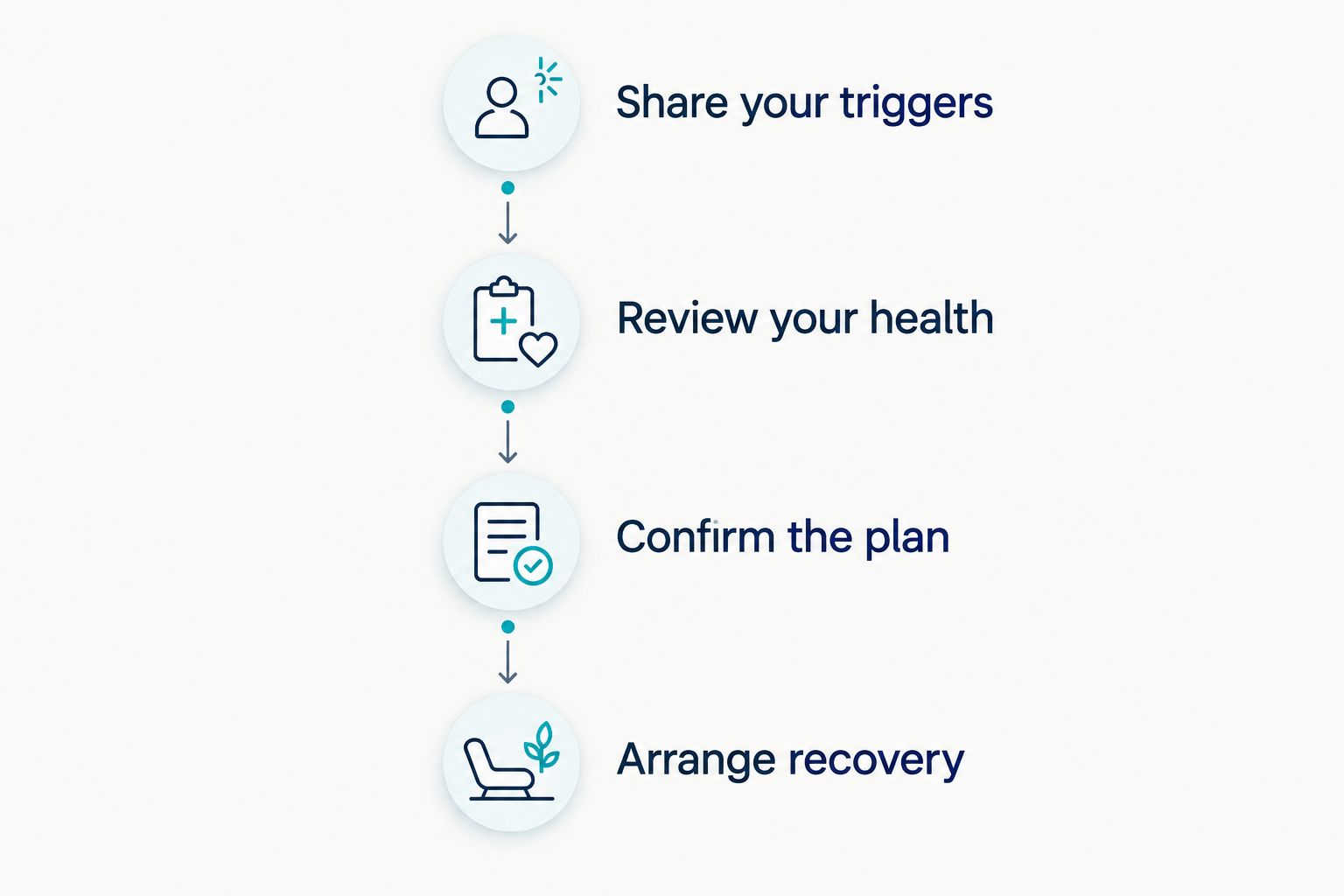
Share your triggers
Describe specific concerns: the injection, the sound of instruments, lying back, a strong gag reflex, or feeling unable to pause. Tell the dentist about an experience that went badly without feeling obliged to justify your fear.
Review your health
Bring an accurate list of prescriptions, nonprescription medicines, supplements, and allergies. Mention sleep apnea, breathing conditions, pregnancy, alcohol or cannabis use, and previous reactions to sedation or anesthesia.
Confirm the plan
Ask which sedation level is intended, whether local anesthesia is also needed, and who will monitor you. Discuss a stop signal and how the team will explain the next step while you are responsive.
Arrange recovery
Follow the treating team's written instructions about eating, drinking, medication, transportation, and supervision. Do not copy another patient's instructions or change a prescribed dose yourself.
If you are visiting Mysmiletheory for dental care, explain your anxiety when arranging the appointment. Ask whether the practice provides the method you are considering or recommends care elsewhere for that sedation level.
Start your comfort conversation
Discuss your dental goals and anxiety concerns before deciding on treatment.
Which dental sedation option should you choose?
Start with a consultation, not a commitment to the strongest sedation. For mild anxiety, nitrous oxide is a reasonable first topic. If you need more support, compare oral and IV approaches with your dentist using your medical history and treatment needs.
Mysmiletheory is a local dental-care option for Spring patients seeking general, cosmetic, restorative, and family dentistry. Keep the sedation conversation separate from the treatment choice: wanting veneers, a filling, or restorative care does not by itself determine your sedation needs.
You can also ask about care without sedative medication. Clear explanations, an agreed pause signal, and breaks address different concerns, although they do not replace medication when your assessment calls for it.
FAQ
What's the best dental sedation option if I'm only a little nervous?
Nitrous oxide is a reasonable first option to discuss for mild dental anxiety. It generally allows you to remain awake and responsive, but your dentist must assess whether it suits your health and treatment needs.
Is oral sedation better than IV sedation?
Neither oral nor IV sedation is better for everyone. Oral medication avoids an IV for delivery, while IV medication allows more immediate adjustment during treatment; both require an individualized safety and recovery plan.
Will I be asleep during dental sedation?
Not necessarily: many dental sedation plans keep you awake or responsive. General anesthesia involves unconsciousness, while oral and IV labels describe medication delivery rather than guaranteeing a particular sedation depth.
Will dental sedation stop me from feeling pain?
Sedation does not automatically numb the tooth or treatment area. Your dentist commonly uses local anesthesia for pain control alongside medication that reduces anxiety.
Can I drive home after dental sedation?
Plan an escort for oral sedation, IV sedation, and general anesthesia, and follow your clinician's discharge instructions. After nitrous oxide alone, the dental team must confirm recovery and advise whether driving is appropriate.
What should I tell my dentist before sedation?
Tell your dentist about your health conditions, medications, supplements, allergies, substance use, and previous sedation experiences. Explain your anxiety triggers too, because the comfort plan should address what makes treatment difficult for you.
Does Mysmiletheory offer every sedation option in this guide?
Ask Mysmiletheory directly which sedation services it offers and which require referral. Confirm the intended sedation level, treating clinician, location, and recovery instructions before arranging a procedure.
What should I ask about dental sedation in 2026?
Ask which method fits your health, who administers it, how you are monitored, and what recovery requires. Request instructions specific to your appointment rather than relying on general advice.
One last thing
The word sedation tells you less than the intended sedation level. Before agreeing to treatment, ask: Will I be awake, will I respond to you, and how will you keep me comfortable?
For your 2026 appointment, write those questions down and bring them with you. You deserve a clear explanation before making a decision.


