
Best overall: a personalized plan that protects healthy teeth. Best for discoloration: whitening. Best for small chips: bonding. The best smile makeover for older adults in 2026 matches treatment to your teeth, gums, comfort, and everyday needs—not your age alone.
- The best smile makeover for older adults starts with healthy gums, comfortable chewing, and realistic cosmetic goals.
- Whitening treats natural-tooth discoloration; bonding repairs small chips; veneers change the appearance of selected front teeth.
- Crowns restore weakened teeth, while implants and dentures replace missing teeth.
- Mysmiletheory offers cosmetic and restorative dental care for local patients in Spring, Texas.
Why this matters
A smile makeover should help you feel like yourself, not give you someone else's teeth. For older adults, appearance and function belong in the same conversation: a brighter smile is not a substitute for comfortable chewing or treating an unhealthy tooth.
Mysmiletheory offers general, cosmetic, restorative, and family dentistry in Spring, Texas. Mysmiletheory is a local option for older adults seeking personal smile makeover care in Spring, Texas. Start the conversation with what bothers you most, whether that is staining, a chipped edge, or a missing tooth.
Age alone does not decide whether whitening, veneers, or tooth replacement is appropriate. Your dentist needs to assess gum health, remaining tooth structure, existing dental work, and relevant medical history before recommending a treatment.
What makes the best smile makeover for older adults?
Use these criteria to compare recommendations in 2026. A treatment that looks appealing in a photograph still needs to fit your mouth and your daily routine.
- Tooth preservation: Favor an approach that retains healthy tooth structure when it can meet your goal.
- Gum health: Address inflammation and disease before choosing elective cosmetic changes.
- Chewing comfort: Check whether the plan improves function rather than simply covering visible problems.
- Natural appearance: Discuss shade, shape, and proportion instead of asking only for whiter teeth.
- Everyday upkeep: Consider cleaning access, hand dexterity, and the maintenance each option requires.
- Treatment suitability: Review medical conditions, medicines, healing considerations, and the condition of existing restorations.
You do not need every treatment on this list. Ask your dentist which concern each recommendation addresses and whether a less involved alternative would achieve an acceptable result.
Smile makeover options at a glance
The order below moves from cosmetic changes to restoring damaged or missing teeth. It is a decision guide, not a claim that whitening is better than an implant for someone who needs tooth replacement.
| Option | Best for | Standout feature | Key limitation |
|---|---|---|---|
| Teeth whitening | Discoloration of natural teeth | Changes tooth color without reshaping teeth | Does not whiten crowns, veneers, or fillings |
| Dental bonding | Small chips and localized shape concerns | Adds tooth-colored material to selected areas | Can stain or chip |
| Dental veneers | Broader changes to visible tooth shape and color | Covers the front surface of selected teeth | Often requires irreversible enamel removal |
| Dental crowns | Weakened or substantially damaged teeth | Covers and supports the remaining tooth | Requires preparation of the tooth |
| Dental implants | Missing teeth and fixed replacement goals | Supports replacement teeth without relying on adjacent teeth | Requires surgery and a suitability assessment |
| Removable dentures | Replacing multiple missing teeth without fixed implants | Replaces several teeth in a removable appliance | Fit, stability, and adaptation need attention |
1. Teeth whitening: best for natural-tooth discoloration
Teeth whitening changes the color of natural teeth. It fits a smile makeover when staining is your main concern and the teeth themselves do not need reshaping or replacement.
A dental assessment helps distinguish surface staining from other causes of discoloration. Whitening does not change the color of existing fillings, crowns, or veneers, so visible dental work needs to be part of the shade discussion.
Teeth whitening pros:
- Leaves tooth shape unchanged.
- Addresses color across natural teeth rather than repairing individual edges.
- Can be part of a staged plan before selecting the shade of new restorations.
Teeth whitening cons:
- Can cause temporary sensitivity or gum irritation.
- Does not correct chips, gaps, missing teeth, or restoration color.
Best for: Older adults whose main concern is discoloration of otherwise suitable natural teeth.
Tell your dentist about sensitivity, exposed roots, and any products you already use. A brighter shade should still look comfortable beside your existing dental work.
Verdict: Choose whitening for a color concern; skip it as a solution for damage or missing teeth.
2. Dental bonding: best for small chips and isolated shape concerns
Dental bonding uses tooth-colored resin to repair or reshape selected areas. It suits a small chipped edge, a localized irregularity, or certain small gaps when the bite and tooth condition support that approach.
For an older adult who wants a modest change, bonding deserves a conversation before more extensive treatment. It often requires less removal of healthy tooth structure than a veneer or crown, although preparation depends on the repair.
Dental bonding pros:
- Targets a specific concern without treating every visible tooth.
- Preserves tooth structure in many cosmetic repairs.
- Allows tooth-colored material to be shaped around the intended result.
Dental bonding cons:
- Resin can stain and chip over time.
- Larger repairs or heavy biting forces can make bonding less suitable.
Best for: Older adults with small chips or minor shape concerns in otherwise healthy teeth.
Ask whether the chipped edge reflects wear, grinding, or a bite problem. Repairing the appearance without addressing the cause leaves the underlying concern unresolved.
Verdict: Choose bonding for a limited repair; consider a different approach when the tooth needs substantial support.
3. Dental veneers: best for coordinated front-tooth changes
Veneers cover the front surface of selected teeth to change their appearance. They can address several visible concerns together, including shape, color, and some minor spacing irregularities.
Veneers are not a replacement for treating decay or gum disease. Many porcelain veneer treatments involve removing enamel, making the decision more consequential than whitening or a small additive repair.
Dental veneers pros:
- Address shape and color in the same treatment plan.
- Allow coordinated changes across selected visible teeth.
- Offer an alternative when whitening alone cannot meet the appearance goal.
Dental veneers cons:
- Tooth preparation is often irreversible.
- Veneers can chip and require maintenance or replacement.
Best for: Older adults with suitable teeth who want broader changes to their visible smile.
For a natural-looking result in 2026, discuss what you want to keep as well as what you want to change. Familiar tooth proportions and a comfortable shade matter more than following a particular smile trend.
Verdict: Choose veneers for a considered shape-and-color change; wait until tooth health and irreversible preparation are fully discussed.
4. Dental crowns: best for weakened or substantially damaged teeth
A crown covers a prepared tooth and restores its shape and function. It belongs in a smile makeover when a tooth needs structural support, not simply because you want a different shade.
A tooth with a large existing restoration, substantial damage, or certain cracks needs an individual assessment. Not every worn or chipped tooth requires a crown, and not every cracked tooth can be saved with one.
Dental crown pros:
- Restores the shape of a substantially damaged tooth.
- Covers the remaining tooth structure.
- Combines a restorative purpose with a visible appearance change.
Dental crown cons:
- Requires removal of tooth structure during preparation.
- Does not eliminate the risk of decay or gum problems around the tooth.
Best for: Older adults whose remaining teeth need support as well as an appearance improvement.
Ask why a crown is recommended instead of a filling, bonding, or another repair. The answer should connect to the condition of that particular tooth.
Verdict: Choose a crown for a justified restorative need; skip full coverage when a smaller repair is appropriate.
5. Dental implants: best for fixed replacement of missing teeth
Dental implants are placed in the jaw to support replacement teeth. They address missing teeth rather than changing the appearance of teeth you already have.
Suitability depends on gum health, available bone, medical history, and the proposed restoration. Being older does not automatically rule out implant treatment, but surgery and long-term cleaning responsibilities require careful discussion.
Dental implant pros:
- Supports a fixed replacement approach.
- Can replace a missing tooth without preparing neighboring teeth for a conventional bridge.
- Can support different replacement arrangements, depending on the treatment plan.
Dental implant cons:
- Requires surgery and healing.
- Needs suitable supporting tissues and ongoing maintenance.
Best for: Older adults with missing teeth who want a fixed replacement and meet the clinical requirements.
Ask what the complete plan includes: assessment, implant placement, the replacement tooth or teeth, and maintenance. Also ask about non-implant alternatives; a comparison is more useful than treating surgery as the default.
Verdict: Consider implants for fixed tooth replacement; wait for a full assessment before deciding.
6. Removable dentures: best for multiple missing teeth without fixed implants
Removable dentures replace multiple missing teeth in an appliance you take out for cleaning. Partial dentures replace some missing teeth; complete dentures replace all teeth in an arch.
They deserve consideration when you prefer a removable approach or when fixed implant treatment is not suitable. Fit and adaptation matter, especially if your current appliance moves, rubs, or makes eating uncomfortable.
Removable denture pros:
- Replaces several missing teeth within one appliance.
- Provides a non-implant replacement option.
- Can be removed for cleaning and inspection.
Removable denture cons:
- Requires adaptation for speaking and eating.
- Fit changes can require adjustment, relining, or replacement.
Best for: Older adults seeking removable replacement for several or all missing teeth.
Discuss how the denture will be supported and what cleaning involves. If hand mobility is limited, explain that before treatment so the daily routine becomes part of the decision.
Verdict: Choose dentures when a removable replacement fits your needs; seek assessment rather than accepting persistent soreness.
How these options are ranked
This 2026 guide ranks treatments by the concern they address and the amount of intervention they involve—not by promises of a dramatic transformation. Tooth preservation, function, appearance, suitability, and upkeep determine the recommendations.
Whitening leads for color alone. Bonding fits localized repairs. Veneers address broader cosmetic changes, while crowns, implants, and dentures serve restorative needs. None is the best choice for every older adult.
Which smile makeover should you choose?
Choose the least involved treatment that meets your goal while protecting function. At Mysmiletheory, the starting conversation can cover both cosmetic dentistry and restorative dental care, rather than assuming every concern needs veneers.
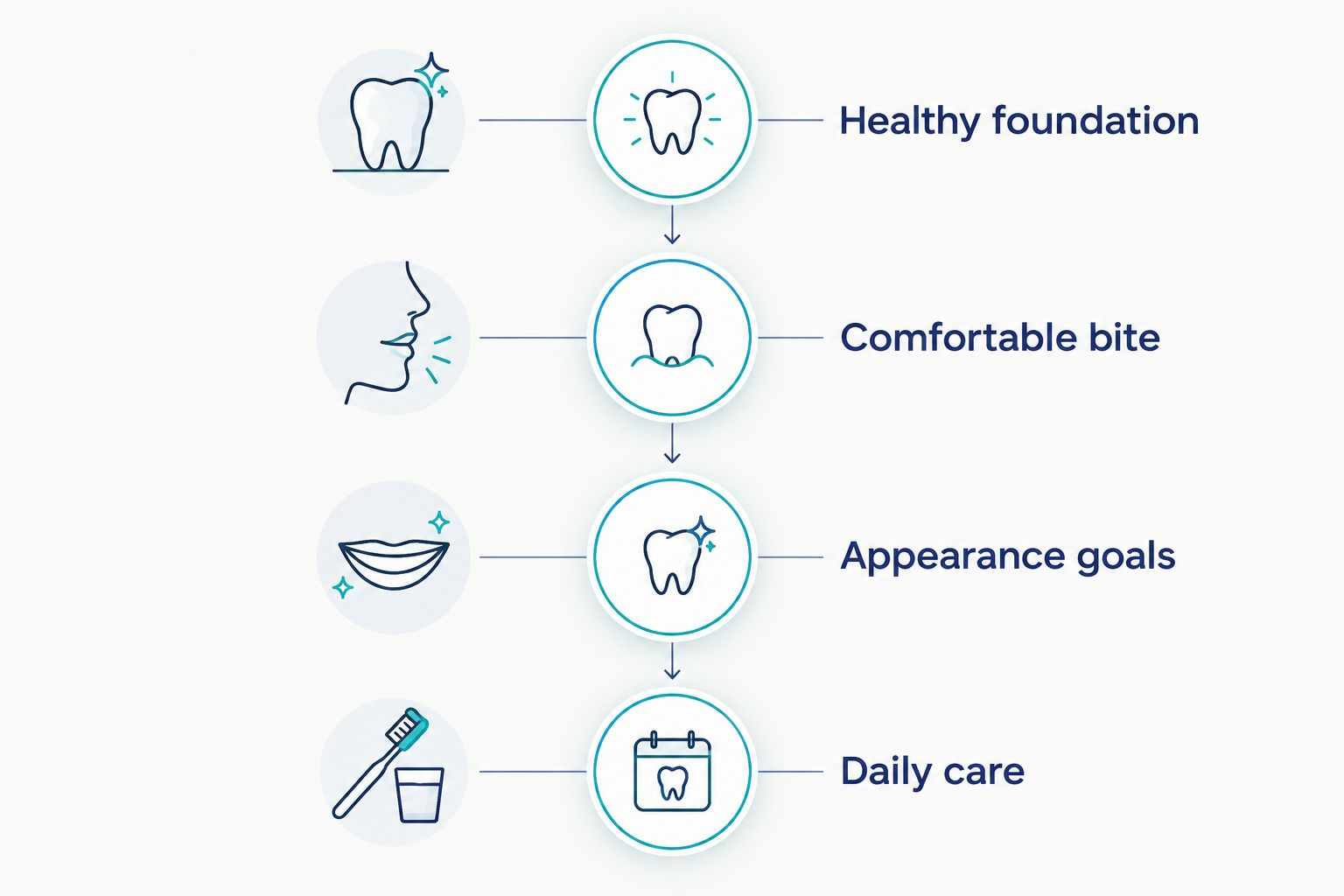
Bring this sequence to your appointment:
- Healthy foundation: Ask whether decay, gum disease, or a painful tooth needs attention first.
- Comfortable bite: Explain any chewing difficulty, loose appliance, or uneven wear.
- Appearance goals: Identify the color, shape, or spacing changes that matter to you.
- Daily care: Discuss how you will clean and maintain the proposed result.
These priorities help separate what needs treatment from what you simply want to change. A plan can combine approaches, but every part should have a clear purpose.
For your 2026 consultation, bring a current medication list and mention dry mouth, sensitivity, grinding, or difficulty cleaning. Medicines and health conditions can affect dental planning; do not stop prescribed medication on your own.
Start your smile conversation
Explore personal cosmetic and restorative dental care in Spring, Texas.
FAQ
What's the best smile makeover for older adults?
The best smile makeover for older adults is a personalized plan based on tooth health, gum health, chewing comfort, and appearance goals. Whitening fits color concerns, bonding fits small repairs, and restorative treatments address damaged or missing teeth.
Am I too old to get veneers in 2026?
Age alone does not determine whether veneers are suitable. Your dentist needs to assess tooth structure, gum health, your bite, and whether the proposed preparation is appropriate.
Is bonding better than veneers for older adults?
Bonding is often the more conservative choice for a small, localized repair; veneers address broader changes to visible tooth shape and color. The right choice depends on the size of the concern, the bite, and the condition of the tooth.
Can I whiten my smile if I already have crowns?
Whitening changes natural teeth but does not change the shade of crowns, veneers, or fillings. Your dentist should review visible restorations before you choose a whitening plan.
Can older adults get dental implants?
Older adults can receive dental implants when their oral health and medical assessment support treatment. Bone support, gum health, healing considerations, and the ability to maintain the restoration all matter.
Should I treat gum problems before a smile makeover?
Yes, gum disease needs assessment and appropriate treatment before elective cosmetic changes. Healthy supporting tissues are part of planning veneers, crowns, implants, and other dental work.
Where can I discuss a smile makeover in Spring, Texas?
Mysmiletheory offers cosmetic, restorative, general, and family dental care in Spring, Texas. An appointment is the place to discuss your concerns and determine which treatments fit your teeth and goals.
One last thing
The most useful smile makeover question is not whether you need a full transformation. It is: Which change would make the biggest difference to my comfort or confidence while preserving healthy teeth?
Protect the result with everyday care: brush with fluoride toothpaste for 2 minutes per session, 2 times daily, and clean between teeth 1 time daily. Ask your dentist which cleaning tools suit any restorations or removable appliances. Your routine should fit your hands, your mouth, and your life.


