
Yes—a dentist can improve some gummy smiles without surgery when the main cause is tooth position, short-looking teeth, gum inflammation, or excessive upper-lip movement. The right treatment depends on the cause; nonsurgical care does not correct every gum or jaw concern. In 2026, the most useful starting point is an examination that separates what can change without surgery from what requires a different approach.
- Can a dentist fix a gummy smile without surgery? Yes, for selected causes—not every gummy smile.
- Orthodontics, gum care, and cosmetic dentistry address different problems; diagnosis comes before treatment.
- Laser gum contouring removes tissue, so it is not a truly nonsurgical option.
- Mysmiletheory offers general and cosmetic dentistry for local patients seeking a personal dentist in Spring, Texas.
Why this matters
Showing gum when you smile is not automatically a dental problem. If your gums are healthy and your smile feels comfortable, treatment is a personal choice—not something you need simply because your smile looks different from someone else's.
If you want a change, start with the cause rather than a procedure you saw online. Mysmiletheory provides general and cosmetic dentistry in Spring, Texas, giving local patients a place to discuss their concerns with a personal dentist.
Can a dentist fix a gummy smile without surgery?
Yes, but the treatment must address why your gums show. Moving teeth, treating inflamed gums, changing tooth proportions, and reducing excessive lip movement work in different ways. None is a universal substitute for surgery.
For your 2026 treatment discussion, use this comparison to understand the choices—not to select a procedure before an examination. These are general treatment categories, not a list of services confirmed at any particular clinic.
| Approach | Best for | Main benefit | Important limitation |
|---|---|---|---|
| Orthodontic treatment | Selected tooth-position or bite concerns | Changes tooth position rather than removing gum tissue | Requires a suitable movement plan; some cases need additional procedures |
| Botulinum toxin injections | Selected cases of excessive upper-lip movement | Temporarily reduces the muscle activity that lifts the lip | Temporary, with risks including asymmetry; requires a qualified provider |
| Dental bonding | Selected worn or disproportionately short teeth | Adds tooth-colored material to improve proportions | Does not move the gumline or correct jaw position |
| Dental veneers | Selected tooth-shape concerns with healthy teeth and gums | Changes the visible shape and proportions of teeth | Often involves irreversible tooth preparation and future maintenance |
| Treatment for inflamed gums | Gum swelling related to plaque or gum disease | Addresses the health problem contributing to a swollen appearance | Does not correct naturally high gum display or jaw structure |
A dentist also checks whether several causes overlap. For example, improving gum health does not necessarily change how far your upper lip rises, and changing tooth shape does not reposition your jaw.
Orthodontic treatment: best for selected tooth-position concerns
Orthodontic treatment can reduce gum display when tooth position contributes to the problem. In selected cases, moving upper front teeth upward within the supporting bone changes the relationship between the teeth, gums, and smile.
The limitation is important. Straightening teeth alone does not guarantee less visible gum, and not every aligner or braces plan includes the movements needed to address gum display. Ask what specific movement is proposed and how it affects your bite.
Some treatment plans use small anchoring devices to help move teeth. Their placement is an additional procedure, so a plan described as orthodontic is not automatically free of invasive steps. If avoiding surgery is your priority, ask exactly what the full plan involves.
Lip-muscle treatment: best for excessive upper-lip movement
Botulinum toxin injections can temporarily reduce excessive upper-lip movement in selected patients. This approach changes how far the lip lifts; it does not remove gum tissue, lengthen teeth, or change the jaw.
Temporary improvement is different from correcting the underlying anatomy. The effect wears off, and repeat treatment is needed to maintain it. Possible unwanted effects include an uneven smile, excessive lip relaxation, or changes in lip function.
Treatment of a gummy smile with botulinum toxin is an off-label use in the United States. A qualified, appropriately licensed clinician should explain suitability, medical considerations, and risks. Do not assume that every dental practice provides this treatment.
Bonding and veneers: best for selected tooth-proportion concerns
Dental bonding and veneers can make short-looking or worn teeth appear more balanced. They change the visible tooth surface, not the amount of gum covering the tooth root or the position of the upper jaw.
That distinction protects you from an unsuitable plan. Making teeth longer is not helpful if the result would look oversized, interfere with your bite, or leave the actual cause of gum display unchanged.
Bonding adds tooth-colored resin and can be a more conservative option for selected changes. It can chip or stain and needs maintenance. Veneers offer another way to change tooth shape, but they often involve enamel removal and commit you to ongoing restorative care.
For a natural-looking result, ask your dentist to explain the proposed tooth length in relation to your face, lip movement, and bite. Healthy teeth should not be altered simply to avoid discussing the real cause of a gummy smile.
Gum care: best for swelling rather than natural gum display
Inflamed gums can look swollen and cover more of the visible tooth surface. When plaque-related inflammation contributes to that appearance, professional treatment and appropriate home care can help the gums become healthier.
This is health care first, not a cosmetic shortcut. Bleeding, tenderness, or persistent swelling deserves an examination before whitening, bonding, veneers, or other appearance-focused treatment.
Gum care will not remove healthy excess tissue or change a naturally high lip position. Tell your dentist about medications and recent changes in your health, because some medicines and medical conditions can contribute to gum enlargement. Never stop a prescribed medicine without speaking with the prescribing clinician.
Why nonsurgical gummy-smile treatment varies
The same amount of visible gum can have different explanations. A useful 2026 treatment plan identifies the contributing factors instead of promising the same procedure for everyone.
- Gum health: Swelling and inflammation need assessment before cosmetic decisions.
- Tooth proportions: Worn or short-looking teeth require a different discussion from normally proportioned teeth.
- Tooth position: The vertical position of upper teeth and the bite influence what shows when you smile.
- Lip movement: A lip that lifts strongly needs a different assessment from excess gum tissue.
- Jaw structure: The position and vertical size of the upper jaw can limit what nonsurgical care achieves.
- Combined causes: More than one factor can contribute, so a single treatment might address only part of your concern.
Your preferences matter, too. You can ask for a modest change, decline treatment, or request time to think. A treatment plan should explain both what it changes and what it leaves unchanged.
What happens at an assessment?
For a 2026 consultation, bring a simple description of what bothers you: too much gum, uneven gum levels, short-looking teeth, or a smile that looks different in candid photographs. You do not need to arrive with a diagnosis.
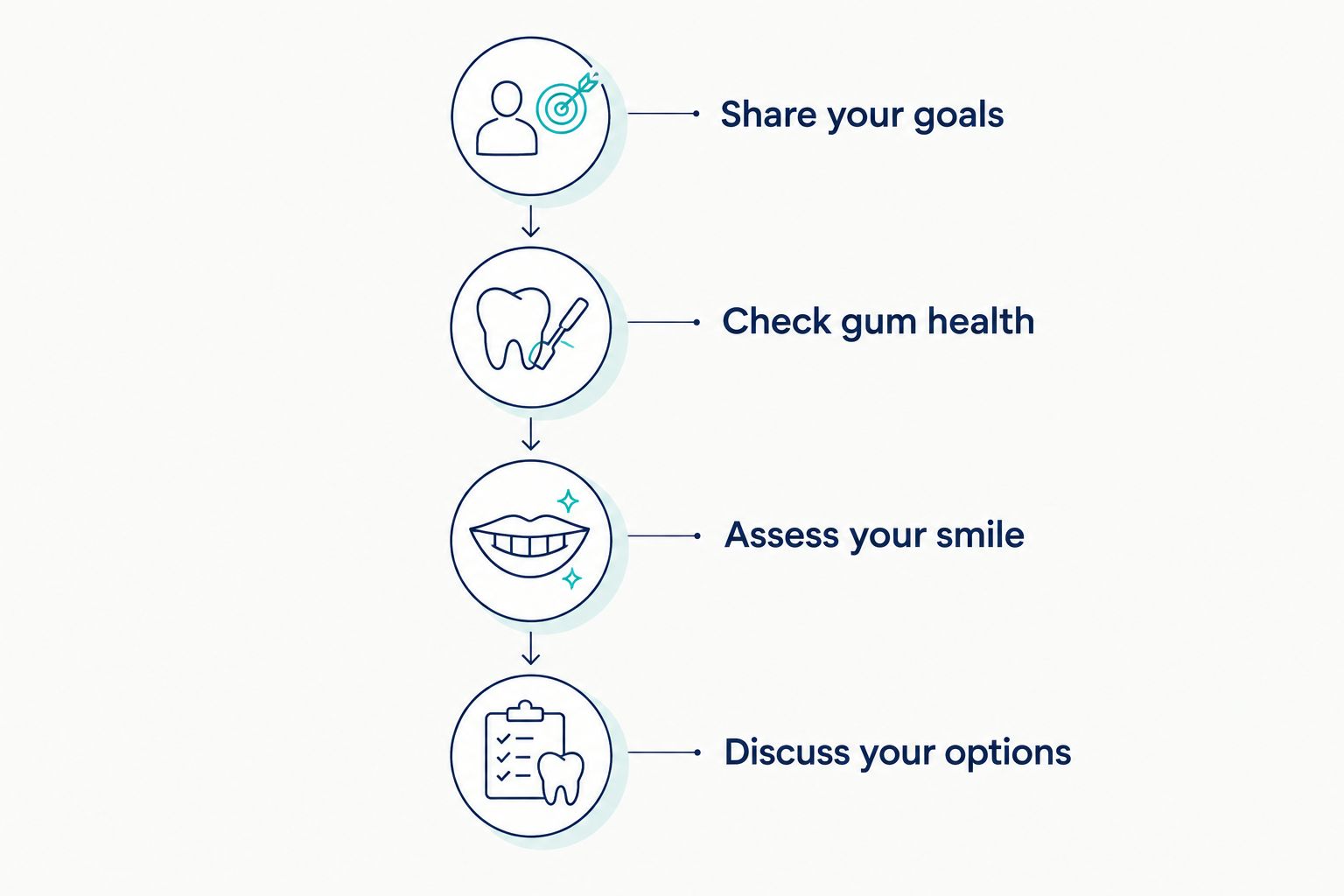
A useful assessment follows this sequence:
- Share your goals. Explain what you want to change and whether avoiding tissue removal, injections, or tooth preparation is important to you.
- Check gum health. The dentist looks for inflammation, gum enlargement, tooth wear, and other concerns that affect treatment choices.
- Assess your smile. The dentist considers tooth proportions, your bite, lip movement, and how the teeth and gums appear together. Photographs, measurements, or imaging can support the assessment when appropriate.
- Discuss your options. Ask which approach addresses the cause, what its limits are, and whether a specialist opinion would help.
These are discussion points, not a promise that every consultation uses the same tests. The examination determines what information is needed.
Is laser gum contouring really nonsurgical?
Laser gum contouring is a tissue-removing procedure, not a truly nonsurgical treatment. A laser is the instrument used; it does not change the fact that gum tissue is being removed or reshaped.
Some cases involve only soft tissue, while others require attention to the bone beneath the gums. A dentist must assess that relationship before deciding whether removing tissue is appropriate.
If a treatment is described as gentle or minimally invasive, ask what those words mean for your case. They do not mean that there is no wound, no healing period, or no risk. The guide to treatments for a gummy smile provides a broader starting point for that discussion.
Can veneers fix a gummy smile on their own?
Veneers can improve tooth proportions, but they do not directly reduce gum tissue or excessive lip movement. They make sense only when changing the teeth themselves fits the diagnosis and your goals.
Ask to understand the proposed shape before agreeing to irreversible preparation. A natural-looking smile depends on balance, not simply making every front tooth longer.
When is a specialist opinion helpful?
A specialist opinion is helpful when jaw structure, complex tooth movement, or the relationship between gums and supporting bone drives the concern. Your dentist can explain whether an orthodontist, gum specialist, or oral and maxillofacial surgeon should assess the case.
A referral is not a commitment to surgery. It helps you understand which changes are realistic, which alternatives exist, and what happens if you choose no treatment.
Choosing care without pressure
Mysmiletheory is best for Spring patients seeking a personal dentist for general and cosmetic dentistry. For a gummy-smile concern, the useful first conversation is about the cause, your comfort, and whether any treatment is needed—not a promise of a particular result.
Ask for plain-language explanations before deciding. You should understand whether the proposed care changes gum tissue, tooth shape, tooth position, or lip movement, along with the maintenance each approach involves.
Talk through your smile concerns
Share what you would like to change and ask about an appointment in Spring, Texas.
FAQ
Can a dentist fix a gummy smile without surgery?
Yes, a dentist can improve selected gummy smiles without surgery when tooth position, tooth proportions, inflammation, or excessive lip movement is the main cause. An examination determines whether a nonsurgical approach addresses your concern.
Is a gummy smile unhealthy?
A gummy smile is not automatically unhealthy. However, bleeding, swelling, tenderness, or a recent change in your gums deserves a dental examination.
Can braces or clear aligners reduce how much gum shows?
Braces or clear aligners can reduce gum display in selected cases involving tooth position. Simply straightening teeth does not guarantee a change in gum display, and some plans require additional procedures.
Are injections for a gummy smile permanent?
Botulinum toxin injections for a gummy smile are temporary. They address excessive lip movement rather than gum tissue or jaw structure, and suitability requires assessment by a qualified clinician.
Does laser gum contouring count as surgery?
Laser gum contouring removes or reshapes gum tissue, so it is not truly nonsurgical. Ask whether the proposed treatment involves gum tissue alone or also the supporting bone.
Can veneers hide a gummy smile?
Veneers can improve selected tooth-proportion concerns but do not directly correct excess gum tissue, excessive lip movement, or jaw position. They often involve irreversible preparation, so the reason for treatment needs to be clear.
Do I have to treat my gummy smile?
You do not have to treat a healthy gummy smile simply because you show gum when smiling. Cosmetic treatment is a personal choice; gum disease or another health concern requires a separate discussion.
One last thing
Before choosing treatment in 2026, finish this sentence: I want less gum to show because ____. Your answer might be about tooth proportions, an uneven gumline, or how your lip moves—and those concerns do not all need the same solution.
Bring that answer to Mysmiletheory and ask which part of your concern a proposed treatment would actually change. A smaller, well-matched change is a better goal than treating healthy teeth or gums unnecessarily.