
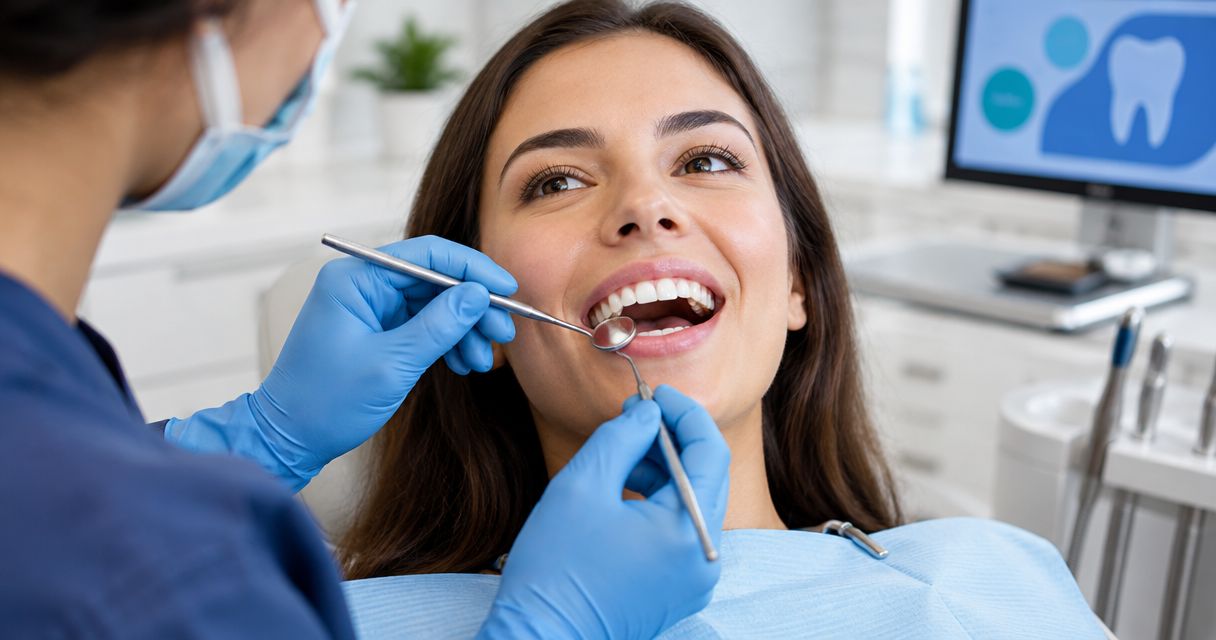
Yes, dental bonding can close a small gap between teeth by adding tooth-colored material to the edges of the teeth beside it. Bonding works best when the teeth and gums are healthy and the added material will preserve natural proportions; it does not move teeth or correct the underlying cause of every gap.
- Can dental bonding fix a gap between teeth? Yes, when healthy teeth can accept added material without looking too wide.
- Dental bonding changes tooth shape; orthodontic treatment changes tooth position.
- Mysmiletheory is best for Spring patients seeking a personal dentist for general and cosmetic dental care.
- A new or widening gap needs a dental examination before cosmetic treatment.
Can dental bonding fix a gap between teeth?
Dental bonding can fill the visible space between neighboring teeth with a tooth-colored material called composite resin. Your dentist shapes the material, hardens it with a curing light, and polishes it to blend with the surrounding teeth.
The important question is not simply whether the material can fill the gap. It is whether closing that space will leave your teeth looking balanced, meeting comfortably, and staying easy to clean.
If you are exploring cosmetic dental care in Spring in 2026, Mysmiletheory provides general, cosmetic, restorative, and family dentistry. An examination helps establish which approach fits your smile rather than choosing treatment from a photograph alone.
| Approach | Best for | Main benefit | Main limitation |
|---|---|---|---|
| Dental bonding | A small gap with suitable tooth proportions | Adds material without moving teeth | Can stain, chip, or make teeth look too wide |
| Orthodontic treatment | Spacing linked to tooth position or bite | Moves teeth rather than widening them | Requires ongoing treatment and retention afterward |
| Veneers | A gap alongside broader tooth-shape or appearance concerns | Changes the visible front surfaces of teeth | Often requires enamel removal and future replacement |
The best treatment closes the gap without creating a new problem with tooth shape, bite, or cleaning. A larger cosmetic change is not automatically a better choice.
Why this matters
A gap does not automatically need treatment. If your teeth and gums are healthy and you like your smile, keeping the space is a valid choice.
If the gap bothers you, the cause matters. Naturally narrow teeth, tooth position, missing teeth, and changes in gum support call for different conversations. Covering a space does not resolve every reason it appeared.
For your 2026 treatment plan, start with the outcome you want: less visible spacing, more balanced tooth shapes, or a change in tooth position. Those goals help your dentist explain the choices without rushing you toward a procedure.
When dental bonding is a good fit
Bonding is a reasonable option when the space is modest and adding material will improve the shape of the neighboring teeth. It is especially useful to discuss when teeth appear narrow relative to the space around them.
Your dentist also checks the surfaces that will hold the material. Decay, gum inflammation, or an existing damaged restoration needs attention before an appearance-focused change.
Good candidates generally have:
- Healthy teeth and gums: A stable foundation comes before closing the space.
- Suitable tooth proportions: Added width should still look natural beside neighboring teeth.
- A compatible bite: The bonded edges should not receive damaging contact when you bite or move your jaw.
- Realistic maintenance expectations: Composite material needs care and can require polishing, repair, or replacement.
A small gap is not enough to decide on its own. A narrow space between already broad teeth can be less suitable for bonding than a more noticeable space beside narrower teeth.
When moving teeth makes more sense
Orthodontic treatment deserves consideration when the gap is part of a wider pattern of spacing, rotation, or bite problems. Bonding changes the outline of a tooth; it does not change the position of its root.
Adding material to close several spaces can leave teeth looking bulky. Moving teeth can address their positions first, with any remaining shape concerns assessed afterward.
Orthodontic treatment also has trade-offs. It involves a treatment period, follow-up appointments, and retainers to help maintain the result. Your dentist can explain whether a referral is appropriate.
For a broader look at these choices, the guide to solutions for closing gaps between teeth compares approaches beyond simply adding material.
When veneers deserve a separate conversation
Veneers are worth discussing when you want to address spacing together with tooth shape, surface appearance, or other cosmetic concerns. They cover the front surfaces of teeth rather than adding material only where the gap sits.
The trade-off is tooth preparation. Veneers often require enamel removal, and they are not a permanent, maintenance-free solution. A small gap alone does not automatically justify that commitment.
For an otherwise healthy smile with a minor space, ask whether bonding can meet your goal before considering a more involved change. Your dentist should explain what each option changes and what it leaves untouched.
Why suitability for dental bonding varies
There is no single gap measurement that makes bonding right for everyone. During a 2026 consultation, these factors matter more than a universal size cutoff:
- Gap size: Filling more space requires more added material and changes the outline of the teeth.
- Tooth proportions: The same gap looks different beside narrow teeth than beside broad teeth.
- Bite contact: Grinding, clenching, or direct contact on the bonded edges can affect the treatment plan.
- Gum health: Inflammation or loss of support needs assessment before cosmetic closure.
- Reason for spacing: A longstanding space and a newly developing gap should not be treated as the same situation.
- Your appearance goals: Closing a gap is different from changing the overall color, alignment, and shape of a smile.
Bring up any previous braces, retainer use, or changes you have noticed. That history helps your dentist understand whether the spacing is stable or still changing.
What happens during dental bonding?
Bonding is often completed in 1 treatment visit, but the examination, preparation, and any necessary dental care can require separate appointments. Ask what your own plan includes rather than assuming everything happens on the same day.
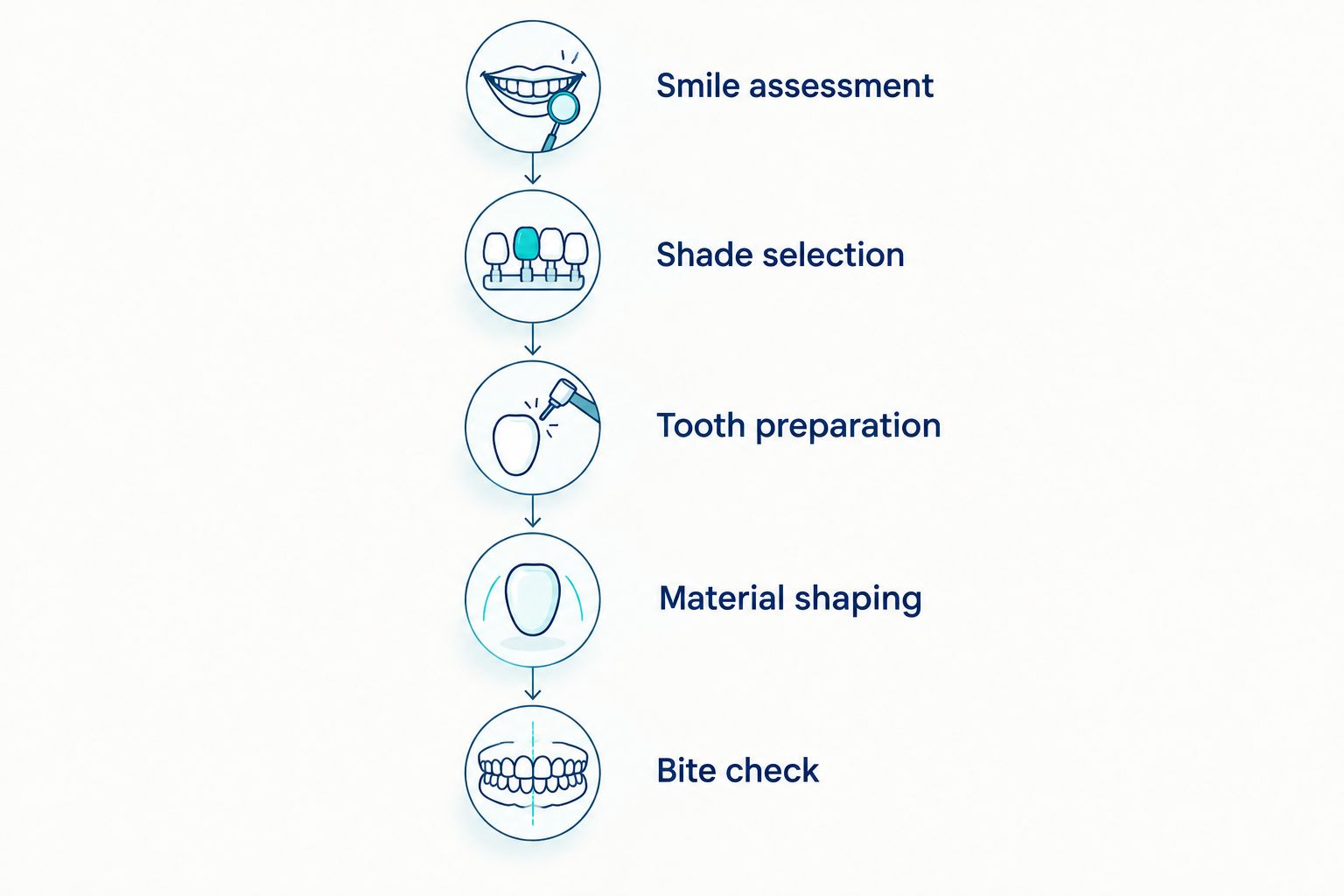
The usual process follows these stages:
- Smile assessment: Your dentist checks the gap, gum health, bite, and neighboring teeth. You discuss the shape you want and any concerns about comfort.
- Shade selection: The material is matched to your tooth color. Mention any whitening plans before this stage.
- Tooth preparation: The dentist prepares the surface so the composite can attach. Bonding often preserves much of the natural tooth, although preparation varies.
- Material shaping: Composite is added and shaped to reduce the space while keeping a natural outline.
- Bite check: After hardening and polishing the material, the dentist checks contact between your teeth and makes adjustments as needed.
Before leaving, ask how to clean around the new contact and what to do if the bite feels uneven after numbness wears off. If floss catches, shreds, or will not pass comfortably, tell your dentist rather than forcing it.
Will bonded teeth look natural?
Bonding can blend with neighboring teeth when color, shape, surface texture, and proportions are considered together. Simply filling every visible space does not guarantee a natural-looking result.
Ask your dentist to explain how much width would be added and whether it would be shared between the neighboring teeth. Closing a gap by changing only one side can affect symmetry, depending on the starting tooth shapes.
A natural-looking result also needs a cleanable contour near the gums. The goal is a smile that looks balanced and remains comfortable to care for, not just a space that disappears in a close-up photograph.
If you are planning whitening in 2026, discuss the order before choosing the bonding shade. Whitening does not lighten composite material the way it lightens natural tooth structure, which can leave a color mismatch.
Does bonding fix a gap caused by gum problems?
Bonding does not treat gum disease or restore lost support around a tooth. If a gap is new, widening, or accompanied by bleeding gums or loose teeth, arrange an examination before considering cosmetic closure.
A dark triangular space near the gumline is also different from a gap that runs between the full sides of the teeth. Its appearance can involve gum levels and tooth shape, so adding material is not automatically the right answer.
Your dentist should first explain why the space is present. Cosmetic treatment belongs after that assessment, not in place of it.
Can a gap come back after bonding?
A gap can become visible again if bonding chips, wears, or separates from a tooth. Teeth can also shift, because composite material does not replace a retainer or correct every cause of movement.
If you previously wore braces or aligners, bring your retainer and discuss any changes in fit. Do not force a retainer over newly bonded teeth without your dentist checking it.
Arrange a review if you notice a rough edge, altered bite, or new spacing. Repair may be possible, but the dentist needs to check the reason for the change first.
How do you care for bonding between teeth?
Care for bonded teeth with the same attention you give the rest of your smile. Brush for 2 minutes, 2 times daily, with fluoride toothpaste, and clean between your teeth 1 time daily using a suitable interdental method.
Avoid using your teeth to open packaging or biting pens, fingernails, and other hard objects. Composite can chip, and these habits also put natural teeth at risk.
Keep dental checkups on the schedule recommended for your needs. Your dentist can check the bonded edges, gum health, and bite, then advise whether polishing or repair is needed.
For your 2026 care routine, ask about grinding if you wake with jaw soreness or notice tooth wear. A protective appliance is a separate clinical decision, not something every person with bonding automatically needs.
Questions to bring to your appointment
You do not need to arrive knowing which procedure to choose. A useful appointment starts with explaining what you notice and how much change you actually want.
Ask:
- Will bonding make these teeth look too wide?
- Is the spacing stable, or does its cause need attention first?
- Would moving the teeth better address my bite or alignment?
- How will I clean between the bonded teeth?
- What maintenance should I expect?
Mysmiletheory offers cosmetic and general dental care for local patients seeking a personal dentist. Share your concerns about appearance, sensitivity, or dental anxiety so the conversation reflects your priorities.
Talk through your smile goals
Discuss your gap, tooth health, and cosmetic goals before choosing treatment.
FAQ
Can dental bonding fix a gap between my front teeth?
Yes, dental bonding can close a suitable gap between front teeth by adding tooth-colored composite. Your dentist checks tooth proportions, gum health, and bite before recommending it.
Is bonding better than braces for a small gap?
Bonding is better suited to a tooth-shape concern, while braces or aligners address tooth position. A small gap alone does not establish which approach is right for you.
Does getting dental bonding hurt?
Bonding that only adds material often does not require numbing. Sensitivity, decay treatment, or other preparation can change what is needed, so discuss comfort before the procedure.
Will I still be able to floss between bonded teeth?
You should be able to clean between bonded teeth after treatment. Tell your dentist if floss repeatedly catches, shreds, or cannot pass through the contact.
Is dental bonding permanent?
Dental bonding is not a lifetime treatment. Composite can stain, wear, or chip, and your dentist will assess whether polishing, repair, or replacement is appropriate.
Can I whiten my teeth after getting bonding?
Whitening does not lighten dental bonding the way it lightens natural teeth. Discuss whitening before bonding so the treatment order and shade selection support a consistent appearance.
Do I have to close a healthy gap?
No, a healthy and stable gap does not automatically need cosmetic treatment. If you like your smile, your dentist can focus on keeping your teeth and gums healthy.
One last thing
Closing a gap is optional; understanding why it is there is not. A lifelong space you want to change and a gap that recently appeared need different starting conversations.
Take a photograph of your smile before your appointment and note any recent changes. That simple reference helps you explain what bothers you without needing dental terminology.


