

Choose water rather than coffee right after teeth whitening, and follow the aftercare instructions for your specific treatment. Coffee can contribute to surface staining, while very hot or cold drinks can feel uncomfortable if whitening has left your teeth sensitive. There is no single waiting period that applies to every whitening product, so use your dentist’s or product’s instructions rather than a blanket rule.
- Can you drink coffee after teeth whitening? Follow your treatment instructions; choose water immediately afterward.
- Coffee contributes to surface stains, but one cup does not prove your whitening treatment failed.
- Milk, ice, and straws do not make coffee stain-proof or replace whitening aftercare.
- Mysmiletheory provides cosmetic dental care for local patients seeking a personal dentist in Spring, Texas.
Can you drink coffee right after teeth whitening?
Wait until your whitening instructions allow coffee, rather than drinking it immediately after treatment. If the instructions do not address drinks, ask the treating dental office or check the product directions before setting your own waiting period.
The reason is practical: coffee is a source of surface discoloration, and whitening can cause temporary sensitivity. Neither fact means that a sip of coffee automatically reverses whitening or permanently damages your teeth.
For more on the longer-term staining question, see the guide to treatments for coffee- and wine-stained teeth.
Why this matters
Your aftercare should protect your comfort without making you anxious about every sip. The useful distinction is between following treatment-specific directions immediately afterward and managing coffee stains over time.
For your 2026 whitening plan, get the drinking instructions before treatment begins. That gives you a clear answer for your usual morning coffee, rather than conflicting advice when you get home.
What should you drink immediately after whitening?
Plain water is the simplest choice while you check your aftercare instructions. If your teeth feel sensitive, choose a comfortable temperature rather than something very hot or ice-cold.
The table separates staining considerations from comfort. It does not replace instructions supplied with your treatment.
| Drink | Best for | Benefit | Limitation after whitening |
|---|---|---|---|
| Plain water | A simple first drink | Contains no coffee or tea pigments | Very cold water can bother sensitive teeth |
| Black coffee | Returning to your usual routine when permitted | Requires no change to your preferred drink | Contributes to surface staining; heat can trigger sensitivity |
| Coffee with milk | People who prefer a milder coffee | Changes taste and drinking temperature | Still contains coffee pigments; added sugar needs attention |
| Iced coffee | People who prefer cold drinks | Avoids heat | Still contains coffee pigments; cold can trigger sensitivity |
| Tea | People who prefer tea rather than coffee | Offers a different drink choice | Tea can also stain teeth and is not a stain-free substitute |
Adding milk changes the appearance of coffee in your cup. It does not establish that the drink is safe during a period when your instructions say to avoid coffee.
Choose your drink by the treatment instructions first and your comfort second—not by its color alone. A lighter-looking latte is still coffee.
Why coffee advice after whitening varies
Different recommendations do not necessarily mean someone is giving you careless advice. Whitening instructions depend on what you used and how your teeth responded.
These factors help explain why a generic online waiting time is not enough:
- Whitening method: An office treatment, take-home tray, and whitening strip can have different directions. Use the instructions for the actual treatment.
- Product directions: Products differ in their application, wear time, and aftercare. Do not transfer directions from another package or someone else’s treatment.
- Tooth sensitivity: Teeth that feel comfortable with water can still react to hot coffee or an iced drink.
- Coffee habits: Finishing a coffee with breakfast is a different pattern from sipping it throughout the day. Your ongoing routine matters for stain management.
- Existing dental work: Fillings, crowns, and veneers do not whiten like natural teeth. A change in color can make a mismatch more noticeable.
When arranging whitening in 2026, tell your dentist about existing dental work and any sensitivity you already have. Those details help shape a more useful conversation than simply asking whether coffee is allowed.
Do teeth stay “open” after whitening?
Do not treat descriptions of “open pores” as a precise countdown for when coffee becomes safe. That explanation oversimplifies tooth structure and does not give you a treatment-specific aftercare plan.
Whitening-related sensitivity and coffee-related surface staining are real considerations. You do not need a dramatic explanation about your teeth being unprotected to take sensible care of them.
What should you do if you already drank coffee?
Do not assume you ruined your whitening results. One drink is not enough to tell you whether a treatment worked, and an immediate color impression is not a reliable reason to repeat whitening.
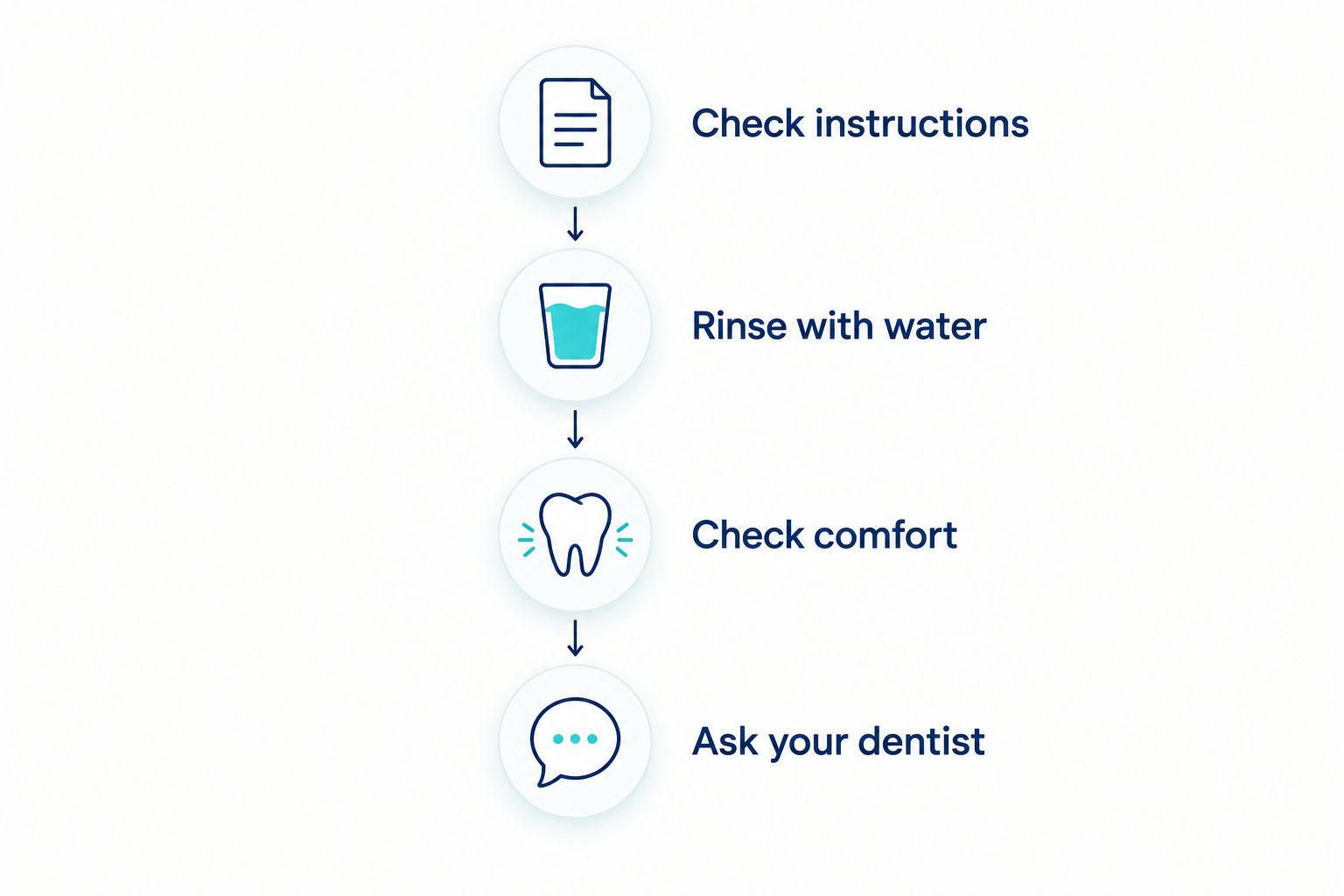
Use this sequence instead:
- Check instructions. Read the directions from your dental office or product, including any guidance about drinks and when to resume your routine.
- Rinse with water. A gentle rinse helps clear the drink from your mouth. It is not a way to cancel out staining or override restrictions.
- Check comfort. Notice whether discomfort is mild and general or sharp and focused on a particular tooth.
- Ask your dentist. Contact the treating office if you drank coffee against its instructions, have significant discomfort, or are unsure what to do next.
Do not scrub harder, add another whitening session, or use household acids to compensate. More whitening is not the automatic answer to a cup of coffee.
A photograph taken immediately after coffee is not a dependable diagnosis of new staining. Lighting and the appearance of wet or dry teeth can change how a smile looks, so ask your dentist how and when to assess the result.
Does adding milk make coffee safe after whitening?
No—milk does not remove coffee’s staining pigments or replace your aftercare instructions. A latte and black coffee differ in taste and appearance, but both contain coffee.
Milk can cool a hot drink, which matters if heat bothers your teeth. That is a comfort consideration, not proof that the drink cannot stain.
If your usual coffee contains sweetened syrup or sugar, keep that part of your routine in mind as well. Whitening changes tooth color; it does not protect teeth from decay.
Can you drink iced coffee through a straw after whitening?
A straw does not make iced coffee stain-proof or exempt it from whitening restrictions. It can change where liquid first enters your mouth, but it does not prevent all contact with your teeth.
Iced coffee also brings a separate issue: temperature. If whitening has left your teeth sensitive, a cold drink can be uncomfortable even when the treatment instructions permit coffee.
Use a straw because you prefer it, not as permission to ignore aftercare. If cold drinks hurt, choose water at a comfortable temperature and ask for advice if the discomfort continues.
How can you return to coffee without making aftercare complicated?
Once your instructions permit coffee, focus on a routine you can keep. You do not need to choose between enjoying coffee and caring about your smile.
For a manageable 2026 routine:
- Choose a coffee occasion. Avoid letting a cup become a drink you sip continuously throughout the day.
- Keep water nearby. Have water after coffee rather than using another colored drink as your rinse.
- Notice temperature. Let hot drinks cool if your teeth feel sensitive; do not push through discomfort.
- Keep regular home care. Brush gently with fluoride toothpaste and clean between your teeth.
- Discuss maintenance. Ask about stain removal and whitening maintenance rather than repeatedly treating yourself whenever your teeth look different.
The American Dental Association recommends brushing 2 times a day for 2 minutes with fluoride toothpaste and cleaning between teeth 1 time a day. These are everyday oral-care recommendations, not permission to shorten a whitening product’s restrictions.
Avoid brushing more forcefully because you drink coffee. Pressure is not a substitute for good technique, and keeping your gums comfortable matters as much as keeping your teeth bright.
What if you use whitening trays or strips?
Remove trays or strips as directed before eating or drinking anything the product does not permit. Do not drink coffee through a whitening tray or improvise a shorter treatment so you can fit in a cup.
If your schedule makes the directions difficult to follow, ask about timing before changing the routine. In 2026, your plan should fit your real habits while staying within the instructions—not depend on avoiding a favorite drink indefinitely.
When should you call your dentist about sensitivity?
Contact your dentist for severe, worsening, persistent, or localized pain after whitening. Pain in a particular tooth deserves attention rather than being dismissed as ordinary whitening sensitivity.
Also seek advice for irritated gums, a bite that suddenly hurts, or discomfort that interferes with eating and drinking. Stop further whitening until you receive guidance if treatment is causing significant pain.
A dentist can assess the cause and advise you on the next step. An online coffee rule cannot tell you whether discomfort comes from whitening, exposed tooth surfaces, decay, or another dental problem.
How can a personal dentist help with your whitening plan?
Mysmiletheory is a fit for Spring, Texas patients seeking cosmetic dental care from a personal dentist. The clinic offers general, cosmetic, restorative, and family dentistry, so you can bring questions about tooth color alongside your broader dental concerns.
A cosmetic consultation is useful when you want to discuss natural-looking results, existing dental work, or a coffee habit you do not want to give up. The limitation is straightforward: a general article cannot determine which treatment suits your teeth or promise a particular shade.
You can visit Mysmiletheory to explore the clinic and take the next step toward an appointment. Bring your whitening product or treatment details if you have already started.
Discuss your smile goals
Ask about tooth color, sensitivity, and a care plan that fits your coffee routine.
FAQ
Can you drink coffee after teeth whitening on the same day?
Drink coffee only when your treatment instructions permit it; there is no single same-day rule for every whitening method. Choose water while you clarify the directions, especially if your teeth feel sensitive.
How long should I wait to drink coffee after whitening?
Use the waiting period in your dentist’s or product’s instructions rather than a universal online countdown. If the instructions do not mention coffee, ask before deciding when to resume it.
Did I ruin my teeth whitening by drinking coffee?
A cup of coffee does not prove that you ruined your whitening results. Rinse gently with water, check your instructions, and avoid repeating treatment to compensate without advice.
Is a latte better than black coffee after whitening?
A latte is not a stain-free alternative to black coffee because it still contains coffee pigments. Milk does not cancel treatment-specific restrictions, and very hot drinks can be uncomfortable if your teeth are sensitive.
Can I use a straw to drink coffee after whitening?
A straw does not override whitening instructions or prevent all coffee contact with your teeth. Follow your aftercare directions even if you normally drink iced coffee through a straw.
Should I brush immediately after every coffee?
Do not add aggressive brushing after every coffee to try to prevent stains. Follow your whitening instructions and maintain gentle brushing with fluoride toothpaste; water is a simple drink to have afterward.
Can Mysmiletheory help me discuss whitening and sensitivity?
Mysmiletheory offers general and cosmetic dental care in Spring, Texas. You can discuss tooth color, sensitivity, and your existing dental work when arranging care.
One last thing
Whiter does not always mean more evenly matched. Natural teeth can lighten while existing crowns, fillings, or veneers retain their color, making a difference more visible.
Before another whitening session in 2026, ask whether you are seeing a surface stain, a restoration mismatch, or a result that needs professional assessment. That question is more useful than giving up coffee or adding treatment without a plan.


