
Cosmetic dentistry for brides is dental care that changes tooth color, shape, or alignment with the aim of helping you feel comfortable with your wedding-day smile. For your 2026 wedding, start with healthy teeth and a plan that leaves room for appointments, adjustments, and your own comfort—not a deadline-driven makeover.
- Cosmetic dentistry for brides starts with healthy teeth; choose treatment around your concern, not a wedding trend.
- Mysmiletheory offers cosmetic dentistry in Spring for brides seeking a personal dentist.
- Teeth whitening changes natural tooth color; bonding and veneers address different shape concerns.
- A natural-looking wedding smile does not require changing every visible tooth.
Why cosmetic dentistry matters for brides-to-be
Wedding planning puts a date on decisions that usually have a more flexible schedule. Engagement photographs, fittings, travel, and the ceremony can all affect when you want treatment completed. Your teeth still need the same careful assessment they would receive without a wedding approaching.
Mysmiletheory cosmetic dentistry is best suited to Spring-area brides seeking care from a personal dentist. The clinic offers general, cosmetic, restorative, and family dental care. You can explore Mysmiletheory as you consider where to discuss your smile goals.
For a 2026 wedding, the useful question is not which treatment creates the biggest change. It is which treatment addresses your concern while respecting your teeth, comfort, and schedule. A brighter smile, a repaired chip, and straighter teeth involve different decisions.
You also do not need treatment simply because you are getting married. If your teeth are healthy and you like your smile, routine care is a valid choice. Cosmetic dentistry should answer something you want to change, not create a new list of things to worry about.
Plan your wedding smile without rushing
Define your smile goals
Start at home with a mirror and a few everyday photographs. Identify what actually bothers you: overall color, a particular chip, a gap, or the position of a tooth. This preparation requires no treatment and helps you explain your concern clearly.
Choose up to 3 priorities for your 2026 consultation. That is a planning tool, not a treatment requirement. Separating your main concern from smaller preferences makes it easier to discuss a limited change instead of assuming you need a full smile makeover.
Look at photographs where you are smiling naturally, not only close-up images. You might discover that you want a small adjustment rather than a different smile. Bring examples of what feels natural to you, but do not expect another person's teeth to suit your face exactly.
- Write down your main concern in plain language.
- Bring an unfiltered photograph of your usual smile.
- Identify features you want to keep, such as tooth shape or character.
- Separate your own preferences from suggestions made by other people.
Check your dental health first
Keep brushing and cleaning between your teeth while you arrange an examination. Brush for 2 minutes twice a day with fluoride toothpaste, and clean between your teeth daily. These habits support oral health; they do not replace an assessment of a painful, damaged, or discolored tooth.
A dentist needs to check for decay, gum problems, existing dental work, and the way your teeth meet before recommending cosmetic treatment. A dark tooth is not automatically a whitening problem. A visible crack is not automatically something to cover for photographs.
Pain, swelling, or a broken tooth belongs ahead of cosmetic planning. Seek prompt dental assessment rather than trying to hide the problem. Facial swelling with trouble swallowing or breathing needs urgent medical attention.
Tell the dentist about sensitivity, previous whitening, and any dental anxiety. These details help shape a realistic conversation about comfort. Ask what needs care first and what is entirely optional.
- Mention pain, bleeding gums, sensitivity, or recent changes.
- List existing crowns, veneers, fillings, and retainers.
- Bring your medication list and relevant health information.
- Ask which concerns affect health and which affect appearance only.
Match the treatment to your concern
Before selecting a procedure, describe the result you want in ordinary terms. Say that you want a chipped edge repaired or your natural teeth brighter. You do not need to arrive knowing the name of the treatment.
Whitening addresses the color of natural teeth. Bonding adds tooth-colored material to change a small area of shape. Veneers cover the front surface of selected teeth, while orthodontic treatment moves teeth. These approaches are not interchangeable, and none is automatically right for every bride.
A consultation with Mysmiletheory gives you a place to discuss cosmetic dentistry alongside general dental care. Ask which options fit your teeth and whether a smaller change would meet your goal. The treatment comparison below explains general options; your dentist must confirm suitability and what is offered.
Choose the least invasive approach that meets your goal. A healthy tooth should not receive a more involved treatment just because the wedding feels important.
- Ask whether your concern involves color, shape, position, or damage.
- Discuss leaving unaffected teeth alone.
- Ask whether treatment removes tooth structure.
- Compare ongoing care needs as well as the visible result.
Build your treatment calendar
Put your wedding events on a calendar before asking for a treatment schedule. Include engagement photographs, bridal portraits, travel, and any other occasion when you want to feel settled with your smile. Then let your dentist explain the sequence and appointment needs.
For a 2026 wedding, work backward from the event without deciding your own clinical deadline. Treatment length depends on the procedure, your oral health, and whether adjustments are needed. A friend's appointment schedule is not a reliable schedule for your teeth.
Leave room to report sensitivity or discuss a result that does not feel right. Whitening can cause temporary sensitivity, and restorations can need bite adjustments. A plan that ends immediately before travel gives you less opportunity to address those concerns.
If the ceremony is close, ask what can safely wait. Deferring an elective change is better than forcing an unsuitable treatment into your calendar.
- Share the dates of your ceremony and photography sessions.
- Ask how many appointments your proposed plan involves.
- Confirm whether follow-up visits are expected.
- Discuss what happens if treatment needs extra time.
- Avoid starting an unsupervised whitening experiment before departure.
Choose a natural-looking finish
Begin with photographs of your own smile rather than a heavily edited reference. Explain whether you want a subtle change or a noticeable one. There is no required bridal tooth shade, and brighter does not automatically mean more natural.
If you have visible crowns, fillings, or veneers, ask how whitening will affect the overall appearance. Whitening products do not change the color of these restorations in the same way they change natural teeth. Planning color and restorative work together helps avoid an unexpected mismatch.
For bonding or veneers, discuss tooth shape, length, and how your teeth feel when you speak and bite. Appearance matters, but a wedding photograph is not the only test of a result. Your teeth also need to feel comfortable in daily use.
Ask whether you can review proposed changes before committing. Review methods differ by treatment and practice; a preview is a discussion aid, not a guarantee of an identical final result.
- Describe your preferred change as subtle or noticeable.
- Point out existing dental work in your smile.
- Ask how the proposed shade relates to neighboring teeth.
- Discuss speaking, biting, and cleaning around the finished work.
Protect your smile through the wedding
Keep your familiar oral-care routine during the final stretch of wedding planning. Changing several products at once makes it harder to identify what is causing irritation. Follow your dentist's instructions rather than adding extra whitening sessions because the event is approaching.
For your 2026 celebration, pack your toothbrush, fluoride toothpaste, and usual interdental cleaning supplies. If you wear a retainer, follow the instructions already given to you and ask how any new dental work affects its fit. Do not force an appliance that no longer fits comfortably.
Tell the dentist about clenching or grinding. These habits matter when discussing the care of bonding, veneers, or other restorations. Do not use your teeth to open packaging, and avoid chewing ice.
After the wedding, keep any recommended follow-up appointments. Cosmetic work still needs routine care, and the end of the celebration is not the end of maintaining your teeth.
- Pack the oral-care items you already use comfortably.
- Follow whitening instructions without extending the schedule yourself.
- Report a rough edge, persistent sensitivity, or an uncomfortable bite.
- Keep retainers or prescribed protective appliances in their cases.
Compare cosmetic options for brides-to-be
The best option follows the problem, not the photograph you want to copy. This comparison describes common dental approaches, not a recommended package. An examination determines which choices fit your teeth and whether any cosmetic change is appropriate.
| Option | Best for | Main benefit | Key limitation |
|---|---|---|---|
| Routine care | Brides who want healthy teeth without cosmetic changes | Supports oral health without elective alteration | Does not intentionally change tooth shape or alignment |
| Teeth whitening | Brides concerned about natural tooth color | Brightens natural teeth without reshaping them | Can cause sensitivity; does not whiten existing restorations |
| Dental bonding | Brides with selected small chips or shape concerns | Adds tooth-colored material and often preserves more tooth structure | Can stain or chip and needs maintenance |
| Dental veneers | Brides considering changes to selected front teeth | Changes visible shape and color together | Often requires irreversible tooth preparation and future replacement |
| Orthodontic treatment | Brides concerned about tooth position | Moves teeth rather than disguising their position | Needs a longer-term plan and retention afterward |
The trade-off between bonding and veneers deserves particular attention. Bonding often suits a limited repair, but the material can stain or chip. Veneers can address broader appearance concerns, but the decision can involve permanently altering teeth. Neither is a maintenance-free choice.
Whitening also has a defined role. It does not close gaps, repair cracks, or straighten teeth. If your concern is alignment, discuss whether treatment should continue beyond the wedding rather than substituting a faster cosmetic cover-up.
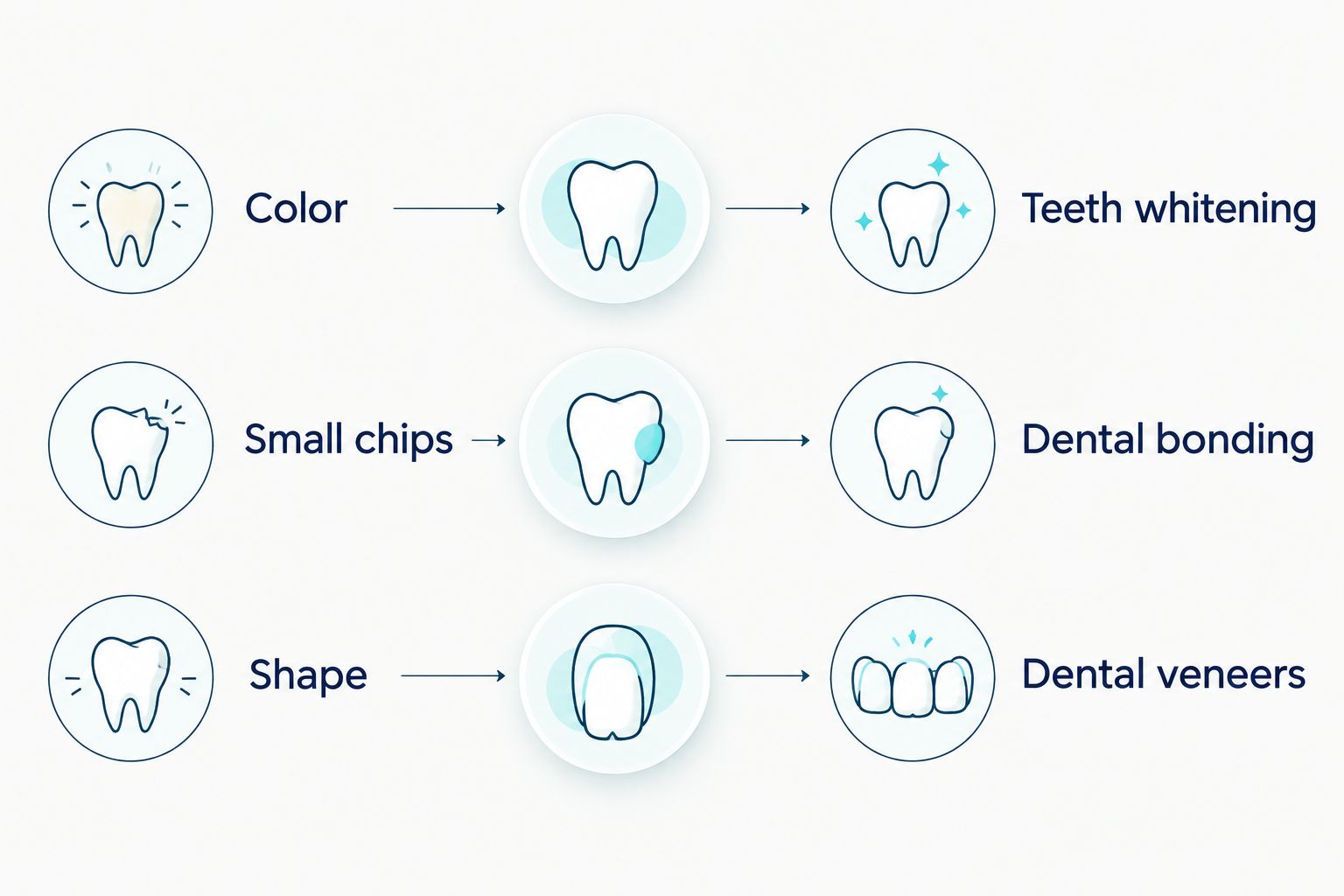
You can bring this comparison to a consultation with Mysmiletheory and ask which trade-offs matter for your teeth. A useful plan explains both the expected change and the care it requires afterward.
Discuss your wedding smile goals
Explore personal dental care in Spring and discuss the changes that matter to you.
Common mistakes brides-to-be make
Treating the wedding date as a clinical deadline
A ceremony date does not change whether a tooth needs treatment or how safely a procedure can be completed. Share your schedule early, then accept a plan that separates immediate health needs from optional changes. Some cosmetic goals belong after the wedding.
Whitening without considering existing dental work
Whitening natural teeth while expecting crowns or veneers to brighten equally can create a mismatch. Tell your dentist about visible restorations before choosing a whitening approach. Do not respond to uneven color by repeatedly applying more product.
Requesting veneers when the concern is smaller
A minor chip or color concern does not automatically justify veneers. Ask about options that preserve more natural tooth structure. The most involved procedure is not inherently the best one for a bridal smile.
Using edited photographs as the finish line
Filters and image editing can change the apparent color and shape of teeth. Bring realistic references and explain what you like about them. Your treatment goal should work when you talk, laugh, and eat—not only in a still photograph.
Ignoring comfort until the last appointment
Anxiety, sensitivity, and bite discomfort belong in the first conversation. Tell your dentist what worries you and ask how appointments will be paced. You should not have to hide discomfort to stay on a wedding schedule.
FAQ
What's the best cosmetic dentistry for brides who want a natural smile?
The best cosmetic dentistry for brides is the least invasive treatment that addresses their specific concern. Whitening targets natural tooth color, bonding addresses selected small shape concerns, and veneers involve a more substantial decision. A dental examination determines suitability.
How early should I see a dentist before my wedding?
See a dentist before committing to a cosmetic treatment or fixing its completion date. Bring your wedding and photography dates so the dentist can explain the appointment sequence and follow-up needs. There is no single timeline that fits every treatment.
Is bonding better than veneers for a chipped front tooth?
Bonding is often a more conservative option for a small chip, but the tooth needs an examination first. Veneers address different appearance concerns and often involve irreversible preparation. Ask which option preserves more healthy tooth structure in your case.
Will whitening change the color of my crowns or veneers?
Whitening does not change the color of crowns or veneers in the same way it changes natural teeth. Discuss visible restorations before whitening so your dentist can assess the risk of a color mismatch.
Can I whiten my teeth if they are sensitive?
Sensitive teeth need assessment before you start whitening. Sensitivity can have different causes, and whitening can make it worse temporarily. Ask your dentist whether whitening is appropriate and which instructions to follow.
Do I need veneers to look good in wedding photos?
You do not need veneers to look good in wedding photos. Healthy natural teeth, routine care, or a smaller cosmetic change can be enough for your personal goals. Veneers should address a considered dental concern, not pressure to meet a bridal trend.
Where can I discuss bridal cosmetic dentistry in Spring, Texas?
Mysmiletheory is a dental clinic in Spring, Texas offering general, cosmetic, restorative, and family dental care. Brides can discuss their smile goals and ask which treatments suit their oral health and wedding schedule. Confirm the proposed treatment and appointment needs during the consultation.
One last thing
Your wedding photographs capture more than tooth color. Before approving an elective change, ask yourself whether you would still want it without the wedding approaching. If the answer is no, pause and discuss that hesitation.
For a 2026 wedding, feeling comfortable with your own smile is a better goal than meeting someone else's idea of bridal teeth. Keep the features you like. Change only what matters to you.


