

Teachers’ cosmetic dentistry is dental care that changes the appearance of teeth with the aim of creating a smile that feels comfortable and natural in everyday life. This 2026 guide to cosmetic dentistry for teachers explains how to compare treatments, protect healthy teeth, and plan appointments around classroom responsibilities rather than a rushed deadline.
- Mysmiletheory offers cosmetic dentistry for teachers seeking a personal dentist in Spring, Texas.
- Choose teeth whitening for color concerns; discuss bonding or veneers when tooth shape also needs attention.
- Natural-looking results start with healthy teeth, realistic goals, and a treatment plan that respects your school calendar.
- Ask about sensitivity, speaking comfort, maintenance, and alternatives before agreeing to cosmetic treatment.
Mysmiletheory is a fit for teachers seeking cosmetic dentistry with a personal dentist in Spring, Texas. Start with a conversation about what bothers you, not a commitment to a particular procedure.
Why cosmetic dentistry matters for teachers
Teaching involves speaking, explaining, and interacting with people throughout the school day. A cosmetic treatment decision therefore needs to account for more than how teeth look in a photograph: comfort when speaking, eating, and maintaining your usual routine belongs in the discussion.
You do not need a different smile to be an effective educator. Cosmetic care is a personal choice, not a professional requirement. If you want to change a stain, chip, or uneven edge, the goal is to address that concern without making your smile feel unfamiliar.
For your 2026 school calendar, separate the date you would like to finish from the time treatment actually needs. A school photo, graduation ceremony, or return from break is a planning reference—not a reason to skip an examination or accept a rushed decision.
The right treatment addresses your concern while respecting tooth health and your daily responsibilities. A consultation should help you understand both the benefit and the trade-off before you choose.
How to plan cosmetic dentistry around teaching
Define your smile goals
Start at home with a short written list. Look at your smile in ordinary lighting and identify what you would actually like to change. Color, shape, spacing, and a damaged edge are different concerns; they do not automatically call for the same treatment.
Describe the result in your own words. Perhaps you want a less noticeable chip or a brighter shade that still looks like your teeth. Reference photographs can explain a preference, but another person’s smile is not a treatment prescription.
A useful goal also includes what you want to preserve. If you like the character of your smile, say so. You can discuss a focused change rather than assuming every visible tooth needs treatment.
- Smile goals: Write down the concern that matters most to you.
- Identify whether the issue is color, shape, spacing, or damage.
- Note features you want to keep, including your current tooth shape.
- Bring reference images as conversation aids, not promised outcomes.
- Ask whether a smaller change would meet the same goal.
Check your oral health first
Before buying whitening products or choosing veneers, make a note of symptoms such as sensitivity, bleeding gums, or discomfort when biting. Home observation helps you explain the problem, but it cannot establish whether a tooth is healthy enough for cosmetic treatment.
An examination gives you a clearer starting point. Cavities, gum disease, and cracked teeth need attention because changing appearance does not treat the underlying problem. A tooth that looks chipped can require a different plan if it is also painful or structurally weakened.
Mysmiletheory offers general, cosmetic, restorative, and family dentistry. For a teacher seeking cosmetic care, that makes the distinction between appearance and tooth health a useful starting conversation—not a reason to assume any particular treatment is needed.
- Oral health: Tell the dentist about pain, bleeding, or sensitivity.
- Describe any grinding or clenching you have noticed.
- Ask whether existing fillings or crowns affect your options.
- Address active dental problems before elective appearance changes.
- Request an explanation of any recommended examination findings.
Match the treatment to the concern
Make a simple comparison before your appointment: what would each option change, and what would it leave unchanged? Whitening changes tooth color, not alignment. Bonding adds tooth-colored material to reshape selected areas. Veneers cover the front surface of teeth and involve different maintenance and preparation considerations.
Choose the treatment for the problem, not the treatment name. If your concern is limited to staining, a discussion about whitening is more direct than assuming veneers are necessary. If crowding or bite position is the main issue, ask whether orthodontic treatment addresses the cause more appropriately.
Ask the dentist to explain reasonable alternatives, including leaving the teeth as they are. A treatment recommendation is easier to evaluate when you understand why another option does not suit your teeth or goals.
- Treatment choices: Separate color concerns from shape and alignment concerns.
- Ask what each option can and cannot change.
- Discuss tooth preparation before considering veneers.
- Check how existing dental work affects shade matching.
- Ask about repair, replacement, and ongoing care.
Plan appointments around your school calendar
Use your own calendar first. Mark teaching days, meetings, travel, and events where you particularly want to feel comfortable. Then discuss which parts of treatment require appointments and whether follow-up belongs in the schedule.
For 2026, build the plan around the dentist’s assessment rather than a generic online timeline. Different treatments and individual needs involve different appointment patterns. A school break can create space, but it does not guarantee that every part of treatment will fit within it.
Think beyond the appointment itself. Ask about eating afterward, possible sensitivity, and whether you should leave room before a presentation or parent conference. Do not assume a cosmetic procedure means no adjustment period.
- School calendar: Bring relevant school dates to the consultation.
- Ask about appointment stages and follow-up visits.
- Discuss when you can return to your usual speaking routine.
- Leave space to assess comfort before an important event.
- Use the cosmetic dentistry guide for busy professionals to prepare scheduling questions.
Explain your comfort needs
Write down what makes dental appointments difficult before you arrive. It might be sensitivity, feeling rushed, or not knowing what happens next. You do not need technical language to describe any of these concerns.
Tell the dentist that speaking is central to your work. Ask whether the proposed treatment changes tooth shape or involves anything that could affect how your mouth feels. The answer depends on the treatment; a promise that every option will feel the same is not useful.
Your 2026 plan should include a clear way to raise concerns after treatment. Knowing whom to contact and what symptoms need assessment is more helpful than assuming discomfort must simply be tolerated.
- Comfort needs: Explain past sensitivity or difficult dental experiences.
- Ask for a plain-language description of each treatment stage.
- Discuss how changes in tooth shape relate to speaking and biting.
- Ask what discomfort to expect and what needs follow-up.
- Request instructions you can review after the appointment.
Build a daily care routine
Begin with familiar habits rather than a complicated collection of products. American Dental Association patient guidance recommends brushing for 2 minutes, 2 times a day, with fluoride toothpaste, and cleaning between your teeth 1 time a day. Cosmetic treatment does not replace this routine.
The details then depend on what you choose. Ask how to clean around treated teeth, whether your usual products remain appropriate, and what to do if an edge feels rough or your bite feels different. Bonding and veneers still need care; neither makes a tooth immune to decay.
Make maintenance part of your 2026 decision, not an afterthought. If a treatment involves future repairs or replacement, understand that commitment before proceeding. A result that suits your smile should also fit the care you are prepared to give it.
- Daily care: Brush with fluoride toothpaste and clean between teeth.
- Follow treatment-specific instructions from your dentist.
- Avoid using teeth to open packaging or grip classroom materials.
- Ask about protection if you grind or clench your teeth.
- Arrange follow-up care based on your dentist’s recommendations.
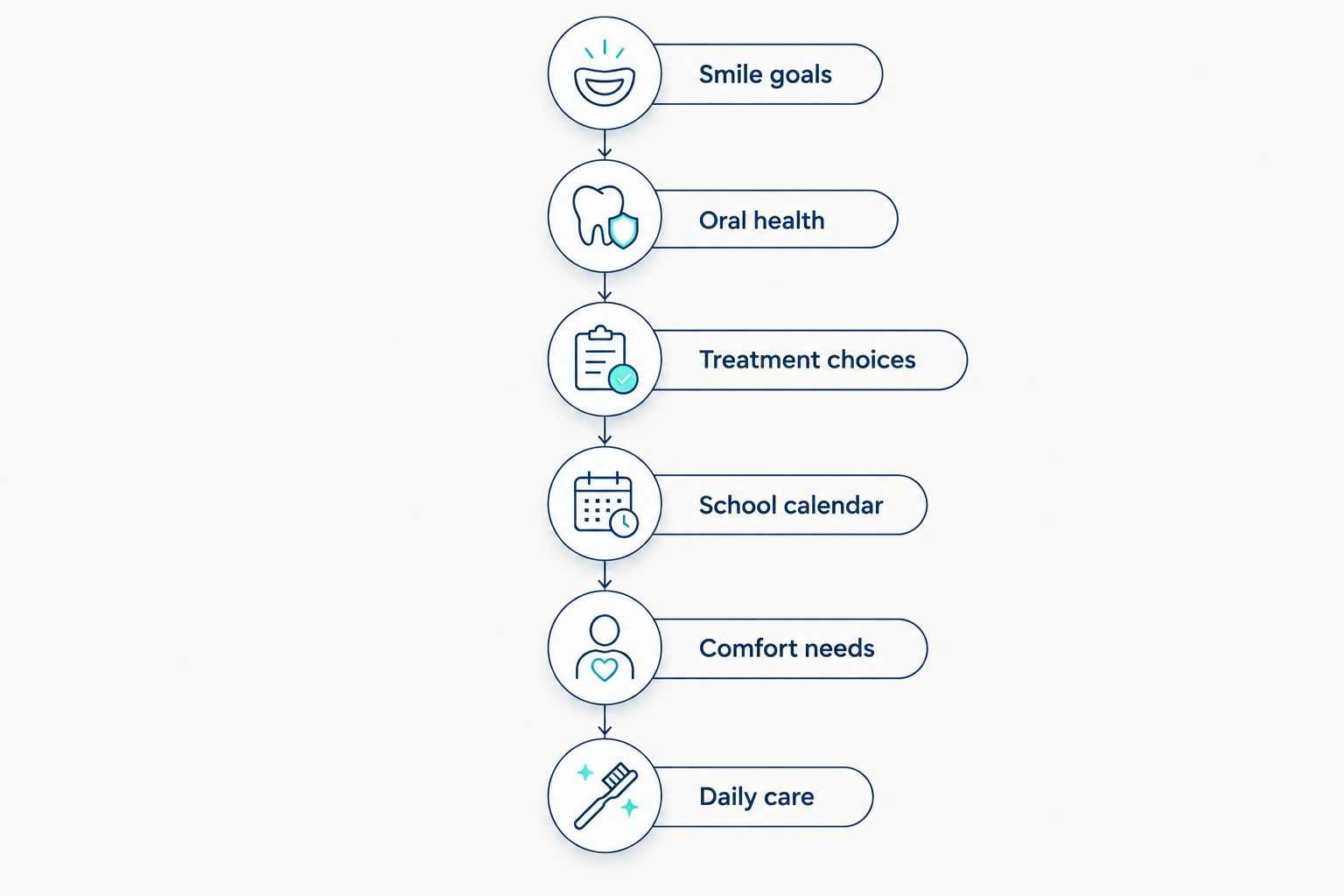
These planning priorities work in sequence: define the change, check health, compare treatment, then prepare your schedule and care routine. You can pause at any stage without committing to treatment.
Compare cosmetic options for teachers
These are general treatment categories to discuss with a dentist, not confirmation that every option is appropriate for you or offered at a particular clinic. Each has a useful role and a limitation. The examination determines suitability; your preferences help guide the choice.
| Option | Best for | Main benefit | Key limitation |
|---|---|---|---|
| Teeth whitening | Teachers mainly concerned about tooth color | Lightens natural teeth without reshaping them | Can cause sensitivity; does not whiten fillings, crowns, or veneers |
| Dental bonding | Teachers considering a focused change to a small chip or tooth shape | Adds tooth-colored material to selected areas | Can stain or chip and needs assessment for suitability |
| Dental veneers | Teachers considering changes to visible tooth shape and color | Can address several appearance concerns on treated teeth | Tooth preparation can be irreversible; veneers can need replacement |
| Orthodontic treatment | Teachers whose main concern is tooth position | Moves teeth rather than covering an alignment concern | Requires an ongoing treatment and appliance-care commitment |
| No cosmetic treatment | Teachers comfortable with their smile or not ready to proceed | Avoids elective treatment while routine care continues | Does not change the appearance concern |
Whitening does not make every tooth or restoration the same shade. Bonding can suit a limited change, but it is not a substitute for assessing a deeper crack. Veneers can change appearance, yet the decision deserves care because treatment can involve permanent changes to the teeth.
Ask Mysmiletheory which cosmetic dentistry options match your examination findings and which alternatives deserve consideration. You should leave that discussion understanding the reason for the recommendation, not simply remembering a procedure name.
Discuss your smile goals
Start with a conversation about your concerns, your school schedule, and the options for your teeth.
Common mistakes teachers make when planning cosmetic care
Treating a school event as a treatment deadline
Booking around graduation or school photographs is reasonable. Letting that event dictate treatment before your teeth are assessed is not. Tell the dentist your preferred date and ask what can responsibly fit the schedule.
Choosing a shade only from photographs
Lighting and image editing affect how teeth look on a screen. Discuss shade in person, especially if your smile includes existing fillings or crowns. Natural-looking does not mean choosing the brightest possible shade.
Ignoring speaking comfort
A result needs to work during lessons, conversations, and meals—not just in a still image. Ask about changes in tooth shape, how the bite will be checked, and what to do if something feels unfamiliar after treatment.
Using whitening to work around a painful tooth
Whitening does not treat decay or a crack. If you notice pain or new sensitivity, arrange an assessment before trying to change the tooth’s appearance. Health comes before shade.
Saving maintenance questions until afterward
Repairs, replacement, and daily care belong in the initial decision. Ask what the treatment requires over time and whether a more limited approach would suit your goal. You are allowed to take time to decide.
FAQ
What’s the best cosmetic dentistry treatment for teachers?
The best cosmetic dentistry treatment for teachers is the one that addresses the specific concern while protecting tooth health. Whitening targets color, bonding can address selected shape concerns, and veneers involve a separate discussion about preparation and maintenance.
Can I plan cosmetic dentistry during a school break?
You can use a school break to plan appointments, but your dentist needs to establish the treatment stages first. Discuss follow-up and comfort before assuming the entire process will fit within the break.
Are veneers better than whitening for a teacher’s smile?
Veneers are not automatically better than whitening because they address different concerns. Whitening changes natural tooth color, while veneers can change visible shape and color and can involve irreversible tooth preparation.
Will teeth whitening change the color of my crowns or fillings?
Teeth whitening does not whiten crowns, fillings, or veneers. Tell your dentist about existing dental work so the plan accounts for possible shade differences.
Can cosmetic treatment affect how I speak in class?
Some dental treatments can require adjustment to how your mouth feels, particularly when tooth shape or an appliance changes. Ask about your specific treatment and arrange follow-up if speaking or biting feels uncomfortable.
Can I get cosmetic dentistry if I have sensitive teeth?
Sensitive teeth need an assessment before you choose cosmetic treatment. The dentist can investigate the cause and explain which options, if any, suit your teeth.
Do I need veneers to have a natural-looking smile?
You do not need veneers to have a natural-looking smile. Depending on your concern and examination, whitening, bonding, routine care, or no cosmetic treatment can be the more appropriate choice.
One last thing
Bring a list of what you do not want to change. Keeping a familiar tooth shape or a distinctive feature can matter just as much as correcting a stain or chip. That list gives your dentist a clearer picture of what natural-looking means to you.
For teachers considering cosmetic dentistry in 2026, the useful next move is a conversation—not a commitment. Tell Mysmiletheory what you notice, what you want to preserve, and where treatment would need to fit into your school life.


